
Main Courses
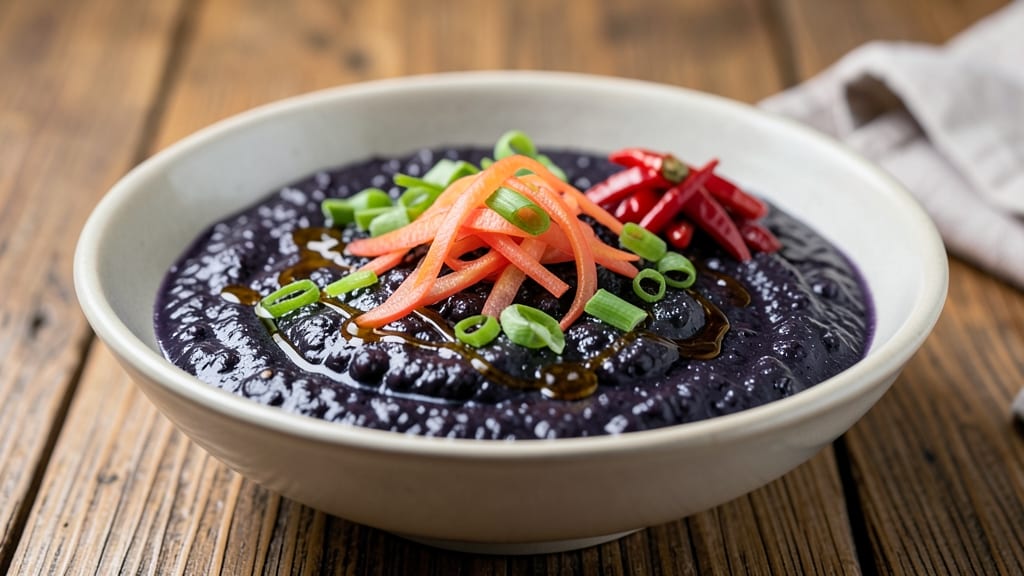
This black rice congee recipe transforms nutrient-dense black rice into a velvety porridge with earthy depth and antioxidant richness. The key lies in proper soaking and slow simmering—no pressure cooker shortcuts here—to achieve that signature silky texture while preserving the rice's deep purple hue.
I've perfected this over multiple batches, ensuring each spoonful delivers both comfort and nutrition.
What sets this apart is the balance between creamy consistency and light brothiness, achieved through precise water-to-rice ratios and gentle cooking. The result is a dish that's both restorative and deeply satisfying, perfect for breakfast or light meals.
Garnishes like scallions and ginger add freshness, while optional fried shallots introduce a satisfying crunch. This is congee that feels like a culinary experience, not just a meal.
Ingredients for black rice congee
Earthy black rice paired with delicate aromatics creates this velvety congee, rich in antioxidants and comforting texture.
| Ingredient | Amount | Notes |
|---|---|---|
| Black Rice 🌾 | 1 cup | Uncooked, high-quality for deep color |
| Water 💧 | 8 cups | Filtered for best texture |
| Fresh Ginger Root 🧄 | 1 inch | Fixed: Peel and slice thinly |
| Fresh Ginger Root 🧄 | 1 tbsp | Fixed: Grated, for garnish |
| Green Onions 🧅 | 4 whole | Sliced thinly for garnish |
| Sesame Oil 🫒 | 1 tbsp | Toasted, for aroma |
| Light Soy Sauce 🍶 | 1 tbsp | For umami balance |
| Salt 🧂 | ½ tsp | Diamond Crystal preferred |
| Shallots 🧅 | 2 whole | Fried for garnish, optional |
| White Rice 🍚 | ¼ cup | Jasmine preferred, for texture |
| Dried Shiitake Mushrooms 🍄 | 2 pieces | Rehydrated, for depth |
| Vegetable Oil 🫒 | 1 tbsp | High smoke point |
| Fresh Cilantro 🌿 | ¼ cup | Chopped, for freshness |
The black rice is the star—look for high-quality, unpolished grains to preserve its deep purple hue and nutritional benefits. Whole Foods or Asian markets carry the best varieties, often labeled as 'forbidden rice' or 'black jasmine'. If using pre-washed rice, rinse it thoroughly to remove excess starch, which can make the congee gummy. The white rice adds subtle texture contrast, so jasmine rice is ideal for its delicate floral notes. For the mushrooms, dried shiitake from Trader Joe's or bulk bins delivers the most umami punch—just rehydrate them in hot water for 20 minutes before adding to the pot.
No fresh ginger? Ground ginger at half the amount works in a pinch, though fresh is ideal for that bright, zesty kick. Swap the green onions for baby bok choy if you prefer a sweeter garnish—just thinly slice the stems. The sesame oil should be toasted, not the flavored kind from the bottle. For extra depth, add a splash of mirin with the soy sauce. If you're short on time, pre-cooked congee mixes from Asian grocery stores can be used as a base, though homemade tastes infinitely better. The shallots are optional but add a satisfying crunch—fry them in vegetable oil until golden for maximum flavor.
This congee tastes even better the next day as flavors meld, so make a double batch and store leftovers in the fridge for up to 5 days. For longer storage, freeze in airtight containers for 3 months. Reheat gently on the stove with a splash of water to restore its silky texture. The rice will thicken slightly upon reheating, so stir in a little water if it becomes too stiff. Garnishes like cilantro and fried shallots can be added fresh after reheating to maintain their crispness and vibrant colors.
Why You'll Love This Recipe
- No-Fuss Simmer: I swear by this recipe because it’s basically set it and forget it—just black rice, water, and a thumb-sized ginger slice. The rice breaks down into that silky, porridge-like texture all on its own while you sip tea or scroll through your phone.
- Earthy Depth: That first spoonful of black rice congee? It’s where the magic happens—the deep, almost nutty flavor of the rice (thanks to its anthocyanins) with just a whisper of ginger’s sharpness. Top it with green onions, and suddenly, you’ve got a bowl that tastes like a hug from a warm kitchen.
- Weeknight Wonder: Between us, this is my lazy-days hero. It’s ready in under 40 minutes, reheats beautifully, and I’ve served it for breakfast, lunch, or even a late-night snack when I’m too tired to think. (Yes, even on a Tuesday night.)
Step-by-step instructions for black rice congee
Transform simple ingredients into a velvety, antioxidant-rich porridge with this precise method.
Prepare the Black Rice and Shiitake Mushrooms
Rinse the 1 cup black rice thoroughly under cold water until the water runs clear. This removes excess starch that can make the congee gummy. Soak the rice in 8 cups water for at least 4 hours—overnight is ideal. The rice should absorb all the water and become plump and tender.
While the rice soaks, rehydrate the 2 pieces dried shiitake mushrooms by placing them in a small bowl of hot water for 20 minutes. This step unlocks their umami depth. After soaking, remove the mushrooms and finely chop them, reserving the soaking liquid. We'll use this later to concentrate flavor in the congee.
Simmer the Congee Base
Drain the soaked black rice and transfer it to a large stockpot with a heavy bottom. Add 1 tablespoon vegetable oil and place the pot over medium-high heat. Stir occasionally for 5 minutes until the rice begins to sizzle and develop a nutty aroma.
Gradually add 6 cups of the reserved soaking water (from the shiitake mushrooms) along with the chopped mushrooms. Bring to a gentle boil, then immediately reduce heat to low. The key here is patience—simmer uncovered for 1 hour, stirring every 15 minutes to prevent sticking. You're aiming for a thick, creamy consistency where the rice grains break down completely.
Incorporate White Rice and Seasonings
Add the 0.25 cup white rice and the 1-inch peeled, sliced fresh ginger root to the pot. The white rice adds subtle texture contrast while the ginger infuses warmth. Stir well to combine, then continue simmering for another 30 minutes on low heat. The congee should now have a luxurious, pudding-like thickness.
Season with 1 tablespoon light soy sauce and 0.5 teaspoon salt, stirring until fully integrated. Taste and adjust the salt if needed—this is where you balance the earthy black rice with savory depth. The congee should be silky but still have slight body, not watery. If it's too thick, add 1-2 tablespoons water at a time until you reach the perfect spoonable consistency.
Finish with Aromatics and Garnishes
Remove the pot from heat and stir in 1 tablespoon toasted sesame oil for a nutty aroma. The sesame oil should bloom immediately, releasing its toasted fragrance. Ladle the congee into 4 serving bowls, creating a smooth surface for garnishing.
Top each serving with 1 tablespoon grated fresh ginger root, 1 fried shallot (if using), 1 green onion sliced thinly, and 1 tablespoon chopped fresh cilantro. The fried shallots add a delicate crunch that contrasts beautifully with the silky porridge. Serve immediately while warm, as the texture continues to evolve even after cooking.
Pro Tips For Making Black Rice Congee
- SOAK THE RICE FIRST: Black rice stays stubbornly firm if you skip this—soak it for at least 4 hours (or overnight if you’re patient). I used to rush it, and the congee turned out grainy instead of silky. Trust me, the extra time makes all the difference when you’re blending it later.
- STIR CONSTANTLY AT FIRST: The first 20 minutes are critical—keep that pot moving to prevent sticking. Black rice releases starch quickly, and a burned bottom ruins everything. Use a wooden spoon and don’t walk away; this isn’t the time to multitask.
- GINGER SLICES, NOT GRATES: Thin, even slices of ginger (about 1/8-inch thick) infuse flavor without overpowering. Grated ginger turns bitter and muddies the broth. My grandmother swore by this, and she was right: small, neat slices dissolve just enough to add warmth without taking over.
- BLEND IN BATCHES: If your congee is too thick after cooking, don’t force it—blend it in small portions. A crowded blender overheats and sputters, and you’ll end up with a lumpy mess. Work in 1-2 cup increments, then stir it back into the pot. Yes, it’s extra steps, but the result is smooth every time.
Make-ahead tips for this recipe
Overnight Prep Advantage
Black rice congee benefits from overnight soaking—the rice absorbs more water, resulting in a creamier texture. Place the 1 cup black rice in a bowl with 8 cups water before bed, and wake up to perfectly plump grains.
This method also saves active cooking time by 2-3 hours compared to shorter soaks. 🌙
Freezer-Friendly Storage
Portion cooled congee into airtight containers (glass or BPA-free plastic) with 1-inch headspace for expansion. Label with dates and freeze for up to 3 months. Thaw overnight in the fridge before reheating—this prevents grainy textures. For quick meals, freeze individual servings in silicone molds for single-portion convenience.
Reheating Like a Pro
Never microwave congee directly—it turns rubbery. Instead, transfer frozen portions to a pot with 2 tablespoons water, cover, and heat on low for 10-15 minutes. Stir occasionally to restore its silky consistency.
For extra richness, add 1 teaspoon toasted sesame oil during reheating. Garnishes like fried shallots should be added fresh after warming. 🔥
Batch Cooking Strategy
Double the recipe and store in the fridge for 5 days—flavors deepen as the rice absorbs more broth. Use a slow cooker on low for 6-8 hours as an alternative method.
For meal prep, divide into 4 portions and reheat separately to maintain texture. I keep a jar of pre-soaked black rice in my freezer for emergency congee nights!
Garnish Prep Ahead
Pre-chop all garnishes (green onions, cilantro) and store in small containers with a damp paper towel to prevent wilting. Fry shallots in advance and keep in an airtight jar at room temperature for up to 1 week.
Grated ginger can be stored in the fridge for 3 days in a sealed container. This saves 10 minutes of prep time per serving. ✨
Texture Troubleshooting
If reheated congee is too thick, stir in 1 tablespoon water at a time until smooth. For extra creaminess, blend ½ cup cooked congee and mix back into the pot.
Avoid over-stirring while reheating—gentle heat preserves the delicate rice breakdown. The key is low and slow—never rush the process! 💫
Nutrition facts
Frequently asked questions
Why does black rice congee have a deep purple color?
Black rice (also called forbidden rice) contains high levels of anthocyanins, the same antioxidants that give blueberries their color. When cooked properly, these pigments infuse the broth, creating that stunning purple hue. The longer you simmer it gently, the more vibrant the color becomes without overcooking the rice.
Can I make black rice congee without white rice?
Yes! The white rice adds subtle texture contrast, but you can skip it entirely. For a purer black rice experience, simply increase the water ratio slightly (by ½ cup) and simmer for 10-15 extra minutes to achieve the same creamy consistency. The flavor will be more concentrated and earthy.
What's the best way to fix congee that's too thick?
Add 1-2 tablespoons water at a time while stirring gently on low heat. For a creamier texture, blend ½ cup of the congee until smooth, then mix it back in. Never microwave—it disrupts the delicate rice breakdown. The key is patience: let it reheat slowly to restore its silky consistency.
How do I store leftover black rice congee?
Cool completely, then store in airtight containers for up to 5 days in the fridge. For longer storage, freeze in portions with 1-inch headspace for up to 3 months. Thaw overnight in the fridge before reheating gently on the stove with a splash of water. Garnishes should always be added fresh after warming.
Can I use instant congee mixes instead of cooking from scratch?
While possible, homemade yields far superior results. Instant mixes often contain preservatives and lack the depth of flavor from fresh ingredients like shiitake mushrooms and ginger. For a shortcut, use pre-cooked congee mixes** from Asian markets as a base, then boost with extra black rice, sesame oil, and fresh aromatics. You'll still get that antioxidant-rich benefit!