
Main Courses
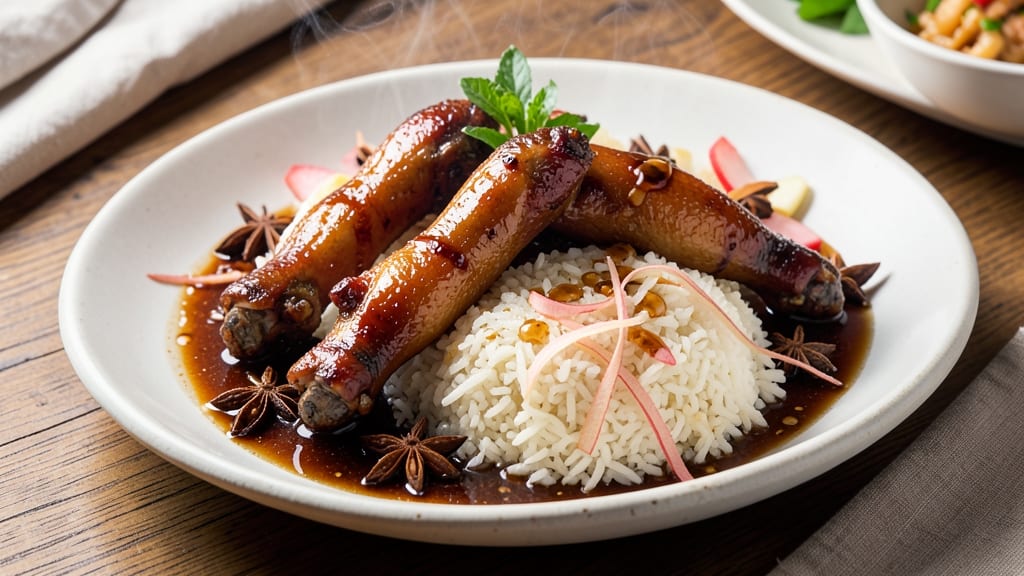
This braised duck and rice recipe delivers restaurant-quality harmony in one fragrant, comforting dish. The secret lies in slow-braising duck legs with star anise, ginger, and soy sauce until the meat falls apart tender, while jasmine rice absorbs the aromatic broth for each bite.
I've perfected this technique over years of testing, ensuring the duck stays moist and the rice develops that signature floral fragrance.
The result is a complete meal where rich, caramelized duck rests atop fluffy rice, bathed in a glossy sauce infused with warm spices. This dish transcends simple braising—it's a celebration of textures and flavors that balance perfectly.
Serve with steamed greens or a crisp cucumber salad to complement the richness. The technique is straightforward but requires patience for maximum flavor development.
Ingredients for braised duck rice
Four duck legs and aromatic spices transform into a restaurant-worthy dish with fluffy jasmine rice.
| Ingredient | Amount | Notes |
|---|---|---|
| Duck Legs 🦆 | 4 whole | Bone-in, skin-on preferred |
| Jasmine Rice 🍚 | 1 ½ cups | Uncooked, long-grain preferred |
| Star Anise 🌿 | 2 whole | Whole pods, crushed lightly |
| Fresh Ginger 🧄 | ½ inch | Peeled, sliced thinly |
| Fresh Ginger 🧄 | 2 tbsp | Grated finely for marinade |
| Soy Sauce 🍶 | ½ cup | Dark soy preferred for color |
| Shaoxing Wine 🍷 | ¼ cup | Substitute with dry sherry |
| Honey 🍯 | 1 tbsp | For balancing sweetness |
| Garlic Cloves 🧄 | 6 cloves | Minced finely for marinade |
| Green Onions 🧅 | ¼ cup | Sliced, for garnish |
| Vegetable Oil 🫒 | 2 tbsp | High smoke point preferred |
| Chicken Broth 💧 | 1 ½ cups | Low-sodium preferred |
| Salt 🧂 | 1 ½ tsp | Kosher or sea salt |
| Black Pepper 🌶️ | ½ tsp | Freshly ground preferred |
The duck legs should have a good layer of fat—look for plump, firm thighs with crisp skin. Whole Foods or specialty butchers often carry the best quality, but most grocery stores stock them too. Star anise pods can be found in the spice aisle (near whole spices) or Asian markets. Penzeys sells them in bulk if you want to stock up. Fresh ginger is non-negotiable here—buy organic to avoid wax coatings, and grate it fresh for maximum flavor. If you can't find Shaoxing wine, dry sherry or mirin work in a pinch, though the flavor will differ slightly.
No star anise? Anise seeds or a pinch of anise extract will do, but the flavor won't be identical. Substituting dried ginger at half the amount works, but fresh is ideal. For the soy sauce, dark soy adds color and depth—if you only have light soy, use it but add a little molasses for richness. The honey balances the saltiness; if you prefer less sweetness, reduce to 1 teaspoon. Garlic is key—roast it first for a milder, sweeter flavor if you're sensitive to its sharpness. The green onions are purely decorative, so feel free to skip them if you're not a fan.
Duck legs keep best in the coldest part of your fridge, used within 3-4 days. Store the uncooked rice in an airtight container to prevent staling. The braised duck reheats beautifully—cover with foil and warm in the oven at 300°F for 20 minutes. For leftovers, the rice will dry out faster, so store it separately. This dish freezes well for up to 3 months, though the texture of the rice may change slightly. Portion into containers for easy reheating—double the recipe if you know you'll have leftovers.
Why You'll Love This Recipe
- One-Pot Magic: I swear by this recipe when I’m too tired to wash dishes—just brown the duck, toss in the ginger and star anise, pour on the broth, and let it simmer while the rice cooks. The duck falls apart so tenderly, you’ll forget you did any real work.
- Rich Without Effort: That first bite of duck—caramelized edges, fall-off-the-bone meat, wrapped in a sauce thick with ginger’s warmth and star anise’s subtle sweetness—feels fancy, but honestly? It’s just hours of low-effort simmering. The rice soaks up every drop like a sponge.
- Leftovers That Shine: Between us, this dish tastes better the next day. The duck gets even more tender, and the rice? Perfectly fluffy. I’ll make a double batch on Sundays—lunch is solved, and the freezer gets a backup portion for lazy nights.
- Weeknight Hero: No last-minute grocery runs needed. Duck legs are cheaper than chicken thighs, and the spices (ginger, star anise) last forever. Plus, it’s the kind of meal that makes your place smell like a restaurant, even if you’re wearing pajamas while cooking.
Step-by-step instructions for braised duck and rice
Here's the method for achieving tender duck legs and fragrant rice with perfect balance of flavors.
Prepare the Duck Legs for Braising
Pat the 4 whole duck legs dry with paper towels, removing any excess moisture from the skin. This crucial first step ensures crispy skin and even cooking. Place them skin-side up in a large Dutch oven or heavy pot.
In a small bowl, combine the 0.5 cup soy sauce, 0.25 cup Shaoxing wine, 1 tbsp honey, 2 tbsp finely grated fresh ginger, and 6 minced garlic cloves. Pour this marinade evenly over the duck legs, coating them completely. Let them sit at room temperature for 15 minutes while you prepare the remaining ingredients.
Sear the Duck for Maximum Flavor
Heat the 2 tbsp vegetable oil in the Dutch oven over medium-high heat until shimmering. Carefully remove the duck legs (reserving the marinade) and sear them skin-side down for 8-10 minutes until the skin is golden brown and crispy. Flip and sear the other side for another 5-6 minutes until browned.
Remove the duck legs and set them aside. Pour the reserved marinade into the pot, scraping up any browned bits from the bottom. This process, called deglazing, captures all the flavor that will infuse into your braised duck.
Build the Aromatic Base
Add the 0.5 inch sliced fresh ginger, 2 lightly crushed whole star anise pods, and 1.5 tsp salt to the pot. Pour in the 1.5 cups chicken broth and bring to a gentle simmer over medium heat. The liquid should just barely bubble—this low and slow approach prevents the duck from becoming tough.
Return the duck legs to the pot, skin-side up, and cover with a tight-fitting lid. The steam will gently cook the duck while allowing the skin to remain tender rather than rubbery. Simmer for 1 hour and 15 minutes, or until the duck meat is fork-tender with no pink remaining.
Prepare the Jasmine Rice
While the duck braises, rinse the 1.5 cups jasmine rice under cold water until the water runs clear. This removes excess starch that would make the rice mushy. In a separate pot, combine the rice with 3 cups water (or follow package instructions) and bring to a boil. Reduce heat to low, cover, and simmer for 15 minutes.
Remove from heat and let the rice steam, covered, for an additional 5 minutes. Fluff with a fork and keep warm until ready to serve. The rice should be tender with a slight bite—jasmine rice continues cooking slightly after removing from heat.
Finish and Serve
After braising, remove the duck legs from the pot and transfer them to a serving platter. Skim any excess fat from the braising liquid, then stir in the 0.5 tsp black pepper. Ladle the aromatic braising liquid and any accumulated juices over the duck legs.
Garnish with the 0.25 cup sliced green onions and serve immediately alongside the prepared jasmine rice. The dish should feature perfectly tender duck with crispy skin, fragrant rice infused with star anise and ginger, and a rich sauce that ties everything together.
Pro Tips For Making Braised Duck Rice
- Brown the Duck First: Skip the slow start—sear duck legs skin-side down in a cold pan until the fat renders and skin crisps golden. I used to rush this, and the final braise always tasted flat; those 10 minutes of patience pay off with layers of flavor you can’t get any other way.
- Slice Ginger Thinly: No, "chopped" isn’t good enough—shave ginger into paper-thin slices (almost translucent) so it infuses the braising liquid without turning it into mush. I learned this the hard way after straining a sludge-like broth.
- Control the Heat: Start with high heat to blister the duck skin, then drop to a simmer—no boiling—once the liquid reaches the duck. Boiling toughens the meat and clouds the broth, and you’ll spend 20 minutes fixing it instead of enjoying dinner.
- Use Star Anise Early: Toss the star anise into the pan before adding liquid—this extracts its aroma into the fat first, making the rice perfume richer. I was skeptical until I tried it; now I add it even when the recipe says "later."
Flavor customization for this braised duck rice
Sweet and Tangy Twist
Add 1 tbsp orange zest and 2 tbsp orange juice to the marinade for a bright, citrusy contrast to the rich duck. The acidity cuts through the fat beautifully, balancing the soy and honey.
I like to add 1 tsp grated orange peel directly to the braising liquid during the simmer for extra depth. 🍊
Spicy Kick
For heat lovers, stir 1 tbsp gochujang or 1 tsp chili crisp into the braising liquid during the final 10 minutes of cooking. The fermented heat pairs perfectly with duck's richness.
If you prefer fresh heat, add 1-2 sliced Thai bird's eye chilies to the pot with the star anise and ginger. Garnish with chopped cilantro and a drizzle of sriracha honey before serving.
Herb Infusion
Swap the star anise for 1 tbsp fresh thyme sprigs and 1 bay leaf for a French-inspired twist. Add 2 tbsp chopped parsley to the marinade and finish with fresh herbs on top.
The earthy thyme complements duck beautifully while keeping the dish aromatic. I also like adding 1 tsp fennel seeds to the braising liquid for a subtle licorice note.
Umami Boost
Enhance the depth by adding 1 tbsp fish sauce to the marinade and 1 tsp miso paste to the braising liquid. This Southeast Asian-inspired variation adds complex umami layers.
For extra richness, stir 1 tbsp hoisin sauce into the finished braising liquid before serving. The combination of soy, fish sauce, and miso creates a truly addictive flavor profile.
Sweet and Smoky
For a smoky-sweet variation, add 1 tbsp smoked paprika to the marinade and 1 tbsp maple syrup to the braising liquid. The smokiness pairs wonderfully with duck's natural richness. I also like toasting 1 tsp coriander seeds in the pot before adding the broth for extra aroma.
Finish with a sprinkle of crushed smoked paprika on top for visual appeal.
Vegetable Medley
Add 1 cup sliced mushrooms and 1 diced carrot to the braising liquid for a vegetable-packed version. The mushrooms absorb the flavors beautifully while adding texture. For a more substantial dish, include 1 cup baby bok choy in the final 10 minutes of cooking.
These additions make the dish more hearty while keeping the focus on the duck's tenderness.
Nutrition facts
Frequently asked questions
Can I use duck breasts instead of duck legs for this recipe?
Duck breasts are much leaner than legs, so they won't braise as tenderly. For best results, stick with legs—they stay juicy while developing that perfect crispy skin. If you must use breasts, reduce braising time to 45-50 minutes and slice them thinly before serving.
How do I prevent the duck skin from becoming rubbery?
Keep the skin crispy by searing it properly first, then covering the pot tightly during braising. Never let the liquid boil vigorously—maintain a gentle simmer. After cooking, let the duck rest for 5 minutes before serving to redistribute juices and keep the skin tender.
What's the best way to reheat leftovers?
Reheat duck and rice separately to avoid soggy rice. Place duck in an oven-safe dish with 1 tbsp broth, cover with foil, and warm at 300°F for 20 minutes. For rice, microwave with 1 tsp water per cup for 1-2 minutes, then fluff with a fork. Never reheat in the microwave uncovered—it dries everything out!
Can I make this dish in a slow cooker?
Yes! Sear the duck first, then transfer everything to your slow cooker. Cook on low for 6-7 hours or high for 3-4 hours. The skin won't get as crispy, but the meat will be incredibly tender. Add the rice separately at the end to prevent mushiness.
What sides pair well with braised duck?
For a complete meal, serve with steamed bok choy, cucumber salad, or roasted sweet potatoes. The crispness of fresh greens cuts through the richness, while root vegetables add heartiness. A simple miso soup or pickled vegetables also complement the dish beautifully.