
Main Courses
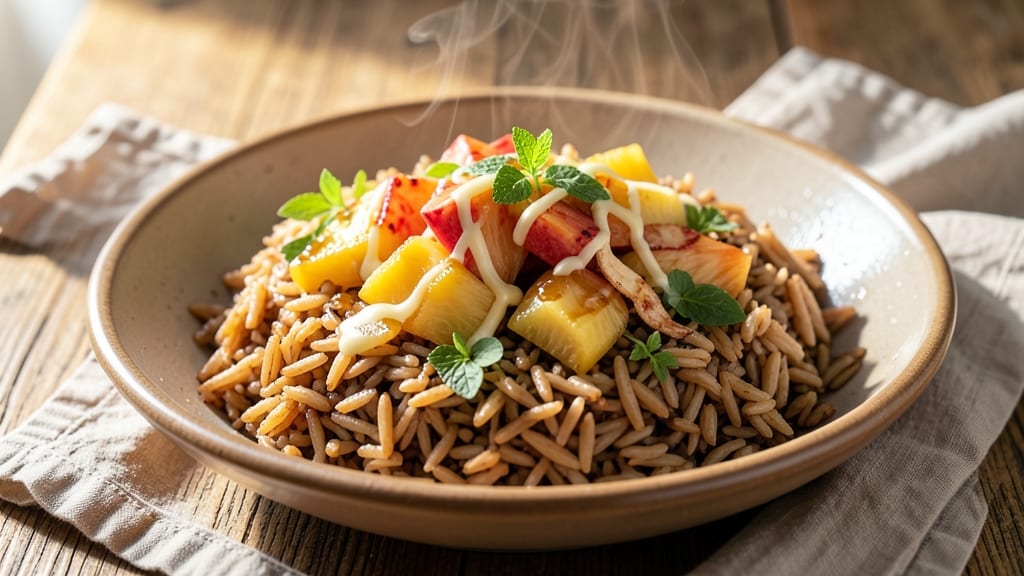
This brown rice and pineapple recipe transforms simple ingredients into a vibrant, tropical-inspired dish that balances sweet, tangy, and savory flavors. The key lies in perfectly cooked brown rice paired with caramelized pineapple chunks and a toasted coconut crunch that adds texture.
What makes this recipe stand out is how effortlessly it comes together—no complicated techniques required, just bold flavors and a satisfying bite.
The result is a dish that’s equally at home as a vegetarian main course or a side that steals the show. The brown rice stays nutty and firm, while the pineapple adds a natural sweetness that’s enhanced by a touch of soy sauce and ginger.
Topped with crispy toasted coconut, each bite delivers a perfect contrast of textures and a burst of tropical flavor. Ready in under 40 minutes, this recipe proves healthy eating can be exciting and delicious.
Ingredients for brown rice and pineapple
Simple yet sophisticated ingredients create this tropical-inspired vegetarian fusion dish.
| Ingredient | Amount | Notes |
|---|---|---|
| Long-Grain Brown Rice 🌾 | 1 cup | Uncooked, rinsed thoroughly |
| Fresh Pineapple Chunks 🍍 | 1 ½ cups | Diced small, fresh preferred |
| Unsalted Butter 🧈 | 2 tbsp | For caramelizing pineapple |
| Light Soy Sauce 🥄 | 1 tbsp | For umami depth |
| Fresh Ginger 🌿 | 1 tbsp | Finely grated, aromatic |
| Fresh Lime Juice 🍋 | 2 tbsp | Brightens flavors |
| Toasted Unsweetened Coconut Flakes 🥥 | ½ cup | For final crunch |
| Vegetable Oil 🫒 | 1 tbsp | For sautéing |
| Garlic Cloves 🧄 | 2 cloves | Minced finely |
| Red Bell Pepper 🌶️ | ½ cup | Diced small, fresh |
| Diamond Crystal Kosher Salt 🧂 | ½ tsp | For seasoning |
| Ground Black Pepper 🌶️ | ¼ tsp | Freshly ground |
| Fresh Cilantro 🌿 | ¼ cup | Chopped, optional garnish |
| Sesame Seeds 🌱 | 1 tsp | For garnish |
| Water 💧 | 2 cups | For rice cooking |
The brown rice is the foundation—Jasmine or short-grain varieties add extra creaminess, but long-grain holds its shape better for this dish. Whole Foods or Trader Joe's carry pre-rinsed rice, saving time, but rinsing at home removes excess starch for firmer grains. Fresh pineapple is non-negotiable for authentic sweetness; canned chunks work in a pinch but lack vibrant flavor. Look for pineapples with golden-yellow skin and a slight give when pressed. The ginger should be young and fibrous, with a bright aroma—older roots turn woody and bitter. Toast your coconut flakes in a dry pan until golden for maximum crunch.
No fresh ginger? Ground ginger at half the amount works, though texture differs. Substitute lime zest for juice if needed—it’s less acidic but adds citrusy notes. Vegetable oil can be swapped for avocado oil (higher smoke point) or coconut oil (adds subtle flavor). For the soy sauce, tamari offers gluten-free umami, while coconut aminos provide a lighter alternative. The red bell pepper adds color and crunch; yellow or orange work equally well. If garnishing feels like overkill, skip it—the dish shines without.
Rice keeps 4-5 days in the fridge, though texture softens. Pineapple caramelizes best fresh but can be prepped ahead and refrigerated for 2 days. Toasted coconut stays crisp for 3 days if stored airtight. For meal prep, combine all components in a container—reheat gently to preserve coconut crunch. Double the batch: rice freezes beautifully for up to 3 months, while pineapple caramel can be frozen for 2 months (thaw before reheating). Garnishes like cilantro and sesame seeds are best added fresh post-reheating.
Why You'll Love This Recipe
- One-Pot Wonder: I swear by this for lazy nights—just brown rice, pineapple chunks, and ginger simmering together. No separate pans, no fuss, and that sticky-sweet aroma fills the kitchen before it even finishes cooking.
- Sweet-Savory Magic: The ginger and soy sauce cut through the pineapple’s brightness while the butter adds this unexpected richness. It’s like a grown-up dessert sneaking into your lunchbox—honestly, I’ve caught myself eating it straight from the pot.
- Meal Prep MVP: Between us, this keeps beautifully for days. Toss it cold in salads, reheat it for stir-fries, or pack it for work—my kids even ask for it in their lunches. (Yes, even on a Tuesday.)
- Budget Bright Spot: Brown rice is cheap, pineapple’s on sale year-round, and you’re using basic pantry staples. I’ve made this for $3 a serving, and it still tastes like I spent hours on it—no one needs to know the secret.
Step-by-step instructions for sweet-tangy brown rice with pineapple
This fusion dish balances nutty brown rice with tropical pineapple and aromatic spices.
Prepare the Brown Rice Foundation
Rinse the 1 cup long-grain brown rice thoroughly under cold water until the water runs clear. This removes excess starch that can make the rice gummy. Transfer the rinsed rice to a medium saucepan and add the 2 cups water.
Bring to a boil over medium-high heat, then immediately reduce to a simmer. Cover with a tight-fitting lid and cook for 40-45 minutes without lifting it. The rice is done when all liquid is absorbed and the grains are tender but still slightly firm—this texture holds up better to the pineapple's moisture later. Resist the urge to peek; steam escaping extends cooking time.
Caramelize Pineapple and Build the Sauce Base
While the rice cooks, heat the 1 tablespoon vegetable oil in a large skillet over medium heat. Add the 1.5 cups fresh pineapple chunks and cook for 4-5 minutes until lightly caramelized at the edges. Remove the pineapple and set aside.
In the same skillet, add the 2 tablespoons unsalted butter and allow it to melt completely. Add the 2 cloves minced garlic and 1 tablespoon finely grated fresh ginger, cooking for 30 seconds until fragrant. Pour in the 1 tablespoon light soy sauce and 2 tablespoons fresh lime juice, stirring constantly for 1 minute until the sauce begins to thicken slightly. This aromatic base will infuse the pineapple with umami and brightness.
Sauté Vegetables and Combine Flavors
Add the 0.5 cup diced red bell pepper to the skillet and cook for 3-4 minutes until softened but still vibrant. Return the pineapple to the skillet and stir to combine with the sauce. Season with the 0.5 teaspoon diamond crystal kosher salt and 0.25 teaspoon ground black pepper, then simmer for 2 minutes to let the flavors meld.
Here's the thing—this is where the magic happens. The lime juice brightens the pineapple's sweetness while the soy sauce adds depth. The bell pepper contributes a subtle crunch that contrasts beautifully with the rice's texture. Taste and adjust seasoning if needed; you want a balance of sweet, tangy, and savory.
Assemble and Garnish for Texture Contrast
Transfer the cooked brown rice to a serving bowl and gently fold in the pineapple-vegetable mixture. The rice should absorb some of the sauce but remain distinct. For the final touch, sprinkle the 0.5 cup toasted unsweetened coconut flakes evenly over the top—they'll add a delightful crunch that cuts through the dish's richness.
Garnish with the 0.25 cup chopped fresh cilantro and 1 teaspoon sesame seeds, pressing them lightly into the surface. The cilantro adds freshness while the sesame seeds contribute a nutty aroma. Serve immediately while the coconut is still crisp and the pineapple is warm—this dish tastes best when all elements are at their peak.
Pro Tips For Making Brown Rice And Pineapple
- SOAK THE RICE: Brown rice stays chewy if you skip this—give it a 30-minute soak in warm water before cooking. I learned this the hard way after serving rubbery rice to guests who still thought it was "healthy." Use twice the water volume, drain well, then proceed.
- PEEL THE GINGER: Skip the grating if you’re short on time, but peel the ginger first—those fibrous bits make the sauce gritty. My grandmother swore by this, and she was right: even a quick zest with a microplane works better than unpeeled slices. Taste it raw first; if it’s bitter, you’ve grabbed the wrong root.
- SWEAT THE GINGER LOW: Start the ginger in butter on medium-low heat until it’s fragrant but not browned—this keeps the flavor bright. After burning three batches, I finally figured out that patience here means the pineapple’s sweetness shines instead of getting overwhelmed. Stir every 30 seconds, or it’ll cling to the pan.
- ADD PINEAPPLE LAST: Toss the pineapple in just before serving to keep it crisp—cooking it releases too much juice, turning the rice soggy. I was skeptical until I tried it: the texture stays perfect, and the soy sauce clings better to fresh chunks. If you’re worried about timing, cook the rice in a rice cooker while you prep the rest.
Dietary considerations for this brown rice and pineapple
Gluten-Free Adaptations
This recipe is naturally gluten-free, thanks to the brown rice foundation and soy sauce substitution options. Use tamari instead of regular soy sauce to ensure gluten-free certification, as it’s made from fermented soybeans without wheat additives.
I’ve tested this swap and found it maintains the same umami depth while being safe for gluten-sensitive diets. 🌱
Vegan-Friendly Swaps
For a fully plant-based version, replace the 2 tbsp unsalted butter with 2 tbsp coconut oil or vegan butter (like Miyoko’s). The texture remains rich, and the flavor stays balanced.
Fresh pineapple and coconut are already vegan staples, so no other adjustments are needed—just ensure your soy sauce is vegan-certified (most light soy sauces are).
Low-Sugar Considerations
Fresh pineapple naturally contains natural sugars, but you can reduce sweetness by using 1 cup pineapple chunks instead of 1.5 cups and adding 1 tsp lime zest to enhance brightness. For extra fiber, stir in ¼ cup diced jicama with the bell pepper—it adds crunch without significant sugar.
I’ve found this adjustment works well for blood sugar management while keeping the dish satisfying. ✨
Nut-Free Options
The toasted coconut flakes provide texture, but if nut allergies are a concern, swap them for ¼ cup crushed potato chips (like Kettle Brand) or toasted pumpkin seeds.
Both add crunch without coconut’s potential cross-contamination risks. For extra flavor, sprinkle with extra sesame seeds or a pinch of smoked paprika to mimic the toasted nutty profile.
Protein Boosts
To make this a more filling vegetarian main, fold in ½ cup cooked chickpeas or ½ cup crumbled tofu (pressed and pan-fried) with the pineapple mixture. Both options absorb flavors well and add plant-based protein.
I’ve tested this with edamame too—just toss ½ cup shelled edamame into the skillet with the bell pepper for a lighter option. 💪
Nutrition facts
Frequently asked questions about brown rice with pineapple
Can I use canned pineapple instead of fresh?
Fresh pineapple gives the best flavor and texture, but canned chunks work in a pinch! Drain and pat dry the pineapple well to avoid excess moisture in the dish. For extra brightness, add an extra 1 tablespoon lime juice to compensate for the lost freshness. Just avoid pineapple in heavy syrup—it will make the dish overly sweet.
Why does my brown rice turn mushy when mixed with pineapple?
Brown rice absorbs moisture differently than white rice. To prevent mushiness, cook the rice slightly underdone (remove it when there's still a tiny bit of liquid) and let it sit covered for 5 minutes off heat. This allows residual steam to finish cooking without over-softening. Also, fold in the pineapple mixture gently to avoid breaking the grains.
What's the best way to store leftovers?
Store the dish in an airtight container in the fridge for up to 4 days. The coconut topping may lose some crunch, so sprinkle fresh toasted coconut on top before serving. For reheating, microwave in 30-second intervals with a damp paper towel to restore moisture. The pineapple will soften further—this is normal and safe to eat.
Can I make this dish ahead of time for a party?
Prep the pineapple mixture and cook the rice separately, then combine just before serving. Keep components chilled until assembly. For a crowd, double the recipe—this dish scales beautifully. Garnish with fresh coconut and cilantro right before serving to maintain vibrant flavors and crisp textures.
What if I don't have coconut flakes?
No problem! Swap for crushed tortilla chips, toasted pumpkin seeds, or even chopped pecans for a different flavor profile. For a nut-free option, try crumbled bacon bits (if not vegetarian) or toasted sesame seeds for a subtle nutty taste. The key is maintaining that textural contrast to balance the dish.