
Main Courses
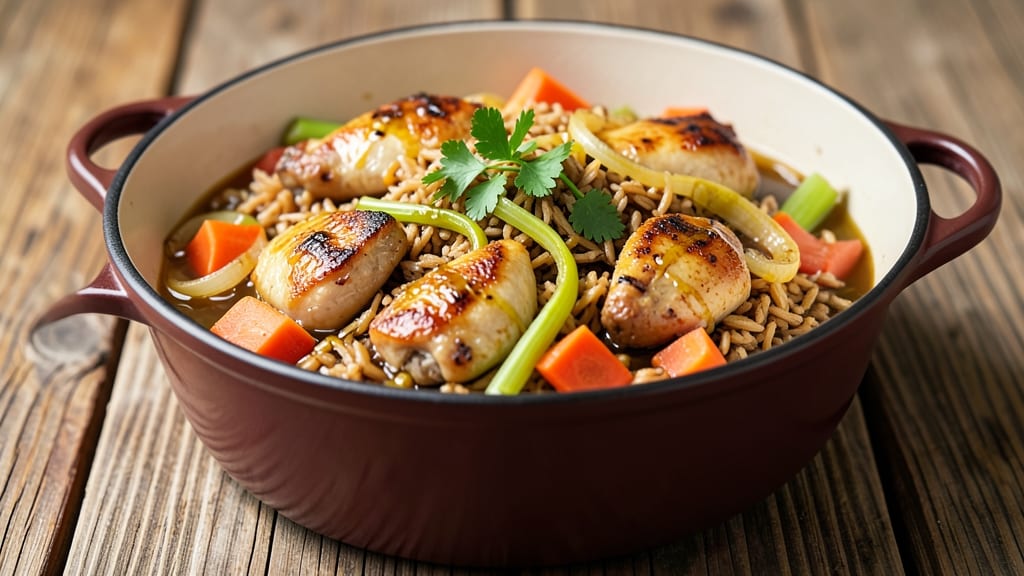
This brown rice one pot recipe transforms weeknight dinners with nutty, fluffy grains that never stick or clump. The secret? A simple broth-based method with chicken, carrots, and celery that cooks perfectly in one pot, saving time and cleanup. No fancy techniques—just balanced flavors and foolproof texture.
What makes this dish special is its versatility: tender chicken, caramelized vegetables, and aromatic rice all simmer together until rich and flavorful. The result is a complete, restaurant-quality meal ready in under an hour with minimal effort. Perfect for meal prep or a stress-free family dinner.
Ingredients for brown rice one pot
Nutty brown rice, tender chicken, and aromatic vegetables combine in one pot for restaurant-quality flavor.
| Ingredient | Amount | Notes |
|---|---|---|
| Long-Grain Brown Rice 🌾 | 1 cup | Uncooked, rinsed thoroughly |
| Boneless Chicken Thighs 🍗 | 1 ½ lb | Skinless, cut into bite-sized pieces |
| Carrots 🥕 | 2 medium | Peeled, cut into 1-inch chunks |
| Yellow Onion 🧅 | 1 large | Diced, about 1.5 cups |
| Celery Stalks 🧄 | 3 whole | Chopped into 0.5-inch pieces |
| Low-Sodium Chicken Broth 💧 | 3 cups | Homemade or quality store-bought |
| Extra-Virgin Olive Oil 🫒 | 2 tbsp | For sautéing vegetables |
| Garlic Cloves 🧄 | 4 cloves | Minced, about 1 tbsp |
| Fresh Thyme Leaves 🌿 | ¼ cup | Chopped, or 1 tsp dried thyme |
| Bay Leaves 🍃 | 2 whole | Dried, removed before serving |
| Salt 🧂 | 1 ½ tsp | Diamond Crystal kosher salt |
| Black Pepper 🌶️ | ½ tsp | Freshly ground |
| Fresh Parsley 🌿 | 0.2 cup | Chopped, for garnish |
The brown rice is the foundation here—jasmine or long-grain varieties work best for their firm texture. Trader Joe's and Whole Foods carry excellent bulk options, but any uncooked brown rice will do. Rinse it thoroughly before cooking to remove excess starch and prevent clumping. Chicken thighs stay juicier than breasts during long simmering, so bone-in, skin-on thighs are ideal if you want extra richness. For vegetables, organic carrots and celery from the store's produce section are perfect—just make sure they're firm with no soft spots. The garlic and thyme? Fresh is always better, but dried works in a pinch if you're short on time.
No fresh thyme? Dried thyme at one-third the amount keeps the flavor profile intact. Short on chicken broth? Vegetable broth or water with 1 tsp bouillon works, though the flavor will be subtler. The carrots and celery can be swapped for other root vegetables like parsnips or sweet potatoes—just adjust cooking time accordingly. For a vegetarian version, replace the chicken with extra-firm tofu or chickpeas. The olive oil is non-negotiable for sautéing—it adds depth that butter can't match here. If you're using pre-minced garlic, toast it in the oil for 30 seconds to bring out its flavor.
This dish tastes even better the next day as flavors meld. Store leftovers in an airtight container in the fridge for up to 5 days or freeze for 3 months. For meal prep, portion into individual containers—each serving reheats beautifully with a splash of water or broth. The rice stays firm and fluffy when cooled properly, so avoid reheating dry. Garnish with fresh parsley right before serving to keep it vibrant. If you're making this ahead, cook the rice slightly underdone and let it finish steaming in the broth during reheating.
Why You'll Love This Recipe
- One-Pot Magic: I swear by this when I’m too tired to wash another pan—just dump everything in, stir, and walk away. The brown rice soaks up all the savory juices from the chicken, and the carrots and celery soften just enough to melt into the mix. No straining, no fuss, just pure convenience.
- Savory Depth: That crispy chicken skin (yes, leave it on!) paired with the nutty brown rice? It’s like a hug in a bowl. The onions and carrots caramelize just enough to add sweetness, while the celery keeps it bright—no blandness here.
- Meal Prep MVP: Between us, this is my lunchbox lifesaver. Cook a big batch on Sunday, and you’ve got flavorful leftovers for days. The rice stays firm enough to reheat without turning mushy, and the chicken stays juicy—no sad, dry reheats here.
- Budget-Friendly Powerhouse: Chicken thighs are cheap, brown rice lasts forever, and veggies stretch across multiple meals. Honestly, I make this when I’m pinching pennies, and it still feels like a restaurant-quality dish. Plus, the leftovers taste just as good cold for salads the next day.
Step-by-step instructions for perfect one-pot brown rice
This method guarantees nutty, fluffy brown rice with zero sticking or mushy texture.
Sauté Vegetables Until Soft and Fragrant
Heat the 2 tablespoons extra-virgin olive oil in a heavy-bottomed pot over medium heat. Add the diced yellow onion, chopped celery stalks, and peeled carrot chunks, stirring occasionally for 5-7 minutes until the vegetables soften and the onion becomes translucent.
Here's the thing—don't rush this step. You want the vegetables to develop deep flavor through caramelization. When they're tender but still hold their shape, add the minced garlic cloves and cook for 30 seconds until fragrant. This aromatic base forms the flavor foundation for your entire dish.
Brown the Chicken Thoroughly
Increase heat to medium-high and add the 1.5 pounds boneless chicken thighs in a single layer. Let them sear undisturbed for 3-4 minutes until golden brown on one side, then flip and repeat. You're looking for a deep, caramelized crust that seals in juices.
Don't overcrowd the pot—work in batches if needed. The chicken should release easily from the pan when ready. Once browned on all sides, remove the chicken and set aside temporarily. This step ensures maximum flavor and prevents dry chicken later.
Toast the Rice for Nutty Depth
With the chicken removed, reduce heat to medium-low and add the 1 cup long-grain brown rice, stirring to coat in the vegetable-oil mixture for 2 minutes. This toasting step develops the rice's natural nuttiness and prevents sticking later.
Watch for the rice to turn slightly translucent at the edges—that's your signal it's properly toasted. Here's where it gets important: don't skip this step. Toasted rice absorbs liquid differently, resulting in perfectly fluffy grains rather than mushy ones.
Simmer with Broth and Seasonings
Pour in the 3 cups low-sodium chicken broth, then add the 1.5 teaspoons salt, 0.5 teaspoon black pepper, 0.25 cup chopped fresh thyme leaves, and 2 whole bay leaves. Return the chicken to the pot and bring everything to a gentle boil.
Once boiling, immediately reduce heat to low and cover tightly with a lid. The key here is maintaining a very gentle simmer—you should see just a few tiny bubbles at the edges. This controlled heat prevents the rice from absorbing liquid too quickly, which is what causes sticking.
Cook Until Rice is Tender and Juices are Absorbed
Simmer uncovered for 40-45 minutes, stirring once halfway through. The rice is done when all liquid is absorbed and the grains are tender but still hold their shape. You'll know it's ready when a knife slides in easily and the bottom has a light crust.
Real talk: your oven might run hot, so start checking at the 35-minute mark. If it finishes too early, add a splash of water and cover for another 5 minutes. The chicken should be cooked through with an internal temperature of 165°F. Garnish with 0.2 cup chopped fresh parsley before serving.
Pro Tips For Making Brown Rice One Pot
- Par-Cook the Rice First: Brown rice takes forever to soften in a one-pot dish, and I learned this the hard way—skipping pre-cooking leaves you with chewy, half-done grains. Simmer it separately in broth or water for 15 minutes first, then add everything else. The rice will absorb flavors faster, and your dish won’t turn into a mushy experiment.
- Cut Chicken Evenly: Uneven-sized chicken thighs mean some pieces stay raw while others dry out. Trim excess fat and slice them into 1-inch chunks—no bigger, no smaller. This ensures they cook at the same rate, and you won’t end up with a game of "lucky dip" for tender bites.
- Sear Onions Low and Slow: High heat burns onions before they soften, turning your base bitter and charred. Sauté them on medium-low with a splash of water or broth until they’re translucent and sweet—about 8 minutes. This builds flavor without the smoke alarm going off.
- Add Celery Last: Celery stays stubbornly crisp if added too early. Toss it in during the last 10 minutes of cooking so it softens just enough to be edible (yes, it’ll still have texture, but it won’t be a crunchy surprise). If you’re impatient like me, chop it smaller—it’ll cook faster.
Troubleshooting this dish
Sticking Rice Fix
If your brown rice sticks to the pot, you likely didn't toast it properly or used too much liquid. First,
Mushy Texture Solutions
Mushy rice usually means overcooking or insufficient liquid absorption. If yours turns out too soft, try this: Remove from heat immediately when the rice is almost done (grains should still have a slight bite), then let it sit covered for 10 minutes. This resting time allows residual heat to finish cooking without overdoing it. For next time, check the rice at 35 minutes—it should be tender but still firm.
Chicken Too Dry
Overcooked chicken happens when the pot gets too hot or the liquid evaporates too quickly. To fix this, simmer at the lowest heat setting possible while still maintaining a gentle bubble.
If your chicken is dry after cooking, try this trick: Shred it directly in the pot and mix with the rice—this redistributes moisture. For future batches, reduce the simmer time by 5 minutes and check the chicken's internal temp early (aim for 160°F before the rice finishes).
Broth Too Salty
If your broth tastes too salty, don't panic—there are easy fixes. For immediate correction, add ½ cup unsalted broth or water and stir well. If you're making this ahead, reduce salt slightly next time (start with 1 tsp instead of 1.5 tsp).
For extra depth, add 1 tsp lemon juice or 1 tbsp tomato paste to balance the flavor. Always taste your broth before adding rice to adjust seasoning.
Uneven Cooking
Unevenly cooked rice often means inconsistent heat distribution. To fix this, stir the rice once halfway through cooking (around 20 minutes) to redistribute any settled grains.
For future attempts, use a pot with a tight-fitting lid and place it on a burner with even heat distribution (avoid electric coils that heat unevenly). If your stove runs hot, try covering with a towel under the lid to trap heat more evenly. ✨
Burnt Bottom
A burnt bottom is usually caused by too high heat or insufficient liquid. If this happens, scrape off the burnt bits carefully with a spatula, then add ¼ cup broth or water to deglaze the pot. Stir well and simmer for 5 more minutes to redistribute flavors.
To prevent this, always use low heat after adding the broth and avoid stirring too frequently (which can scrape rice onto the bottom). A light layer of oil in the pot before cooking also helps create a barrier.
Nutrition facts
Frequently asked questions
Can I use white rice instead of brown rice in this one-pot recipe?
While white rice will cook faster (about 20-25 minutes instead of 40-45), it won't have the same nutty flavor or nutritional benefits. For best results, stick with brown rice—but if you're short on time, use jasmine rice (cooks in 15 minutes) and reduce the broth to 2 cups to maintain texture. The dish will still be delicious!
How do I adjust this recipe for two people?
Halve all ingredients: use ½ cup brown rice, ¾ lb chicken, 1.5 cups broth, and 1 cup diced vegetables. Cooking time remains the same, but check the rice at 30 minutes since smaller batches dry out faster. A 2-quart pot works perfectly for this serving size.
Can I make this recipe vegetarian?
Swap the chicken for 1 can (15 oz) chickpeas (drained) or 1 block (14 oz) extra-firm tofu (pressed and cubed). For extra protein, add ½ cup lentils or 1 cup frozen peas during the last 10 minutes of cooking. Boost umami with 1 tsp soy sauce or ½ tsp smoked paprika.
Why does my brown rice turn out mushy?
Mushy rice usually means overcooking or insufficient liquid absorption. The fix? Remove the pot from heat when the rice is 80% done (grains still slightly firm), then let it steam covered for 10 minutes. For future batches, stir the rice once at 20 minutes to prevent clumping, and use a tight-fitting lid to trap steam.
Can I use this recipe for meal prep?
Yes! This dish reheats beautifully. Store leftovers in an airtight container for up to 5 days or freeze for 3 months. To reheat, add 2 tbsp water or broth per cup of rice and simmer covered for 5-7 minutes. For best texture, cook the rice slightly underdone (35 minutes) and let it finish steaming during reheating.