
Main Courses
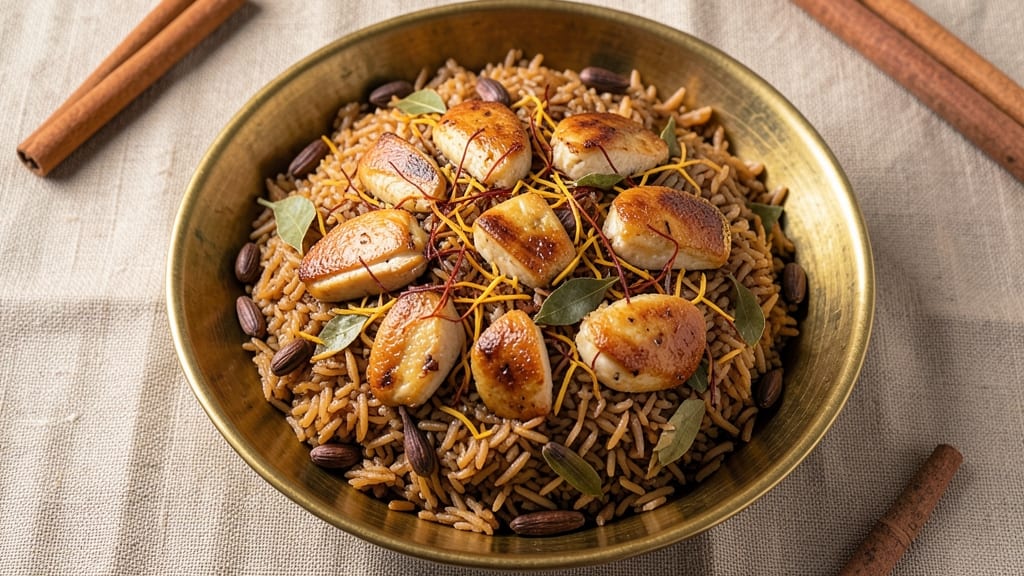
This brown rice pulav recipe transforms simple ingredients into a fragrant, one-pot masterpiece that blends nutty rice with aromatic spices and tender protein. The secret lies in slow-cooking the rice with whole spices and saffron, creating layers of flavor that infuse every grain.
Unlike traditional white rice pulav, brown rice adds earthy depth while maintaining a satisfying texture.
Perfect for weeknight dinners or special occasions, this dish delivers restaurant-quality results with minimal effort—just one pot to cook and clean. The saffron-infused rice absorbs the savory essence of the protein and spices, while the herbs add fresh brightness.
Whether you use chicken, lamb, or vegetables, the technique ensures tender, flavorful bites every time.
Ingredients for brown rice pulav
Earthy brown rice meets aromatic spices and tender protein in this fragrant one-pot masterpiece.
| Ingredient | Amount | Notes |
|---|---|---|
| Long-Grain Brown Rice 🌾 | 1 ½ cups | Uncooked, rinsed thoroughly |
| Chicken Breast 🍗 | 1 ½ lb | Boneless, skinless, cut into bite-sized pieces |
| Saffron Threads 🌼 | ¼ tsp | High-quality, steeped in warm water |
| Bay Leaves 🌿 | 2 whole | Fresh preferred, dried works too |
| Cardamom Pods 🌿 | 6 whole | Lightly crushed for aroma |
| Cinnamon Sticks 🌿 | 2 whole | 1-inch pieces for subtle warmth |
| Cloves 🌿 | 4 whole | Whole, lightly crushed |
| Fresh Cilantro 🌿 | ¼ cup | Chopped, stems removed |
| Fresh Mint Leaves 🌿 | ¼ cup | Chopped, for brightness |
| Yellow Onion 🧅 | 1 whole | Medium, finely diced |
| Garlic Cloves 🧄 | 4 cloves | Peeled, minced finely |
| Vegetable Oil 🫒 | ¼ cup | High smoke point preferred |
| Salt 🧂 | 1 ½ tsp | Diamond Crystal preferred |
| Black Peppercorns 🌶️ | ½ tsp | Freshly cracked |
| Water 💧 | 3 cups | Room temperature preferred |
Saffron is the star here—Whole Foods or specialty spice shops carry the best quality, but Penzeys bulk section is unbeatable for value. The whole spices (cardamom, cinnamon, cloves) should be lightly toasted in the pot before adding liquid to deepen their aroma. For the cilantro and mint, farmers markets often have fresher, more vibrant leaves than grocery stores. If using dried spices, toast them in a dry pan for 30 seconds to wake up their flavors. The brown rice should be rinsed until the water runs clear—this removes excess starch and prevents mushiness.
No saffron? Turmeric at half the amount adds color, though it lacks saffron's floral notes. Substitute chicken with lamb shoulder or chickpeas for a vegetarian version—just adjust cooking time. Fresh herbs can be swapped for dried at one-third the quantity, but fresh is ideal. If your onion is large, use two-thirds of a medium onion instead. For extra richness, add 1 tablespoon ghee when sautéing the onions. The vegetable oil should have a high smoke point—avoid olive oil for frying.
This pulav tastes even better the next day as flavors meld. Store in an airtight container in the fridge for up to 4 days, or freeze portions for 3 months. Reheat gently with a splash of water to restore moisture. For meal prep, cook a double batch—brown rice reheats beautifully and keeps its texture. To enhance presentation, garnish with extra cilantro and a sprinkle of toasted slivered almonds before serving.
Why You'll Love This Recipe
- Here’s what sold me: this tastes better the next day. The rice softens just right, the chicken stays juicy, and the spices meld into something deeper. I make double batches on purpose—lunches for days, easy reheats, and zero food waste. My wallet and my lunchbox thank me.
- One-Pot Magic: I swear by this recipe when I’m too tired to wash three bowls. Brown rice and chicken simmer together—no separate pots, no sticky rice mess. Just toss everything in one pot, let it do its thing, and boom, dinner’s done.
- Saffron Kiss: That tiny pinch of saffron threads? It transforms this dish from good to ridiculously good. The aroma alone makes my kitchen smell like a Persian restaurant, and the flavor? Warm, nutty, and just a little luxurious without breaking the bank.
- Weeknight & Weekend: Between us, this pulav works everywhere. Weeknights when I’m starving but short on time? Check. Sunday family lunch when my mom-in-law’s visiting? Check. Even for a casual dinner with friends—it’s hearty enough to fill plates but light enough to not weigh anyone down.
Step-by-step instructions for brown rice pulav
This aromatic one-pot dish delivers perfectly cooked brown rice and tender chicken infused with warm spices.
Prepare the Saffron Infusion and Spice Base
In a small bowl, steep the 0.25 teaspoon saffron threads in 2 tablespoons of warm water for 5 minutes—this releases their vibrant color and delicate floral aroma. Meanwhile, heat the 0.25 cup vegetable oil in a heavy-bottomed pot over medium heat. Add the 1 whole yellow onion and cook for 5 minutes until softened and translucent.
Add the 6 whole cardamom pods, 2 whole cinnamon sticks, 4 whole cloves, and 2 whole bay leaves to the pot. Toast for 1 minute until fragrant—this awakens their aromatic compounds. Immediately add the 4 minced garlic cloves and cook for 30 seconds until golden. The spices should perfume the kitchen with their warm, earthy scent.
Brown the Chicken and Combine Ingredients
Increase heat to medium-high and add the 1.5 lb chicken breast cut into bite-sized pieces. Cook for 5-6 minutes until the chicken develops a light golden crust—this ensures flavorful meat without drying it out. Stir occasionally to promote even browning.
Add the 1.5 cups long-grain brown rice and stir to coat the chicken and rice in the spiced oil. Pour in the 3 cups water and the saffron infusion, then add 1.5 teaspoons salt and 0.5 teaspoon cracked black peppercorns. Bring to a boil, then reduce heat to low and cover tightly with a lid.
Simmer to Perfect Texture
Simmer for 40 minutes without lifting the lid—this allows steam to build pressure and cook the rice evenly. The rice should absorb most of the liquid by this point, but there may still be a thin layer of water remaining. If the rice appears dry before 40 minutes, add 2 tablespoons water through the lid's steam vent.
After 40 minutes, check the rice—it should be tender but still have a slight bite. If it needs more time, continue cooking for another 5-10 minutes at low heat. The chicken should be fully cooked, reaching an internal temperature of 165°F when tested with a meat thermometer.
Finish with Fresh Herbs and Rest
Remove from heat and let the pulav sit covered for 10 minutes—this resting period allows the rice to finish absorbing moisture and the flavors to meld. Gently fluff the rice with a fork, then stir in the 0.25 cup chopped fresh cilantro and 0.25 cup chopped fresh mint leaves. The herbs add a bright, fresh contrast to the warm spices.
Serve immediately with the herbs distributed evenly throughout. Each bite should deliver tender chicken, nutty brown rice, and layers of aromatic spices balanced by the herbaceous finish. For best results, serve with a side of yogurt or raita to complement the dish's rich flavors.
Pro Tips For Making Brown Rice Pulav
- Soak the Rice First: Brown rice takes longer to cook, but skipping the soak just to save time leads to uneven texture. Toss the rice in cold water for at least 30 minutes—it cooks faster and stays fluffier, especially when paired with chicken that needs its own attention.
- Toast the Whole Spices: Crushing cardamom pods and frying bay leaves in oil for 30 seconds before adding everything else unlocks their flavor. I used to toss them in raw, and the dish always tasted underwhelming—this step makes a real difference.
- Don’t Overcrowd the Pot: Brown rice expands more than white, and piling it all in at once turns your pulav into mush. Cook half the rice first, then add the chicken and remaining rice in layers—this keeps the grains distinct and the chicken tender.
- Bloom the Saffron Early: Steep the saffron threads in warm milk (or water) for 10 minutes before adding them to the rice. I was skeptical until I tried it—dry saffron just sits there like confetti; blooming it ensures every grain gets that golden hue and rich aroma.
Serving suggestions for this brown rice pulav
Garnish Like a Pro
Fresh herbs elevate your pulav from good to spectacular. After resting, fluff the rice gently with a fork, then scatter 0.25 cup chopped cilantro and 0.25 cup chopped mint evenly over the top.
For extra flair, sprinkle 1 tablespoon toasted slivered almonds—their crunch contrasts beautifully with the tender rice. If you love texture, add 2 tablespoons fried onions for a crispy finish. 🌿
Yogurt or Raita
Serve your pulav with a cooling side of yogurt-based raita to balance the spices. Mix 1 cup plain yogurt with 0.25 cup grated cucumber, 1 tablespoon finely chopped mint, and a pinch of salt.
The tangy, creamy contrast cuts through the richness of the saffron-infused rice. For extra depth, add 1 teaspoon grated ginger or a dash of roasted cumin powder.
Fresh Salad
A crisp cucumber-tomato salad adds brightness to the meal. Toss 2 cups diced cucumber and 1 cup cherry tomatoes with 2 tablespoons olive oil, 1 tablespoon lemon juice, and 1 teaspoon chopped dill.
The acidity from the lemon helps cleanse your palate between bites of fragrant pulav. For a heartier option, add 0.5 cup crumbled feta cheese and a sprinkle of black pepper.
Flatbread Pairings
Warm, flaky flatbreads are perfect for soaking up the flavorful rice. Try naan or roti brushed with garlic-infused olive oil before serving. For extra richness, add a dollop of whipped butter or yogurt to the bread.
If you're feeling adventurous, make garlic naan by kneading 1 teaspoon minced garlic into the dough before baking. 🔥
Spiced Tea
Complete the meal with a fragrant cup of masala chai or mint tea. Brew 1 cup black tea with 1 cinnamon stick, 2 cardamom pods, and 1 teaspoon fresh mint leaves for 5 minutes.
Sweeten with 1 teaspoon honey and a splash of hot milk for a comforting finish. The warmth of the spices complements the pulav beautifully.
Presentation Tips
For an elegant touch, serve the pulav in a deep, wide bowl or tagine-style dish to showcase the vibrant colors. Garnish with an extra sprig of mint or a pinch of saffron threads for visual appeal.
If serving family-style, arrange the raita and salad in small bowls around the pulav for easy access. The presentation should feel inviting and celebratory—just like a home-cooked feast. ✨
Nutrition facts
Frequently asked questions
Why does brown rice take longer than white rice in pulav?
Brown rice has its outer bran layer intact, which requires more cooking time to soften completely. In pulav, the 40-minute simmer ensures it reaches perfect tenderness while absorbing all the aromatic spices. For extra flavor, you can soak the rice for 30 minutes before cooking to reduce total time by 10 minutes. The nutty texture is worth the wait!
Can I substitute chicken with another protein?
For a vegetarian version, use 1.5 cups cooked chickpeas or 1 lb paneer cubes. For meat lovers, try 1.5 lb lamb shoulder (increase cooking time to 50 minutes) or salmon fillets (cook for 25 minutes at the end). The key is maintaining the 1:2 rice-to-protein ratio for balanced flavor.
What if my brown rice turns out mushy?
Mushy rice usually means too much liquid or insufficient simmering time. Start with 3 cups water for 1.5 cups rice, then adjust by adding only 2 tablespoons at a time through the lid's vent. Always use a heavy-bottomed pot to prevent burning. For next time, try 1:1.75 rice-to-water ratio and check at 35 minutes.
How can I make this pulav in a rice cooker?
Use the same ingredients but reduce water to 2.5 cups (brown rice absorbs less in cookers). Toast the spices in a separate pan first, then add everything to the cooker. Cook on white rice setting for 40 minutes, then let it rest 10 minutes before fluffing. The cooker's even heat prevents burning while keeping the rice perfectly tender.
Is there a way to make this dish gluten-free?
Yes! Ensure your brown rice is certified gluten-free (most brands are). Use gluten-free vegetable oil and check that all spices (especially cardamom and cinnamon) are processed in a gluten-free facility. For extra safety, toast the spices in a clean, dedicated pan. The dish remains naturally gluten-free as long as you avoid cross-contamination.