
Sauces & Condiments
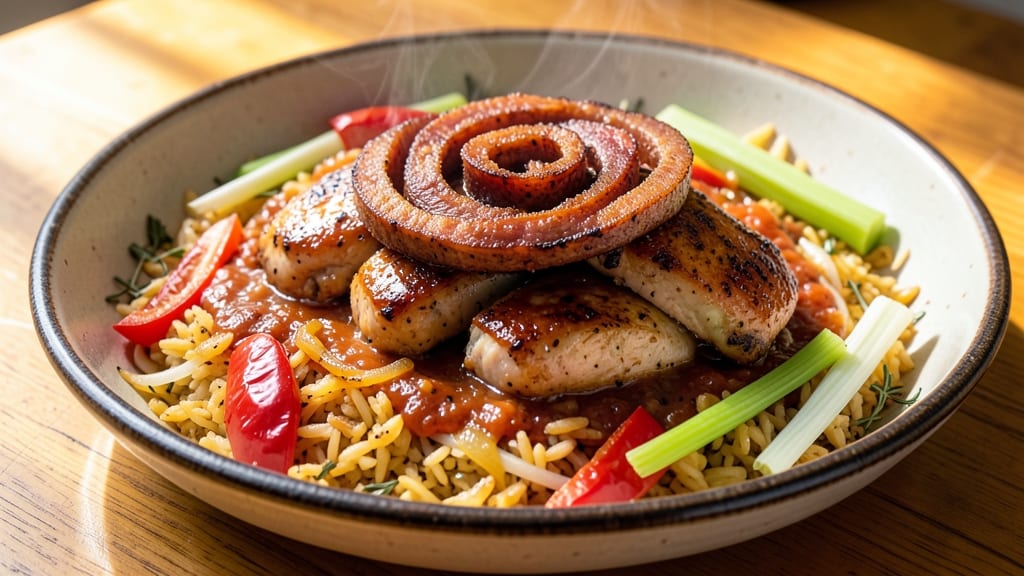
This one-pot Cajun jambalaya rice recipe delivers bold, smoky flavors in a single dish, perfect for feeding a crowd or meal prepping for the week.
The secret lies in proper rice-to-liquid ratios and layering spices—just like authentic Louisiana kitchens do—while keeping the process simple enough for weeknight dinners. Browning the meat first builds deep, caramelized flavor, and the trinity (onions, celery, bell peppers) forms the aromatic base that ties everything together.
By the time it simmers, you'll have tender rice infused with Cajun spices, perfectly cooked protein, and a rich broth that makes every bite satisfying. The dish stays cohesive even after reheating, making it ideal for leftovers.
Whether you use chicken, sausage, or shrimp, this recipe delivers restaurant-quality jambalaya with minimal cleanup—just one pot to wash. Let's get cooking!
Ingredients for cajun jambalaya rice
Sixteen ingredients transform into one smoky, spice-packed jambalaya feast perfect for crowds or meal prep.
| Ingredient | Amount | Notes |
|---|---|---|
| Long-Grain White Rice 🍚 | 2 cups | Uncooked, medium grain preferred |
| Andouille Sausage 🌭 | 1 ½ lb | Sliced into half-moons, high-quality preferred |
| Boneless Chicken Thighs 🍗 | 1 ½ lb | Cut into 1-inch pieces, skin-on preferred |
| Yellow Onion 🧅 | 1 whole | Diced small, about 1.5 cups |
| Green Bell Pepper 🌶️ | 1 whole | Diced small, about 1 cup |
| Celery Stalks 🥬 | 3 whole | Diced small, about 1 cup |
| Garlic Cloves 🧄 | 4 cloves | Minced finely, about 1 tbsp |
| Cajun Seasoning 🌶️ | 3 tbsp | Homemade or high-quality blend |
| Smoked Paprika 🌶️ | 1 tbsp | For additional smoky depth |
| Chicken Broth 💧 | 3 cups | Low-sodium preferred, homemade or quality store-bought |
| Tomato Paste 🍅 | 2 tbsp | For richness, not watery |
| Fresh Parsley 🌿 | ¼ cup | Chopped, for garnish (optional) |
| Green Onions 🧅 | 3 whole | Sliced thin, for garnish (optional) |
| Olive Oil 🫒 | 2 tbsp | Extra-virgin for browning |
| Salt 🧂 | 1 ½ tsp | Kosher or sea salt, adjust to taste |
| Black Pepper 🌶️ | ½ tsp | Freshly ground for best flavor |
The foundation of jambalaya starts with the trinity—onions, bell peppers, and celery. Trader Joe's or Whole Foods carry pre-diced fresh versions to save time, but chopping your own ensures vibrant flavor. For the andouille sausage, look for high-quality brands like Zatarain's or John's—the difference in smokiness is noticeable. Chicken thighs stay juicier than breasts during the long simmer, so skin-on is ideal if available. Freshly minced garlic and finely diced yellow onion (not sweet) create the aromatic base that carries through the dish.
No andouille? Spicy Italian sausage works in a pinch, but the smoky depth will differ. Substitute chicken thighs with shrimp (add at the end) or chicken breast (cut smaller for faster cooking). For the Cajun seasoning, Tony Chachere's is a Louisiana classic, but a homemade blend of paprika, garlic powder, onion powder, thyme, oregano, and cayenne gives you control. The tomato paste can be swapped for crushed tomatoes (reduce by half), but paste delivers richer flavor without watering down the dish. Fresh parsley and green onions are optional but add brightness—dried parsley at half the amount works if needed.
Rice absorbs flavors best when cooked with the broth, so don't rinse it beforehand—this helps achieve that signature jambalaya texture. Store leftovers in an airtight container for up to 4 days in the fridge, or freeze for 3 months. The dish actually improves overnight as flavors meld, making it perfect for meal prep. For reheating, add a splash of broth or water to prevent drying out. Garnish with extra parsley or green onions just before serving to keep the presentation vibrant.
Why You'll Love This Recipe
- One-Pot Magic: I swear by this recipe because it’s actually one-pot—no rice burner disasters here. Sauté the onions and peppers first, brown the chicken and sausage, then dump in the rice and broth. Stir once, let it simmer. That’s it. My counter stays cleaner than my kitchen after this.
- Smoky-Spicy Kick: The andouille sausage alone makes this dish. That smoky, slightly spicy depth? It’s the star. Add the chicken thighs for juicy, fall-apart texture, and the bell peppers bring a bright crunch. Honestly, the first bite feels like a hug from a Cajun chef.
- Weeknight to Party: Make it for Tuesday dinner or double the batch for a tailgate. The rice soaks up all the flavors, so it’s hearty enough for a crowd but simple enough to throw together when you’re exhausted. (Yes, even on a Tuesday night.)
- Budget-Friendly Feast: Chicken thighs and sausage stretch this into a full meal for half the cost of takeout. Leftovers? Even better—it reheats like a dream, and the rice stays fluffy instead of gummy. My wallet and my freezer thank me every time.
Step-by-step instructions for Cajun jambalaya rice
Here's the method to create a deeply flavorful jambalaya that builds layer upon layer of smoky, spicy goodness in one pot.
Sear the Andouille Sausage and Chicken
Heat a large, heavy-bottomed Dutch oven over medium-high heat and add the 2 tablespoons olive oil. Once shimmering, add the 1.5 pounds andouille sausage, sliced into half-moons, and cook for 4-5 minutes until browned on all sides. Remove the sausage with a slotted spoon and set aside.
In the same pot, add the 1.5 pounds boneless chicken thighs, cut into 1-inch pieces, and cook for 5-6 minutes until the chicken develops a golden crust and releases easily from the pan. Here's the thing—don't overcrowd the pan. Work in batches if needed to ensure proper browning, as this step creates the foundation for your jambalaya's depth of flavor.
Sauté the Holy Trinity of Vegetables
Reduce heat to medium and add the 1 whole yellow onion, 1 whole green bell pepper, and 3 whole celery stalks, all diced small. Cook for 6-8 minutes until the vegetables soften and begin to caramelize, stirring occasionally. The goal is to develop their natural sweetness while building a flavorful base.
Add the 4 cloves garlic cloves, minced finely, and cook for 30 seconds until fragrant. Immediately add the 3 tablespoons Cajun seasoning and 1 tablespoon smoked paprika, stirring to coat the vegetables evenly. This is where the jambalaya's signature spice profile begins to emerge. Let the spices toast for 1 minute to deepen their aroma before moving to the next step.
Build the Jambalaya Base
Stir in the 2 tablespoons tomato paste and cook for 1 minute to remove any raw taste. Pour in the 3 cups chicken broth and bring to a gentle simmer. Add the 2 cups long-grain white rice, stirring to distribute evenly throughout the liquid. The rice should be fully submerged, but don't worry if it's not perfect—it will absorb the broth as it cooks.
Return the browned sausage and chicken to the pot, nestling them into the rice mixture. Sprinkle with the 1.5 teaspoons salt and 0.5 teaspoon black pepper, then bring to a boil. Once boiling, reduce heat to low and cover tightly with a lid. This is where patience pays off—let it cook undisturbed for 20 minutes to allow the rice to absorb the liquid and the flavors to meld.
Steam and Rest for Perfect Texture
After 20 minutes, check the rice for doneness. It should be tender but still slightly firm in the center. If there's excess liquid, continue cooking uncovered for 5-10 minutes to evaporate it. If the rice is still undercooked, add ¼ cup water or broth, cover, and cook for another 5 minutes. The key is to achieve a texture where the rice is tender but still holds its shape—this ensures each bite delivers that perfect balance of rice and protein.
Once the rice is cooked, remove from heat and let it rest, covered, for 5 minutes. This resting period allows the flavors to settle and the rice to fluff slightly. Fluff the jambalaya gently with a fork, then garnish with the 0.25 cup chopped fresh parsley and 3 whole green onions, sliced thin. Serve immediately with warm crusty bread to soak up every last bit of that smoky, spice-packed sauce.
Pro Tips For Making Cajun Jambalaya Rice
- CRISP THE CHICKEN FIRST: The andouille and bell pepper will take forever to render fat, so don’t wait—pat those chicken thighs bone-dry and sear them skin-side down in a screaming-hot pan until they release a deep golden crust. I used to skip this, and the chicken would turn out greasy and bland. Trust me, that crust locks in flavor.
- DICE THE ONIONS SMALL: I learned this the hard way—big chunks of onion turn to mush before the chicken is done. Cut them into 1/4-inch pieces so they soften evenly without disappearing into the sauce. Same goes for the bell pepper: slice it into 1/2-inch strips for consistent cooking.
- DON’T STIR THE RICE: Once you add the raw rice to the pot, resist the urge to stir. The goal is to let the rice toast in the fat and develop a crust at the bottom—this gives jambalaya its signature depth. Just give it 2 minutes, then pour in the broth and let it cook undisturbed.
- USE LEFT-OVER FAT: After browning the chicken and andouille, don’t drain the pan—let that rendered fat stay in the pot. It’s liquid gold for building flavor. If you’re worried about excess, skim off the top, but leave at least 1-2 tablespoons to sauté the onions and peppers in. That’s where the real taste lives.
Troubleshooting your cajun jambalaya rice
Rice Too Dry?
If your jambalaya ends up dry, you likely didn't account for the rice's liquid absorption.
The 2:1 rice-to-broth ratio (2 cups rice to 3 cups broth) is perfect, but if your rice is still firm after 20 minutes, add ¼ cup hot broth and cook uncovered for 5 more minutes.
Stir gently to distribute the liquid evenly—this prevents clumping and keeps the texture moist. 💧
Mushy Rice?
Overcooking is the usual culprit here. Once the rice reaches 20 minutes, check for doneness immediately. If it's mushy, you've likely cooked it too long. For future batches, reduce the heat slightly after the initial boil to low-medium and keep an eye on it.
A wooden spoon test works best—press gently; the rice should hold its shape but still be tender.
Broth Too Salty?
If the broth tastes overly salty, it’s usually from the Cajun seasoning or andouille sausage. To fix it, add ¼ cup warm water or broth and stir in 1 tablespoon unsalted butter—this dilutes the salt while adding richness.
If the dish still needs balancing, a splash of lemon juice (about 1 tsp) can brighten the flavors without altering the saltiness. 🧂
Protein Undercooked?
Chicken thighs and sausage should reach 165°F internal temperature for safety. If yours isn't done, remove the meat, slice it thin, and return it to the pot to finish cooking with the rice.
For sausage, 160°F is safe, but if it’s still pink inside, cook it uncovered for 2-3 more minutes on the stovetop. Never rush this—undercooked meat ruins the whole dish. 🍗
Flavor Too Mild?
If your jambalaya lacks depth, you might have skipped the smoke and spice buildup. Next time, toast the Cajun seasoning in the oil for 30 seconds before adding the trinity. Also, ensure your andouille sausage is high-quality—brands like Zatarain's or John's add smoky richness.
For extra heat, stir in ½ tsp cayenne pepper at the end or serve with hot sauce on the side. 🌶️
Burnt Bottom?
A burnt bottom means your Dutch oven wasn’t hot enough or the heat was too high. Always use medium-low heat after the initial searing and stir occasionally to prevent sticking. If it happens, scrape off the burnt bits with a spatula—don’t let them linger, as they’ll make the dish bitter.
For future cooks, use a heavy-bottomed pot (like Lodge Cast Iron) to distribute heat evenly. ⚡
Nutrition facts
Frequently asked questions
Can I make jambalaya with brown rice instead of white?
Yes, but you'll need to adjust the cooking time and liquid ratio. Brown rice absorbs liquid more slowly, so use 1.5 cups brown rice with 4 cups broth and simmer uncovered for 35-40 minutes instead of 20. The texture will be nuttier and chewier, but the flavor will be slightly less traditional. Stir occasionally to prevent sticking.
How spicy should my jambalaya be?
Traditional jambalaya has a moderate heat level—think "warm" rather than "fiery." The 3 tbsp Cajun seasoning and 1 tbsp smoked paprika in this recipe provide balanced spice with smoky depth. For milder heat, reduce the Cajun seasoning to 2 tbsp or omit the cayenne. For extra kick, add ½ tsp cayenne or serve with hot sauce on the side.
Can I substitute shrimp or seafood for the chicken and sausage?
For seafood jambalaya, use 1.5 lbs shrimp or crawfish and add them only in the last 5 minutes of cooking to avoid overcooking. Shrimp should reach 145°F internal temperature. For a mixed seafood version, combine shrimp with ½ lb andouille sausage and cook the shrimp separately before adding to the pot. The dish stays cohesive but gains a lighter, briny flavor.
Why does my jambalaya taste better the next day?
The flavors deepen as the spices and proteins meld overnight! The rice absorbs the smoky, spiced broth more fully, and the proteins rehydrate slightly, making each bite more tender and flavorful. Store leftovers in an airtight container in the fridge for up to 4 days. Reheat with 2 tbsp broth or water to restore moisture, and garnish with fresh parsley to brighten the dish.
What’s the best way to serve jambalaya?
Jambalaya is a hearty one-pot meal, but serving it right elevates the experience. Pair it with warm crusty bread or cornbread to soak up the sauce, and offer hot sauce or sour cream on the side for customization. For a traditional touch, serve with a simple green salad and a cold beer—like a lager or IPA—to cut through the richness.