
Main Courses
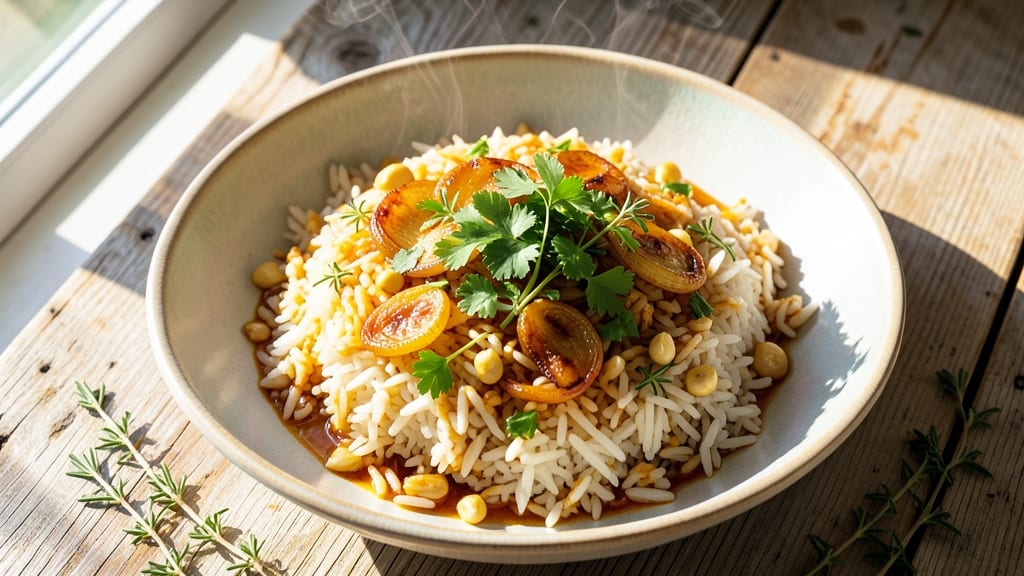
The Camargue rice recipe brings the sun-drenched flavors of Provence to your table with saffron-infused golden grains and crispy herbed edges. This traditional French dish transforms simple rice into a luxurious centerpiece, slow-cooked in aromatic stock until tender and infused with the delicate essence of saffron.
The secret lies in its layered technique—starting with a flavorful base of onions and garlic, then building depth through hours of gentle simmering with rich stock and herbs.
What sets this recipe apart is the authentic Camargue method, where the rice develops a crispy crust on the bottom while remaining tender inside. The saffron threads dissolve into the liquid, staining the grains a beautiful golden hue and imparting a floral aroma that's unmistakably French.
Traditionally served with bull meat or seafood, this versatile dish also pairs beautifully with roasted vegetables or a simple ratatouille for a complete Provençal meal.
The result is a dish that's both rustic and refined—perfect for special occasions or weeknight dinners when you want to impress.
Each bite delivers the complex flavors of the region: the earthy sweetness of the saffron, the savory depth of the stock, and the crispy texture that adds an unexpected crunch. This is more than just rice; it's a taste of southern France in every spoonful.
Whether you're recreating a family recipe or discovering this classic for the first time, the key is patience and attention to detail. The slow cooking process allows all the flavors to meld together, creating a dish that's rich, aromatic, and deeply satisfying.
Serve with a glass of rosé and let the flavors transport you to the Camargue region.
Ingredients for camargue rice
Sun-drenched Provençal flavors start with these essential ingredients for authentic Camargue rice.
| Ingredient | Amount | Notes |
|---|---|---|
| Long-Grain White Rice 🍚 | 2 cups | Uncooked, like Arborio or Carnaroli |
| Saffron Threads 🧡 | ¼ tsp | High-quality, food-grade |
| Yellow Onions 🧅 | 1 whole | Medium size, finely diced |
| Garlic Cloves 🧄 | 4 cloves | Fresh, minced finely |
| Fresh Thyme 🌿 | ¼ cup | Leaves only, stems removed |
| Fresh Parsley 🌿 | ¼ cup | Chopped, for garnish |
| Chicken Stock 💧 | 4 cups | Homemade or high-quality store-bought |
| Dry White Wine 🍷 | ½ cup | Sauvignon Blanc preferred |
| Unsalted Butter 🧈 | 4 tbsp | European-style preferred |
| Olive Oil 🫒 | 2 tbsp | Extra-virgin for richness |
| Salt 🧂 | 1 ½ tsp | Diamond Crystal kosher |
| Black Pepper 🌶️ | ½ tsp | Freshly ground |
| Fresh Bay Leaves 🍃 | 2 whole | Removed before serving |
Saffron is non-negotiable here—Spanish or Iranian threads are most potent. Whole Foods or specialty markets carry the best quality, but avoid pre-ground saffron which loses flavor fast. For the stock, homemade is ideal but a high-quality store-bought like Pacific Foods works in a pinch. The rice? Arborio or Carnaroli from Italian markets give that perfect creamy texture, though regular long-grain rice works too. Fresh herbs are a must—their bright flavors cut through the richness of the butter and wine.
No saffron? Turmeric at one-third the amount gives color but no floral aroma. Running low on white wine? Dry vermouth works surprisingly well. The butter can be swapped for vegetable shortening if needed, though you'll lose some depth. For the onions, yellow or red both work—just make sure they're finely diced. The garlic should be fresh; no jarred minced garlic here. If you're short on time, pre-minced garlic from the store is better than skipping it entirely. The bay leaves can be dried if needed, but fresh adds a subtle piney note that's worth it.
Store cooked rice in an airtight container with a damp paper towel to keep it moist—lasts 4 days in the fridge. For extra crisp, reheat uncovered in a skillet for 2-3 minutes over medium heat. The saffron-infused stock can be made ahead and frozen for up to 3 months. I always make a double batch of stock—one for this recipe, one for soups. The herbs? Wrap them in damp paper towels and store in a bag for up to 5 days.
Why You'll Love This Recipe
- Saffron Spark in Minutes: I swear by this—just toast the onions and garlic until caramelized, toss in the rice, and let the saffron steep while it simmers. No fancy steps, just layers of flavor unfolding while you chop veggies for the rest of dinner.
- Caramelized Crunch Magic: That golden onion base? Chef’s kiss. The slow cook turns them into sweet, jammy bits that cling to every grain, while the thyme adds a bright, herby punch. It’s the kind of rice that makes people pause mid-bite—even my picky husband admits it’s "ridiculously good."
- Weeknight to Special Occasion: Same rice, endless uses. Serve it under a grilled steak for a fancy dinner, or pile it on toast with a fried egg for a lazy Sunday. The saffron’s golden hue makes it feel celebratory, but the effort stays low—honestly, my go-to for both Taco Tuesdays and date nights.
- Leftovers That Still Shine: Unlike plain white rice, this stays exciting reheated. The saffron keeps its color, the onions deepen in flavor, and it’s still the star of your lunchbox the next day. I make a double batch on Sundays—half for dinner, half to stretch into stir-fries all week. Budget win, no waste.
Step-by-step instructions for Camargue rice
This method delivers perfectly balanced Camargue rice with crispy edges and fragrant saffron-infused grains.
Bloom the Saffron and Sauté the Aromatics
In a small bowl, steep the 0.25 teaspoon saffron threads in 2 tablespoons warm chicken stock for 5 minutes to release their vibrant color and aroma. This is where the rice gets its signature golden hue and delicate floral notes.
Heat 2 tablespoons olive oil and 2 tablespoons butter in a heavy-bottomed pot over medium heat. Add the finely diced yellow onion and cook for 5-6 minutes until translucent. Add the minced garlic cloves and cook for 30 seconds until fragrant—don't let it brown or it'll turn bitter. This aromatic base forms the flavor foundation for the entire dish.
Toast the Rice and Add Liquids
Add the 2 cups long-grain white rice to the pot and stir to coat in the oil and butter. Toast the rice for 2-3 minutes until it becomes translucent at the edges—this step develops the nutty flavor and prevents mushy grains. Real talk: don't skip this or you'll end up with bland rice.
Pour in the 0.5 cup dry white wine, scraping up any browned bits from the bottom of the pot. Add the 4 cups chicken stock (including the saffron-infused portion), 1.5 teaspoons salt, 0.5 teaspoon black pepper, and the 2 whole bay leaves. Bring to a gentle simmer over medium-low heat—the liquid should just barely bubble at the edges.
Cook the Rice to Perfect Texture
Cover the pot with a tight-fitting lid and reduce heat to low. Cook for 18-20 minutes without stirring—this gentle heat allows the rice to absorb liquid evenly and develop that signature Camargue texture. You'll notice the rice will absorb most of the liquid but leave a thin layer at the bottom—this ensures crispy edges.
After 18 minutes, check the rice by lifting the lid slightly. If the liquid has been absorbed but the rice still looks slightly underdone, cook for another 2 minutes. The rice should be tender with a slight bite in the center—this is the perfect al dente texture. If it's still too firm, add 1-2 tablespoons hot chicken stock and cook for another 2 minutes.
Rest and Finish with Herbs
Once the rice is perfectly cooked, remove it from heat and let it sit covered for 5 minutes. This resting period allows the steam to redistribute and the rice to plump up fully. Don't skip this step—it makes a huge difference in texture.
After resting, fluff the rice gently with a fork and stir in the 0.25 cup fresh thyme leaves and 0.25 cup chopped parsley. The herbs add a bright, fresh finish that cuts through the richness of the saffron and butter. Serve immediately, garnished with additional parsley if desired. The rice should be golden in color, with crispy edges and perfectly tender grains throughout.
Pro Tips For Making Camargue Rice
- TOAST YOUR RICE FIRST: I used to skip this, but now I swear by it—dry-toast your long-grain rice in the pot with oil for 2-3 minutes before adding liquid. It deepens the nutty flavor and prevents the rice from turning mushy later. (Yes, even if you're impatient like me, don't rush this part.)
- BLOOM THE SAFFRON RIGHT: Skip the "just toss it in" approach—soak your saffron threads in 2 tablespoons of warm water for 10 minutes first. Then, add that liquid to the rice instead of the threads. This guarantees even color and flavor distribution without clumping. (Your future self will notice the difference.)
- SWEAT THE ONIONS LOW: After mincing the onions, cook them on medium-low heat for 8-10 minutes until they're translucent but not browned. Rushing this step makes the rice taste raw and bitter. (I learned this the hard way—burnt onions ruin everything.)
- STIR ONCE AFTER BOILING: Once the rice and broth come to a boil, stir it once to distribute the saffron-infused water. Then, let it cook undisturbed for 15 minutes. Over-stirring breaks the grains and turns your Camargue rice into glue. (Sounds weird, but it works—trust the process.)
Flavor customization for these flavors
Saffron Variations
For a more intense saffron flavor, steep 0.5 teaspoon threads in 2 tablespoons warm stock for 10 minutes instead of 5. I've found Spanish saffron from La Mancha delivers the most complex aroma, while Iranian saffron has a slightly sweeter profile.
If you're using turmeric as a substitute, reduce to ⅛ teaspoon—it won't replicate the floral notes but gives golden color. 🧡
Herb Swaps
Swap thyme for fresh rosemary (use 1 sprig) for a piney depth, or add 1 teaspoon dried marjoram for a subtle citrus note. I love adding ½ teaspoon fresh tarragon at the end for an anise-like brightness that pairs beautifully with the saffron.
For a Mediterranean twist, stir in 1 tablespoon chopped basil after cooking.
Protein Additions
For a traditional Camargue-style dish, add 1 pound sliced bull meat (or beef chuck) when toasting the rice. For seafood lovers, stir in ½ pound cooked shrimp during the final 2 minutes of cooking.
I've also made a vegetarian version with ½ cup crumbled feta folded in at the end—it adds a salty tang that balances the saffron's sweetness.
Spice Infusions
Add ½ teaspoon ground coriander when toasting the rice for a subtle citrusy warmth. A pinch of cayenne pepper (about ⅛ teaspoon) at the end adds a gentle heat that complements the saffron beautifully.
For a smoky twist, stir in ½ teaspoon smoked paprika with the wine—it mimics the flavors of grilled Camargue specialties. 🌶️
Vegetable Enhancements
Fold in ½ cup diced roasted zucchini or ¼ cup caramelized leeks during the final 5 minutes of cooking. I often add ½ cup finely chopped bell peppers (any color) when sautéing the onions—they add natural sweetness that harmonizes with the saffron.
For extra richness, stir in 2 tablespoons crumbled goat cheese at the very end.
Wine Alternatives
Swap the white wine for ½ cup dry vermouth for a more herbal complexity, or use ½ cup apple cider for a subtle sweetness that pairs beautifully with the saffron.
I've also experimented with ½ cup tomato passata (unsweetened) for a rustic Provençal twist—it adds depth without overpowering the delicate saffron flavor. 🍷
Nutrition facts
Frequently asked questions
Why does Camargue rice need saffron?
Saffron is essential for authentic Camargue rice as it provides the signature golden color and delicate floral aroma that defines this Provençal dish. The threads dissolve into the stock, infusing the rice with their unique sweetness and earthy notes. Without saffron, you lose both the visual appeal and the complex flavor profile that makes this dish special.
Can I make Camargue rice without a heavy-bottomed pot?
Yes, but you risk burning the rice or uneven cooking. Use a pot with thick sides or a heavy-duty saucepan. If all you have is a thin pot, reduce the heat to low and stir occasionally to prevent sticking. The key is gentle, even heat—this rice needs patience, not high heat!
What's the secret to crispy edges?
Leave a thin layer of liquid at the bottom of the pot during cooking—this creates steam that crisps the edges. After cooking, let the rice rest covered for 5 minutes before fluffing. This resting time helps develop the crispy texture while keeping the interior tender. Don't skip the rest—it's what transforms good rice into restaurant-quality!
How do I store leftovers?
Store cooked Camargue rice in an airtight container with a damp paper towel to prevent drying. It keeps well in the fridge for 4 days. For reheating, spread the rice on a baking sheet and warm in a 350°F oven for 10 minutes to restore crispiness. Microwaving works but may make the edges soggy.
What's the best wine pairing?
A crisp Provence rosé or dry white wine like Sauvignon Blanc complements the saffron and herbs beautifully. For red wine lovers, a light Beaujolais won't overpower the delicate flavors. The key is choosing something with enough acidity to cut through the richness of the butter and stock.