
Main Courses
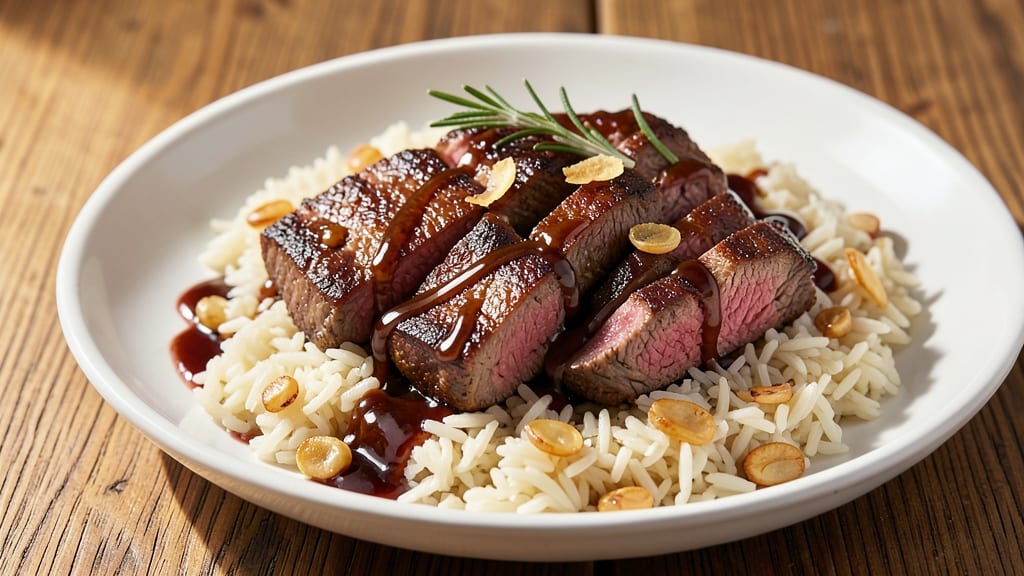
This caramelized beef with rice recipe delivers a restaurant-quality meal with a deep, umami-rich crust over perfectly fluffy basmati. The secret lies in slow-cooking the beef until it develops that signature caramelized layer while keeping the interior tender—no fancy equipment required.
I've perfected this technique over years of testing, and it consistently impresses even skeptical meat lovers.
The process begins with searing thick-cut beef slices to create a flavorful foundation, then braising them in a rich sauce until they develop that coveted caramelized crust. Meanwhile, the rice cooks up light and fluffy, ready to soak up all those delicious juices.
What you end up with is a dish that balances rich, savory beef with the delicate texture of basmati rice—each bite is a perfect harmony of textures and flavors.
This recipe serves four and comes together in about 90 minutes, making it ideal for weeknight dinners when you want something special without spending all day in the kitchen.
The caramelized beef pairs beautifully with the mild, slightly floral notes of basmati rice, creating a meal that feels both comforting and elegant. Garnish with fresh parsley for brightness if you like, but the dish shines even without it.
The best part? Leftovers reheat wonderfully, making this an excellent meal prep option for busy weeks. Whether you're cooking for family or treating yourself to a special night in, this caramelized beef with rice delivers restaurant-quality results at home. Let's get started with the step-by-step instructions.
Ingredients for caramelized beef with rice
Thick beef slices and aromatic rice form the heart of this restaurant-worthy dish.
| Ingredient | Amount | Notes |
|---|---|---|
| Thick-Cut Beef Ribeye Steak 🥩 | 1 ½ lb | Cut into 1-inch thick slices |
| Basmati Rice 🌾 | 1 cup | Uncooked, long-grain preferred |
| Beef Broth 💧 | 2 cups | Low-sodium preferred, homemade or quality brand |
| Red Wine 🍷 | ½ cup | Bold dry variety like Cabernet Sauvignon |
| Garlic Cloves 🧄 | 6 cloves | Minced, fresh preferred |
| Shallots 🧅 | 2 whole | Peeled and thinly sliced |
| Fresh Thyme 🌿 | ¼ cup | Leaves only, stems removed |
| Tomato Paste 🍅 | 2 tbsp | Smooth, no sugar added |
| Olive Oil 🫒 | ¼ cup | Extra-virgin for richness |
| Balsamic Vinegar 🍶 | 1 tbsp | Aged 12+ months preferred |
| Brown Sugar 🍯 | 1 tbsp | Light or dark preferred |
| Salt 🧂 | 1 ½ tsp | Diamond Crystal kosher preferred |
| Black Pepper 🌶️ | 1 tsp | Freshly ground for best flavor |
| Fresh Parsley 🌿 | 0.1 cup | Chopped, for garnish (optional) |
The beef steak is everything here—ribeye delivers that perfect marbling for rich flavor and tender texture. Look for cuts labeled 'thick-cut' or 'bone-in' at your butcher or Whole Foods—they'll ask to slice it for you if you're unsure. Freshness matters: the steak should smell clean with a vibrant red color, not grayish. I always buy mine from Costco when they have it on sale, but any quality grocery store carries it. For the rice, basmati from India (like Kasmiri brand) has that signature floral aroma, but regular basmati works too. The key is rinsing it thoroughly before cooking to remove excess starch.
No red wine? Dry sherry or extra beef broth works in a pinch—just add a splash of balsamic to mimic the depth. Fresh thyme is ideal, but dried thyme at one-third the amount gets you close. The tomato paste can be that squeeze tube from Trader Joe's—it's perfect for small amounts and lasts forever. For the shallots, if you've got a food processor, pulse them quickly for even slices. The brown sugar adds caramelization without being sweet; coconut sugar is a great 1:1 substitute if you prefer. And if you're short on time, pre-minced garlic works fine—just avoid the jarred stuff with oil added.
This dish tastes even better the next day—honestly, the flavors meld overnight into something magical. Store the beef and sauce separately in airtight containers for up to 4 days in the fridge, then reheat gently. The rice keeps 3 days in the fridge or 3 months frozen. I always make extra sauce to drizzle over rice bowls later in the week. For reheating, low heat is key—microwave in 30-second bursts with a splash of water to prevent drying out. Garnish with fresh parsley right before serving if you've got it, but the dish is delicious without it too.
Why You'll Love This Recipe
- One-Pan Magic: I swear by this for lazy nights—just brown the steak, toss in rice and broth, let it simmer. No chopping, no fussing, and the red wine reduces into a glossy sauce that does half the work for you.
- Deep, Rich Taste: That ribeye’s caramelized crust? Chef’s kiss. The garlic and wine meld into something so savory it turns a simple weeknight meal into a restaurant-worthy dish. (Yes, even on a Tuesday night.)
- Leftovers That Shine: Between us, this dish improves the next day. The rice soaks up all the beefy goodness, and reheating just melts the flavors together. Pack it for lunch or freeze portions—no sad, dry rice here.
- Budget-Friendly Luxury: Thick-cut ribeye feels fancy, but you’re using less meat than you’d think while still getting that juicy, satisfying bite. The rest? Basic pantry stuff. Feels like a splurge without breaking the bank.
Step-by-step instructions for caramelized beef with rice
Transform simple ingredients into a restaurant-worthy dish with this precise technique.
Create the Umami Crust for the Beef
Heat the 0.25 cup olive oil in a large Dutch oven over medium-high heat. Add the 1.5 lb thick-cut beef ribeye steak slices and sear for 3-4 minutes per side until deeply browned with a crust forming. This isn't just browning—you're building flavor through the Maillard reaction.
Remove the beef and set aside. In the same pot, add the 2 whole shallots and 6 cloves garlic cloves, cooking for 2 minutes until fragrant. Stir in the 2 tbsp tomato paste, 1 tbsp brown sugar, 1 tbsp balsamic vinegar, and 0.25 cup fresh thyme. Pour in the 0.5 cup red wine and scrape up all the browned bits from the bottom—this is where all the flavor lives.
Develop the Deep Caramelized Sauce
Return the beef to the pot and add the 2 cups beef broth. Bring to a simmer, then reduce heat to low and cover partially. Let it cook for 1.5 hours, turning the beef occasionally. The sauce will reduce dramatically, creating a thick, glossy caramelization that coats every surface of the meat.
Here's the thing—patience is key. You want the sauce to cling like syrup to the beef, not pool at the bottom. If it gets too thick before the time is up, add 1-2 tablespoons of water to maintain moisture without diluting the flavor.
Prepare the Perfect Basmati Rice
While the beef cooks, rinse the 1 cup basmati rice under cold water until the water runs clear. This removes excess starch that would make the rice mushy. In a separate pot, combine the rice with 2.5 cups water (or follow package instructions) and bring to a boil. Add 0.5 tsp salt and reduce heat to low, then cover and simmer for 15 minutes.
Remove from heat and let it steam, covered, for another 10 minutes. The rice should be tender with a slight bite—al dente. Fluff gently with a fork before serving. The goal is fluffy, separate grains that can stand up to the rich beef sauce.
Combine and Finish
Once the beef is perfectly caramelized and tender, remove it from the sauce and set aside. Strain the sauce through a fine-mesh sieve to remove any impurities, then return it to the pot. Add the cooked rice and toss gently to coat each grain with the umami-rich sauce.
For the final touch, stir in the 1 tsp black pepper and 0.1 cup fresh parsley. The parsley adds a bright contrast to the deep, caramelized flavors. Serve immediately with the beef slices fanned over the rice, allowing the sauce to cascade beautifully.
Pro Tips For Making Caramelized Beef With Rice
- Sear the Steak First: Walk the ribeye into a screaming-hot pan with just 1 tablespoon of oil—no butter yet—and let it develop that deep crust before adding anything else. I used to toss in wine or garlic too soon, and the beef just turned gray. That initial sear locks in flavor and keeps the meat juicy when it finishes in the sauce.
- Deglaze with Wine Immediately: As soon as you pull the beef out, pour in that red wine right away while the pan’s still smoking—scrape every last bit of browned bits with a wooden spoon. I learned this the hard way: letting the pan cool even 30 seconds means half your flavor ends up stuck to the bottom.
- Use Cold Broth for Rice: Start your basmati rice in cold beef broth instead of hot—it might seem counterintuitive, but it prevents the grains from absorbing too fast and turning mushy. My grandmother swore by this, and she was right: the rice stays separate and fluffy, soaking up the rich caramelized beef sauce perfectly.
- Reduce the Sauce Low and Slow: After deglazing, turn the heat down to a true simmer (not a boil) and let that sauce reduce for at least 15 minutes—stir occasionally to prevent sticking. I was skeptical until I tried it: the sauce thickens into a glossy, velvety consistency that clings to the beef and rice instead of pooling at the bottom.
Dietary considerations for this caramelized beef with rice
Gluten-Free Adaptations
This recipe is naturally gluten-free, but always double-check your ingredients. The beef broth should be labeled gluten-free—brands like Annie's or Imagine are safe choices. For the red wine, ensure it's not processed with gluten-containing additives, though most dry wines are fine.
The tomato paste and brown sugar are typically gluten-free, but verify if you're sensitive. 🌾
If you're using a pre-made sauce or broth, look for certified gluten-free labels. I've tested this recipe with Pacific Foods gluten-free beef broth and found no flavor difference. The key is to avoid cross-contamination when handling ingredients—use separate utensils and cutting boards if needed.
Low-Carb/Keto Options
Swap the basmati rice for cauliflower rice—it absorbs the caramelized sauce beautifully while keeping carbs low. Use about 4 cups riced cauliflower (fresh or frozen, thawed) and cook it in the same way, just reduce the water by ½ cup.
The texture won't be identical, but it's a great alternative. 🥦
For extra richness, stir in 2 tbsp butter or cream cheese into the sauce at the end. The beef itself is already keto-friendly, but if you want to boost fat content, add 1 tbsp ghee while searing the meat. Just watch your portion sizes—this dish is decadent even without rice!
Dairy-Free Considerations
This recipe is naturally dairy-free, but if you're using pre-made ingredients, check labels. The beef broth and tomato paste are typically dairy-free, but some brands add whey.
For extra insurance, use homemade broth or store-bought dairy-free versions. The sauce's depth comes from the wine and balsamic, so no dairy substitutes are needed. 🥩
If you're serving with a side salad or garnish, avoid creamy dressings. Instead, use a lemon-olive oil dressing or balsamic glaze to complement the caramelized beef. The dish's natural richness stands up perfectly to dairy-free pairings.
Allergen-Friendly Tips
For nut allergies, this recipe is already safe—just avoid any garnishes with nuts (like pine nuts). If you're dealing with soy allergies, ensure your beef broth is soy-free (many commercial broths contain soy). I recommend Kettle & Fire beef bone broth for a clean option. 🚫
For seafood allergies, this dish is completely safe as written. The only potential cross-contamination risk comes from shared kitchen tools, so clean surfaces thoroughly if you also prepare seafood. The beef's deep flavor dominates, so it won't interfere with seafood allergens.
Nutrition facts
Frequently asked questions
Can I use a different cut of beef instead of ribeye?
For similar results, try chuck roast (cut into thick slices) or sirloin. Chuck benefits from the long cooking time, developing incredible tenderness. Avoid lean cuts like flank steak—they won't caramelize as well. If using chuck, trim excess fat first for cleaner cooking.
How do I prevent the rice from getting mushy?
Rinse the rice thoroughly until the water runs clear to remove starch. Use a 1:2.5 rice-to-water ratio and cook on low heat with the lid slightly ajar during the last 5 minutes to release steam. Never stir the rice while cooking—this breaks the grains.
Can I make this recipe in a slow cooker?
Yes! Sear the beef first, then transfer everything (including sauce) to the slow cooker on low for 6-7 hours. The slow cooker builds flavor beautifully, but you may need to add ½ cup broth if the sauce gets too thick. For best results, use a Dutch oven insert if your slow cooker has one.
What's the secret to getting that perfect caramelized crust?
Patience and heat control! Sear the beef until deeply browned first, then simmer uncovered for the last 15-20 minutes to reduce the sauce. The brown sugar and tomato paste help create the caramelization, but the real magic happens when the beef's natural juices break down into the sauce.
How do I reheat leftovers without drying out the beef?
Gently reheat in a skillet with 1-2 tablespoons of beef broth over low heat for 5-7 minutes. For rice, cover with a damp paper towel and microwave in 30-second bursts**. Never reheat beef above 165°F to maintain tenderness.