Salads
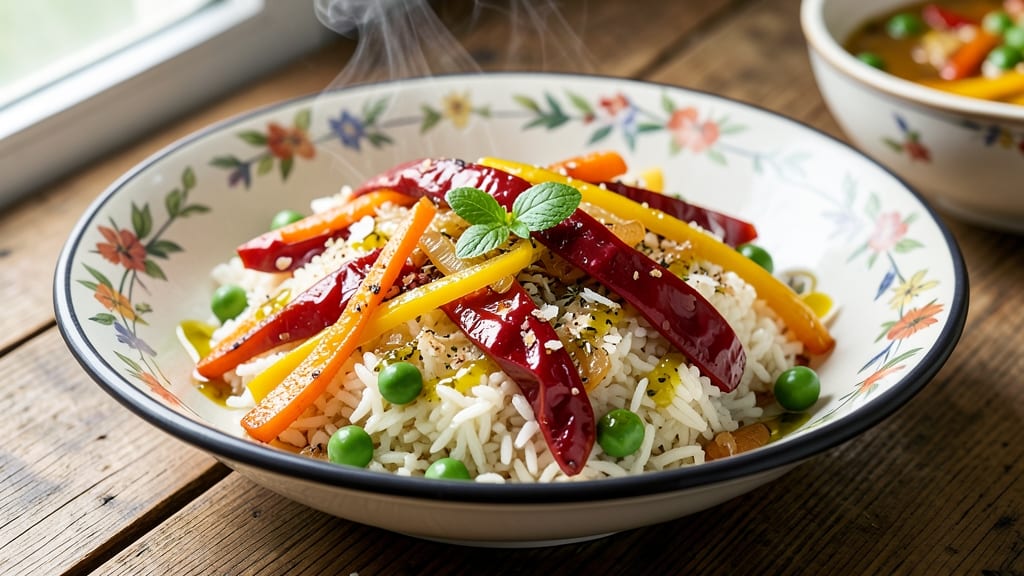
This one-pot Caribbean vegetable rice delivers bold, aromatic flavors with minimal effort—perfect for weeknight dinners or vibrant gatherings. 🌟 The secret lies in sautéing fresh bell peppers, peas, and carrots with garlic, thyme, and a touch of Scotch bonnet, then simmering everything together in fragrant rice.
Inspired by Jamaican and Trinidadian traditions, this dish balances sweet, savory, and spicy notes while keeping prep simple.
The result is a fragrant, slightly spicy rice dish where each grain absorbs the vibrant flavors of the vegetables and herbs. One-pot simplicity means less cleanup, and the recipe easily adapts to vegetarian preferences or adds protein like shrimp or chicken.
Whether served alongside grilled fish or as a standalone meal, this recipe brings the warmth of the Caribbean to your table with every bite.
Ingredients for caribbean vegetable rice
Fresh Caribbean vegetables and aromatic herbs transform simple rice into a vibrant, one-pot masterpiece.
| Ingredient | Amount | Notes |
|---|---|---|
| Long-Grain White Rice 🍚 | 1 ½ cups | Uncooked, rinsed thoroughly |
| Red Bell Peppers 🌶️ | 1 whole | Seeded, diced into small pieces |
| Green Bell Peppers 🌶️ | 1 whole | Seeded, diced into small pieces |
| Carrots 🥕 | 1 ½ cups | Baby or regular, diced small |
| Fresh Peas 🌱 | 1 cup | Or frozen peas, thawed |
| Yellow Onion 🧅 | 1 whole | Medium, finely diced |
| Garlic Cloves 🧄 | 4 cloves | Minced finely |
| Fresh Thyme 🌿 | 2 tbsp | Leaves only, chopped |
| Scotch Bonnet Pepper 🌶️ | 1 whole | Seeded, finely chopped |
| Vegetable Broth 💧 | 2 cups | Low-sodium preferred |
| Tomato Paste 🍅 | 2 tbsp | Smooth, not chunky |
| Olive Oil 🫒 | 2 tbsp | Extra-virgin preferred |
| Salt 🧂 | 1 tsp | Diamond Crystal preferred |
| Black Pepper 🌶️ | ½ tsp | Freshly ground |
| Fresh Cilantro 🌿 | ¼ cup | Chopped, for garnish |
The bell peppers and Scotch bonnet are the flavor anchors here. Local farmers markets often carry the freshest Scotch bonnet, but any habanero or jalapeño will add heat if you can't find it. For the peppers, red and green bell peppers give that classic Caribbean sweetness—don't skip them. The carrots should be firm and bright orange; organic baby carrots from Whole Foods or Trader Joe's work perfectly. Thyme is non-negotiable—fresh thyme from the grocery store's produce section has more depth than dried, but if you must use dried, reduce to one-third the amount. The rice? Jasmine or basmati adds a subtle floral note that pairs beautifully with the vegetables.
No Scotch bonnet? Habanero or jalapeño at half the amount will give you heat without overwhelming the dish. Fresh peas unavailable? Frozen peas work just as well—no need to thaw them first. The tomato paste can be substituted with 1/4 cup tomato sauce (just reduce the broth by 1/4 cup to balance). For a deeper flavor, toast the tomato paste in the olive oil for 2 minutes before adding other ingredients. The cilantro is purely for garnish—skip it if you dislike the flavor, but it adds a bright finish that ties everything together. The vegetable broth matters too; low-sodium versions like Pacific Foods** prevent the dish from becoming too salty.
This rice reheats beautifully—better the next day as the flavors meld further. Store in an airtight container in the fridge for 4-5 days or freeze for up to 3 months**. For meal prep, make a double batch and portion into individual containers. The rice keeps its texture well when reheated with a splash of water or broth. If you're adding protein later, like shrimp or chicken, cook it separately and stir it in just before serving to keep it tender. The dish stays vibrant when served with a side of cool lime wedges** or a sprinkle of fresh herbs.
Why You'll Love This Recipe
- No Chopping Chaos: I swear, this dish only asks for one knife—just dice those peppers and carrots together, toss in the peas, and let the rice cooker do the rest. Even my toddler could handle it (and sometimes does).
- Sweet-Savory Magic: That caramelized bell pepper and carrot combo? It’s like a little flavor party in your mouth—bright, slightly sweet, with just enough tang from the tomatoes or lime (depending on your twist). The peas add this fun little pop that makes it feel special, not sad desk lunch special.
- Lunchbox Hero: Pack this cold or warm—it’s the ultimate meal prep side. My kids grab it for school lunches, and honestly? It’s the only rice dish that doesn’t get soggy by 3 PM. (Yes, even the picky eaters finish theirs.)
- Pantry Stretch: Between us, this recipe turns $3 worth of veggies into a full side that feels fancy. Use whatever peppers you have, swap in frozen peas if fresh are pricey, and boom—you’ve just made rice taste like a vacation without the plane ticket. Leftovers? They’re my secret for lazy nights.
Step-by-step instructions for Caribbean vegetable rice
Aromatic, vibrant, and packed with Caribbean heat—this one-pot method delivers restaurant-quality vegetable rice with minimal cleanup.
🍳 Step 1: Sauté the Aromatic Base
Heat the 2 tablespoons olive oil in a heavy-bottomed pot over medium-high heat until shimmering. Add the finely diced yellow onion and cook for 3-4 minutes until softened and translucent, stirring occasionally. This foundational step builds the flavor base—don't rush it.
Add the minced garlic cloves and finely chopped Scotch bonnet pepper (wear gloves if sensitive to heat), cooking for 30 seconds until fragrant. The Scotch bonnet will infuse its signature heat, so handle carefully. Immediately add the chopped fresh thyme and stir for 10 seconds to release its earthy aroma.
🍳 Step 2: Develop the Vegetable Mixture
Add the diced red and green bell peppers to the pot, stirring to combine with the aromatics. Cook for 4-5 minutes until they begin to soften slightly but retain their vibrant color. The peppers should release their natural sweetness while maintaining texture.
Increase heat to medium-high and add the diced carrots and fresh or thawed peas. Stir well to distribute evenly, then sprinkle with the 1 teaspoon salt and ½ teaspoon black pepper. Cook for 3-4 minutes until the carrots soften slightly but still hold their shape—you want them to finish cooking in the broth.
🥘 Step 3: Build the Flavor Foundation
Reduce heat to medium-low and stir in the 2 tablespoons tomato paste, spreading it evenly across the bottom of the pot. Cook for 1-2 minutes until it darkens slightly and loses its raw taste. This step deepens the sauce's richness and balances the vegetable flavors.
Pour in the 2 cups vegetable broth, scraping up any browned bits from the bottom of the pot. Bring to a gentle simmer, then add the 1.5 cups rinsed long-grain white rice. Stir once to distribute the rice evenly—avoid over-stirring to prevent breaking the grains. The liquid should just cover the rice by about ¼ inch.
⏰ Step 4: Simmer to Perfect Texture
Cover the pot with a tight-fitting lid and reduce heat to low. Let the rice simmer undisturbed for 20 minutes. Resist the urge to peek—each time you lift the lid, you release steam and potentially undercook the rice. After 20 minutes, check for doneness by inserting a fork into the center.
The rice should be tender but still slightly firm in the center. If it's not quite done, cover and continue cooking for another 5 minutes. If the liquid has evaporated before the rice is done, add 2-3 tablespoons hot water through the lid's small gap. The goal is fluffy, separate grains with a slight bite—this texture soaks up the flavorful broth beautifully.
🔪 Step 5: Finish and Garnish
Once the rice is perfectly cooked, remove the pot from heat and let it sit covered for 5 minutes. This resting period allows the rice to absorb any remaining liquid and develop its final texture. Fluff the rice gently with a fork, then taste and adjust seasoning if needed.
Transfer to serving bowls and garnish immediately with the ¼ cup chopped fresh cilantro. The bright herb contrast cuts through the rich, spiced flavors. Serve with grilled meats or alongside a crisp salad for a complete Caribbean-inspired meal. Each bite should deliver a perfect balance of smoky Scotch bonnet heat, sweet vegetables, and herby depth.
Pro Tips For Making Caribbean Vegetable Rice
- CHAR THE PEPPERS FIRST: I learned this the hard way—roasting the bell peppers (red and green) whole in a dry pan for 5-6 minutes until their skins blister and blacken makes a world of difference. The smoky depth they add is what turns this from "vegetable rice" to actual Caribbean flavor. Skip this, and you’re just making a side dish.
- USE PEAS AT THE END: Fresh peas? Toss them in the last 3 minutes of cooking—no exceptions. They’ll turn mushy if you add them early, and nobody wants sad, gray peas in their rice. If you’re using frozen, thaw them first and drain well to avoid watering down the pot.
- SALT THE RICE WATER LIKE THE SEA: Caribbean rice needs bold flavor, so don’t skimp: use 1.5 teaspoons salt per 4 cups water (yes, even if your rice is labeled "low-sodium"). The rice absorbs the seasoning, and you want every grain to taste like it belongs in a rum punch.
- STIR THE RICE ONCE, THEN LET IT BE: After the initial boil, stir the rice once to distribute it evenly, then stop stirring. Constant poking breaks the grains and turns your rice into mush. Cover the pot, reduce heat to low, and walk away—this is where the magic happens. (I know, I know, but trust the process.)
Common mistakes when making this dish
Overcrowding the Pot
One of the biggest mistakes is adding all the vegetables at once without proper spacing. When you pack too many veggies into the pot, they steam instead of sauté, losing their natural sweetness and texture.
I always spread them out in a single layer over medium-high heat for the first 3-4 minutes to let them caramelize slightly before adding the rice. This creates the perfect balance of flavors and textures. 🌶️
Skipping the Tomato Paste
Some cooks skip the tomato paste entirely, thinking it's optional—but it's actually the flavor bridge that ties everything together. The paste deepens the sauce's richness and balances the heat from the Scotch bonnet.
I recommend toasting it in the olive oil for 1-2 minutes until it darkens slightly, which enhances its umami depth. Without it, the dish can taste flat and one-dimensional.
Underestimating the Scotch Bonnet
Many people underestimate the Scotch bonnet's heat and use too much, making the dish inedible. A single pepper is plenty for 1.5 cups of rice—it adds just the right amount of smoky heat.
If you're sensitive to spice, remove the pepper's seeds and membranes first, or use half a pepper. I always wear gloves when handling it and add it last to the aromatics so I can control the heat infusion. 🔥
Peeking Too Often
Checking on the rice too frequently is a surefire way to end up with unevenly cooked grains. Every time you lift the lid, you release steam and disrupt the cooking process, potentially leaving the rice undercooked.
I promise, the rice will be done when it's done—trust the 20-minute simmer time and only peek once to check doneness. If you must check, do it quickly and minimize lid lifts.
Using the Wrong Rice
Not all rice is created equal, and using the wrong type can ruin the texture. Long-grain white rice is ideal for this dish because it stays separate and fluffy. Short-grain or sticky rice will turn mushy and clump together.
I always use jasmine or basmati rice for that perfect balance of texture and aroma. If you're in a pinch, white rice works, but avoid instant or pre-cooked rice—it won't absorb the flavors the same way.
Ignoring the Resting Time
Skipping the 5-minute resting period** after cooking is a common mistake that leads to dry, uneven rice. This step allows the rice to absorb any remaining liquid and steams the grains evenly.
I always let the pot sit covered off the heat before fluffing—it makes all the difference in achieving that perfect, fluffy texture. Don't rush it, even if you're eager to serve! ✨
Nutrition facts
Frequently asked questions
Can I make this Caribbean vegetable rice without Scotch bonnet?
For a milder version, use half a habanero or jalapeño pepper instead. If you prefer no heat at all, omit it entirely—the dish will still be flavorful with the bell peppers and thyme. The Scotch bonnet adds smoky depth, but the recipe works beautifully without it.
How do I prevent the rice from becoming mushy?
Use long-grain white rice (jasmine or basmati work best) and never stir the rice after adding it to the pot. Stirring breaks the grains. Also, measure your broth carefully—it should cover the rice by about ¼ inch when added. Too much liquid will make the rice soggy.
Can I prepare this dish ahead of time?
Yes! This rice actually tastes better the next day as flavors meld. Store in an airtight container in the fridge for 4-5 days or freeze for up to 3 months. Reheat with a splash of water or broth to restore moisture. The texture stays perfect when reheated gently.
What's the best way to add protein to this dish?
For a complete meal, cook shrimp, chicken, or fish separately and stir it in just before serving. This keeps the protein tender. Alternatively, add black beans or kidney beans during the final 10 minutes of cooking. The rice will absorb the protein's flavors beautifully.
Why does my vegetable rice taste bland?
Most likely, you skipped toasting the tomato paste or under-seasoned. Always toast the paste in oil for 1-2 minutes to deepen its flavor. Also, taste as you go—adjust with more salt, thyme, or a pinch of Scotch bonnet if needed. The vegetables should shine with sweetness and the herbs should be aromatic.