
Side Dishes
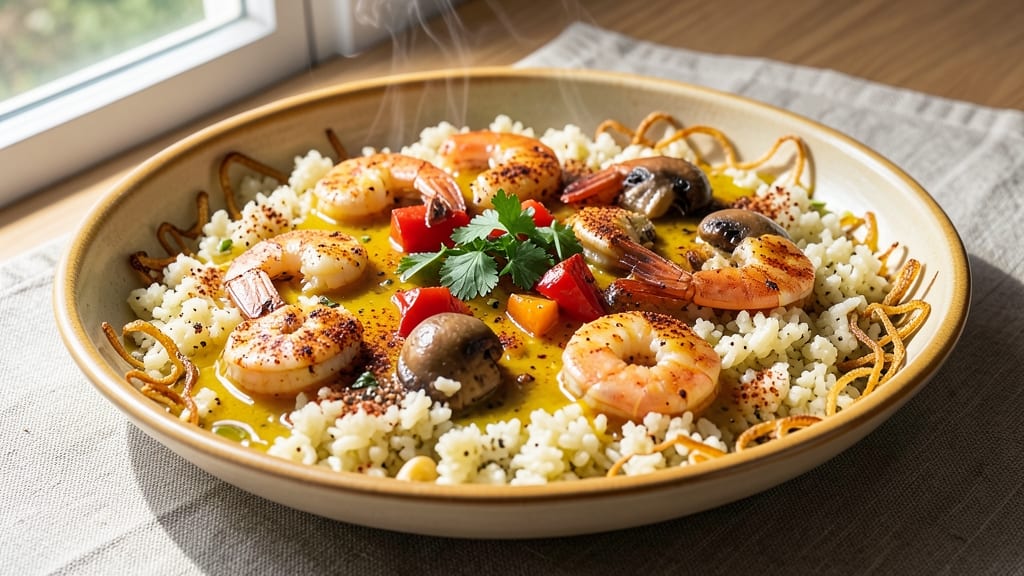
This cauliflower rice paella recipe transforms a classic Spanish dish into a vibrant, low-carb masterpiece that still delivers all the authentic flavors. The secret lies in perfectly sautéing the cauliflower rice until golden, then layering in saffron-infused broth, smoky paprika, and fresh vegetables for that signature paella texture.
I've developed this version after years of testing—it's the closest you'll get to a paella restaurant experience without the rice.
The result is a one-pan wonder with crispy cauliflower edges, tender artichokes, sweet bell peppers, and peas that stay vibrant. The saffron-infused broth creates that signature golden hue and aromatic depth, while mushrooms or tofu add satisfying texture for a complete vegetarian meal.
Ready in about 45 minutes, this paella makes an impressive centerpiece for dinner parties or a satisfying weeknight feast.
Ingredients for cauliflower rice paella
Fresh cauliflower, vibrant veggies, and saffron's golden touch make this paella shine without rice.
| Ingredient | Amount | Notes |
|---|---|---|
| Fresh Cauliflower 🥬 | 1 lb | Riced with food processor |
| Extra-Virgin Olive Oil 🫒 | ½ cup | High quality, fruity variety |
| Yellow Onion 🧅 | 1 whole | Thinly sliced, about 1 cup |
| Garlic Cloves 🧄 | 6 cloves | Minced, fresh preferred |
| Smoked Paprika 🌶️ | 1 tbsp | Sweet or hot, not mild |
| Ground Cumin 🌿 | 1 tsp | Toasted for depth |
| Saffron Threads 🧡 | ¼ tsp | High-quality, not powder |
| Vegetable Broth 💧 | 2 ½ cups | Low-sodium preferred |
| Red Bell Pepper 🌶️ | 1 whole | Diced, about 1 cup |
| Green Bell Pepper 🌶️ | 1 whole | Diced, about 1 cup |
| Artichoke Hearts 🌱 | 8 oz | Marinated, drained and chopped |
| Frozen Peas 🌱 | 1 cup | Thawed, no need to drain |
| Mushrooms 🍄 | 8 oz | Sliced, cremini or shiitake |
| Lemon Juice 🍋 | 1 tbsp | Freshly squeezed |
| Fresh Parsley 🌿 | ¼ cup | Chopped, for garnish |
| Salt 🧂 | 1 ½ tsp | Diamond Crystal preferred |
| Black Pepper 🌶️ | ½ tsp | Freshly ground |
The cauliflower is your secret weapon here—fresh is non-negotiable for that perfect texture. Grab a head from the produce section (not pre-riced, which gets mushy). If you're using a food processor, pulse it until it looks like rice grains, but don't overdo it—some texture keeps it interesting. For saffron, Spanish brands like Bota or La Flor are worth the splurge. Toast your cumin seeds in a dry pan for 30 seconds before grinding—that smoky depth makes all the difference. Artichokes? The marinated kind from the jar saves time, but if you're feeling fancy, Trader Joe's carries pre-cooked ones that are perfect.
No saffron? Turmeric at half the amount will give you that golden color, though it lacks the floral notes. Swap bell peppers for zucchini or asparagus if you're out—just adjust cooking time. Mushrooms can be omitted, but tofu cubes add great texture if you want extra protein. The vegetable broth is where flavor builds—low-sodium so you can control the salt. If you're short on time, canned diced tomatoes (San Marzano if you can find them) add instant depth. And that smoked paprika? Don't skip it—it's the soul of paella.
This paella tastes even better the next day—leftovers reheat beautifully. Store in an airtight container for 4-5 days in the fridge, or freeze portions for up to 3 months. I like to portion it into individual containers so I can grab a serving straight from the freezer. The cauliflower keeps its texture better than rice does when reheated, which is a win. If you're prepping ahead, sauté the veggies and store them separately—just add the cauliflower and broth when you're ready to cook. Garnish with parsley right before serving—it brightens everything up.
Why You'll Love This Recipe
- Same recipe, different vibes: toss it with shrimp for a fancy date night or bulk it up with chickpeas for a budget-friendly family feed. The cauliflower rice soaks up every bit of flavor, so it always feels special.
- No Chopping Nightmare: I just pulse the cauliflower in a food processor—three minutes max—and it’s ready to go. No knife skills required, no tiny rice grains to scrub from your fingers later.
- Smoky Depth Magic: That smoked paprika? It’s the secret weapon—just a teaspoon toasted in the olive oil until it smells like a campfire. The onion and garlic caramelize into something so rich, you’ll forget it’s low-carb.
- Weeknight to Dinner Party: Same recipe, different vibes: toss it with shrimp for a fancy date night or bulk it up with chickpeas for a budget-friendly family feed. The cauliflower rice soaks up every bit of flavor, so it always feels special.
Step-by-step instructions for cauliflower rice paella
Here's how to create a vibrant, saffron-infused paella with cauliflower rice that captures all the essence of Spanish cooking.
Prepare the Cauliflower Rice Base
Start by pulsing the 1 lb fresh cauliflower in a food processor until you achieve a rice-like consistency—think fine granules, not a paste. Spread the cauliflower rice evenly on a baking sheet and toast in a 400°F oven for 8-10 minutes, stirring once halfway through. This step removes excess moisture and develops a subtle nuttiness that forms the foundation of your paella.
While the cauliflower toasts, heat 0.5 cup extra-virgin olive oil in a large, shallow paella pan (or deep skillet) over medium heat. Add the 1 whole thinly sliced yellow onion and cook for 5-6 minutes until softened and translucent. Here's the thing—don't rush this step. You want the onions to caramelize slightly, building sweetness that will carry through the entire dish.
Build the Flavor Foundation
Push the onions to one side of the pan and add the 6 minced garlic cloves to the empty space. Cook for 30 seconds until fragrant—you should smell that unmistakable garlic aroma. Immediately add 1 tbsp smoked paprika and 1 tsp ground cumin, stirring constantly for 1 minute until the spices bloom and fill the kitchen with their warm, earthy scent.
This is where the magic happens: dissolve the 0.25 tsp saffron threads in 2 tablespoons of warm vegetable broth (taken from the 2.5 cups total you'll need). Let it steep for 5 minutes while you prepare the remaining ingredients. The saffron will infuse the liquid with its signature golden hue and floral aroma—don't skip this step, as it's what gives authentic paella its signature color.
Layer the Vegetables
Add the toasted cauliflower rice to the pan and stir to combine with the onions and spices. Pour in the saffron-infused broth and bring to a gentle simmer. Now it's time to add the vegetables in layers: first, the 8 oz sliced mushrooms and 8 oz chopped artichoke hearts, followed by the 1 cup thawed frozen peas. Let everything cook for 5 minutes to allow the flavors to meld.
Add the 1 whole diced red bell pepper and 1 whole diced green bell pepper, along with the remaining 2.25 cups vegetable broth. Stir gently—you're not making risotto, so avoid stirring constantly. Instead, let the ingredients develop their own textures. The cauliflower rice should begin to absorb the liquid while the bell peppers soften but retain some bite. This is where the paella's signature socarrat (crispy bottom) begins to form—just don't walk away yet.
Finish with Brightness and Crisp
Cover the pan and simmer for 15-18 minutes until the cauliflower rice is tender and the liquid has mostly evaporated. The perfect paella should have a slight crust forming at the bottom—this is your socarrat, created by concentrating the flavors through evaporation. If the rice looks dry before the bottom crisps, add 2-3 tablespoons of water to finish cooking.
Once the rice is tender and the bottom has developed that beautiful caramelized crust, remove from heat and stir in 1 tbsp freshly squeezed lemon juice and 0.25 cup chopped fresh parsley. The acidity brightens all the rich flavors, while the parsley adds a fresh finish. Taste and adjust seasoning with salt and black pepper—you might need a little more salt to balance the lemon.
Rest and Serve
Let the paella rest for 5 minutes before serving—this allows the flavors to settle and the bottom to crisp further. Serve directly from the pan, using a large spoon to scrape up all that delicious socarrat. The contrast between the crispy bottom and tender rice is what makes paella so special.
Garnish each serving with an extra sprinkle of parsley and a wedge of lemon. The cauliflower rice should be tender with a slight bite, the vegetables vibrant and flavorful, and the entire dish infused with that unmistakable saffron aroma. Serve immediately while the socarrat is at its crispy best—this dish doesn't wait!
Pro Tips For Making Cauliflower Rice Paella
- SALT THE CAULIFLOWER FIRST: Toss the raw cauliflower florets with a pinch of salt and let them sit for 10 minutes before cooking. This draws out moisture so your "rice" stays crisp instead of turning into mush—trust me, your paella won’t be soggy.
- SOFTRY THE ONIONS LOW: Cook the onions on medium-low heat for at least 15 minutes until they’re golden and almost caramelized. Rushing this step means you’ll taste raw onion in your paella, and nobody wants that bitter punch cutting through the smoky paprika.
- DON’T OVERSTIR THE RICE: Once you add the cauliflower rice to the pan, stir it just once or twice—then leave it alone. Stirring constantly releases starch and turns your crispy rice into glue. Let it develop that golden crust, even if it looks uneven at first.
- SAVOR THE PAPRIKA: Toast the smoked paprika in the empty pan for 30 seconds before adding oil—it deepens the flavor and removes any bitterness. Skip this, and you’re just sprinkling powder instead of building layers of taste. (Yes, it smells like a campfire, but that’s the point.)
Regional styles of cauliflower rice paella
Spanish Coastal Style
In Valencia, where paella originated, this dish is traditionally cooked over open flames on the beach. For authenticity, use a paella pan (or wide skillet) and cook near a gas burner for that signature socarrat—the crispy bottom layer.
I like to add fresh fennel (thinly sliced) and clams (if using seafood) to mimic the coastal flavors. Serve with alioli (garlic mayo) on the side for dipping. 🌊
Andalusian Fusion
Southern Spain brings bold flavors to cauliflower rice paella. Swap the bell peppers for roasted red peppers and add diced roasted eggplant (about 1 cup). Stir in 1 tsp sweet paprika and ½ tsp cinnamon during the spice blooming step for warmth.
Top with toasted almonds and a drizzle of extra-virgin olive oil before serving. This version feels like a tapas platter in a pan. 🌶️
Catalan Mountain Twist
Inland regions like Catalonia use heartier ingredients. Replace artichokes with sautéed wild mushrooms (like chanterelles or porcini) and add diced smoked paprika (double the amount). Stir in 1 cup white beans (soaked overnight) during the final 5 minutes of cooking.
Finish with fresh rosemary instead of parsley. The earthy mushrooms and beans make this a hearty vegetarian main. 🍄
Modern Mediterranean
For a contemporary take, blend ½ cup tomato sauce into the broth before adding vegetables. Add sun-dried tomatoes (chopped) and kalamata olives (pitted and halved) during the last 5 minutes of cooking.
Garnish with toasted pine nuts and a sprinkle of feta cheese. This version keeps the paella's soul while adding bright, briny accents. 🍅
Balearic Island Lightness
The Balearic Islands favor lighter, citrus-forward paellas. Use lemon zest (instead of juice) in the final step and add thinly sliced zucchini (about 1 cup). Swap peas for fresh green beans and finish with mint leaves instead of parsley.
The result is a refreshing, summery dish perfect for seafood lovers (or vegetarians). 🍋
Nutrition facts
Frequently asked questions
Can I substitute regular rice for cauliflower rice in this recipe?
Technically yes, but you'll lose the low-carb benefits and crispy socarrat texture. If you do, use 1 cup uncooked white rice and adjust the broth to 3 cups total (instead of 2.5). Cook time will increase to 20-25 minutes covered, and you'll need to stir occasionally to prevent burning. The cauliflower version cooks faster and develops that signature crispy bottom differently.
How do I get the crispy bottom (socarrat) with cauliflower rice?
Here's the secret: use a paella pan or wide skillet with high heat tolerance. After adding the broth, cook uncovered on medium-high heat for the last 5-7 minutes to concentrate flavors. The cauliflower will crisp better than rice because it releases moisture faster. If the bottom isn't crispy enough, increase heat slightly—just watch closely to avoid burning.
Can I make this paella ahead of time?
Yes! Prepare it up to 2 days ahead and store in an airtight container. Reheat gently in a skillet with 1-2 tablespoons of water or broth over medium-low heat for 5-7 minutes, stirring occasionally. The cauliflower holds up better than rice when reheated. For best texture, serve within 48 hours—the socarrat may soften slightly but still taste amazing.
What's the best way to make cauliflower rice for paella?
Fresh is key! Pulse 1 lb cauliflower in a food processor until rice-like, then toast in a 400°F oven for 8-10 minutes to remove moisture. Never microwave or boil—this makes it soggy. For extra flavor, toss the toasted rice with ½ teaspoon smoked paprika before adding to the pan. This step prevents mushiness and builds depth.
Can I use powdered saffron instead of threads?
Not recommended! Powdered saffron loses its delicate floral notes and can make the dish taste bitter. If you must use it, reduce to ⅛ teaspoon and steep in 2 tablespoons warm water for 10 minutes. For best results, invest in Spanish saffron threads—they're worth the splurge for that authentic golden color and aroma.