
Main Courses
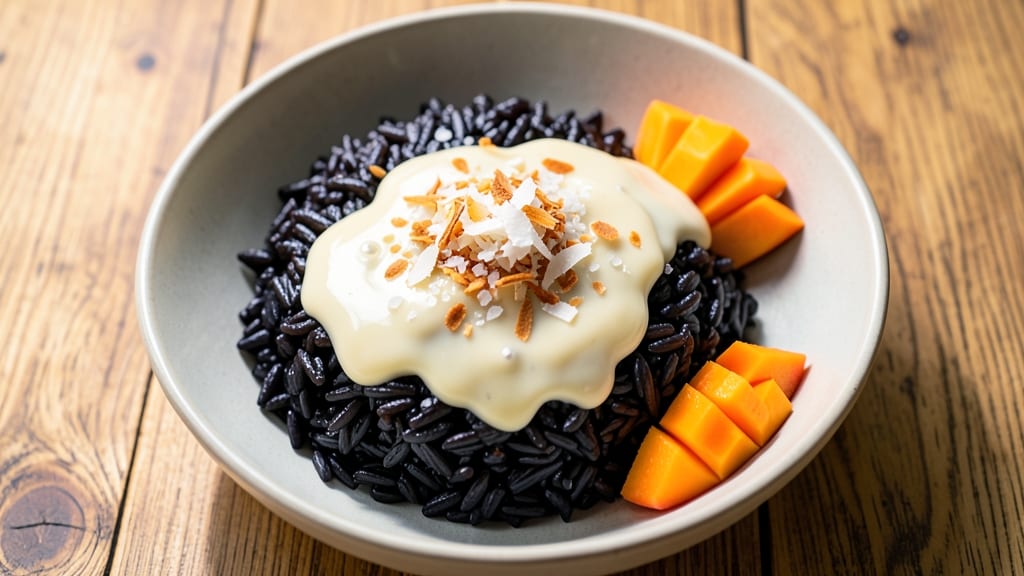
Black glutinous rice biko transforms simple ingredients into a Filipino dessert masterpiece—rich, caramelized layers of coconut and sticky rice that melt in your mouth. This recipe captures the heart of Filipino celebrations, where biko becomes the star of festive tables. The secret lies in slow cooking the rice with coconut milk until it reaches that perfect creamy, caramelized texture that makes every bite unforgettable.
What sets this recipe apart is the balance of sweetness and depth—coconut milk creates a velvety sauce that clings to each grain, while sugar develops into a glossy, amber caramel. Traditionally served warm with extra grated coconut on top, it’s a dessert that feels both comforting and special.
Whether you're recreating a family tradition or introducing Filipino flavors to your table, this foolproof method ensures restaurant-quality results at home.
Ingredients for black glutinous rice biko
Creamy coconut milk and caramelized sugar create the velvety base for this Filipino masterpiece.
| Ingredient | Amount | Notes |
|---|---|---|
| Black Glutinous Rice 🍚 | 1 cup | Uncooked, soaked overnight |
| Coconut Milk (Full-Fat) 🥥 | 2 cans | 13.5 oz each, unsweetened |
| Granulated Sugar 🍬 | 1 ½ cups | Light brown preferred |
| Unsalted Butter 🧈 | ½ cup | Cold, cubed for caramel |
| Shredded Coconut (Sweetened) 🥥 | 1 cup | Freshly grated preferred |
| Salt 🧂 | ¼ tsp | Fine sea salt |
| Vanilla Extract 🌸 | 1 tsp | Pure vanilla preferred |
| Water 💧 | ½ cup | For initial soaking |
| Toasted Sesame Seeds 🌰 | 1 tbsp | Optional garnish |
| Ground Cinnamon 🌿 | ½ tsp | For finishing touch |
| Lemon Zest 🍋 | 1 tsp | Brightens flavor |
The black glutinous rice is the star—look for it in Asian markets or specialty stores like H Mart or 99 Ranch Market. Soaking it overnight prevents uneven cooking. For the coconut milk, full-fat cans create the richest texture—avoid light versions. The sugar should be light brown for subtle caramel notes, though white works in a pinch. Butter matters here: unsalted, cold cubes melt into a glossy caramel that coats each grain perfectly. If you can't find sweetened shredded coconut, toast unsweetened and mix with a touch of sugar.
No black glutinous rice? Substitute with regular glutinous rice, though the color and texture will differ slightly. For coconut milk, coconut cream plus water mimics the richness (use 1 cup cream + 1 cup water). The sugar can be swapped for palm sugar or coconut sugar for deeper flavor. Butter too expensive? Coconut oil works equally well—just don't skip the caramelization step. The sesame seeds and cinnamon are optional but add that authentic Filipino touch. Lemon zest can be omitted if you prefer a sweeter profile, but it brightens the coconut flavor beautifully.
This dessert reheats like a dream—microwave 1-2 minutes with a splash of water for that creamy texture. Store in an airtight container for 3-4 days in the fridge, though it's best enjoyed fresh. For make-ahead prep, cook the rice mixture completely, then refrigerate before serving warm. The flavors deepen overnight, making it perfect for holiday gatherings. Garnish with extra shredded coconut and a sprinkle of cinnamon just before serving to keep it looking festive.
Why You'll Love This Recipe
- I’ll be real: black glutinous rice isn’t cheap, but a single batch stretches to feed four for breakfast and dessert. The sugar and coconut milk are pantry staples, and the butter? A tiny amount goes a long way. It’s the kind of treat that feels special without breaking the bank.
- One-Pot Magic: I swear by this recipe because it’s literally three ingredients simmered together—no fancy layers, no stress. Just rice, coconut milk, and sugar (plus butter for that melt-in-your-mouth richness), and it transforms into something decadent with almost no effort.
- Rich Without Guilt: Here’s what sold me—the way the black rice soaks up the full-fat coconut milk until it’s creamy but still holds its shape. Add a pat of butter and a sprinkle of toasted coconut? That’s pure, velvety satisfaction with just 150 calories per serving.
- Lunchbox Hero: Between us, this is my go-to for school lunches or office snacks. The texture stays perfect for hours (no soggy rice here), and kids actually finish it—no leftovers in their backpacks. Honestly, I’ve packed this in jars for three days straight, and it’s still delicious.
Step-by-step instructions for black glutinous rice biko
Master this Filipino coconut rice dessert with rich caramel and perfect texture using precise techniques.
Soak and Prepare the Black Glutinous Rice
Place the 1 cup black glutinous rice in a bowl and cover with the 0.5 cup water. Let it soak for at least 8 hours or overnight at room temperature. This long soak is crucial—it ensures the rice absorbs moisture evenly and develops that signature sticky, chewy texture. After soaking, drain any excess water through a fine-mesh strainer.
Transfer the soaked rice to a heavy-bottomed pot with a tight-fitting lid. I like to use a stainless steel pot for even heat distribution. Give the rice a gentle stir to separate any clumps, then add 1 cup of the full-fat coconut milk and 1.5 cups granulated sugar. Stir well to combine, ensuring the sugar dissolves completely. This initial mixture forms the sweet, creamy base of your biko.
Cook the Rice Mixture Low and Slow
Place the pot over medium-low heat and bring the mixture to a gentle simmer. Once it reaches a soft boil, reduce the heat to low and cover tightly with the lid. Let the rice cook undisturbed for 45-50 minutes, stirring gently every 10 minutes to prevent sticking. You're looking for a thick, porridge-like consistency where the rice grains are tender but still hold their shape.
Here's the thing—black glutinous rice has a naturally higher starch content than white rice, which means it absorbs liquid differently. If the mixture looks too dry after 40 minutes, add 2-3 tablespoons of water to maintain moisture. The key is patience; rushing this step will result in a gummy texture instead of the perfect sticky consistency.
Build the Caramel Layer
Once the rice is tender, increase the heat to medium and uncover the pot. Add the 0.5 cup cold unsalted butter in small pieces, stirring constantly until it melts completely and coats the rice evenly. This butter layer is what creates that signature caramelized top. Next, stir in the 1 teaspoon vanilla extract and 0.25 teaspoon salt, mixing well to distribute the flavors uniformly.
Now for the caramel—reduce the heat to low and let the mixture cook uncovered for 10-15 minutes, stirring frequently. You'll see the sugars begin to caramelize, creating a glossy, golden-brown layer on top. This is when the biko transforms from a simple rice dessert to something truly special. If the caramel starts to darken too quickly, reduce the heat slightly to prevent burning.
Add Coconut Milk and Final Touches
Pour in the remaining 1 cup full-fat coconut milk and stir vigorously to incorporate. The mixture should become smooth and velvety. Add the 1 cup shredded coconut, 0.5 teaspoon ground cinnamon, and 1 teaspoon lemon zest, folding them in gently. The lemon zest brightens the rich coconut flavors, while the cinnamon adds warmth. Let the biko cook uncovered for another 5 minutes on low heat, stirring occasionally to prevent sticking.
Here's where attention to detail matters: the biko should have a thick, pudding-like consistency with a glossy sheen. If it's too thin, continue cooking uncovered on low heat, stirring frequently. If it's too thick, add 1-2 tablespoons of water to loosen it. The perfect texture should be firm enough to hold its shape when spooned but still creamy on the tongue.
Serve Warm with Garnishes
Transfer the biko to serving bowls or ramekins. Let it cool slightly for 5-10 minutes—this allows the flavors to meld and the caramel to set slightly. Garnish each serving with 1 tablespoon toasted sesame seeds and an additional sprinkle of shredded coconut for texture contrast. The sesame seeds add a nutty crunch that cuts through the richness of the coconut and caramel.
Serve warm for the ultimate experience—each bite should deliver a perfect balance of creamy rice, rich coconut, and caramelized sweetness. The black rice adds an earthy depth that pairs beautifully with the tropical coconut flavors. For best results, enjoy within 2 hours of preparation while the texture remains at its peak.
Pro Tips For Making Black Glutinous Rice Biko
- SOAK THE RICE 4 HOURS: Black glutinous rice absorbs water like a sponge—skip the soak, and you’ll end up with a gummy, uneven texture. I learned this the hard way after making biko that looked like it had been chewed by a rubber duck. Use twice the water by volume (e.g., 2 cups rice to 4 cups water), cover, and let it sit at room temp. No need to rinse after soaking—just drain well.
- STEAM FIRST, THEN BAKE: I used to dump everything in the oven at once, thinking it’d all meld together. Wrong. Start by steaming the soaked rice in a lined baking dish (cover with foil, 30 minutes at 350°F/175°C) to cook it evenly. Only then add the coconut milk mixture—this keeps the rice from turning mushy when the wet ingredients go in. Trust me, your biko will thank you with a perfect, creamy texture.
- USE FULL-FAT COCONUT MILK ONLY: Light or low-fat coconut milk won’t cut it here—this isn’t a diet dessert. The fat is what gives biko its signature richness and prevents it from drying out. If you’re using canned milk, shake the can hard before opening (the cream settles at the bottom like a lazy cow). And for the love of all things sweet, don’t substitute with cream—it’ll curdle and ruin the whole thing.
- TOAST THE SHREDDED COCONUT: Sweetened shredded coconut straight from the bag tastes fine, but toasted? That’s where it becomes irresistible. Spread it on a baking sheet in a single layer and toast at 325°F (160°C) for 8–10 minutes, stirring once. Watch it closely—it burns faster than you’d think. The nutty aroma and slight crunch elevate the dish from "good" to "I’ll drive 20 minutes for this." Sprinkle it over the top right before serving for maximum freshness.
Perfect pairings for this dish
Coconut Milk Drinks
Serve your black glutinous rice biko alongside a glass of creamy coconut milk tea for the perfect tropical pairing. Heat 1 cup full-fat coconut milk with 1 cup water, 1 tablespoon honey, and a pinch of ground cinnamon until steaming.
Strain through a fine-mesh sieve for a smooth, fragrant sip that complements the dessert’s richness. For a festive touch, add a splash of pandan extract (about ½ teaspoon) to infuse floral notes that mirror the biko’s earthy depth. 🥥
Filipino Coffee
Balance the sweetness of the biko with a bold cup of Filipino coffee, traditionally brewed with espresso beans and a touch of sugar. I recommend using Barako coffee (a local favorite) or a high-quality dark roast.
Serve the coffee black or with a splash of coconut milk to let its caramelized notes harmonize with the dessert’s caramelized top. The bitterness cuts through the coconut’s richness beautifully. ☕
Fresh Tropical Fruit
Add a refreshing contrast with ripe mango slices or jackfruit chunks, which pair perfectly with the biko’s coconut and caramel flavors. The natural sweetness of the fruit balances the dessert’s richness, while the tropical vibrancy makes it feel like a celebration.
For extra flair, drizzle the fruit with a lime-honey dressing (mix 1 tablespoon honey with 1 teaspoon lime juice). 🍍
Latik (Coconut Caramel)
For an authentic Filipino touch, serve latik—a thick, caramelized coconut topping—on the side. This traditional accompaniment adds a smoky, buttery depth that elevates the biko. Spread a spoonful over each serving or drizzle it generously for a decadent finish.
If you can’t find latik, substitute with coconut caramel sauce (melt ½ cup butter with ½ cup brown sugar and ¼ cup coconut milk until golden). 🍯
Spiced Chai Latte
Warm up your biko experience with a spiced chai latte made with black tea, cinnamon, cardamom, and a dash of vanilla. The warm spices echo the cinnamon in the dessert while the creamy milk ties back to the coconut.
For an extra layer, swirl in 1 teaspoon coconut milk before serving to bridge the flavors seamlessly. 🌿
Nutrition facts
Frequently asked questions
Why does my black glutinous rice biko turn out too sticky?
The key is in the cooking process! If your biko is overly sticky, you likely cooked it too long or didn't stir frequently enough. Black glutinous rice absorbs liquid differently—reduce the heat to low after the initial simmer and stir every 10 minutes to maintain even cooking. If it's already too thick, add 1-2 tablespoons of water and cook uncovered for 5 more minutes to adjust the texture. The perfect consistency should be creamy but still hold its shape when spooned.
Can I make this biko without a heavy-bottomed pot?
Yes, but you'll need to be more attentive! Use a medium-sized pot and cook on low heat to prevent scorching. Stir more frequently (every 5-7 minutes) and reduce the heat whenever you see the mixture thickening too quickly. A nonstick pot works well too—just avoid high heat to prevent sticking. The goal is slow, even cooking to develop that signature caramelized layer.
How do I store leftover black glutinous rice biko?
Transfer any leftovers to an airtight container and refrigerate for up to 3-4 days. To reheat, microwave for 1-2 minutes with a splash of water or coconut milk to restore creaminess. For a fresher texture, serve within 2 hours of cooking. If storing longer, consider freezing portions—thaw overnight in the fridge before reheating. The flavors deepen over time, making it perfect for holiday prep!
What's the difference between biko and bibingka?
Both are Filipino rice desserts, but they're distinct. Biko is made with glutinous rice cooked in coconut milk and sugar, creating a creamy, caramelized texture. Bibingka, on the other hand, uses regular rice and is traditionally steamed in clay pots with coconut milk, egg yolks, and sometimes cheese. Biko is softer and stickier, while bibingka has a firmer, cake-like texture. Both are delicious but serve different purposes—biko as a comforting dessert, bibingka as a festive treat!
Can I substitute regular glutinous rice for black glutinous rice?
Yes, but your biko will lose its distinctive color and earthy depth. Regular glutinous rice will still work, though it may turn slightly grayish when cooked. For best results, look for black glutinous rice in Asian markets or online—it's worth the search for that authentic look and flavor. If you can't find it, try adding 1 teaspoon activated charcoal powder (food-grade) mixed with the rice before cooking for a similar effect.