
Salads
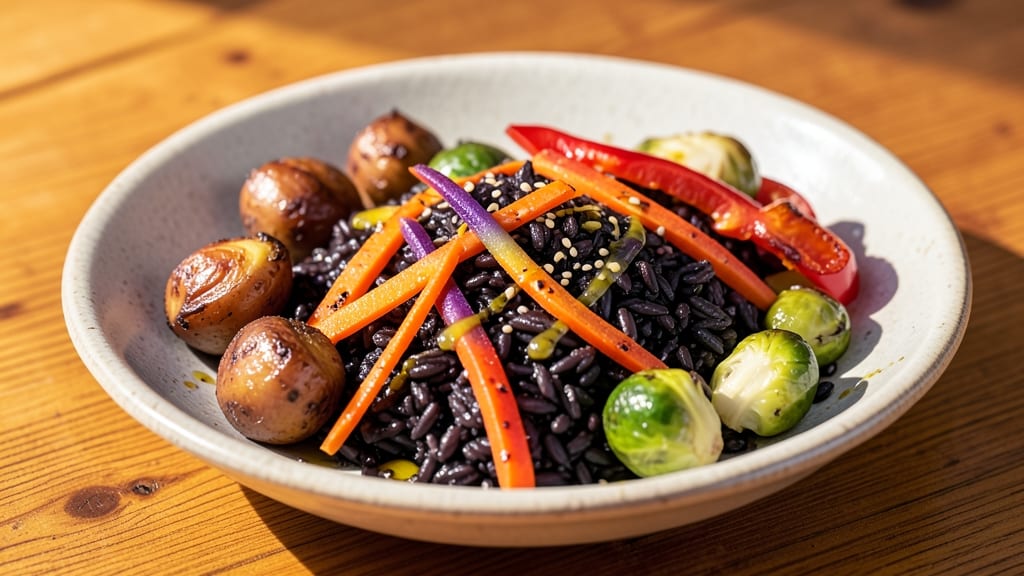
This black rice and vegetables recipe transforms simple ingredients into a visually stunning, nutrient-packed bowl that delivers both earthy depth and vibrant color. The deep purple-black rice—packed with antioxidants—pairs perfectly with roasted vegetables that develop a satisfying nutty crunch while maintaining their natural sweetness.
What makes this dish special is how effortlessly it balances texture and flavor, requiring just 45 minutes of active time for impressive results.
The secret lies in cooking the black rice separately for optimal texture—firm yet tender—while roasting the vegetables at high heat to enhance their natural sugars. A light sesame-ginger dressing ties everything together, adding brightness without overpowering the dish's earthy foundation.
This recipe isn't just about color; it's about creating a meal that's as nourishing as it is beautiful, perfect for weeknight dinners or meal prep.
Ingredients for black rice and vegetables
These vibrant ingredients create a stunning antioxidant bowl balancing earthy black rice with nutty roasted vegetables.
| Ingredient | Amount | Notes |
|---|---|---|
| Black Rice (Forbidden Rice) 🌾 | 1 cup | Uncooked, rinsed thoroughly |
| Rainbow Carrots 🥕 | 1 ½ cups | Sliced into thin batons |
| Baby Sweet Potatoes 🍠 | 1 lb | Halved lengthwise, skin on |
| Brussels Sprouts 🥬 | 1 lb | Trimmed, halved vertically |
| Red Bell Pepper 🌶️ | 1 whole | Sliced into thin strips |
| Sesame Oil 🫒 | 1 tbsp | Toasted, for aroma |
| Fresh Ginger 🌿 | 1 ½ tbsp | Finely grated, aromatic |
| Low-Sodium Soy Sauce 🍶 | 2 tbsp | For umami depth |
| Toasted Sesame Seeds 🌰 | 1 tbsp | For garnish |
| Extra-Virgin Olive Oil 🫒 | 2 tbsp | For roasting vegetables |
| Garlic Cloves 🧄 | 3 cloves | Minced, aromatic |
| Honey 🍯 | 1 tbsp | For balancing flavors |
| Kosher Salt 🧂 | 1 ½ tsp | Diamond Crystal preferred |
| Ground Black Pepper 🌶️ | ½ tsp | Freshly cracked |
The black rice is the centerpiece—look for Forbidden Rice from specialty stores or Asian markets, as it's often labeled as 'black jasmine' or 'emperor's rice'. Whole Foods and Trader Joe's carry it, but if unavailable, substitute wild rice for a similar chewy texture. Rinse it thoroughly before cooking to remove excess starch, which prevents clumping. For the vegetables, rainbow carrots and purple sweet potatoes add visual appeal, but regular orange carrots and sweet potatoes work just as well. The key is to choose firm, unblemished produce—avoid any with soft spots or wilting—as the vegetables will roast at high heat.
No sesame oil? Avocado oil or light olive oil works in a pinch, though it lacks the nutty depth. Fresh ginger is essential for the dressing—substitute 1 teaspoon of ground ginger if needed, but fresh is preferred. For a sweeter touch, maple syrup can replace honey in a 1:1 ratio. The soy sauce should be low-sodium to avoid overpowering the delicate flavors; if unavailable, use coconut aminos. For extra crunch, toast the sesame seeds in a dry pan over medium heat for 2-3 minutes, stirring constantly, until fragrant. The garlic should be minced finely—this ensures it blends seamlessly into the dressing without any noticeable chunks.
Black rice keeps well in the fridge for 4-5 days once cooked, though it's best enjoyed within 2 days for optimal texture. Store roasted vegetables separately in airtight containers to maintain their crispness. The dressing can be made 1 day ahead and stored in the refrigerator, though the ginger may lose some of its brightness—add a pinch of extra salt before serving to revive the flavors. For meal prep, assemble the bowls just before eating to prevent the vegetables from becoming soggy. If reheating, warm the components separately and toss with a drizzle of sesame oil to restore crispness.
Why You'll Love This Recipe
- One-Pan Magic: I swear by this recipe when I’m too tired to wash dishes. Toss everything—black rice, sweet potatoes, Brussels sprouts—onto one sheet pan, roast until caramelized, and boom. The rice soaks up all the sweetness from the veggies while they crisp to perfection. No pots, no pans, just done.
- Earthy Umami Bomb: That deep, nutty flavor from the black rice? It’s the star. The rainbow carrots add a natural sweetness, the Brussels sprouts bring a little bite, and the red bell pepper ties it all together with a bright pop. Honestly, I’ll take this over takeout any day—it’s that good.
- Meal Prep MVP: Between us, this is my weeknight lifesaver. Cook a big batch on Sunday, and you’ve got lunch or dinner covered for days. The flavors only get better as the rice absorbs more of those roasted veggie juices. Even my picky-eating teenager asks for seconds—(yes, even on a Tuesday night).
- Budget-Friendly Powerhouse: Black rice might sound fancy, but it’s actually cheaper than white rice in bulk. Pair it with seasonal veggies like carrots and sweet potatoes, and you’ve got a filling, nutrient-packed meal that won’t break the bank. Plus, leftovers taste just as good reheated—no sad, soggy rice here.
Step-by-step instructions for black rice and vegetables bowl
Here's how to create a vibrant, nutrient-packed dish with deep flavors and perfect textures.
Prepare the Black Rice
Rinse the 1 cup of black rice (forbidden rice) thoroughly under cold water in a fine-mesh strainer until the water runs clear. This removes excess starch that can make the rice gummy. Transfer the rinsed rice to a medium saucepan and add 2 cups of water (or follow package instructions if different). Bring to a boil over medium-high heat, then immediately reduce to a low simmer, cover, and cook for 30-35 minutes until the liquid is completely absorbed and the rice is tender.
Here's the thing—black rice needs gentle heat to develop its signature deep purple color and nutty flavor. Avoid peeking during cooking as steam escape extends the cooking time. Once done, fluff with a fork and let it sit covered for 5 minutes to steam evenly. The rice should be tender but still hold its shape, with a rich, almost blue-black hue when cooled.
Roast the Vegetables for Maximum Flavor
Preheat your oven to 425°F. In a large bowl, toss the 1.5 cups of sliced rainbow carrots, 1 lb of halved baby sweet potatoes, 1 lb of halved Brussels sprouts, and 1 whole red bell pepper sliced into strips with 2 tablespoons of extra-virgin olive oil, 1.5 teaspoons of kosher salt, and 0.5 teaspoon of ground black pepper. Spread them evenly on two rimmed baking sheets.
Roast for 25-30 minutes, stirring halfway through, until the carrots are tender with caramelized edges, the sweet potatoes are fork-tender with crispy skin, and the Brussels sprouts are golden brown and slightly charred. The red bell pepper should soften but retain some structure. This high-heat roasting develops deep, caramelized flavors that balance the earthy black rice perfectly.
Create the Ginger-Garlic Sauce
While the vegetables roast, heat 1 tablespoon of sesame oil in a small saucepan over medium heat. Add the 3 minced garlic cloves and 1.5 tablespoons of finely grated fresh ginger, cooking for 1-2 minutes until fragrant but not browned. This quick cooking preserves their bright, aromatic qualities.
Reduce heat to low and stir in 2 tablespoons of low-sodium soy sauce and 1 tablespoon of honey. Simmer for 2-3 minutes until the sauce thickens slightly and coats the back of a spoon. The honey balances the soy sauce's saltiness while adding subtle sweetness that complements the roasted vegetables. Keep this sauce warm until ready to use.
Assemble the Vibrant Bowl
Divide the cooked black rice among four serving bowls. Spoon the roasted vegetables evenly over the rice, creating a colorful, textured base. Drizzle each serving with 1 tablespoon of the ginger-garlic sauce, reserving any extra for additional flavor if desired.
Finish with a sprinkle of 1 tablespoon of toasted sesame seeds for nutty crunch and visual appeal. The contrast between the deep purple rice, vibrant vegetables, and golden seeds creates a visually stunning dish. Serve immediately while the vegetables are still warm and the flavors are at their peak.
Optional Garnish and Serving
For an elevated presentation, garnish each bowl with a few thin slices of red bell pepper arranged artistically on top. The bright color adds a final touch of visual contrast. Pair with a side of steamed edamame or a simple cucumber salad to complete the meal.
This dish delivers a perfect balance of textures—creamy rice, crisp-tender vegetables, and nutty seeds—while showcasing the antioxidant-rich properties of black rice. The ginger-garlic sauce ties all the flavors together, creating a harmonious bite with every spoonful.
Pro Tips For Making Black Rice And Vegetables
- PARBOIL THE RICE FIRST: Black rice stays stubbornly chewy if you skip this step. Toss it in boiling salted water for 8-10 minutes (not fully cooked—just softened) before your main method. I learned this the hard way after serving mushy rice that made people question my cooking skills.
- CUT CARROTS IN EVEN SLICES: Thin, uniform strips cook faster and look better. Use a mandoline if you’re impatient, but if you’re doing it by hand, aim for ¼-inch thickness—any thicker and the rainbow carrots turn sad and undercooked.
- DON’T OVERCROWD THE PAN: Brussels sprouts and bell peppers release moisture like crazy. Cook them in batches if needed—two layers max—or they’ll steam instead of caramelize. I used to ignore this and ended up with soggy greens instead of crisp-tender bites.
- ROAST THE SWEET POTATOES SEPARATELY: Baby sweet potatoes take forever to tenderize in the same pot as faster-cooking veggies. Toss them in oil and roast at 400°F (200°C) for 20 minutes before adding them to the rice. Trust me, your dish will thank you.
Regional styles of these flavors
Asian-Inspired Forbidden Rice Bowl
In China, this dish traces back to ancient imperial cuisine where black rice (called "forbidden rice") was reserved for emperors. The modern version replaces meat with roasted vegetables, keeping the dish vegetarian while maintaining its regal presentation.
Serve with a side of steamed bok choy and a drizzle of chili oil for authentic Chinese restaurant flair. 🥢
Japanese Antioxidant Donburi
For a Japanese twist, swap the ginger-garlic sauce for a light tamari glaze (mix 1 tbsp tamari, 1 tsp mirin, and ½ tsp grated daikon radish).
Top with quick-pickled cucumbers (slice ½ cucumber thin, toss with 1 tbsp rice vinegar and ½ tsp sugar) for a refreshing contrast. This version is a staple in Tokyo health cafes. 🍱
Thai-Inspired Stir-Fry Adaptation
Transform this into a Thai-inspired stir-fry by cooking the black rice separately, then tossing the roasted vegetables with 1 tbsp fish sauce, 1 tsp palm sugar, and ½ tsp white pepper.
Add ½ cup sliced Thai basil and serve over rice with a fried egg on top. The balance of salty, sweet, and umami mirrors street food favorites like Pad See Ew. 🌶️
Mediterranean-Inspired Twist
Swap the soy sauce for lemon-herb dressing (mix 2 tbsp olive oil, 1 tbsp lemon juice, 1 tsp dried oregano, and ½ tsp honey). Add kalamata olives and feta cheese crumbles to the roasted vegetables for a Greek-inspired bowl.
The black rice adds a unique earthy depth that pairs beautifully with Mediterranean flavors. 🍋
Mexican-Inspired Street Food Bowl
For a Mexican-inspired version, roast the vegetables with 1 tsp smoked paprika and ½ tsp cumin. Top with avocado slices, pickled red onions, and a lime crema (mix 2 tbsp sour cream, 1 tbsp lime juice, and ½ tsp chili powder).
The black rice adds a striking visual contrast to the vibrant toppings. 🌮
Korean-Inspired Bibimbap Style
Turn this into a Korean bibimbap by adding gochujang sauce (mix 1 tbsp gochujang, 1 tsp honey, and 1 tsp sesame oil). Serve with kimchi on the side and a fried egg on top.
The black rice replaces traditional white rice, adding a bold, nutty flavor that complements the spicy-sweet sauce. 🍳
Nutrition facts
Frequently asked questions
Why does black rice turn purple when cooked?
Black rice gets its striking color from high levels of anthocyanins, the same antioxidants found in blueberries. When cooked, these compounds react with heat and moisture to create that deep purple-black hue. The longer it cooks, the more intense the color becomes—this is why it's called "forbidden rice" in some cultures!
Can I use regular white rice instead of black rice?
While you can substitute white rice, you'll lose the dish's antioxidant benefits and visual appeal. For a similar texture, try wild rice or brown rice, though neither will have the same deep color. If you're set on white rice, add a few drops of natural food coloring (like beet juice) to mimic the purple effect.
How do I prevent the roasted vegetables from getting soggy?
Roast the vegetables at 425°F for maximum crispiness, and avoid overcrowding on the baking sheets. For extra crunch, toss them with 1 teaspoon of cornstarch before roasting. If reheating, warm them in a dry skillet over medium heat for 2-3 minutes instead of microwaving. The key is high, dry heat!
What's the best way to store leftovers?
Store the cooked black rice and roasted vegetables separately in airtight containers for up to 4 days. Reheat the rice with a splash of water in the microwave, and warm the vegetables in a dry pan. The dressing can be refrigerated for 3 days—just stir before using. For best texture, assemble the bowls fresh rather than reheating together.
Can I make this dish gluten-free?
Yes! Simply replace the soy sauce with tamari or coconut aminos, both of which are naturally gluten-free. Check that your sesame oil and honey are also certified gluten-free. The rest of the ingredients are already gluten-free, making this an easy adaptation for dietary needs.