
Side Dishes
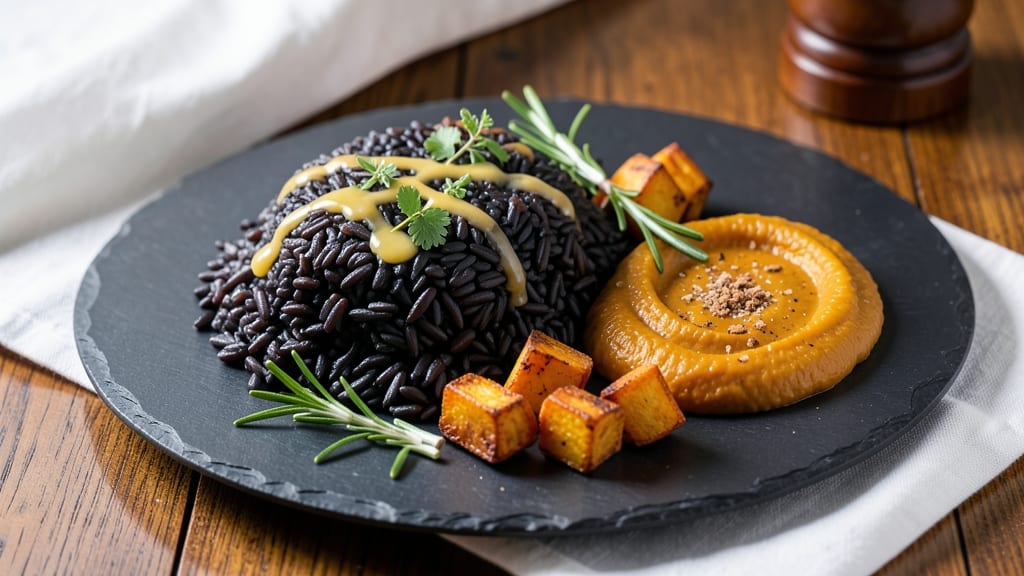
This black rice and butternut squash recipe transforms humble ingredients into a vibrant, earthy dish that’s as nutritious as it is delicious. The deep purple hue of black rice pairs perfectly with the natural sweetness of roasted butternut squash, creating a visually stunning side that’s rich in fiber and antioxidants.
What makes this recipe special is how the flavors meld together—warm spices like cinnamon and nutmeg enhance the squash, while the rice absorbs the savory aromas for a cohesive bite.
With just 30 minutes of active prep and 45 minutes of baking, this dish is ideal for weeknight dinners or holiday spreads. The squash roasts until tender and caramelized, while the black rice cooks up fluffy and fragrant, ready to be combined into a single, satisfying plate.
Whether served as a standalone vegan meal or alongside grilled proteins, this recipe delivers restaurant-quality results with minimal effort.
Ingredients for black rice butternut squash
Earthy black rice and tender butternut squash create a visually stunning, nutrient-packed dish perfect for any meal.
| Ingredient | Amount | Notes |
|---|---|---|
| Black Rice 🌾 | 1 cup | Uncooked, rinsed thoroughly |
| Butternut Squash 🎃 | 3 cups | Cubed, 1-inch pieces |
| Vegetable Broth 💧 | 2 cups | Low-sodium preferred |
| Coconut Milk 🥥 | 13 ½ oz | Full-fat canned variety |
| Cinnamon 🌿 | 1 tsp | Ground, high-quality |
| Nutmeg 🌿 | ¼ tsp | Freshly grated preferred |
| Garlic Cloves 🧄 | 3 cloves | Minced for even cooking |
| Olive Oil 🫒 | 2 tbsp | Extra-virgin for richness |
| Maple Syrup 🍁 | 1 tbsp | Pure, grade B preferred |
| Salt 🧂 | ½ tsp | Diamond Crystal kosher |
| Black Pepper 🌶️ | ¼ tsp | Freshly cracked |
| Fresh Thyme 🌿 | 2 tbsp | Chopped leaves only |
| Lemon Juice 🍋 | 1 tbsp | Freshly squeezed |
The black rice is the star here—look for forbidden black rice at specialty stores or Asian markets, as it's not always stocked at regular grocery chains. Trader Joe's carries it in their frozen section, which works perfectly for this recipe. For the butternut squash, choose a smaller sugar pie variety if available—it's sweeter and more tender. The squash should be firm with no soft spots, and a bright, even color. If you can't find fresh thyme, dried thyme at one-third the amount works in a pinch, though fresh is ideal for that bright herbal note.
No coconut milk? Full-fat cashew cream makes an excellent substitute, though the texture will be slightly thicker. The maple syrup adds depth, but agave nectar or date syrup works just as well if you prefer. For the cinnamon and nutmeg, pre-ground spices are fine, but if you have whole spices, toast them lightly before grinding for a more intense flavor. The garlic can be minced finely or left in small chunks—just be consistent. If you're short on time, pre-cubed butternut squash from the grocery store saves chopping, though it's worth the extra minute for freshly cut pieces.
The black rice keeps well in the fridge for up to 5 days once cooked, though it's best enjoyed within 2-3 days for optimal texture. Store it in an airtight container with a damp paper towel to prevent drying. The roasted squash can be prepped ahead and refrigerated for 3 days before baking—just reheat the baked pieces with a splash of water to restore moisture. For meal prep, combine the cooked rice and squash in a single container, adding a drizzle of olive oil to keep everything fresh. This dish reheats beautifully, making it perfect for batch cooking—just warm gently on the stove with a splash of water to revive the flavors.
Why You'll Love This Recipe
- One-Pot Magic: I swear by this—just toss everything into one pot: rice, squash, broth, and coconut milk. No chopping boards to clean, no extra dishes. The squash softens right in the rice, and by the time the rice is tender, the whole thing smells like a hug.
- Creamy-Spiced Dream: That cinnamon and coconut milk combo? It’s the secret weapon. The black rice adds an earthy depth, while the squash soaks up all the richness—like a cross between a curry and a dessert. (Yes, even on a Tuesday night.)
- Meal Prep MVP: Make a big batch on Sunday, and you’ve got lunch or dinner covered all week. The flavors only get better as it sits—especially the way the cinnamon mellows into something warm and inviting. My kids grab it straight from the fridge, no complaints.
Step-by-step instructions for earthy purple rice with roasted squash
This method balances rich textures and warm spices for a harmonious dish where black rice absorbs all the flavors.
Roast the Butternut Squash Until Caramelized
Preheat your oven to 400°F and line a baking sheet with parchment paper. Toss the 3 cups of butternut squash with 1 tablespoon of olive oil, ½ teaspoon of salt, and ¼ teaspoon of black pepper. Spread in an even layer, ensuring the pieces aren't crowded.
Roast for 25-30 minutes until the edges are deeply caramelized and a knife slides in easily. The squash should smell sweet and toasty—this is your cue to remove it from the oven. Let it cool slightly before proceeding, as hot squash will release moisture that can dilute your rice later.
Toast the Black Rice and Build the Flavor Base
In a medium saucepan, heat 1 tablespoon of olive oil over medium heat. Add the 1 cup of black rice and toast for 2-3 minutes, stirring constantly, until the grains become fragrant and slightly translucent at the edges. This step develops the nutty depth of the rice.
Add the 3 cloves of minced garlic and cook for 30 seconds until fragrant. Immediately pour in the 2 cups of vegetable broth and bring to a gentle simmer. Reduce heat to low and cover, letting the rice absorb liquid for 15 minutes without stirring. The lid creates steam that prevents the rice from drying out.
Infuse the Rice with Spices and Coconut Milk
After the initial 15 minutes, stir the rice gently and add the 13.5 oz of coconut milk, 1 teaspoon of cinnamon, ¼ teaspoon of nutmeg, 1 tablespoon of maple syrup, and 2 tablespoons of chopped fresh thyme. Increase heat to medium-low and simmer uncovered for 10-12 minutes until the rice is tender and the liquid has reduced to a creamy consistency.
Here's the thing—black rice needs gentle handling. If it looks dry before the time is up, add 2-3 tablespoons of water to maintain moisture. The rice should be al dente with a slight bite, not mushy. Remove from heat and let it sit covered for 5 minutes to finish absorbing flavors.
Combine and Finish with Brightness
Transfer the roasted squash to the rice pot and gently fold everything together. The residual heat will warm the squash while integrating its caramelized sweetness. Stir in the 1 tablespoon of lemon juice and adjust seasoning with additional salt if needed.
For the final touch, let the dish rest for 5 minutes before serving. This resting period allows the flavors to meld completely, creating a cohesive dish where the earthy black rice contrasts beautifully with the sweet, roasted squash. The lemon juice brightens the richness of the coconut milk, balancing the warm spices.
Pro Tips For Making Black Rice Butternut Squash
- SOAK THE RICE OVERNIGHT: Black rice stays stubbornly hard unless you soak it—at least 4 hours, ideally overnight. I learned this the hard way after serving a batch where half the grains were still chewy. Rinse it first, then cover with plenty of water (double the rice volume) to break down the tough outer layer.
- ROAST THE SQUASH SKIN-ON: Cut the butternut squash in half lengthwise, scoop out the seeds, then roast it whole at 400°F (200°C) for 45 minutes before cubing. The skin caramelizes into sweet, crispy edges—no peeling required. (Yes, even if you’re impatient like me, resist the urge to speed this up.)
- SIMMER COCONUT MILK LOW: Coconut milk curdles fast when it boils, turning your creamy sauce into a lumpy mess. Once you add it to the pot, keep the heat at a bare simmer—just enough to see tiny bubbles at the edges. Stir occasionally, but don’t let it bubble vigorously.
- SAVE THE BROTH STARCH: After roasting the squash, don’t dump that starchy roasting liquid down the drain. Strain it into your vegetable broth before simmering—it thickens the sauce naturally without extra cornstarch. (I skip this, and the dish still works, but it’s noticeably smoother when I don’t.)
Common mistakes when making your black rice butternut squash
Overcooking the Squash
Butternut squash is forgiving, but over-roasting turns it mushy and dull. I’ve burned 30 minutes watching it turn to puree—don’t let that happen! Remove it from the oven when it’s tender with just a hint of resistance.
A fork should slide in easily, but the edges should still hold their shape. If you’re unsure, cut a test piece—it should be golden with caramelized edges, not brown and watery. 🎃
Skipping the Rice Toast
Toasting the black rice for 2-3 minutes before cooking unlocks its nutty depth, but I’ve seen people skip this step and end up with bland rice. The toasted grains release starches that create a richer base for the coconut milk and spices.
If you’re short on time, at least stir the raw rice in the pot for 1 minute over medium heat to warm it before adding liquid.
Ignoring the Resting Time
Rushing to serve the rice immediately after cooking is a rookie mistake. Black rice needs 5-10 minutes off the heat to finish absorbing flavors and firming up. I’ve served it too soon, and the grains turned mushy.
Let it sit covered while you roast the squash—multitasking saves time and improves texture. The same goes for the final resting period after combining everything.
Overcrowding the Pan
Black rice expands dramatically—1 cup uncooked turns into nearly 3 cups cooked. If you’re using a small pot, the rice will steam instead of toast, and the grains may turn out gummy.
Use a pot with at least 2-quart capacity for 1 cup of rice. If you’re cooking for more, work in batches or use a larger pot. Trust me, your rice will thank you.
Using Low-Quality Spices
Pre-ground cinnamon and nutmeg lose potency quickly, but I’ve used them anyway—and regretted it. For this dish, freshness matters. If you don’t have whole spices, buy high-quality pre-ground varieties like Penzeys or McCormick Gourmet Collection.
A little extra cost ensures warm, aromatic flavors that shine in the coconut milk. The same goes for thyme—fresh is non-negotiable for that bright herbal note.
Underseasoning the Squash
The roasted squash carries the dish, so don’t skimp on salt. I’ve made this mistake, and the final dish tasted flat. Season the squash with ½ teaspoon of salt before roasting—it enhances sweetness and balances the earthy rice.
Taste it after roasting and adjust if needed. The squash should be savory, not bland, so don’t be shy with the salt.
Nutrition facts
Frequently asked questions
Can I substitute regular brown rice for black rice in this recipe?
While you can use brown rice, the flavor and texture will differ significantly. Black rice has a naturally nutty, earthy taste and a deeper purple hue that pairs beautifully with the squash. For a similar texture, try wild rice blend, but expect a slightly chewier bite. The dish will still be delicious, but the visual contrast and unique flavor profile will be lost.
How do I store leftovers and reheat this dish?
Store leftovers in an airtight container in the fridge for up to 5 days. To reheat, warm gently on the stove with 1-2 tablespoons of water or coconut milk to restore moisture. Microwave reheating works too, but add a splash of water first to prevent drying. For best texture, reheat only until warmed through—overheating can make the squash mushy.
Can I make this recipe without coconut milk?
Yes! Use full-fat cashew cream (blend soaked cashews with water) or even vegetable broth for a lighter version. For richness, add 1 tablespoon of tahini or nutritional yeast. The dish will be less creamy but still flavorful. The key is maintaining the balance of sweetness and earthiness from the spices and squash.
Is this dish naturally gluten-free and vegan?
This recipe uses only plant-based ingredients and contains no gluten. Double-check your spices and broth labels to ensure they're certified gluten-free if needed. The black rice and butternut squash are both naturally gluten-free, making this a safe option for gluten-sensitive or vegan diets.
What's the best way to serve this dish?
This vibrant side pairs beautifully with grilled proteins like tofu or tempeh, or as a standalone vegan meal. Garnish with toasted pumpkin seeds or fresh parsley for extra crunch. For a complete plate, serve with a simple green salad dressed with lemon vinaigrette to balance the richness.