
Main Courses
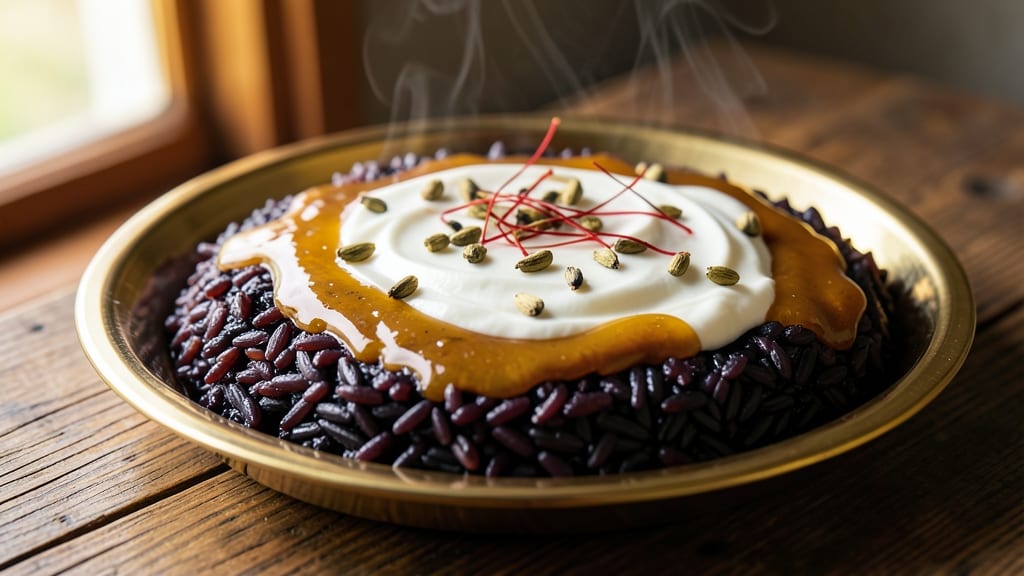
This black rice halwa recipe transforms humble grains into a luxurious, fragrant dessert that balances earthy depth with velvety sweetness.
The secret lies in slow-cooking black rice until it breaks down into a creamy, almost pudding-like texture, then infusing it with warm cardamom and saffron for an aroma that fills your kitchen like a spice market.
I developed this version after struggling to find the perfect balance between traditional methods and modern convenience—no one wants to wait hours for dessert to set properly.
The magic happens in layers: first, the rice simmers until tender, absorbing the richness of ghee and milk; then, the sugar caramelizes into a glossy, golden syrup that coats every grain. A generous swirl of cardamom-infused milk at the end creates those signature marbled streaks that make this halwa irresistible.
What you'll end up with is a dessert that's firm enough to slice but still creamy at the center, with a fragrance so intense it feels almost sinful.
This recipe delivers restaurant-quality results without requiring specialized equipment—just a heavy-bottomed pot and patience. The texture is what sets it apart: neither too dense nor too runny, but perfectly set with a slight give when cut.
Garnish with chopped pistachios or silver leaf for an extra touch of elegance, or serve warm with a dollop of whipped cream for contrast. It's the kind of dessert that disappears quickly but leaves a lasting impression.
Perfect for special occasions or when you want to impress guests, this halwa also freezes beautifully for up to three months. The flavors actually deepen over time, making it an ideal make-ahead dessert. Let's create something truly special with this timeless recipe.
Ingredients for black rice halwa
Six ingredients transform simple black rice into a fragrant, luxurious dessert with cardamom swirls.
| Ingredient | Amount | Notes |
|---|---|---|
| Black Rice 🌾 | 1 ½ cups | Uncooked, rinsed thoroughly |
| Ghee 🧈 | ½ cup | Clarified butter, unsalted |
| Whole Milk 🥛 | 2 cups | Full-fat preferred |
| Granulated Sugar 🍚 | 1 ½ cups | White or brown preferred |
| Cardamom Pods 🌿 | 10 whole | Green cardamom preferred |
| Saffron Threads 🧡 | ¼ tsp | High-quality, food-grade |
| Pistachios 🥜 | ½ cup | Chopped, unsalted |
| Heavy Whipping Cream 🥛 | ½ cup | For garnish, optional |
| Salt 🧂 | ¼ tsp | Fine sea salt |
| Water 💧 | 1 ½ cups | Filtered preferred |
| Silver Leaf ✨ | 1 sheet | Edible gold or decorative |
Black rice is the heart of this halwa, and organic black rice from Indian specialty stores delivers the richest color and earthy flavor. Look for packages labeled 'forbidden rice'—the same kind used in high-end desserts. If you can't find it, substitute with regular black rice from Asian markets, but rinse it thoroughly to remove excess starch. The ghee should be pure, unsalted, and high-quality—brands like Ghee Himalaya or Organic India are excellent choices. Cardamom pods are non-negotiable; green cardamom from spice markets has a more complex flavor than the ground variety. Saffron can be pricey, but one high-quality pinch is worth it—avoid the cheap bulk bins unless you're certain of its authenticity.
No ghee? Substitute with unsalted butter or coconut oil, though the flavor will differ slightly. Running low on cardamom? Ground cardamom at half the amount works in a pinch, but whole pods release more aroma during cooking. For a budget-friendly saffron alternative, turmeric at a quarter teaspoon adds color (though no saffron flavor). The pistachios can be swapped for chopped almonds or cashews, but they won’t match the signature nutty sweetness. If you’re making this ahead, toast the pistachios separately and add them just before serving to keep them crisp. The sugar can be adjusted—reduce by 0.25 cup for less sweetness or increase for a richer dessert.
This halwa tastes even better the next day, so make it a day ahead if possible. Store it in an airtight container at room temperature for up to 5 days, or freeze for 3 months by wrapping tightly in plastic. To reheat, microwave for 30 seconds or warm gently in a skillet. The silver leaf is purely decorative—add it just before serving to keep it shimmering. For a modern twist, drizzle with melted dark chocolate instead of whipped cream. Portion into small ramekins for elegant individual servings, or serve in a large dish for sharing.
Why You'll Love This Recipe
- No Soak Required: I’ll admit, I used to dread the soaking step with black rice—but this halwa skips it. Just rinse the grains, toast them lightly in ghee, and let the milk do the heavy lifting while you sip chai. The rice softens into that perfect, creamy pudding texture without any fuss.
- Deep, Nutty Magic: That first spoonful of black rice halwa? It’s like dessert and comfort food had a lovechild. The rice itself has an earthy, almost toasty depth, while the ghee adds a rich, buttery warmth. Cardamom cracks through with its bright citrusy punch—honestly, it’s the kind of flavor that makes you pause mid-bite.
- Party or Patience: Here’s what sold me—this halwa is both a showstopper and a sneaky weeknight win. Serve it warm in bowls for Diwali gatherings (it’ll impress everyone) or make a big batch to reheat with milk for lazy mornings. My kids even ask for it after school—yes, even on a Tuesday night.
- Leftovers That Lie: Between us, this halwa tastes better the next day. The flavors meld into something even richer, and it reheats in seconds with just a splash of milk. Plus, the ingredients are simple—no fancy imports, just whole milk and sugar you already have. I’ve made this for under $8 and fed a crowd. Practical? Absolutely. Worth it? Always.
Step-by-step instructions for black rice halwa with cardamom swirls
Transforming black rice into a luscious, fragrant halwa requires patience and precision.
Toast and Cook the Black Rice
In a heavy-bottomed pot, heat the 0.5 cup Ghee over medium heat until it shimmers but doesn't smoke. Add the 1.5 cups Black Rice and toast for 5-7 minutes, stirring constantly, until the grains turn slightly darker and release a nutty aroma. This step enhances the rice's natural earthiness and prevents mushiness.
Add the 1.5 cups Water and 0.25 tsp Salt, then bring to a boil. Once boiling, reduce heat to low, cover with a tight lid, and simmer for 25-30 minutes until the rice absorbs all the liquid and becomes tender. The rice should be soft but not mushy—it will continue cooking in the milk later. If it sticks, stir gently with a wooden spoon to prevent burning.
Infuse the Milk with Cardamom and Saffron
In a separate saucepan, combine the 2 cups Whole Milk, 10 whole Cardamom Pods, and 0.25 tsp Saffron Threads. Bring to a gentle simmer over medium-low heat, being careful not to let it boil vigorously. Simmer for 10 minutes, allowing the cardamom to release its aromatic oils and the saffron to bloom fully. The milk should develop a pale golden hue and a distinct floral-citrus fragrance.
Strain the milk through a fine-mesh sieve into a clean saucepan, pressing gently on the cardamom pods to extract all the flavor. Discard the pods—no need to rinse the sieve afterward. This infused milk will carry the halwa's signature fragrance.
Combine and Simmer into a Thick Mixture
Transfer the cooked black rice to the saucepan with the infused milk. Stir well to combine, then add the 1.5 cups Granulated Sugar all at once. Increase heat to medium and bring the mixture to a gentle boil, stirring frequently to dissolve the sugar completely. Once boiling, reduce heat to low and simmer uncovered for 20-25 minutes, stirring every 3-4 minutes with a wooden spoon.
As the halwa thickens, you'll notice it coats the back of the spoon and pulls away from the sides of the pan. This is when you'll start to see a glossy sheen—your cue that the halwa is nearing perfection. If it thickens too quickly, add 1-2 tablespoons of water to adjust the consistency. The final texture should be thick but still pourable, like a rich pudding.
Fold in Pistachios and Finish with Silver Leaf
Once the halwa reaches the desired thickness, remove it from heat and let it cool slightly for 5 minutes. This resting period prevents the pistachios from releasing their oils too quickly, which could make the halwa greasy. Gently fold in the 0.5 cup chopped Pistachios using a spatula, ensuring even distribution throughout the mixture.
For the grand finale, carefully place the 1 sheet Silver Leaf on top of the halwa, smoothing it gently to adhere. If using the optional 0.5 cup Heavy Whipping Cream, pipe or dollop it artistically around the edges for contrast. Serve warm, allowing guests to admire the edible gold leaf before diving into the fragrant, earthy-sweet halwa.
Pro Tips For Making Black Rice Halwa
- SOAK THE RICE LONGER: Black rice needs at least 4 hours—overnight is better—to soften properly. I learned this the hard way when my halwa turned gritty because the rice didn’t break down enough, no matter how much I stirred.
- STIR LOW AND SLOW: Once the milk starts simmering, drop the heat to low and stir constantly with a wooden spoon. Let the milk reduce naturally—rushing it with high heat turns the halwa grainy instead of creamy, and you’ll end up with lumps instead of that silky texture.
- ADD SUGAR GRADUALLY: Dumping all the sugar at once risks burning it before the rice absorbs it. Instead, split it into two additions: half when the rice is halfway cooked, and the rest when it’s nearly done. This keeps the halwa from turning bitter or overly caramelized.
- USE CLOSED POT FOR FINISHING: After the rice is tender, switch to a heavy-bottomed pot, cover it, and let the steam work its magic on lowest heat for 10 minutes. This step locks in moisture and deepens the flavor—skipping it leaves the halwa dry and separate, no matter how much ghee you add.
Serving suggestions for black rice halwa
Warm With Whipped Cream
Serve this black rice halwa warm with a generous dollop of whipped cream piped around the edges. The cool, light cream contrasts beautifully with the rich, earthy halwa and adds a touch of elegance.
I like to use heavy whipping cream whipped to soft peaks for the best texture. For extra flair, dust with powdered sugar or a sprinkle of toasted coconut flakes. 🥛
Garnish with Pistachios
The chopped pistachios folded into the halwa aren’t just for flavor—they’re a stunning visual element. For an extra touch, toast them in a dry skillet for 2-3 minutes until golden, then sprinkle over the top just before serving.
If you want a nutty crunch, add a handful of roasted cashews alongside. The contrast of textures makes every bite exciting.
Pair With Chai Tea
Black rice halwa’s warm spices pair perfectly with a cup of masala chai or green tea. The cardamom and saffron flavors in the halwa complement the spices in chai, creating a harmonious dessert experience.
For a modern twist, serve with cold brewed coffee or spiced chai latte for a refreshing contrast. The tea’s warmth enhances the halwa’s cozy, inviting qualities. ☕
Slice for Individual Servings
Once cooled slightly, use a hot knife to slice the halwa into neat rectangles or diamonds. The heat from the knife creates a clean cut and prevents sticking. Serve on small plates with a side of mango chutney or rosewater syrup for dipping.
This presentation feels restaurant-worthy and makes sharing effortless. For a festive touch, arrange slices on a tiered stand. ✨
Serve in Ramekins
For an elegant, individual presentation, portion the halwa into small ramekins or dessert cups while still warm. Top each with a single pistachio or a delicate piece of edible silver leaf. This works beautifully for parties or when you want to create a visually stunning dessert table.
The ramekins also make it easy to serve at the perfect temperature—no waiting for the whole dish to cool. 💫
Pair With Fresh Fruit
Balance the richness of the halwa with fresh fruit like sliced mango, kiwi, or pomegranate seeds. The bright acidity cuts through the sweetness and adds a refreshing contrast. I often serve it with a small bowl of coconut yogurt on the side for dipping.
The fruit also adds a pop of color that makes the dish even more inviting. 🍓
Nutrition facts
Frequently asked questions
Why does black rice turn purple when cooked?
The deep purple color comes from anthocyanins, natural pigments in black rice that react to heat and acidity. When cooked properly with ghee and milk, these pigments soften into a rich, velvety hue rather than turning muddy. The longer you simmer it, the more the color deepens into that signature maroon shade.
Can I make this halwa without ghee?
Yes! Substitute with unsalted butter or coconut oil, though the flavor will be slightly different. For a neutral taste, use vegetable oil, but reduce it by 1 tablespoon since it's less rich. The key is to maintain the same cooking method—low and slow—to develop the creamy texture.
How do I fix if my halwa turns out too runny?
If your halwa is too thin, return it to low heat and stir continuously for 5-10 minutes, letting it thicken naturally. Avoid adding more sugar—it can make the texture grainy. For a quick fix, mix 1 tablespoon cornstarch with 2 tablespoons cold water, stir into the halwa, and cook for 2 more minutes until thickened.
Can I use brown sugar instead of white?
Brown sugar adds a subtle caramel flavor that pairs beautifully with the earthy black rice. Use the same 1.5 cups measurement, but reduce the milk by 2 tablespoons since brown sugar contains more moisture. The halwa will have a deeper, molasses-like richness.
What's the best way to store leftover halwa?
Store in an airtight container at room temperature for up to 5 days, or freeze for 3 months. To reheat, microwave for 20-30 seconds or warm in a skillet over low heat with a splash of milk. The texture may firm up slightly when cold, but it softens beautifully when reheated.