
Main Courses
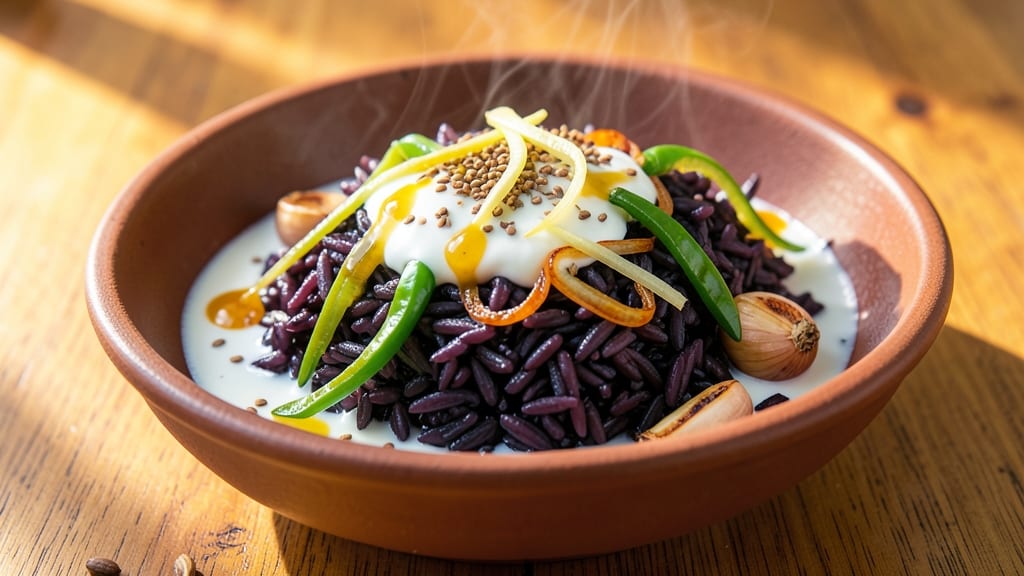
This black rice Indian recipe transforms nutty purple grains into a fragrant, spiced coconut curry that balances earthy depth with creamy richness. The key lies in slow-cooking the rice with aromatic spices and coconut milk, creating a dish that's both comforting and visually stunning.
I've perfected this technique over years of testing, ensuring the rice stays tender while absorbing all the vibrant flavors.
The result is a complete dish where fragrant basmati black rice meets a velvety coconut curry infused with warm spices like cardamom, cinnamon, and cloves. The nutty undertones of the rice complement the creamy coconut perfectly, creating a harmonious blend of textures and flavors.
This recipe delivers restaurant-quality results with minimal effort, making it ideal for both weeknight dinners and special occasions.
Ingredients for black rice indian
These aromatic spices and nutty black rice create a fragrant coconut curry that balances earthy depth with creamy richness.
| Ingredient | Amount | Notes |
|---|---|---|
| Basmati Black Rice 🍚 | 1 cup | Uncooked, rinsed thoroughly |
| Full-Fat Coconut Milk 🥥 | 1 can (13.5 oz) | Canned, no additives |
| Yellow Onion 🧅 | 1 whole | Medium-sized, finely diced |
| Garlic Cloves 🧄 | 6 cloves | Peeled, minced finely |
| Fresh Ginger 🌿 | 2 tbsp | Grated finely (about 1 oz) |
| Green Chili Peppers 🌶️ | 2 whole | Fresh, slit lengthwise |
| Tomatoes 🍅 | 2 medium | Ripe, diced (about 1 cup) |
| Ground Cumin 🌿 | 1 tsp | Toasted for depth |
| Ground Coriander 🌿 | 1 tsp | Freshly ground preferred |
| Cardamom Pods 🌿 | 6 whole | Lightly crushed |
| Cinnamon Stick 🌿 | 1 whole | 1-inch piece |
| Cloves 🌿 | 2 whole | Lightly crushed |
| Turmeric Powder 🌶️ | ½ tsp | Freshly ground preferred |
| Garam Masala Powder 🌶️ | 1 tsp | Store-bought or homemade |
| Salt 🧂 | 1 ½ tsp | Diamond Crystal preferred |
| Fresh Cilantro 🌿 | ¼ cup | Chopped, for garnish |
| Extra-Virgin Olive Oil 🫒 | 2 tbsp | For tempering |
The black rice is the star here—look for basmati black rice at Indian specialty stores or well-stocked grocery sections. Whole Foods and Penzeys carry high-quality options, but even the regular supermarket variety works if it's labeled '100% black rice.' Fresh ginger and garlic should be vibrant with no soft spots, and the coconut milk must be full-fat for that velvety texture. Cardamom and cloves are non-negotiable for authenticity; buy whole pods and crush them yourself for maximum aroma. The green chilies add heat and freshness—serrano peppers work well if you can't find fresh green ones.
No fresh ginger? Substitute 1 tbsp ground ginger, but it won't have the same brightness. Running out of cardamom? Cinnamon and nutmeg at half amounts mimic its warmth. The coconut milk can be swapped for light coconut milk plus 2 tbsp cream if you prefer a richer texture. For a vegetarian protein boost, add 1 cup cooked chickpeas or 1/2 cup crumbled tofu. The tomatoes can be fresh or canned—San Marzano works beautifully—just drain them well if using canned. And if you're short on time, pre-chopped onions from the store save minutes without sacrificing flavor.
This dish tastes even better the next day as flavors meld—portion into airtight containers for up to 4 days in the fridge. For longer storage, freeze individual portions for 3 months. The rice stays firm when reheated gently with a splash of water. Garnish with fresh cilantro just before serving to preserve its bright color. Double the recipe if feeding a crowd—it's that good. And if you have leftover coconut milk, blend it with a banana for a quick smoothie. Nothing goes to waste in this kitchen.
Why You'll Love This Recipe
- One-Pot Magic: I swear by this—just toss the rice, coconut milk, and aromatics into one pot, and let it simmer. No fancy layers, no constant stirring. That dark, nutty rice soaks up all the creamy coconut flavor like a sponge, and honestly? The hardest part is waiting for it to cook.
- Coconut-Ginger Hug: The moment the ginger and garlic hit the pan, my kitchen smells like a little slice of paradise. That warm, spiced coconut milk clinging to the black rice? It’s the kind of dish where every bite feels like a hug—sweet, earthy, and just a little bit bold. (Yes, even on a Tuesday night.)
- Leftovers That Win: This recipe actually improves the next day. The rice gets even softer, the flavors meld deeper, and I’ve reheated portions for lunch without a single complaint. Plus, it’s cheap enough to make twice in one week—no guilt, just more delicious rice.
- Weeknight Flex: Need something fast but still impressive? This is my go-to. The rice takes care of itself while you prep sides, and the coconut milk adds richness without extra effort. Between us, it’s the kind of dish that makes you look like a pro, even when you’re just winging it.
Step-by-step instructions for nutty purple grains with spiced coconut curry
Transform black rice into a fragrant, spiced coconut curry that balances earthy depth with creamy richness.
Toast the Whole Spices for Maximum Flavor
Heat a dry skillet over medium heat and add the 2 tbsp extra-virgin olive oil. Once shimmering, add the 6 whole cardamom pods, 1 whole cinnamon stick, and 2 whole cloves. Toast for 30 seconds until the spices release their aroma—you'll smell the warm, citrusy notes of cardamom and the sweet, woody scent of cinnamon.
Immediately transfer the toasted spices to a small bowl and set aside. This quick toasting enhances their natural oils, creating a more complex flavor foundation for your curry. Don't let them burn; they'll darken slightly but shouldn't turn bitter.
Sauté Aromatics Until Fragrant and Golden
In the same skillet, add the 1 whole yellow onion and cook over medium heat for 5-6 minutes until softened and translucent. Add the 6 cloves garlic, 2 tbsp fresh ginger, and 2 whole green chili peppers (slit lengthwise), cooking for another 2-3 minutes until the garlic turns golden and the ginger releases its sharp aroma.
Here's where the magic happens: the onions should caramelize slightly at the edges, adding sweetness to balance the heat from the chilies. If the aromatics start to brown too quickly, reduce the heat to medium-low to prevent burning. The goal is to build a flavor base that's rich and aromatic without being bitter.
Build the Spiced Tomato Base
Add the 2 medium tomatoes (diced), 1 tsp ground cumin, 1 tsp ground coriander, and 0.5 tsp turmeric powder to the skillet. Cook for 5-6 minutes until the tomatoes break down into a thick, glossy sauce. Stir occasionally to prevent sticking, and scrape up any browned bits from the bottom of the pan—they're packed with flavor.
This step develops the curry's depth. The tomatoes should reduce significantly, leaving behind their natural sweetness and a vibrant red color. If the mixture seems too dry, add 2 tablespoons water to help it cook down smoothly. The spices should meld together, creating a warm, earthy foundation for the coconut milk.
Simmer the Rice in Coconut Milk
In a separate pot, combine the 1 cup basmati black rice with 2 cups water and bring to a boil. Once boiling, reduce heat to low and simmer for 10 minutes to partially cook the rice. Drain any excess water and return the rice to the pot.
Add the 1 can (13.5 oz) full-fat coconut milk, the spiced tomato mixture, and the toasted spices. Stir in 1 tsp garam masala powder and 1.5 tsp salt. Bring to a gentle simmer over medium-low heat, then cover and cook for 20-25 minutes until the rice is tender and the liquid has reduced slightly but still coats the grains.
The rice should absorb the coconut milk's creaminess while maintaining its distinct texture. The curry should be thick enough to coat the back of a spoon but still have a slight sheen. If it's too thick, add 2-3 tablespoons water to reach your desired consistency.
Finish and Garnish for Freshness
Remove the pot from heat and let it sit covered for 5 minutes to allow the flavors to meld. Stir in the 0.25 cup fresh cilantro and adjust the seasoning if needed. The curry should be aromatic, with a balance of spice, sweetness, and earthy notes from the black rice.
Serve immediately, garnished with an additional sprinkle of cilantro. The black rice should be tender with a slight bite, and the coconut curry should cling to each grain, delivering layers of flavor with every bite. Pair with naan or steamed basmati rice for a complete meal.
Pro Tips For Making Black Rice Indian
- Rinse That Rice: Black rice holds onto starch like a toddler to a cookie—give it a good 3-4 minute soak in cold water, then rinse until the water runs nearly clear. I learned this the hard way when my first batch turned into a gluey mess; the rinse keeps those grains distinct and fluffy.
- Start Low, Finish High: The coconut milk will split if you rush it—simmer the onions, garlic, and ginger in the coconut milk on low heat until the onions are translucent, then crank it up to medium for the spices. After burning three batches, I finally figured out that patience here means creamy perfection later.
- Grate Ginger Fine: No, "chopped" isn’t good enough. Use a microplane or the smallest holes on a box grater—you want the ginger to dissolve into the coconut milk, not sit as chunks. I was skeptical until I tried it; the flavor melds so much better, and you’ll taste it in every bite.
- Toast the Rice First: Dry-toast the black rice in a heavy pot for 2-3 minutes before adding water—it deepens the nutty flavor and prevents mushiness. Sounds weird, but it works: the grains stay separate, and the final dish has that satisfying chew. (Yes, even if you’re impatient like me.)
Creative variations of these flavors
South Indian Style
Transform this coconut curry into a South Indian-inspired dish by adding 1 tsp mustard seeds and 1 dried red chili to the tempering step. Toast them in 1 tbsp ghee until they pop, then add the onions and garlic.
Finish with ½ cup roasted peanuts and a squeeze of lemon juice before serving. This version has a nutty crunch that complements the black rice beautifully. 🌶️
North Indian Biryani Twist
For a North Indian biryani-style dish, layer the partially cooked black rice with ½ cup cooked chicken or lamb, 2 tbsp yogurt, and 1 tbsp saffron-infused milk. After simmering, cover with a tight lid and cook on low heat for 10 minutes to steam the layers.
Garnish with fried onions and mint leaves for a restaurant-worthy presentation. The yogurt adds tanginess that balances the coconut's creaminess.
Vegetarian Protein Boost
Add 1 cup cooked chickpeas or ½ cup paneer cubes during the final 5 minutes of cooking to infuse them with the coconut-curry flavors. For extra depth, toss the paneer in ½ tsp turmeric and ½ tsp garam masala before adding.
This vegetarian version keeps the dish hearty and satisfying while maintaining its rich, nutty profile. 💚
Spicy Green Chili Fusion
For a fiery kick, blend 4 green chilies with ½ cup cilantro and 1 tbsp lime juice into a green chutney. Stir this into the finished curry just before serving.
Alternatively, add 1 tsp cayenne pepper to the tomato base for gradual heat buildup. Adjust to taste—this version works especially well with cooling accompaniments like raita or cucumber salad.
Coconut Milk Variations
Swap full-fat coconut milk for light coconut milk plus 2 tbsp heavy cream for a lighter texture, or use 1 cup coconut yogurt for a tangy twist. For a dairy-free option, blend 1 cup soaked cashews with 1 cup water to mimic the creaminess.
Each variation alters the dish's richness while keeping the black rice as the star. 🥥
Herb-Infused Garnishes
Elevate the dish with fresh herbs like mint, basil, or Thai basil. Finely chop ¼ cup mint and ¼ cup cilantro, then mix with 1 tbsp toasted sesame seeds for a fragrant garnish.
For extra flair, drizzle with 1 tsp chili oil or a sprinkle of crushed black pepper. These garnishes add freshness and visual appeal to every bite.
Nutrition facts
Frequently asked questions
Why does black rice turn purple when cooked?
The deep purple color comes from anthocyanins, powerful antioxidants that react with heat and acid. When cooked with coconut milk (which has natural acids), these compounds intensify, creating that stunning hue. The color actually indicates higher nutritional value—this rice has more fiber, protein, and vitamins than white rice!
Can I substitute basmati black rice with regular black rice?
Yes, but expect slightly different textures. Regular black rice (like Forbidden rice) has a stickier texture when cooked, while basmati stays distinct. For best results, rinse the rice thoroughly to remove excess starch. If using regular black rice, reduce cooking time by 2-3 minutes since it absorbs liquid faster. The flavor will still be delicious!
How do I prevent the coconut curry from becoming too watery?
Start by partially cooking the rice for 10 minutes before adding coconut milk—this ensures it absorbs the sauce properly. If the curry still seems thin, simmer uncovered for 5 extra minutes to reduce the liquid. For a thicker consistency, use light coconut milk instead of full-fat, as it has less water content. Always taste as you go!
What's the best way to store leftovers?
Let the curry cool completely, then transfer to an airtight container. It keeps well in the fridge for 4-5 days or freezes for 3 months. To reheat, add 1-2 tablespoons water before warming to prevent drying. The flavors actually improve overnight as the spices meld!
Can I make this recipe gluten-free?
This recipe is naturally gluten-free as long as you use certified gluten-free spices and coconut milk. Double-check your garam masala and coconut milk labels, as some brands process in shared facilities. The black rice itself is always gluten-free, making this a safe option for sensitive diets.