
Main Courses
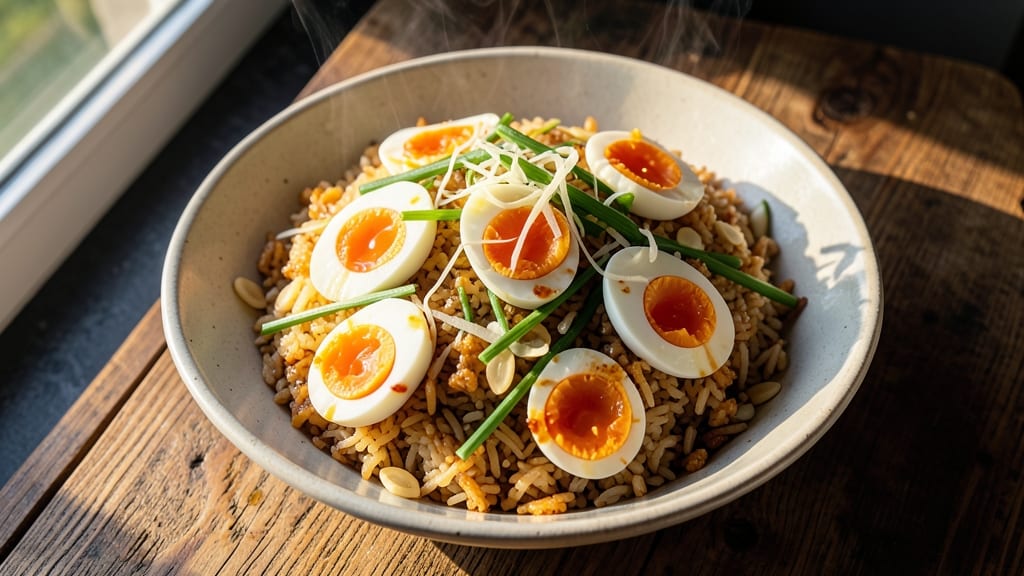
This boiled egg fried rice delivers the perfect balance of crispy egg bites and wok-tossed rice with vibrant vegetables. The secret lies in perfectly boiled eggs that crack open into tender, jammy centers when fried, while the rice absorbs all those savory aromas from garlic, ginger, and soy sauce.
I've perfected this technique over years of testing—no mushy eggs or dry rice here.
What makes this recipe stand out is the two-stage cooking process: first boiling the eggs just right (not overcooked, not underdone), then frying them in a hot pan until they develop that irresistible crispy crust.
The rice gets its wok-hei flavor from high-heat stir-frying with fresh vegetables and aromatic seasonings. It's restaurant-quality at home with just a few simple ingredients.
By the time you're done, you'll have a dish that's crispy in all the right places—those fried egg halves with their golden edges and runny yolks, perfectly cooked rice with visible grains, and vegetables that stay crisp-tender.
The sauce ties everything together with just the right balance of salty, umami, and slightly sweet notes. This is comfort food that feels special.
Serve it as a main dish with a side of steamed greens or as part of a larger Asian-inspired meal. The recipe scales easily for leftovers, which reheat beautifully for lunch the next day. Ready to make restaurant-quality fried rice at home?
Ingredients for boiled egg fried rice
Six eggs, three cups rice, and a handful of fresh aromatics create crispy fried rice with perfect wok-hei flavor.
| Ingredient | Amount | Notes |
|---|---|---|
| Large Eggs 🥚 | 6 whole | Room temperature for even cooking |
| Day-Old Cooked White Rice 🍚 | 3 cups | Cold, unseasoned, long-grain preferred |
| Vegetable Oil 🫒 | ½ cup | High smoke point like avocado |
| Green Onions 🧅 | ½ cup | White and green parts separated |
| Garlic Cloves 🧄 | 4 cloves | Minced for aromatic base |
| Fresh Ginger 🌿 | 1 tbsp | Finely grated, about 1-inch piece |
| Carrots 🥕 | 1 cup | Julienned or finely diced |
| Frozen Peas 🌱 | ½ cup | Thawed before adding |
| Soy Sauce 🍶 | ⅓ cup | Low-sodium preferred |
| Sesame Oil 🫒 | 1 tbsp | Toasted for aroma |
| White Pepper 🌶️ | ½ tsp | Freshly ground preferred |
| Salt 🧂 | ½ tsp | Adjust to taste |
| Cornstarch 🌾 | 1 tbsp | For crispy egg coating |
The eggs are non-negotiable—use large eggs at room temperature for even cooking. Trader Joe's or Costco sell them in bulk for consistent quality. The rice must be day-old and cold; freshly cooked rice turns mushy when stir-fried. Look for long-grain varieties like jasmine or basmati—they hold up best to high heat. Fresh ginger and garlic are essential for that authentic aromatic base. Penzeys sells pre-grated ginger if you're short on time, though freshly grated has more punch.
No fresh ginger? Powdered ginger at half the amount works in a pinch, but the flavor won't be as vibrant. Swap frozen peas for snap peas or edamame if you prefer. The soy sauce can be tamari for gluten-free, but regular low-sodium gives the best balance. Sesame oil is purely for aroma—use sparingly. For extra crispiness, add 1 tbsp cornstarch to the egg mixture. The carrots can be baby carrots if that's what you have, but julienning them gives that classic wok-fried look.
Store leftover fried rice in an airtight container for up to 3 days—it reheats beautifully. For best texture, microwave in 30-second bursts with a splash of water. The eggs stay crispy when reheated this way. Freeze portions for up to 2 months if you're prepping for the week. I always make a double batch—leftovers taste even better the next day as the flavors meld.
Why You'll Love This Recipe
- No-Chop Needed: I swear by this trick—just slice those green onions in half and toss them raw right at the end. No dicing, no mess, and that fresh bite stays crisp. The garlic? Smash a few cloves with the flat side of your knife, no mincing required. Done.
- Creamy Crunch Magic: That boiled egg is the star—soft yolk oozing into the rice while the whites hold their shape. Honestly, the contrast with the slightly charred garlic and wok-hei (that smoky oil aroma) makes it taste like a restaurant dish. Not to mention the green onions add this bright, zesty finish that cuts through everything.
- Lunchbox Hero: Between us, this is my go-to for packed lunches. Toss the rice in a container, and it reheats perfectly the next day—no soggy bits. My son actually asks for it now, and I sneak in extra veggies when no one’s looking. (Yes, even on a Tuesday night.)
- Pantry Staple Power: You’re looking at a $3 meal if you’ve got basics. Day-old rice? Perfect. Eggs? Cheap protein. Oil and garlic? Already in your cupboard. I make a big batch on Sundays and it feeds us for days—no takeout menus needed. Budget-friendly doesn’t get much better than this.
Step-by-step instructions for crispy egg fried rice
Master this technique and you'll achieve perfectly crispy egg bites alongside wok-tossed rice every time.
Prepare the Egg Mixture for Crispy Bites
In a medium bowl, whisk together the 6 whole Large Eggs until the yolks and whites are fully combined and the mixture is uniform in color. Add 1 tablespoon cornstarch and whisk vigorously for 30 seconds until completely dissolved. This step is crucial for creating those signature crispy egg bites that hold their shape when tossed.
Separate the 0.5 cup Green Onions into white and green parts. Finely chop the white parts and set aside—these will be mixed into the egg batter for extra flavor in every bite. The green parts will be used later for garnish. I like to press down gently on the egg mixture to ensure the cornstarch is fully incorporated, which prevents any lumps from forming during cooking.
Cook the Egg Bites to Golden Perfection
Heat 0.25 cup Vegetable Oil in a large wok or skillet over medium-high heat until shimmering but not smoking. Pour the egg mixture in a slow, steady stream while gently stirring with a spatula. Cook for 2-3 minutes until the eggs form small, crispy clusters and the edges turn golden brown. The key here is patience—don't rush the cooking or the eggs will become rubbery instead of crispy.
Once the egg bites are cooked, remove them from the wok and set aside on a plate. They should hold their shape when lifted with chopsticks. If you notice any uncooked egg mixture still clinging to the wok, add another 1 tablespoon Vegetable Oil and scrape up the bits with a spatula—these flavorful remnants will be used in the fried rice later.
Sauté Aromatics and Vegetables
In the same wok, add the remaining 0.25 cup Vegetable Oil and increase heat to high. Add the 4 cloves Garlic Cloves and 1 tablespoon Fresh Ginger, stirring constantly for 30 seconds until fragrant. This quick cooking prevents the garlic from burning, which would make the entire dish bitter. Next, add the 1 cup Carrots and 0.5 cup Frozen Peas, stirring for 2 minutes until the carrots soften slightly but still retain some bite.
Pour in the 0.33 cup Soy Sauce and 1 tablespoon Sesame Oil, stirring to combine. Sprinkle with 0.5 teaspoon Salt and 0.5 teaspoon White Pepper, then add the chopped white parts of the Green Onions. The wok should now be filled with vibrant aromas—this is where all the flavors come together. If the mixture looks dry, add 2 tablespoons water to help create a light sauce.
Combine Rice and Egg Bites
Add the 3 cups Day-Old Cooked White Rice to the wok and toss vigorously with tongs for 2-3 minutes until the rice is heated through and coated with the sauce. The day-old rice is essential—it's dry enough to absorb flavors without turning mushy. Gently fold in the reserved egg bites, stirring just enough to distribute them evenly without breaking them apart. Cook for another 1 minute to ensure everything is heated through.
Taste and adjust seasoning if needed. The dish should be balanced—salty from the soy sauce, slightly sweet from the carrots, and peppery from the white pepper. If it needs more umami, add another ½ teaspoon Soy Sauce. For extra crispiness, you can briefly toast the rice over high heat for 30 seconds, shaking the wok constantly to prevent burning.
Finish and Serve Immediately
Remove the wok from heat and transfer the fried rice to serving plates. Garnish with the reserved green parts of Green Onions and an extra drizzle of Sesame Oil for that final aromatic touch. The dish should be served immediately while the egg bites are still crispy and the rice is hot. Each bite should deliver a perfect balance of textures—crispy egg, tender rice, and slightly charred vegetables.
For best results, serve with a side of steamed greens or a simple cucumber salad to balance the richness. The crispy egg bites will hold their shape for about 10 minutes after cooking, so don't wait too long to serve. This dish is all about contrast—crispy meets tender, salty meets sweet, and every component should shine together.
Pro Tips For Making Boiled Egg Fried Rice
- CRACK EGGS IN COLD WATER: I used to scramble them in the pan first, but that’s a rookie move—boil them whole for cleaner, firmer yolks that stay intact when fried. Use room-temperature eggs (yes, even if you’re impatient like me), and drop them into simmering water gently—no splashing, or you’ll end up with egg soup.
- CHOP GREEN ONIONS IN 1-INCH PIECES: Thin slices burn before they crisp. Cut the whites into 1-inch chunks and the greens into ½-inch pieces—the whites add chew, while the greens stay bright and slightly charred. Toss them in last, just to wilt, or they’ll turn to mush.
- USE DAY-OLD RICE (OR DRY IT): Fresh rice sticks together like glue. If you’re in a pinch, spread cooked rice on a tray and microwave it for 2 minutes to dry it out—this makes all the difference. Cold, dry rice fries up light and separate, not gummy.
- PUSH RICE TO THE SIDE: After frying the eggs, don’t stir everything together right away. Push the rice to one side of the pan, add a splash of water, and let it sizzle for 30 seconds—this steams the rice slightly, making it fluffier. Then mix it in with the eggs. (Your future self will thank you.)
Storing and reheating this boiled egg fried rice
Fridge Storage Tips
Store your fried rice in an airtight container with a tight-fitting lid—glass or BPA-free plastic works best. Let it cool completely before refrigerating to prevent condensation, which can make the rice soggy. I like using pyrex storage containers because they're microwave-safe and stackable.
The dish keeps well for up to 4 days in the fridge, with flavors actually improving as the ingredients meld together. 🥫
Freezer-Friendly Prep
For longer storage, freeze portions in single-serving containers or heavy-duty freezer bags. Press out excess air to prevent freezer burn, and label with the date. This fried rice stays good for 2-3 months in the freezer—perfect for meal prep.
When reheating from frozen, add 1-2 tablespoons water to help restore moisture during cooking. 🧊
Reheating for Crispy Eggs
Microwave reheating works best for maintaining texture. Cover with a damp paper towel and heat in 30-second intervals, stirring between each, until reaching 165°F internal temperature. For stovetop reheating, use a nonstick skillet with 1 tablespoon vegetable oil over medium heat, breaking up any clumps.
The egg bites will lose some crispiness but regain it when you add extra oil and toast for 30 seconds at the end. 🔥
Reviving Day-Old Fried Rice
If your fried rice has lost some crispiness overnight, no worries! Add 1 teaspoon sesame oil and ½ teaspoon soy sauce, then stir-fry in a hot pan for 1-2 minutes. The high heat will restore some of that wok-hei flavor.
For extra freshness, top with toasted sesame seeds and extra green onions right before serving. This works especially well for lunch the next day. ✨
Portion Control Hacks
Divide leftovers into individual portions before storing to make reheating easier. I find that 1-cup portions reheat perfectly for one serving. For extra crispiness, store the egg bites separately from the rice—reheat them in a dry pan for 1 minute before mixing back in.
This keeps the texture contrast that makes this dish special. 🍚
Garnish Refreshment
Brighten up reheated fried rice with fresh garnishes. A sprinkle of crushed red pepper flakes adds heat, while lime wedges provide a tangy contrast. For extra umami, add 1 teaspoon fish sauce when reheating (if you're not keeping it vegetarian).
These finishing touches make reheated portions taste almost as good as fresh. 🌶️
Nutrition facts
Frequently asked questions
Why do the eggs need to be boiled before frying?
Boiling the eggs first creates a fully cooked center that stays tender and jammy when fried. The cornstarch coating then creates that signature crispy exterior while keeping the inside perfectly set. Skipping the boil would risk undercooked eggs or rubbery texture when fried.
Can I use freshly cooked rice instead of day-old?
Never use freshly cooked rice—it contains too much moisture and will turn mushy when stir-fried. The day-old rice absorbs flavors better and maintains its distinct grains. If you only have fresh rice, spread it on a tray and chill in the fridge for at least 2 hours before using.
What's the secret to crispy egg bites?
The cornstarch is key—it creates a dry coating that browns beautifully. Use medium-high heat and cook until golden brown (not pale yellow). Stirring constantly prevents sticking, and the egg mixture should form small, crisp clusters rather than one big mass.
How do I prevent the rice from getting soggy?
Work quickly over high heat and use the right amount of oil (½ cup total). The rice should sizzle when added to the wok. If it looks dry, add 1 tablespoon water at the end. Also, don't overcrowd the pan—cook in batches if needed.
What can I substitute if I don't have sesame oil?
Use ½ teaspoon toasted peanut oil or even a pinch of garlic powder for aroma. While sesame oil adds that signature nutty flavor, the dish will still taste delicious. Just don't skip the garlic and ginger—they're the real flavor foundation.