
Main Courses
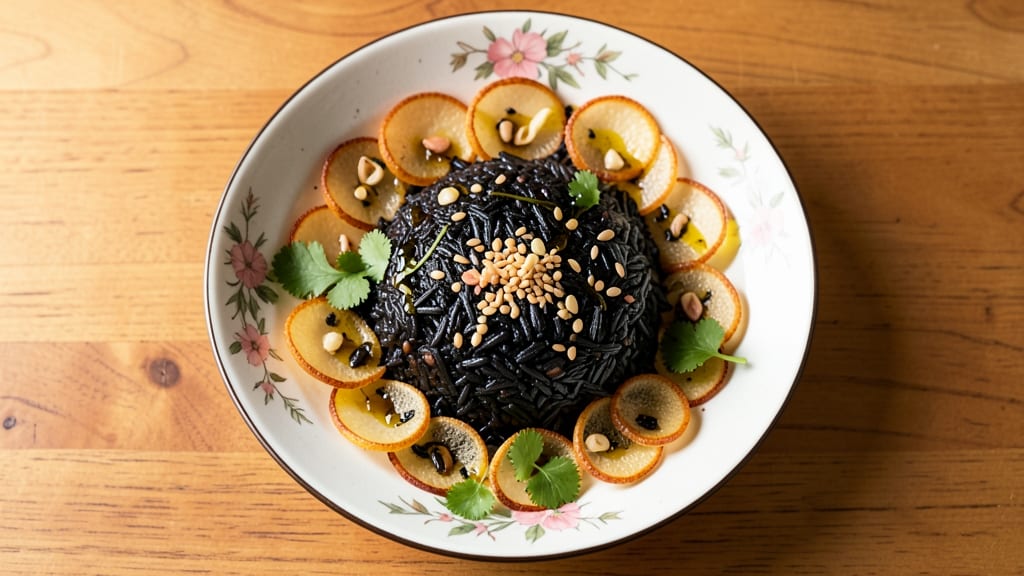
This Bolay black rice recipe transforms forbidden rice into a fragrant, nutty centerpiece with a crispy celery crown that elevates every bite. The key lies in proper soaking and slow cooking to unlock its deep, earthy flavors while maintaining perfect texture.
Filipino home cooks swear by this technique to create restaurant-quality rice that's both visually stunning and packed with nutritional benefits.
What makes this dish special is the crispy celery crown—thinly sliced celery fried until golden and layered over the steamed rice. This traditional touch adds texture contrast while enhancing the rice's natural nuttiness.
The result is a dish that's equally impressive as a main course or centerpiece for special occasions, where presentation matters as much as taste.
Ingredients for bolay black rice
Transform forbidden rice into a restaurant-worthy centerpiece with these carefully selected ingredients.
| Ingredient | Amount | Notes |
|---|---|---|
| Black Forbidden Rice 🌾 | 1 ½ cups | Uncooked, rinsed thoroughly |
| Celery Stems 🥬 | 1 whole | Thinly sliced for crispy crown |
| Vegetable Oil 🫒 | ½ cup | High smoke point preferred |
| Garlic Cloves 🧄 | 3 cloves | Minced for aroma infusion |
| Shallots 🧅 | 2 whole | Finely diced for sweetness |
| Salt 🧂 | 1 ½ tsp | Diamond Crystal preferred |
| Black Peppercorns 🌶️ | ½ tsp | Freshly cracked for texture |
| Water 💧 | 3 cups | Filtered for optimal flavor |
| Bay Leaves 🌿 | 2 whole | For aromatic depth |
| White Wine Vinegar 🍷 | 1 tbsp | For subtle tang |
| Sugar 🍚 | 1 tsp | Balances earthy flavors |
| Freshly Toasted Sesame Seeds 🌰 | 1 tbsp | For nutty garnish |
| Toasted Coconut Flakes 🥥 | 2 tbsp | For aromatic contrast |
The black forbidden rice is the star—Filipino markets or specialty Asian grocers carry it in bulk, often labeled as 'black rice' or 'forbidden rice'. Look for vibrant, deep purple grains with minimal white specks, indicating higher anthocyanin content for richer color and nutrition. Celery crowns require crisp, fresh celery with tight stalks; avoid woody or yellowing pieces. For the garlic and shallots, local farmers markets often have fresher, more flavorful options than grocery store bins. The vegetable oil should have a high smoke point—avocado or refined coconut oil work exceptionally well for frying the celery crown.
No black forbidden rice? Substitute with wild rice or black quinoa—though the color won't be identical, the texture works similarly. For the celery crown, substitute with thinly sliced green onions or leeks if needed, though celery provides the signature crunch. Diamond Crystal salt is preferred for its coarser grain, but Morton kosher salt at half the amount works in a pinch. Freshly cracked peppercorns add texture, but pre-ground black pepper at one-third the amount suffices. The white wine vinegar can be swapped for rice vinegar or apple cider vinegar without altering the dish's essence.
Store uncooked black rice in an airtight container in a cool, dark place for up to 6 months. Once cooked, the rice keeps for 3 days in the fridge—reheat gently with a splash of water to maintain texture. The celery crown ingredients should be prepped fresh day-of for optimal crispiness, but the fried slices can be stored separately for 2 days in the fridge. For presentation, toast the sesame seeds and coconut flakes in a dry pan over medium heat until golden—about 2 minutes per batch—to enhance their aromatic qualities.
Why You'll Love This Recipe
- One-Pot Magic: I swear by this recipe because it’s literally just toss everything in one pan—no fancy steps, no extra bowls. The celery stems add a subtle crunch without needing to chop anything fancy, and the rice cooks right alongside the aromatics.
- Nutty, Earthy Kick: That deep, almost smoky flavor from the black rice? It’s ridiculously satisfying. The garlic and shallots caramelize just enough to give it a rich, savory depth that sticks with you long after the last bite.
- Lunchbox Hero: Between us, this is my go-to for meal prep. The rice holds up for days in the fridge, and the celery adds a fresh crunch that keeps it from getting bland. Pack it cold or reheat it—either way, it’s a winner.
- Budget Luxury: Black forbidden rice can feel fancy, but this recipe treats it like a pantry staple. A small bag goes a long way, and the celery, garlic, and oil are basics you already have. It’s restaurant-quality without the splurge.
Step-by-step instructions for bolay black rice with crispy celery crown
Here's how to transform forbidden rice into a fragrant, textured dish with perfect crispy celery accents.
Prepare the Celery Crown and Aromatics
Begin by slicing the 1 whole celery stem into thin, even rounds about ⅛-inch thick. These will form your crispy crown. Arrange them in a single layer on a parchment-lined baking sheet and set aside. In a separate small bowl, combine the 2 whole shallots (finely diced) and 3 cloves garlic (minced) with 1.5 teaspoons salt and 0.5 teaspoon freshly cracked black peppercorns. Let this mixture sit at room temperature for 10 minutes to release its flavors.
While the aromatics rest, heat 0.5 cup vegetable oil in a large, heavy-bottomed pot over medium heat until shimmering but not smoking. Add the celery crowns and cook for 3-4 minutes until just golden at the edges but still holding shape. Remove with a slotted spoon and set aside on paper towels to drain excess oil. This initial crisping ensures your crown maintains texture throughout cooking.
Toast the Rice and Build the Flavor Base
In the same pot (with rendered oil), add the shallot-garlic mixture and cook over medium-low heat for 5-6 minutes until softened but not browned. The goal is to develop their sweetness without burning. Add 2 whole bay leaves and 1 teaspoon sugar to the pot, stirring to combine. This creates a fragrant base that will infuse the rice.
Next, add the 1.5 cups black forbidden rice to the pot and stir gently to coat each grain in the aromatic oil. Toast the rice for 2-3 minutes, stirring constantly, until you detect a nutty aroma and see the grains begin to turn slightly translucent at the edges. This step is crucial—it prevents the rice from becoming mushy and develops its signature depth of flavor. If the rice starts to brown too quickly, reduce the heat to medium-low.
Simmer the Rice to Perfect Texture
Pour in 3 cups water and 1 tablespoon white wine vinegar, then bring to a gentle boil over medium-high heat. Once boiling, immediately reduce heat to low and cover the pot tightly with a lid. Let the rice simmer undisturbed for 30 minutes. The lid should remain sealed to trap steam and cook the rice evenly.
After 30 minutes, check the rice. It should be tender but still slightly firm to the bite—forbidden rice requires less liquid than white rice. If the grains aren't fully tender, add ¼ cup hot water, cover, and simmer for another 5-10 minutes. The rice is ready when the liquid is fully absorbed and the grains hold their shape with a slight chew. Resist the urge to peek during cooking; each time you lift the lid, you release steam and risk uneven cooking.
Finish with Garnishes and Resting
Once the rice is perfectly tender, remove the pot from heat and let it sit covered for 5 minutes. This resting period allows the rice to finish absorbing any remaining moisture and develop its final texture. Discard the bay leaves. Stir in the 1 tablespoon freshly toasted sesame seeds and 2 tablespoons toasted coconut flakes, distributing them evenly throughout the rice.
Gently fold the crispy celery crowns back into the rice, using a wide spatula to preserve their texture. Taste and adjust seasoning with additional salt if needed. The final dish should balance the earthy forbidden rice with the bright, crispy celery and nutty coconut notes. Serve immediately while the celery crowns remain crisp and the rice is at its peak texture.
Pro Tips For Making Bolay Black Rice
- Soak the Rice Properly: Black forbidden rice needs a good 4-6 hour soak—yes, even overnight works—to soften those tough grains. I used to skip this and ended up with chewy, undercooked rice that tasted like it was still fighting me.
- Sauté Shallots Low and Slow: Shallots for bolay should caramelize, not burn. Cook them on medium-low heat for 8-10 minutes until golden—this adds sweetness that cuts through the rice’s earthiness. High heat turns them bitter, and nobody wants that.
- Use Celery Stems, Not Leaves: The recipe calls for celery stems because they’re sweeter and less bitter than leaves, which can overpower the dish. Chop them into thin matchsticks so they cook evenly and blend right into the rice.
- Stir Gently After Adding Rice: Once you toss the soaked rice into the pan, stir just once or twice—this prevents breaking the grains. Overmixing turns bolay into mush, and that’s a crime when you’re this close to a perfect dish.
Serving suggestions for this bolay black rice
Traditional Filipino Pairings
Bolay black rice shines alongside classic Filipino dishes like ginataang gulay (coconut milk-based vegetable stew) or sinigang (sour tamarind soup). The earthy rice absorbs the rich coconut flavors beautifully while providing a textural contrast.
For a hearty meal, serve with adobo chicken—the tangy sauce cuts through the rice's nuttiness. 🌶️
Don't overlook grilled pork skewers (taho) or fish balls (kikiam) as perfect complements. The crispy celery crown adds a refreshing crunch that balances the richness of fried pork or fish. I always serve bolay with a side of atchara (pickled papaya) to add brightness and acidity.
Modern Fusion Ideas
For a contemporary twist, pair bolay with seared scallops or pan-seared duck breast. The rice's deep umami pairs wonderfully with seafood's briny notes. Try drizzling with reduced fish sauce (patis) for an extra layer of depth. For vegetarians, miso-glazed tofu or grilled eggplant work beautifully.
Add quick-pickled vegetables (thinly sliced cucumbers, carrots, and daikon in rice vinegar) to the plate. The acidity refreshes the palate between bites of rich rice. A sprinkle of crushed peanuts on top adds crunch and a nutty complement to the sesame and coconut garnishes.
Presentation Tips
Serve bolay in a wide, shallow dish to showcase the crispy celery crown's golden edges. Garnish with edible flowers (like pansies) for a restaurant-worthy touch. I use a black ceramic platter to make the rice's deep purple color stand out even more.
For family-style dining, arrange bolay in the center with small bowls of patis (fish sauce), calamansi slices, and toasted coconut flakes on the side. Let guests customize their bowls with extra crispy celery or a squeeze of lime. The presentation should feel inviting and interactive!
Drink Pairings
A light Filipino beer like San Miguel Pale Pilsen complements the dish's earthy notes without overpowering. For non-alcoholic options, yogurt-based drinks (like salabat) with ginger and lemongrass enhance the meal's warmth. Iced calamansi juice adds a refreshing citrus contrast.
For wine lovers, a dry Riesling or Sauvignon Blanc works beautifully—their crisp acidity balances the rice's richness. Avoid heavy reds; they can clash with the delicate celery crown's crispness. A jasmine tea with honey also pairs wonderfully for an after-dinner option.
Nutrition facts
Frequently asked questions
Why does Bolay black rice need soaking before cooking?
Soaking removes excess tannins that make forbidden rice bitter and helps it absorb flavors better. For this recipe, soak the rice for at least 4 hours (or overnight) in cold water, changing the water twice. This step unlocks the rice's natural nuttiness and ensures perfect texture.
Can I use regular white rice instead of black forbidden rice?
While you can substitute, the dish loses its signature deep purple color and earthy flavor. For a similar texture, try wild rice or black quinoa, though the cooking time may vary. The crispy celery crown still works, but the nutritional benefits of anthocyanin-rich forbidden rice are unique.
How do I prevent the celery crown from getting soggy?
Fry the celery slices until golden and crispy before adding to the rice, then drain well on paper towels. When folding them back in, use a wide spatula to avoid crushing. Serve immediately to maintain crispness—don't let the rice sit too long with the celery.
What makes this Bolay recipe different from other black rice dishes?
The crispy celery crown and aromatic base of toasted shallots, garlic, and bay leaves set it apart. Unlike plain black rice preparations, this version balances earthy rice with bright, crispy celery and nutty coconut, creating a textural and flavor contrast that's uniquely Filipino.
Can I make Bolay black rice in an Instant Pot?
Yes! Use the Steam function for 12 minutes after toasting the rice and aromatics. Add 1 cup water (instead of 3 cups) and let it sit covered for 5 minutes off heat. The pressure cooker method reduces cooking time but may require extra monitoring to avoid mushiness.