
Main Courses
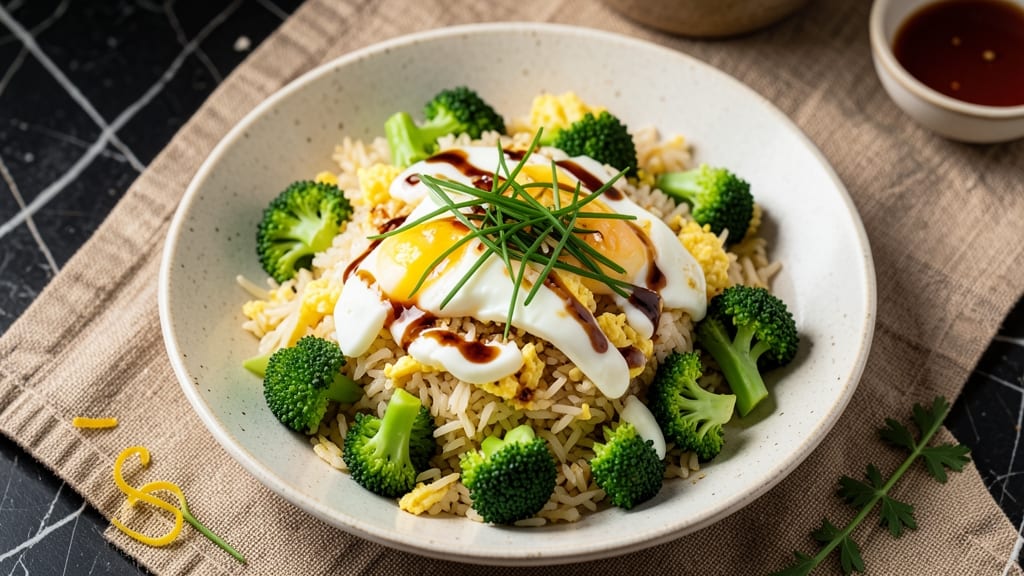
This broccoli egg fried rice recipe transforms simple ingredients into a restaurant-quality dish with just one pan and 20 minutes of active time. The secret lies in high-heat stir-frying—where wok hei (breath of the wok) flavor develops through quick, continuous tossing.
I've perfected this vegetarian version to deliver crisp-tender broccoli, fluffy scrambled eggs, and aromatic rice that clings together perfectly.
What sets this apart is the balance of textures and flavors: crispy broccoli florets from proper blanching, silky scrambled eggs that blend seamlessly, and a savory-sweet sauce made with just soy sauce, sesame oil, and a touch of sugar.
The dish maintains authentic technique while offering modern flexibility—swap in peas or bell peppers if you prefer. Ready in under 30 minutes, it's the ideal weeknight solution that still feels special.
Ingredients for broccoli egg fried rice
Cold rice, fresh broccoli, and silky eggs create restaurant-quality fried rice with just one pan.
| Ingredient | Amount | Notes |
|---|---|---|
| Day-Old Cooked White Rice 🍚 | 4 cups | Cold, preferably from 1-2 days prior |
| Fresh Broccoli Florets 🥦 | 4 cups | Cut into even-sized florets |
| Large Eggs 🥚 | 4 whole | Room temperature for even cooking |
| Vegetable Oil 🫒 | 3 tbsp | High smoke point preferred |
| Low-Sodium Soy Sauce 🥢 | 2 tbsp | For authentic umami flavor |
| Toasted Sesame Oil 🌰 | 1 tbsp | Adds nutty aroma at the end |
| Granulated Sugar 🍚 | 1 tbsp | Balances savory flavors |
| Garlic Cloves 🧄 | 3 cloves | Minced finely for aromatic base |
| Green Onions 🧅 | ¼ cup | Sliced thin for garnish |
| Diamond Crystal Kosher Salt 🧂 | ½ tsp | Adjusts seasoning to taste |
| Freshly Ground Black Pepper 🌶️ | ¼ tsp | Enhances overall seasoning |
| Vegetable Broth 💧 | ½ cup | Low-sodium preferred |
The rice is the foundation—day-old works best for that perfect texture, but freshly cooked rice in a pinch will do (just spread it on a tray to cool quickly). For broccoli, cut florets uniformly so they cook evenly; blanching them for 30 seconds first ensures crisp-tender results. Eggs should be room temperature—cold eggs curdle in hot oil. I always grab organic broccoli from the store's refrigerated section (it stays fresher longer) and keep a bottle of toasted sesame oil in my pantry for that authentic aroma.
No sesame oil? Substitute neutral oil plus a pinch of ground sesame seeds for the aroma. Low-sodium soy sauce is key—regular versions can overpower the dish. For extra protein, add crumbled tofu or chopped mushrooms (cook them first with the garlic). The vegetable broth adds depth; if you don't have it, water plus an extra dash of soy sauce works. For a smoky twist, swap half the soy sauce for vegetarian oyster sauce. Always use Diamond Crystal kosher salt—it dissolves better than table salt.
Store any leftovers in an airtight container for up to 3 days—it reheats beautifully in a skillet with a splash of water. For meal prep, divide into single portions and freeze for up to 2 months. The broccoli stays crispest when reheated gently. I double the recipe on Sundays and portion it into containers for quick lunches—just microwave and garnish with fresh green onions. The eggs scramble perfectly every time if you cook them low and slow before adding the rice.
Why You'll Love This Recipe
- Pantry Rescue: I swear by this when my fridge is half-empty but I’m starving. Day-old rice, a few eggs, and whatever broccoli I forgot about—it’s my secret weapon for turning scraps into something that actually tastes like a meal.
- Crispy-Creamy Magic: That first crack of the egg against the hot pan? Pure satisfaction. The soy sauce caramelizes just enough to coat every grain while the broccoli stays bright and the egg turns into a silky, slightly runny center—textures you can’t mess up.
- Lunchbox Hero: Honestly, this is my go-to for packed lunches. Toss it in a container, and it reheats like a dream (no soggy rice here). My kids eat it cold straight from the fridge—proof it’s not just adult-friendly.
- Budget Win: I make this for $2 a serving, easy. Eggs and rice stretch forever, and broccoli’s one of those veggies that’s always on sale. Plus, it’s the kind of dish where leftovers taste just as good the second day—no sad, dry rice here.
Step-by-step instructions for wok-tossed broccoli egg fried rice
Master this technique for perfectly balanced texture and flavor every time.
Prep Ingredients for Optimal Texture
Begin by separating the 4 whole large eggs into a bowl and whisking them lightly with 0.5 teaspoon Diamond Crystal kosher salt and 0.25 teaspoon freshly ground black pepper. The eggs should be room temperature for even cooking. In a separate bowl, combine the 4 cups day-old cooked white rice with 2 tablespoons low-sodium soy sauce, breaking up any clumps with your fingers. The rice should be completely separated and slightly sticky to the touch.
While the rice soaks up the soy sauce, prepare the vegetables. Cut the 4 cups fresh broccoli florets into even-sized pieces—about 1-inch florets—for consistent cooking. Mince the 3 cloves garlic finely and slice the 0.25 cup green onions into thin rounds, separating the green and white parts. Thinly slicing the onions ensures they crisp perfectly during the stir-fry. Keep all prepped ingredients within easy reach for the quick cooking process ahead.
Create the Flavor Base with Garlic and Broccoli
Heat a wok or large skillet over high heat until it's smoking hot. Add 2 tablespoons vegetable oil and swirl to coat the surface evenly. The oil should shimmer but not smoke excessively—this is the ideal temperature for creating a proper wok hei. Add the minced garlic and stir for 10-15 seconds until fragrant but not browned. Immediately add the broccoli florets and stir-fry for 3-4 minutes until they turn bright green and begin to soften at the edges.
Here's the thing—don't overcrowd the pan. If your wok is too full, the broccoli will steam instead of crisp. Work in batches if needed, but aim to keep the pan as full as possible without sacrificing even cooking. The broccoli should retain a slight crunch while developing a vibrant color. Remove the broccoli to a plate and set aside, leaving the garlic-infused oil in the wok for the next step.
Cook the Eggs to Perfect Custardy Perfection
Reduce the heat to medium-high and add the remaining 1 tablespoon vegetable oil to the wok. Pour in the whisked eggs and let them sit undisturbed for 5-8 seconds until the edges begin to set. Then, using a spatula, gently push the eggs from one side to the other, creating soft, silky curds. The eggs should cook just until they're barely set in the center—still slightly runny when done. Remove the eggs from the wok and set aside with the broccoli.
This is the moment that matters: slightly undercooked eggs will finish cooking when mixed with the hot rice, creating that signature custardy texture. If you overcook them now, you'll end up with dry, scrambled egg bits instead of silky strands. The eggs should look like they've just been dipped in warm custard when you're done.
Stir-Fry the Rice with Seasoned Broth
Return the wok to high heat and add the seasoned rice, breaking up any remaining clumps. Stir-fry vigorously for 2-3 minutes, using the heat of the wok to dry out the surface of each grain slightly. This step is crucial for preventing a gummy texture. After about 1 minute, add the 0.5 cup vegetable broth and 1 tablespoon granulated sugar, stirring constantly to distribute the liquid evenly.
The sugar may seem like an odd addition, but it balances the savory flavors while helping to caramelize the rice slightly at the edges. Let the mixture cook for another 1-2 minutes until the liquid has mostly evaporated and the rice is heated through. You'll know it's ready when the grains are separate, slightly glossy, and the mixture has a dry, sandy texture. This is the perfect base for the final assembly.
Combine and Finish with Sesame Oil
Return the broccoli and eggs to the wok, tossing everything together with the rice. Add the white parts of the green onions (reserve the green for garnish) and stir-fry for 1-2 minutes until everything is heated through and well combined. The broccoli should be heated through but still retain some crispness, while the eggs should be fully set with a creamy texture.
Remove the wok from heat and immediately drizzle with 1 tablespoon toasted sesame oil. Toss gently to distribute the oil evenly—this adds a nutty aroma and rich depth of flavor. Taste and adjust seasoning if needed, adding a splash more low-sodium soy sauce if the dish needs more umami. Garnish with the reserved green onion tops and serve immediately while still hot and sizzling.
Pro Tips For Making Broccoli Egg Fried Rice
- STIR-FRY BROCCOLI FIRST: I learned this the hard way—if you toss in raw broccoli after the rice, it’ll steam instead of crisp up. Blanch the florets for 30 seconds in boiling water, then shock in ice water. That 30-second prep guarantees bright green, tender-crisp broccoli that holds up in the stir-fry.
- USE COLD DRY RICE: Day-old rice is non-negotiable, but cold rice from the fridge is even better. Spread it on a tray and let it sit uncovered for 10 minutes—this dries the surface so it browns properly instead of turning mushy. (Yes, even if you’re impatient like me.)
- SCRAMBLE EGGS SEPARATELY: The egg gets lost in the rice if you mix it in raw. Scramble them in a small pan with a splash of water until just set—soft curds, not rubbery. Then fold them into the rice at the very end. This keeps the eggs creamy and prevents them from turning into a dry, grainy mess.
- SALT THE RICE BEFORE STIR-FRYING: Low-sodium soy sauce is great, but the rice still needs flavor. Sprinkle ½ teaspoon of salt directly over the cold rice before you start cooking—it seasons the grains evenly and cuts through the blandness of day-old rice. (I know, it sounds basic, but it makes a real difference.)
Troubleshooting this recipe
Mushy Broccoli Fix
If your broccoli turns out soggy instead of crisp-tender, you likely overcooked it or didn't blanch first. Start by blanching florets in boiling water for 30 seconds, then immediately plunging into ice water to stop cooking.
When stir-frying, cook broccoli over high heat for no more than 3-4 minutes—it should stay bright green with just a slight softening at the edges. Overcrowding the pan also causes steaming. Work in batches if needed, and keep your wok or skillet at maximum heat. 🥦
Gummy Rice Solution
Gummy rice usually means the grains didn't get enough heat exposure to dry out properly. After adding the rice to your wok, stir-fry vigorously over high heat for 2-3 minutes before adding any liquid. The goal is to dry the surface of each grain slightly.
If your rice still feels sticky, add ½ cup vegetable broth gradually while stirring constantly, letting it evaporate completely before combining with other ingredients. Freshly cooked rice? Spread it on a tray to cool quickly and dry out before using. ❄️
Eggs Too Dry or Rubbery
Overcooked eggs lose their silky texture and become dry or rubbery. The key is to cook them just until they're barely set—about 5-8 seconds undisturbed, then gently pushing with a spatula to create soft curds. Remove them when they still look slightly runny in the center.
If your eggs turn out too firm, try whisking them with 1 teaspoon cornstarch next time for extra creaminess. Also, ensure your wok is properly heated before adding the eggs. 🍳
Flat or Bland Flavor
For deeper flavor, focus on your seasoning base. Bloom the minced garlic in hot oil for 10-15 seconds until fragrant but not browned—this builds aromatic depth. Use low-sodium soy sauce (regular versions can be too salty) and balance it with 1 tablespoon sugar to enhance umami.
Finish with toasted sesame oil for nutty aroma. If your dish tastes flat, try adding ½ teaspoon fish sauce (vegetarian version available) or a splash of vegetable broth for extra depth. 🌶️
Rice Sticking Together
Sticky rice usually means insufficient heat or moisture control. After seasoning your rice with soy sauce, spread it on a tray and let it dry slightly before cooking. When stir-frying, use high heat and break up any clumps vigorously with a spatula.
If the rice still sticks, add ½ cup vegetable broth gradually while stirring constantly, letting it evaporate completely before combining with other ingredients. For extra insurance, use day-old rice—it's drier and separates more easily. 🍚
Nutrition facts
Frequently asked questions
Why does the recipe call for day-old rice?
Day-old rice has dried out slightly, which prevents the final dish from becoming gummy. Freshly cooked rice contains too much moisture, leading to sticky, mushy fried rice. If you only have fresh rice, spread it on a tray and let it cool completely before using. This mimics the texture of day-old rice perfectly.
Can I substitute frozen broccoli in this recipe?
Fresh broccoli gives the best texture, but you can use frozen if needed. Thaw it completely first, then pat it very dry with paper towels to remove excess moisture. Cook it for 1-2 minutes less than fresh broccoli since it starts partially cooked. For extra crispness, blanch it for 20 seconds before stir-frying.
How do I make this dish spicier?
Add ½ teaspoon red pepper flakes or 1 teaspoon sriracha when combining all ingredients in the wok. For heat lovers, stir in 1 teaspoon gochujang (Korean chili paste) with the soy sauce during prep. Always taste before serving—you can adjust the heat level to your preference.
What's the best way to reheat leftovers?
Reheat in a skillet over medium heat with 1 tablespoon vegetable oil and 1 tablespoon water, stirring constantly for 3-4 minutes until hot through. For microwave reheating, cover with a damp paper towel and heat in 30-second intervals, stirring between each. Add a splash of water or broth if it seems dry.
Can I make this gluten-free?
Yes! Replace the soy sauce with 2 tablespoons tamari or coconut aminos (both gluten-free). Check that your vegetable broth and sesame oil are also gluten-free. For extra umami, add ½ teaspoon nutritional yeast when seasoning the rice. The flavor will be slightly different but still delicious.