
Side Dishes
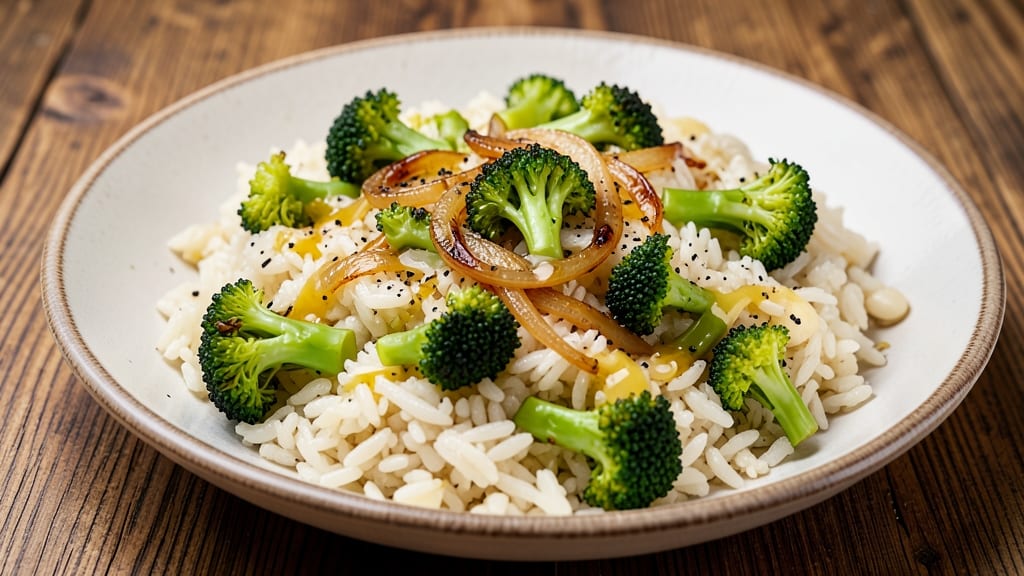
This broccoli rice pilaf recipe transforms simple ingredients into a fragrant, golden-grain side dish with crisp-tender broccoli and herbed butter that elevates every bite. The key lies in proper rice-to-liquid ratios and gentle sautéing techniques that preserve texture while building layers of flavor.
Unlike risotto-style methods, this pilaf uses a traditional approach—sautéing vegetables first, then toasting rice before simmering in broth for even cooking.
What sets this recipe apart is the perfect balance of textures: crispy broccoli florets, fluffy grains, and a finish of herbed butter that adds richness without overpowering. The method is straightforward yet precise, ensuring restaurant-quality results at home with minimal effort.
Whether serving as a vegetarian main or a hearty side, this pilaf delivers satisfying depth and versatility for any meal.
Ingredients for broccoli rice pilaf
Twelve ingredients transform into a restaurant-quality broccoli rice pilaf with crisp florets and herbed butter richness.
| Ingredient | Amount | Notes |
|---|---|---|
| Long-Grain White Rice 🍚 | 1 ½ cups | Uncooked, jasmine or basmati preferred |
| Fresh Broccoli Florets 🥦 | 4 cups | Cut into even-sized florets |
| Vegetable Broth 💧 | 2 ½ cups | Low-sodium, homemade or quality store-bought |
| Unsalted Butter 🧈 | ½ cup | Cold, cut into small cubes |
| Fresh Garlic Cloves 🧄 | 4 cloves | Minced, peeled |
| Yellow Onion 🧅 | 1 whole | Medium, diced |
| Fresh Thyme Leaves 🌿 | ¼ cup | Chopped, stems removed |
| Fresh Parsley Leaves 🌿 | ¼ cup | Chopped, for garnish |
| Extra-Virgin Olive Oil 🫒 | ¼ cup | For sautéing |
| Diamond Crystal Kosher Salt 🧂 | 1 ½ tsp | Adjust to taste |
| Freshly Ground Black Pepper 🌶️ | ½ tsp | Freshly cracked |
| Lemon Zest 🍋 | 1 tsp | From 1 organic lemon |
| Toasted Slivered Almonds 🌰 | ¼ cup | For garnish, optional |
The rice and broccoli are the foundation—jasmine or basmati rice toasts beautifully for that golden hue. I always grab organic broccoli from the produce section at Whole Foods or Trader Joe's for vibrant florets that stay crisp. Fresh herbs elevate the dish, so buy thyme and parsley in small bunches—they wilt fast, but their aroma is worth the freshness. For the broth, homemade is ideal, but Pacific Foods or Imagine brands deliver consistent flavor without excess sodium. The almonds? Toast them in a dry pan for 2-3 minutes until fragrant—they add crunch without overpowering.
No jasmine rice? Basmati or even short-grain brown rice works, though cooking times vary. Short on thyme? Dried thyme at one-third the amount keeps the earthy notes. The lemon zest can be swapped for orange zest for a brighter twist. For the butter, vegetable oil in a pinch works, but nothing beats cold butter for that herbed richness. Fresh parsley is ideal, but dried parsley at half the amount suffices if needed. The almonds? Pecans or walnuts toast just as well for a different texture. Always taste the broth before adding rice—adjust salt to balance the herbs.
Store cooked pilaf in an airtight container for up to 4 days in the fridge, though it's best within 2 days for peak texture. For longer storage, portion into single-serving containers and freeze for up to 3 months. Reheat gently with a splash of broth to restore moisture. The herbed butter keeps separately for 1 week in the fridge—just mix in a splash of warm water to re-emulsify before using. This pilaf reheats beautifully, making it perfect for meal prep. Garnish with fresh parsley and toasted almonds just before serving to preserve their freshness.
Why You'll Love This Recipe
- I swear by this trick: just toss whole broccoli florets into the pot with the rice—they steam perfectly while everything cooks. No tiny bits flying everywhere, no pre-steaming mess. The stems even get tender, so nothing goes to waste.
- No Chopping Chaos: I swear by this trick: just toss whole broccoli florets into the pot with the rice—they steam perfectly while everything cooks. No tiny bits flying everywhere, no pre-steaming mess. The stems even get tender, so nothing goes to waste.
- Garlic-Butter Magic: That moment when the butter melts into the rice, coating every grain with toasty garlic? My mouth waters just thinking about it. The broccoli soaks up the flavor like a sponge, turning this into something way more exciting than plain rice.
- Lunchbox Hero: Between us, this is my go-to for meal prep. Cold or reheated, it holds up beautifully—pack it with grilled chicken or roasted veggies, and you’ve got a lunch that’ll actually get eaten. (Yes, even on a Tuesday.)
Step-by-step instructions for broccoli rice pilaf
This method delivers perfectly fluffy rice with tender broccoli and a golden, herbed butter finish.
Sauté Aromatics for Flavor Foundation
Heat the 0.25 cup extra-virgin olive oil in a large skillet over medium-high heat until shimmering. Add the 1 whole yellow onion and cook for 5-6 minutes until softened and translucent. The onion should release its sweet aroma as it cooks.
Add the 4 cloves minced fresh garlic cloves and 0.25 cup chopped fresh thyme leaves, stirring constantly for 30 seconds until fragrant. This aromatic base prevents the rice from becoming bland and ensures every bite carries depth. If the garlic begins to brown too quickly, reduce heat to medium to avoid bitterness.
Toast the Rice for Enhanced Texture
Add the 1.5 cups long-grain white rice to the skillet and stir for 2 minutes until the grains become translucent at the edges. This toasting step, known as "blooming," prevents the rice from becoming mushy and creates a subtle nutty flavor. You'll see the rice grains separate slightly and develop a faint golden hue.
Pour in the 2.5 cups vegetable broth and bring to a gentle boil. Immediately reduce heat to low and cover the skillet with a tight-fitting lid. Let the rice simmer undisturbed for 12 minutes. Avoid peeking during this time—steam escape causes uneven cooking.
Incorporate Broccoli for Even Cooking
After 12 minutes, remove the lid and stir in the 4 cups fresh broccoli florets and 1.5 tsp Diamond Crystal kosher salt. Return to low heat and cover again, letting the broccoli steam in the residual moisture for 8-10 minutes until tender but still vibrant green. The broccoli should yield slightly when pierced with a fork but retain its shape.
Real talk: if the rice looks dry before the broccoli is tender, add 2-3 tablespoons of water to the pan. The broccoli should finish cooking in the same liquid as the rice to maintain perfect texture.
Finish with Herbed Butter and Garnish
Remove the skillet from heat and let it rest for 5 minutes with the lid on. This resting period allows the rice to absorb any remaining liquid and develop a fluffy texture. In a small bowl, combine the 0.5 cup unsalted butter with the 0.25 cup chopped fresh parsley leaves, 0.5 tsp freshly ground black pepper, and 1 tsp lemon zest. Stir until fully incorporated.
Gently fold the herbed butter mixture into the rice using a wooden spoon, being careful not to mash the grains. The butter should melt into the rice, creating a glossy finish. For an added crunch, sprinkle with the 0.25 cup toasted slivered almonds and serve immediately while the rice is still warm.
Pro Tips For Making Broccoli Rice Pilaf
- TOAST THE RICE FIRST: I learned this the hard way—skipping the toast means your pilaf will stay bland and sticky. Sauté the rice in butter for 2-3 minutes until the grains turn opaque and you smell a nutty aroma. This step locks in flavor and prevents mushiness later.
- CHOP BROCCOLI SMALL: Big florets stay crunchy and undercooked while the rice turns to glue. Cut broccoli into ½-inch pieces—small enough to cook through but still recognizable. If you’re impatient like me, blanch them for 30 seconds first, then drain and toss in cold water.
- STIR THE BROTH IN: Don’t just dump the broth and walk away. After the rice and garlic toast, add a splash of broth at a time, stirring constantly until it’s fully absorbed. This keeps the grains separate and ensures even cooking—no dry pockets or soggy bits.
- USE COLD BROTH: Sounds weird, but it works: finish cooking with cold vegetable broth instead of hot. After the rice absorbs most of the liquid, add ½ cup cold broth and let it steam uncovered. The cold broth cools the rice slightly, preventing overcooking and giving you fluffier grains.
Troubleshooting your broccoli rice pilaf
Mushy Rice Fix
If your rice turns out mushy, it’s usually due to overcooking or too much liquid. Always use a 1:1.66 rice-to-broth ratio (like in this recipe) and avoid peeking under the lid while cooking.
For future batches, try the absorption method: cook rice uncovered for 5 minutes, then cover and reduce heat to low for 10 minutes. This ensures even cooking without excess moisture. 💡
Broccoli Overcooking
Broccoli that’s too soft or mushy means it cooked too long in the residual liquid. To prevent this, add the florets after the rice has already simmered for 12 minutes, then cover and steam for just 8-10 minutes.
For extra-crisp broccoli, blanch it in boiling water for 1 minute before adding it to the rice. This keeps it vibrant and slightly crunchy. ✨
Dry or Undercooked Rice
If your rice is dry or undercooked, the broth may have been too hot or the heat too high. Always bring the broth to a gentle boil before reducing to low heat.
For a foolproof fix, add 2-3 tablespoons of warm broth (not cold) and cover for 2-3 more minutes. Avoid adding cold liquid—it can shock the rice and make it gummy. 🔥
Broth Too Salty
If your broth tastes too salty, dilute it by adding ½ cup warm water and adjust seasoning with ½ teaspoon of sugar to balance. For future batches, taste your broth before adding rice—it should be lightly seasoned, not bland or overly salty.
Homemade broth is ideal, but if using store-bought, opt for low-sodium varieties like Pacific Foods or Imagine. 🧂
Herbed Butter Separation
If your herbed butter separates, simply place the bowl over a double boiler or a pot of simmering water, stirring gently until smooth. For a quick fix, mix in 1 teaspoon of warm water to re-emulsify.
Always keep the butter cold until ready to use—soft butter melts too quickly and can turn greasy. Store any leftovers in an airtight container in the fridge for up to 1 week. 🧈
Uneven Texture
Uneven texture often happens if the rice isn’t stirred evenly or if heat isn’t consistent. Use a heavy-bottomed skillet (like Calphalon or All-Clad) to distribute heat evenly. Stir the rice once after adding broth to separate grains, then avoid disturbing it until the 8-10 minute mark with broccoli.
For even better results, use a rice diffuser (like Basics brand) to prevent sticking. 💪
Nutrition facts
Frequently asked questions
Can I use brown rice instead of white rice?
Yes, but adjust the cooking time and liquid ratio. Brown rice needs 20-25 minutes of simmering (instead of 12 minutes for white rice) and requires 1.5 cups broth per 1 cup rice instead of 1.66 cups. Start checking for doneness after 18 minutes—it should be tender but not mushy. The texture will be nuttier and heartier, perfect for a vegetarian main.
How do I keep the broccoli extra crispy?
Blanch the florets in boiling water for 1 minute before adding them to the rice, then shock in ice water. This preserves their crunch. For even better results, add the broccoli only 5 minutes before the rice is done, then cover and steam briefly. The residual heat will keep them tender-crisp without overcooking.
Can I make this pilaf ahead of time?
Store in an airtight container in the fridge for up to 4 days. Reheat gently with a splash of broth to restore moisture. For best texture, add fresh parsley and toasted almonds just before serving. Freezing isn't recommended—broccoli loses texture when thawed. The herbed butter keeps separately for 1 week in the fridge.
What’s the secret to fluffy rice?
The key is toasting the rice first for 2 minutes until translucent, then using a 1:1.66 rice-to-broth ratio. Never peek under the lid while cooking—steam escape causes uneven texture. After cooking, let it rest for 5 minutes covered before fluffing. A heavy-bottomed skillet (like Calphalon) helps distribute heat evenly for perfect grains.
Can I add protein to make it a main dish?
Yes! Stir in 1 cup cooked chickpeas or ½ cup crumbled feta cheese at the end for a vegetarian boost. For meat lovers, add ½ cup diced chicken breast cooked separately and folded in. Just ensure the protein is fully cooked before mixing—adding raw meat can make the rice soggy.