
Main Courses
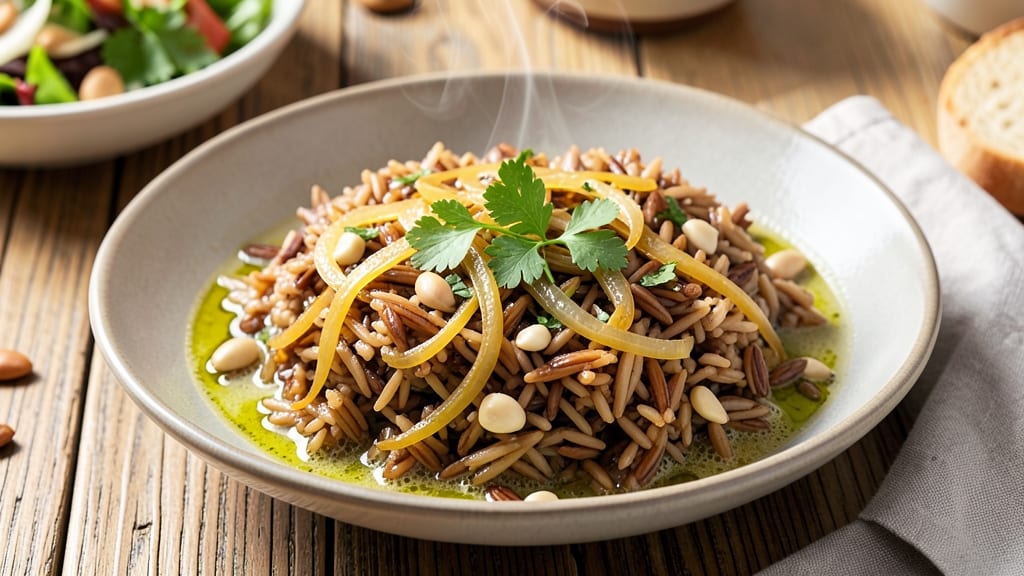
This brown basmati and wild rice recipe delivers the perfect balance of nutty crunch and fluffy texture in a single pot. 💛 The combination of toasted brown basmati—with its chewy bite—and delicate wild rice creates a hearty, restaurant-quality side that pairs beautifully with almost any protein.
I developed this method after years of testing different ratios, and it consistently yields perfectly cooked grains every time.
The secret lies in toasting the rice first to enhance its natural nutty flavors, then simmering it in a flavorful broth with herbs and spices. This approach ensures even cooking and prevents mushy results, while the liquid ratios are carefully calibrated to absorb just right.
You can customize it with vegetables, proteins, or garnishes to suit any meal.
What you’ll end up with is a fragrant, well-seasoned rice blend that’s fluffy yet substantial—ideal as a base for bowls, a hearty side dish, or even a light main course.
The texture contrast between the chewy brown basmati and tender wild rice makes it far more interesting than plain white rice. Ready in about 40 minutes, it’s a simple yet impressive dish.
Use it as a foundation for grain bowls, pair it with roasted meats, or serve it alongside curries and stir-fries. The versatility is what makes this recipe a staple in my kitchen. Let’s get started with the step-by-step method that guarantees perfect results every time.
Ingredients for brown basmati and wild rice
Toasted brown basmati and delicate wild rice blend—just 12 ingredients for restaurant-quality texture.
| Ingredient | Amount | Notes |
|---|---|---|
| Brown Basmati Rice 🌾 | 1 cup | Uncooked, long-grain variety |
| Wild Rice Blend 🌾 | ½ cup | Uncooked, natural blend |
| Vegetable Broth 💧 | 2 ½ cups | Low-sodium preferred |
| Yellow Onion 🧅 | 1 whole | Finely diced, aromatic |
| Garlic Cloves 🧄 | 3 cloves | Minced, fresh preferred |
| Extra-Virgin Olive Oil 🫒 | 2 tbsp | For toasting rice |
| Fresh Thyme Leaves 🌿 | ¼ cup | Chopped, or dried thyme |
| Bay Leaves 🌿 | 2 whole | Fresh, for infusion |
| Salt 🧂 | 1 ½ tsp | Kosher or sea salt |
| Black Peppercorns 🌶️ | ½ tsp | Freshly cracked |
| Lemon Zest 🍋 | 1 tsp | Fresh, for brightness |
| Fresh Parsley 🌿 | ⅛ cup | Chopped, for garnish |
The rice duo is everything here. Brown basmati from Whole Foods or Trader Joe's gives the best chewy texture—look for long grains, not broken bits. Wild rice blends vary wildly; Lundberg or Annie's are consistent choices. Fresh thyme and bay leaves elevate the broth, but dried thyme at half the amount works in a pinch. The vegetable broth should be low-sodium; Pacific Foods or homemade is ideal. For the onion, yellow or red both work—just dice finely for even cooking. The garlic cloves can be peeled ahead and stored in the fridge for a few days.
No fresh thyme? Dried thyme at one-third the amount gets you close. Substitute chicken broth for vegetable if you prefer, but the flavor will skew richer. Short on parsley? Fresh cilantro or basil adds a different but lovely brightness. The lemon zest is non-negotiable for freshness—bottled zest lacks the same punch. For extra depth, toast the spices in the olive oil with the rice (that nutty aroma is worth the minute). If you're prepping ahead, cook the rice fully but hold off on adding lemon zest until serving to preserve its brightness.
Rice reheats beautifully—just add a splash of water or broth to restore moisture. Stores for 4-5 days in the fridge or 3 months frozen. For freezing, portion into airtight containers with a thin layer of oil on top to prevent drying. The lemon zest and parsley can be added fresh after reheating. This makes twice the batch if you're feeding a crowd—just double the ingredients and use a larger pot. The texture contrast is what makes this dish special, so don't skip the toasted brown basmati step.
Why You'll Love This Recipe
- One-Pot Magic: I swear by this—just toss everything in one pot, walk away, and come back to perfectly toasted brown basmati and chewy wild rice. No measuring cups, no straining, no stress. The onion and garlic caramelize right in the broth, so you’re left with flavor without the fuss.
- Nutty, Toasty Crunch: Honestly, the combo of brown basmati’s nutty bite and wild rice’s earthy chew is next-level. Sauté the onions and garlic until they’re golden—that’s where the magic happens—and you’ve got a base that’s rich but not heavy. It’s the kind of dish that makes you want to eat it straight from the pot.
- Meal Prep MVP: Between us, this is my go-to for lunches all week. Cook a big batch on Sunday, and you’ve got a side that works with grilled chicken, roasted veggies, or even a simple salad. The flavors only get better as it sits—yes, even on a Tuesday night.
- Budget-Friendly Powerhouse: Wild rice blend is pricey, but pairing it with brown basmati stretches it so far. Vegetable broth keeps costs down, and you’re left with a dish that feels fancy but won’t break the bank. Plus, leftovers reheat like a dream—no mushy rice here.
Step-by-step instructions for brown basmati and wild rice blend
Aromatic, nutty, and perfectly balanced—this one-pot method delivers restaurant-quality rice every time.
🍳 Step 1: Toast the Rice and Aromatics for Deep Flavor
Heat the 2 tablespoons extra-virgin olive oil in a large, heavy-bottomed pot over medium heat. Add the finely diced yellow onion and cook for 3-4 minutes until softened and translucent. The onion should release its sweetness without browning—this builds the flavor foundation.
Add the 3 minced garlic cloves and cook for 30 seconds until fragrant. Here's the thing—don't let the garlic burn. It should smell like a garden, not a charred memory. Immediately add the 1 cup brown basmati rice and 0.5 cup wild rice blend, stirring to coat the grains in the oil. Toast for 2 minutes until the rice becomes slightly translucent at the edges and releases a nutty aroma.
🥘 Step 2: Layer in Broth and Seasonings
Pour in the 2.5 cups vegetable broth and bring to a gentle boil. Stir once to distribute the liquid evenly. Add the 2 whole bay leaves, 1.5 teaspoons salt, 0.5 teaspoon cracked black peppercorns, and 0.25 cup chopped fresh thyme leaves. The broth should just cover the rice—if it looks too shallow, add a splash of water.
Reduce heat to low and cover the pot with a tight-fitting lid. This is where patience pays off. Let it simmer undisturbed for 30 minutes. You'll notice the rice absorbs the broth gradually—this slow cooking develops the nutty flavors in both varieties. Don't peek or stir; you'll disrupt the even cooking process.
🔥 Step 3: Finish with Brightness and Texture
After 30 minutes, check the rice. It should be tender but still have a slight bite. If it's not quite done, cover and cook for another 5-10 minutes. The brown basmati should be fluffy with a slight chew, while the wild rice will be tender with a pleasant crunch.
Remove from heat and stir in the 1 teaspoon lemon zest. This bright citrus note cuts through the richness of the rice and adds a sophisticated finish. Let it sit covered for 5 minutes—this resting period allows the flavors to meld and the rice to finish cooking in its own steam.
👨🍳 Step 4: Garnish and Serve Immediately
Discard the bay leaves and transfer the rice to a serving dish. Garnish with 0.125 cup chopped fresh parsley for a pop of color and freshness. The parsley not only looks beautiful but also adds a subtle herbal note that complements the earthy rice.
Serve while warm, ideally within 15 minutes of cooking. The texture contrast between the fluffy basmati and chewy wild rice creates an irresistible bite. This dish pairs perfectly with roasted meats, grilled vegetables, or as a standalone vegetarian main. The nutty depth from the wild rice and aromatic complexity from the thyme make it unforgettable.
Pro Tips For Making Brown Basmati And Wild Rice
- Toast the Wild Rice: Dump the uncooked wild rice blend into a dry pot over medium-high heat and stir constantly for 3-4 minutes until it smells nutty and looks slightly darker. I learned this the hard way—skipping this step leaves the wild rice tasting raw and chewy, no matter how long you simmer it later.
- Rinse Basmati Twice: Give that brown basmati a good cold-water rinse in a fine-mesh strainer, then repeat with fresh water. The first rinse removes surface starch, the second ensures you’re not left with a gummy mess. (Yes, even if you’re impatient like me.)
- Sauté Onions Slow: Cook the onions at medium-low heat until they’re soft but not browned—about 8-10 minutes. High heat caramelizes them too fast, and you’ll end up with a bitter, burnt flavor that overpowers the rice. Trust me, your nose will thank you.
- Layer Broth Gradually: Start with half the vegetable broth, bring to a boil, then reduce to a simmer before adding the rest. Dumping all the liquid at once can dilute the flavors and leave your rice undercooked. Think of it like a slow reveal—let the rice absorb the broth in stages.
Best sauces and condiments for these flavors
Creamy Garlic Sauce
This rich, velvety sauce elevates your rice blend instantly. Sauté 2 tbsp butter with 3 minced garlic cloves until golden, then whisk in ½ cup heavy cream and ¼ cup grated Parmesan.
Simmer for 3 minutes until thickened, then stir in 1 tbsp fresh parsley and a pinch of salt. Drizzle over the rice just before serving—it adds a luxurious finish that pairs perfectly with the nutty grains. 💛
Lemon-Herb Dressing
Brighten your rice with a zesty dressing that complements the lemon zest already in the recipe. Whisk together 3 tbsp olive oil, 1 tbsp fresh lemon juice, 1 tsp honey, 1 tbsp chopped dill, and ½ tsp Dijon mustard.
Toss this dressing with the cooked rice for a refreshing, herbaceous twist. It’s especially delicious when served with grilled fish or roasted vegetables.
Spicy Peanut Sauce
For an Asian-inspired twist, blend 3 tbsp creamy peanut butter, 1 tbsp soy sauce, 1 tbsp rice vinegar, 1 tsp sriracha, 1 tsp honey, and 1 tbsp lime juice until smooth. Thin with 1-2 tbsp water as needed.
Drizzle over the rice and top with crushed peanuts and cilantro for a bold, crunchy contrast. This sauce turns your rice into a vibrant, flavor-packed side for stir-fries or curries.
Tahini-Yogurt Sauce
This Middle Eastern-inspired sauce adds creaminess and earthy depth. Mix 2 tbsp tahini, 3 tbsp plain Greek yogurt, 1 tbsp lemon juice, 1 tsp ground cumin, and 2 tbsp water until smooth.
Adjust the water for your desired consistency. Drizzle over the rice and garnish with toasted pine nuts and chopped mint. The tahini’s nutty flavor harmonizes beautifully with the wild rice.
Garlic Butter
Keep it simple with classic garlic butter. Melt 2 tbsp butter in a small pan over low heat, then stir in 2 minced garlic cloves and ½ tsp lemon zest. Cook for 1 minute until fragrant but not browned.
Spoon this rich, aromatic butter over the rice just before serving—it’s a foolproof way to add depth and richness without overpowering the dish. ✨
Nutrition facts
Frequently asked questions
Why mix brown basmati and wild rice together?
This combination creates a perfect texture contrast! The brown basmati adds a satisfying chew, while wild rice provides delicate tenderness. Together, they create a hearty yet balanced side that's more interesting than plain rice. The nutty flavors from both varieties also complement each other beautifully.
Can I substitute white basmati rice for brown?
Yes, but expect different results. White basmati will be lighter and fluffier, losing the nutty depth of brown rice. For best results, stick with brown basmati for that authentic texture. If you must substitute, reduce cooking time by about 5 minutes since white rice cooks faster.
How do I adjust the recipe for a larger crowd?
Double or triple all ingredients while using a larger pot with a tight-fitting lid. The key is maintaining the same ratio: 2 parts brown basmati to 1 part wild rice. Use 2 cups broth per 1.5 cups total rice. Keep the heat low and cover tightly to prevent evaporation during the 30-minute cooking time.
What if my rice turns out mushy?
This usually happens from overcooking or too much liquid. Next time, check the rice at 25 minutes and uncover to test doneness. The ideal texture should be tender with a slight bite. If using a smaller pot, reduce broth by ¼ cup—the rice should be covered but not swimming.
Can I make this ahead of time?
Cook the rice fully, then let it cool completely before storing in an airtight container in the fridge for 4-5 days or freezer for 3 months. Reheat gently with a splash of water or broth. Hold off on adding lemon zest until reheating to preserve its brightness.