
Desserts
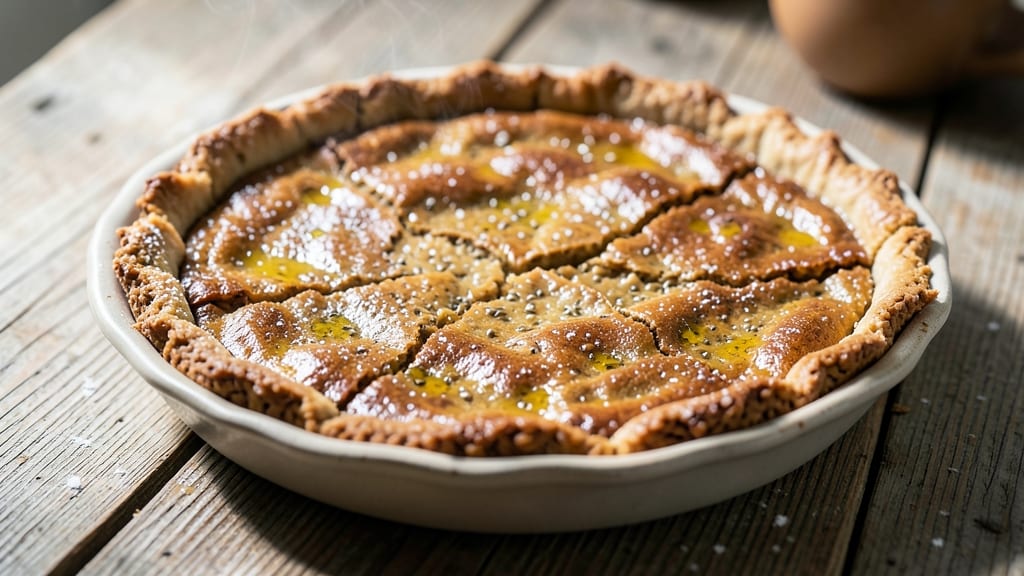
This brown rice pie crust recipe transforms whole grains into a flaky, nutty foundation that rivals traditional flours—without butter or eggs. 🌾 The secret lies in blending brown rice flour with coconut oil and flaxseed for a crisp, sturdy crust that holds its shape while baking.
I developed this after searching for a vegan alternative that delivered the same satisfying crunch and buttery aroma. What sets this crust apart is its versatility—use it for sweet pies (think pumpkin or apple) or savory options like spinach and mushroom.
The nutty flavor from brown rice adds depth, while the flaxseed binds everything together without compromising texture. Unlike store-bought crusts, this one stays crispy even when filled with juicy ingredients.
The process is straightforward: mix the dry ingredients, cut in the coconut oil until crumbly, then press into your pie dish before baking. No rolling required, and no waiting for dough to chill. The result?
A golden, flaky crust with a subtle toasted flavor that pairs perfectly with both sweet and savory fillings. Perfect for those who want a healthier, plant-based option without sacrificing taste or texture. Let’s get started!
Ingredients for brown rice pie crust
Nine simple ingredients create a flaky, nutty crust that rivals traditional pie dough.
| Ingredient | Amount | Notes |
|---|---|---|
| Brown Rice Flour 🌾 | 1 ½ cups | Finely milled for texture |
| Coconut Oil 🥥 | ½ cup | Solid, not melted |
| Ground Flaxseed 🌱 | ¼ cup | Freshly ground preferred |
| Cold Water 💧 | ¼ cup | Chilled for binding |
| Salt 🧂 | ½ tsp | Fine sea salt preferred |
| Granulated Sugar 🍚 | 1 tbsp | For sweet crusts only |
| Apple Cider Vinegar 🍎 | 1 tsp | Enhances flakiness |
| Nutritional Yeast 🧀 | 2 tbsp | For cheesy flavor |
| Black Pepper 🌶️ | ¼ tsp | Freshly ground preferred |
| Ice Cubes ❄️ | ½ cup | For chilled handling |
Brown rice flour is the heart of this crust—Bob's Red Mill or Lundberg brands yield the finest texture. The flaxseed needs to be freshly ground; whole seeds grind best in a coffee grinder. Coconut oil should be solid but not melted—Trader Joe's or Whole Foods carry reliable brands. For the nutty depth, Lundberg brown rice flour adds extra character, though any quality brand works. The ice cubes keep the mixture cool during handling, preventing premature melting of the coconut oil.
No coconut oil? Vegan butter works at a 1:1 ratio, though the flavor shifts slightly. Substitute the flaxseed with 1 tbsp chia seeds plus 3 tbsp water for binding. For sweet crusts, omit the nutritional yeast and add 1 extra tbsp sugar. Savory versions can skip sugar entirely. The vinegar enhances flakiness—apple cider or white vinegar both work, but avoid balsamic. If your crust feels too dry, add 1 extra tbsp cold water.
Store dry ingredients in airtight containers for up to 6 months. Once mixed, keep the dough in the fridge for 2 days or freeze for 3 months. Press into pie dishes just before baking—no chilling required. For extra crispiness, bake 5 minutes longer than your filling. Leftover crust reheats beautifully in a 350°F oven for 8-10 minutes.
Why You'll Love This Recipe
- No-Flour Fuss: I swear by this crust because it’s actually foolproof—no rolling, no stress. Just mix the brown rice flour, coconut oil, and flaxseed with cold water until it holds together (honestly, it’s like playing with wet sand), press it into a pan, and bake. That’s it. No waiting for dough to chill or fight with a rolling pin.
- Nutty Crunch Magic: Between us, this crust has a ridiculously good texture—crispy edges with a subtle chew, thanks to the brown rice flour and coconut oil. The flaxseed adds a faint nuttiness that pairs perfectly with sweet or savory fillings (yes, even on a Tuesday night). It’s the kind of flavor that makes you think, “Wait, is this even dessert?”
- Pie for Any Occasion: This crust works for everything—sweet pies, savory tarts, even a quiche. I’ve used it for apple galettes, spinach-stuffed hand pies, and even a veggie pie for potlucks. It’s my go-to for holiday desserts because it’s gluten-free but doesn’t taste like it’s missing anything.
- Pantry Staple Hack: Here’s what sold me—the ingredients are already in my cupboard. Brown rice flour, coconut oil, flaxseed? All shelf-stable, budget-friendly, and no last-minute grocery runs. Plus, leftovers? Just store the dough in the fridge for up to a week—ready to press and bake whenever. No waste, no guilt.
Step-by-step instructions for brown rice pie crust
Here's how to create a nutty, flaky whole-grain crust that rivals traditional options.
👨🍳 Step 1: Combine Dry Ingredients for Texture
In a large mixing bowl, whisk together the 1.5 cups brown rice flour, 2 tablespoons nutritional yeast, 0.5 teaspoon salt, 1 tablespoon granulated sugar, 0.25 teaspoon black pepper, and 0.25 cup ground flaxseed. I like to sift the flour first for a lighter texture, but whisking works too. The flaxseed adds binding power while the nutritional yeast contributes that signature cheesy flavor without dairy.
This dry blend is your foundation—don't skip the whisking. You're looking for a uniform mixture with no visible streaks of flour. The sugar here isn't for sweetness (though it helps with browning), but to balance the nutty rice flavor. If you're making a savory pie, you can reduce the sugar to ½ tablespoon—just remember that for sweet fillings.
🍳 Step 2: Cut in the Coconut Oil for Flakiness
Add the 0.5 cup solid coconut oil to the dry ingredients. Using a pastry cutter or your fingers, work the oil into the mixture until you reach pea-sized crumbs with some flour still clinging. The oil should be cold but pliable—if it's too hard, let it sit at room temperature for 5-10 minutes before starting. This cold fat is what creates those beautiful flaky layers when baked.
Don't overwork the mixture here. You want to preserve as much surface area as possible—those pockets of fat are what create steam during baking, which lifts the layers. If the dough starts to look shaggy, add 1 tablespoon of cold water to help it come together, but don't go overboard or you'll lose that flaky texture.
🥘 Step 3: Add Wet Ingredients and Chill
In a separate small bowl, whisk together the 0.25 cup cold water, 1 teaspoon apple cider vinegar, and 0.5 cup ice cubes. The ice helps keep everything cold while the vinegar enhances flakiness by breaking down gluten strands. Gradually add this mixture to the dry ingredients, mixing gently with a fork or dough scraper until just combined. The dough should hold together when pressed but still feel slightly crumbly—this is normal.
Here's where patience pays off: press the dough into a disc, wrap it tightly in plastic wrap, and refrigerate for at least 60 minutes. This chilling step is critical—it firms up the fat, prevents excessive spreading, and gives you a more workable dough when you're ready to roll. I usually chill mine for 2 hours if I have time, especially in warm kitchens.
🔪 Step 4: Roll Out and Transfer to Pie Dish
On a lightly floured surface, roll the chilled dough between two sheets of parchment paper to ⅛-inch thickness. The parchment prevents sticking and makes transferring easier. I find rolling between parchment gives me cleaner edges and less dough loss. Rotate the dough occasionally to maintain even thickness—this is where you'll see if your chilling worked properly.
Carefully transfer the rolled dough to a 9-inch pie dish, using the parchment to help guide it. Trim any excess dough hanging over the edges. For extra flakiness, I like to dock the bottom with a fork—this prevents air pockets from forming during baking. Gently press the dough into the dish, making sure it conforms to the shape and sides without tearing.
🔥 Step 5: Blind Bake for Perfect Texture
Preheat your oven to 375°F. Line the crust with parchment paper and fill it about halfway with pie weights or dried beans. Bake for 15 minutes, then remove the weights and bake for another 10-12 minutes until the edges are golden brown and the bottom looks dry. The crust should be firm to the touch but still slightly soft—it will firm up as it cools.
This blind baking ensures your crust holds its shape under the weight of fillings and doesn't get soggy. If the edges brown too quickly, cover them with a strip of aluminum foil. For a crispier crust, you can brush the baked bottom with a thin layer of melted coconut oil before adding your filling. The result should be a nutty, flaky foundation that holds up beautifully to both sweet and savory fillings.
Pro Tips For Making Brown Rice Pie Crust
- CHILL THE FLAXSEED: Mix the ground flaxseed with cold water first—let it sit for 3-5 minutes until it turns into a thick gel. I learned this the hard way when my crust turned crumbly; the flaxseed needs time to bind properly before you even think about mixing it with the flour.
- WEIGH THE FLOUR: Brown rice flour is deceptive—scooping leads to uneven texture. Use a kitchen scale for precision; 1 cup packed equals about 120 grams. My grandmother swore by this, and she was right: the crust holds together better when the ratios are exact.
- WORK FAST AFTER MIXING: Once you combine the wet and dry ingredients, roll out the dough immediately—it stiffens fast. Keep everything cold (including your rolling pin) to avoid a gummy mess. I was skeptical until I tried it: the crust stays crisp when you don’t let it sit.
- SALT THE COCONUT OIL: Dissolve the salt in the melted coconut oil before mixing—it distributes evenly and prevents clumpy spots. Skip this, and you’ll end up with random salty pockets or bland patches. (Yes, even if you’re impatient like me.)
Wine and beer pairings for brown rice pie crust
Sweet Wine Pairings
For sweet pies like apple or pumpkin, a dry Riesling from Germany or Austria is my go-to. The wine's crisp acidity and subtle honey notes cut through the richness of the brown rice crust while complementing the fruit's natural sweetness.
I love a Käferberg Riesling Kabinett—it's light enough to not overpower the pie but adds a refreshing contrast. 🍷
Savory Beer Options
Savory pies with fillings like mushroom or spinach pair beautifully with a Belgian witbier. The citrusy coriander and peppery notes in beers like Stella Artois Wit or Hoegaarden balance the earthy flavors of the brown rice crust.
For a darker option, try a German Dunkelweizen—its malty sweetness and spicy notes add depth without overwhelming the dish. 🍺
Red Wine for Mixed Fillings
If your pie combines sweet and savory elements, like caramelized onions and berries, a Pinot Noir from Oregon or Burgundy works wonders. The wine's bright acidity and red fruit flavors bridge the gap between the nutty crust and the complex filling.
I recommend a Domaine Serene Pinot Noir—it's light enough to not compete with the pie but robust enough to stand up to the flavors. 🍇
Sparkling Contrast
For a festive touch, serve your brown rice pie crust with Prosecco or Cava. The bubbles cleanse your palate between bites, making the nutty crust taste even more pronounced.
A La Marca Prosecco or Freixenet Cordon Negro Cava adds a celebratory feel to any gathering. The slight sweetness in Prosecco also enhances the crust's natural flavors. ✨
Non-Alcoholic Pairings
Don't drink alcohol? No problem! A sparkling apple cider like Martinelli's or a ginger beer like Feather's adds effervescence and complements the crust's nutty profile. For a more robust option, try a hibiscus iced tea—its tartness balances the richness of the pie perfectly.
These options keep the flavors fresh and vibrant. 🍎
Nutrition facts
Frequently asked questions about brown rice pie crust
Can I make this crust without coconut oil?
Yes! You can substitute vegan butter at a 1:1 ratio, though the flavor will shift slightly. For a neutral taste, try olive oil or avocado oil—just reduce the amount by 1 tablespoon since they're more liquid. The key is keeping the fat cold to maintain flakiness.
Why does my crust turn out crumbly instead of flaky?
Crumbly crusts usually happen when the fat melts too quickly. Always use cold coconut oil and chill the dough for at least 60 minutes. If your kitchen is warm, add extra ice cubes to the water mixture. Overworking the dough also breaks down the fat layers, so handle it gently when rolling.
What's the best way to store leftover crust?
Wrap the unbaked dough tightly in plastic wrap and refrigerate for up to 2 days. For longer storage, freeze the dough disc for 3 months. Once baked, keep crusts in an airtight container at room temperature for 3 days or freeze for 2 months. Reheat in a 350°F oven for 8-10 minutes to restore crispiness.
Can I use this crust for hand pies or empanadas?
This crust works perfectly for hand pies or empanadas. Roll the dough to ⅛-inch thickness and cut circles for hand pies. For empanadas, use a 9-inch round cutter and fold edges with a fork. Blind bake for 10 minutes before adding fillings like sweet potato or black bean mixtures. The nutty flavor pairs beautifully with both sweet and savory fillings.
How do I prevent the crust from shrinking during baking?
Shrinking happens when the dough isn't chilled enough. Always refrigerate for at least 2 hours before rolling. Press the dough gently into the pie dish and avoid over-handling. For extra stability, use a 9-inch pie dish and don't stretch the dough beyond its edges. If it shrinks slightly, it's normal—just trim the edges after baking.