
Main Courses
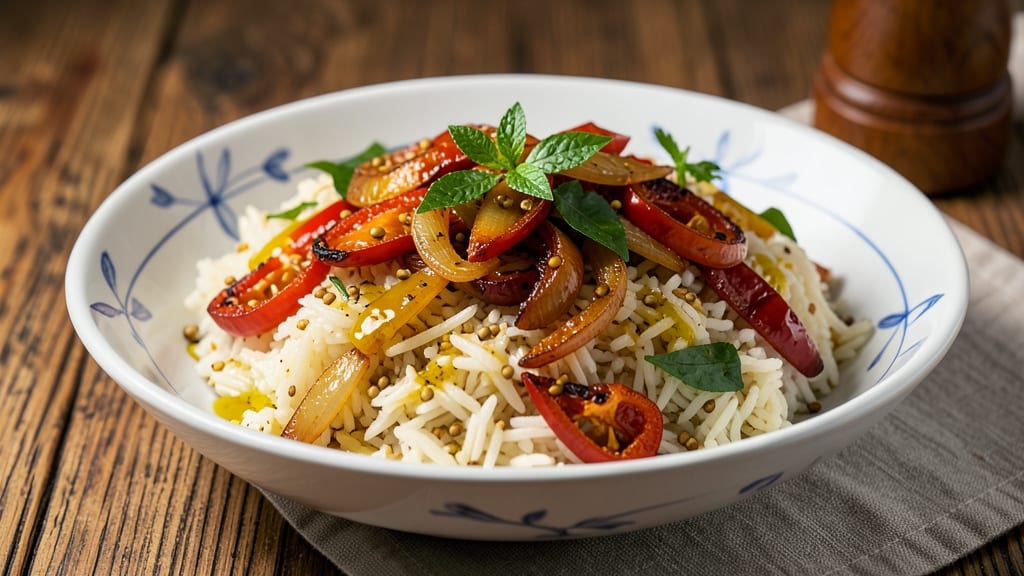
This capsicum rice Indian recipe transforms simple basmati rice into a vibrant, fragrant pilaf where sweet bell peppers meet aromatic spices. The secret lies in tempering whole spices—cumin, mustard seeds, and curry leaves—until they release their signature fragrance, then gently frying bell peppers until tender-crisp. This one-pot dish delivers restaurant-quality flavor with minimal effort, making it perfect for weeknight dinners or festive spreads.
What sets this recipe apart is the balance of textures: al dente basmati rice with caramelized bell peppers and toasted spices, all finished with a sprinkle of fried onions for crunch.
The dish stays true to Indian home-cooking traditions while being adaptable—serve it as a standalone vegetarian main or pair it with yogurt and raita for a complete meal. The aromatic spices and sweet peppers create a dish that's both comforting and vibrant, proving that simple ingredients can deliver extraordinary results.
Ingredients for capsicum rice indian
Simple ingredients elevated by aromatic spices and caramelized bell peppers for vibrant Indian-inspired capsicum rice.
| Ingredient | Amount | Notes |
|---|---|---|
| Basmati Rice 🍚 | 1 cup | Uncooked, long-grain preferred |
| Sweet Bell Peppers 🍅 | 2 cups | Diced, mixed colors preferred |
| Yellow Onions 🧅 | 1 whole | Thinly sliced, for tempering |
| Cumin Seeds 🌿 | 1 tbsp | Whole, toasted for aroma |
| Mustard Seeds 🌶️ | ½ tbsp | Whole, for tempering |
| Curry Leaves 🌿 | ¼ cup | Fresh, lightly crushed |
| Ghee 🧈 | ½ cup | Clarified butter, for cooking |
| Vegetable Oil 🫒 | ¼ cup | For frying onions |
| Salt 🧂 | 1 ½ tsp | Diamond Crystal preferred |
| Black Peppercorns 🌶️ | ½ tsp | Freshly ground preferred |
| Bay Leaves 🍃 | 1 whole | For rice infusion |
| Fresh Cilantro 🌿 | ¼ cup | Chopped, for garnish |
| Lemon Juice 🍋 | 1 tbsp | Freshly squeezed |
The spices are the heart of this dish, so source them fresh. Whole spices like cumin and mustard seeds should be toasted just before using for maximum aroma. Curry leaves are essential for authentic flavor—find them in Indian grocery stores or well-stocked spice shops. For ghee, Amul or Patanjali brands are widely available and deliver rich flavor. The bell peppers should be vibrant and firm, with no soft spots. If you can't find mixed colors, red and yellow peppers work perfectly together. The basmati rice should be long-grain and preferably aged for better texture—look for brands like Tilda or India Gate in specialty stores.
No curry leaves? Fresh thyme at half the amount adds a similar herbal note. Substitute ghee with vegetable oil or coconut oil, though the flavor will differ slightly. For the onions, red onions add a sharper bite if you prefer more depth. The bay leaves can be omitted if unavailable, but they infuse the rice with subtle earthiness. If you're short on time, pre-cut bell peppers from the refrigerated section work fine—just rinse them well before using. For extra crunch, toasted cashews or peanuts can replace the fried onions as a garnish.
This dish reheats beautifully—simmer with a splash of water for 2-3 minutes to restore moisture. Store in an airtight container for up to 4 days in the fridge. For longer storage, freeze portions for up to 3 months. The fried onions lose crispness when reheated, so always add them fresh before serving. Garnish with cilantro and lemon juice just before eating to preserve their bright flavors. This pilaf pairs perfectly with yogurt-based raita or a simple cucumber salad to balance the richness.
Why You'll Love This Recipe
- One-Pot Magic: I swear by this recipe when I’m too tired to wash a dozen pots. Just toss the rice, peppers, onions, and spices into one pan—no straining, no fuss. The rice cooks right in the veggie broth, and that golden crust at the bottom? Pure reward.
- Sweet-Savory Balance: The bell peppers add this bright, almost candy-like sweetness that cuts through the warm cumin and mustard seeds. It’s not too heavy, not too bland—just right. Honestly, I’ve made this with green peppers too, but the sweet ones? They make it feel like a little celebration.
- Lunchbox Hero: Between us, this is my go-to for packed lunches. The flavors stay vibrant for days, and the texture holds up—no mushy rice here. I’ll often double the batch: one for dinner, one for my kid’s school lunch. (Yes, even on a Tuesday night.)
Step-by-step instructions for spiced bell pepper pilaf
Here's the method for authentic, restaurant-quality capsicum rice with vibrant flavors and perfect texture.
Prepare the Rice and Tempering Spices
Rinse the 1 cup basmati rice under cold water until the water runs clear, then soak it in fresh water for 20 minutes. This removes excess starch and prevents gummy rice. Drain thoroughly before using.
In a heavy-bottomed pan, heat 0.25 cup vegetable oil over medium heat. Add the 1 whole yellow onion (thinly sliced) and sauté for 4-5 minutes until translucent. Push the onions to the side and add 0.5 cup ghee to the same pan. Here's where the magic begins: add 1 tbsp cumin seeds and 0.5 tbsp mustard seeds—they'll sizzle and pop. Cook for 30 seconds until the seeds turn aromatic and slightly darken. This tempering step infuses the oil with deep, nutty flavors that'll permeate the entire dish.
Cook the Bell Peppers and Build the Base
Add the 2 cups sweet bell peppers (diced) to the pan with the tempered spices. Stir well and cook for 5-6 minutes over medium-high heat until the peppers soften and release their juices. You'll notice the colors deepen and the edges start to caramelize slightly—that's your signal they're ready.
Now add the drained 1 cup basmati rice to the pan. Stir gently to coat each grain with the spiced oil and peppers. Sprinkle with 1.5 tsp salt and 0.5 tsp black peppercorns (freshly ground), then add 0.25 cup curry leaves and 1 whole bay leaf. The curry leaves will release their citrusy aroma as they cook, while the bay leaf adds subtle earthiness. Pour in 2 cups water (just enough to cover the rice by about ½ inch) and bring to a gentle boil.
Simmer to Perfect Texture
Reduce heat to low and cover the pan with a tight-fitting lid. Let the rice simmer undisturbed for 15 minutes. The key here is patience—don't peek or stir, as this disrupts the even cooking process. After 15 minutes, check the rice. If it's still slightly undercooked (with a bit of liquid remaining), continue cooking for another 2-3 minutes. You want the rice to be tender but still have a slight bite, with all the liquid absorbed.
Once the rice is perfectly cooked, remove the pan from heat and let it sit covered for 5 minutes. This resting period allows the steam to redistribute, ensuring each grain is evenly moist. The bay leaf can be removed at this stage if you prefer a smoother texture.
Finish and Garnish
Fluff the rice gently with a fork, then stir in 0.25 cup fresh cilantro (chopped) and 1 tbsp lemon juice. The cilantro adds a bright, herbaceous note that cuts through the richness of the ghee, while the lemon juice brightens the entire dish. Taste and adjust seasoning if needed—this is your final chance to balance the flavors.
Serve immediately while still warm. The capsicum rice should have vibrant colors from the bell peppers, fragrant aromas from the tempered spices, and perfectly cooked basmati grains that are tender yet distinct. The ghee-infused peppers and onions create a rich, velvety texture that makes this dish truly special. Pair with raita or a simple yogurt sauce for a complete meal.
Pro Tips For Making Capsicum Rice Indian
- CHAR THE ONIONS FIRST: I learned this the hard way—skipping the proper char on onions ruins the depth of flavor in capsicum rice. Slice onions thinly and cook them in oil on medium-high heat until they’re dark golden and slightly crispy at the edges. That’s when they’ll actually caramelize and give your dish that rich, sweet base.
- SALT THE RICE WATER LIKE THE SEA: Too little salt makes bland rice; too much turns it mushy. Use about 1.5 teaspoons of salt per 2 cups of water (yes, even if your rice is labeled "low-sodium"). Taste the water before adding rice—it should be noticeably salty, like the ocean. This keeps the grains firm and flavorful.
- DON’T SKIP THE MUSTARD POP: That initial sizzle when mustard seeds hit the pan isn’t just for show—it’s the flavor bomb of the dish. Use a heavy-bottomed pan and keep heat medium-high until the seeds actually pop. If they burn before popping, your rice will taste flat. (And no, lowering heat first doesn’t work—just deal with the splatter.)
- COOK THE PEPPERS UNTIL SOFT: Crunchy bell peppers in rice? Not ideal. Cut them into even 1-inch chunks and cook until they’re fork-tender, not just slightly softened. If they’re still firm, they’ll sit like rubber in your mouth. A quick test: Slice one piece in half—if it’s translucent, it’s done. (Yes, even if it means 5 extra minutes.)
Troubleshooting perfect results
Undercooked Rice Fix
If your rice turns out undercooked, don't panic—simply add 2-3 tablespoons of hot water and cover the pan again. Return to low heat for 2-3 minutes more, then check.
The residual heat will finish cooking without overcooking the peppers. I've had this happen when using older basmati rice that absorbs liquid faster.
Mushy Rice Prevention
Overcooked rice becomes mushy because of excess moisture. To avoid this, always use 2 cups water for 1 cup rice—no more! If your rice still feels sticky after cooking, fluff it gently with a fork and spread it on a tray to cool.
The steam will evaporate, leaving you with perfectly separate grains. 💫
Burnt Spices Solution
If your spices burn before tempering properly, reduce the heat to low-medium and add a splash of water to deglaze the pan. Stir constantly for 1 minute to release the flavors.
This happens when using high heat with whole spices like mustard seeds—they pop violently if overheated. Always toast spices on medium heat to prevent burning.
Peppers Too Crunchy
For perfectly tender peppers, cut them into ½-inch dice (not larger chunks) and cook them for 8-10 minutes on medium-high heat. If they're still crunchy after mixing with rice, return the pan to heat for 2-3 minutes uncovered.
The peppers should soften slightly but retain their shape—this is key for texture contrast in the dish.
Flat Flavors Troubleshooting
If your dish lacks depth, the spices likely weren't toasted enough. Next time, increase tempering time to 45-60 seconds until you hear the mustard seeds pop audibly. Also, add ½ tsp garam masala at the end for warmth.
I've found that using freshly crushed curry leaves (lightly smashed with the side of a knife) boosts flavor significantly compared to whole leaves.
Oil Management Tips
Too much oil makes the dish greasy, while too little leaves flavors underwhelming. Use ½ cup ghee total (as in the recipe) and ¼ cup vegetable oil for frying onions separately. If your rice feels oily, spread it on a tray to cool—the excess oil will separate.
For extra flavor without grease, try 1 tbsp coconut oil instead of some of the ghee while sautéing peppers.
Nutrition facts
Frequently asked questions
Can I use regular long-grain rice instead of basmati?
While you can substitute basmati with regular long-grain rice, the texture and aroma won't be the same. Basmati's slender grains stay separate when cooked, while other varieties may turn sticky. If you must substitute, use jasmine rice (closer in flavor) and reduce water by ¼ cup to prevent mushiness.
What if I can't find curry leaves?
Curry leaves are essential for authentic flavor, but you can substitute with ½ tsp dried thyme or ¼ tsp ground coriander. For a closer match, try fresh bay leaves (use 2 leaves instead of 1), though the flavor will differ slightly. The dish will still taste delicious, just with a different herbal profile.
How do I make this dish spicier?
Add ½ tsp red chili powder or 1-2 green chilies (finely chopped) when sautéing the peppers. For extra heat, stir in ½ tsp cayenne pepper at the end. Remember, spices build flavor—start with less and adjust to taste. If using fresh chilies, remove seeds for milder heat.
Can I prepare this ahead of time?
Yes! This dish reheats beautifully. Cook as directed, then store in an airtight container for up to 4 days in the fridge. Reheat with 2 tbsp water over low heat for 3-4 minutes. For best texture, add fresh cilantro and lemon juice just before serving to restore brightness.
What other vegetables pair well with capsicum rice?
Try adding ½ cup peas or ½ cup corn kernels when cooking the peppers for extra sweetness. For heartier meals, stir in ½ cup diced potatoes (cook them first until tender). The key is balancing textures—keep the peppers as the star while adding complementary flavors.