
Side Dishes
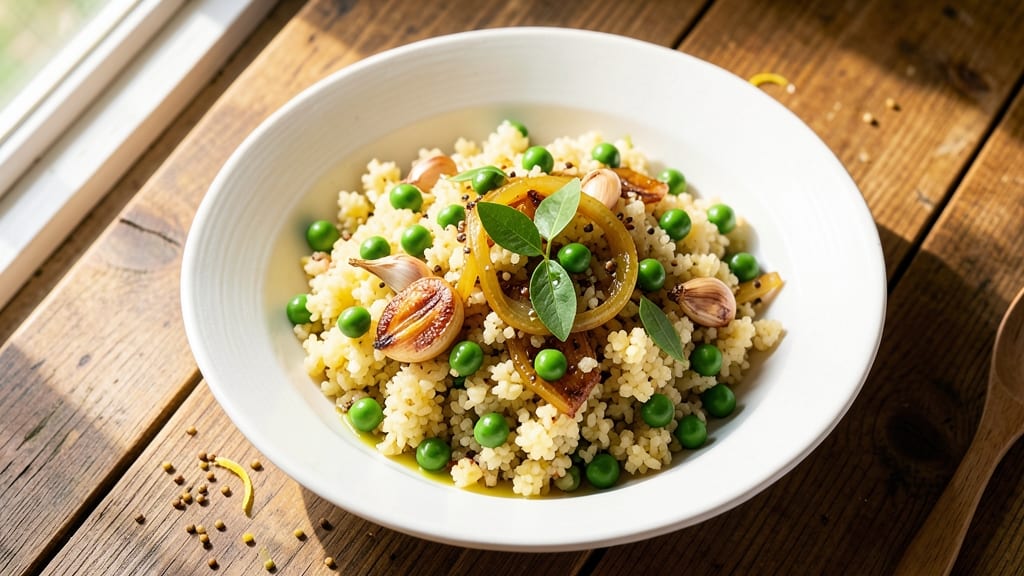
This South Indian-style cauliflower rice and peas recipe transforms a simple side into a fragrant, one-pot meal that delivers bold flavors in just 20 minutes.
The secret lies in perfectly balancing cumin, curry leaves, and mustard seeds—classic spices that create an aromatic base while keeping the dish light and satisfying. I developed this version after craving something hearty yet healthy, and it never fails to impress as both a side or main dish.
What makes this recipe special is its versatility—it’s naturally vegetarian, gluten-free, and low-carb, making it perfect for dietary restrictions without sacrificing flavor. The peas add sweetness and texture, while the cauliflower rice soaks up the spices beautifully.
Serve it with toasted bread or alongside grilled fish for a complete meal, or enjoy it as-is for a quick, protein-packed lunch.
Ingredients for cauliflower rice and peas
South Indian spices and fresh ingredients create this aromatic, one-pot cauliflower dish in minutes.
| Ingredient | Amount | Notes |
|---|---|---|
| Fresh Cauliflower 🥬 | 1 lb | Riced with a food processor |
| Green Peas 🌱 | 1 ½ cups | Fresh or frozen, thawed |
| Yellow Onion 🧅 | 1 whole | Finely diced, vibrant color |
| Garlic Cloves 🧄 | 4 cloves | Minced, aromatic quality |
| Fresh Curry Leaves 🌿 | ¼ cup | Whole leaves, lightly crushed |
| Mustard Seeds 🌶️ | 1 tbsp | Whole seeds, toasted first |
| Ground Cumin 🌿 | 1 tsp | Freshly ground preferred |
| Turmeric Powder 🧂 | ½ tsp | Bright yellow, vibrant |
| Ginger 🌿 | 1 tbsp | Freshly grated, aromatic |
| Coconut Oil 🫒 | 2 tbsp | Virgin, for authentic flavor |
| Salt 🧂 | ¾ tsp | Diamond Crystal preferred |
| Fresh Cilantro 🌿 | ¼ cup | Chopped, for garnish |
| Lemon Juice 🍋 | 1 tbsp | Freshly squeezed |
| Water 💧 | ½ cup | For steaming cauliflower |
The foundation of this dish lies in the spices—mustard seeds and curry leaves are non-negotiable for that authentic South Indian aroma. Whole mustard seeds toast beautifully in coconut oil, releasing their nutty flavor. For curry leaves, Indian grocery stores often carry them fresh, but frozen works in a pinch. The ginger and garlic should be freshly grated and minced—pre-minced garlic lacks the same depth. Turmeric is best when vibrant yellow; if it looks dull, it's lost its potency. The cauliflower should be fresh and firm, not limp or discolored, and riced just before cooking to preserve texture.
No fresh curry leaves? Dried curry powder at half the amount will work, though it lacks the same complexity. Substitute frozen peas for fresh—just thaw and drain them well. For a deeper umami kick, add a pinch of asafoetida (hing) when toasting the mustard seeds. The coconut oil can be swapped for ghee or olive oil, though coconut adds that signature South Indian flavor. If you're short on time, pre-riced cauliflower from the produce section saves chopping, but fresh riced is superior. The lemon juice at the end brightens everything—never skip this step.
This dish reheats beautifully, making it perfect for meal prep. Store leftovers in an airtight container for up to 4 days in the fridge, or freeze portions for up to 3 months. To reheat, add a splash of water and cover to steam. The cauliflower rice softens further when reheated, so it's ideal for cold lunches. Garnish with fresh cilantro right before serving—it wilts quickly, so hold off until the last minute. For extra protein, serve alongside a side of spiced chickpeas or yogurt
Why You'll Love This Recipe
- No Chopping Nightmare: I swear by this—just pulse the cauliflower in a food processor, dump it in, and walk away. The onions and garlic go in whole until they soften, so you’re basically stirring while you scroll through your phone.
- Curry Leaves Magic: That first sizzle of curry leaves in hot oil? Instant aroma bomb. They add this earthy, citrusy punch that turns simple veggies into something you’d pay for at a restaurant—no fancy spices needed.
- Leftover Lifesaver: This keeps perfectly for days. Toss it cold into wraps for lunch or reheat with a splash of water to revive the crisp-tender texture. Honestly, I make double batches just for this reason.
- Budget-Friendly Powerhouse: Fresh peas and cauliflower stretch into a whole meal for next to nothing. The onion and garlic bulk it up, so you’re not just eating "healthy"—you’re eating full, satisfying, and still saving money. Win.
Step-by-step instructions for South Indian-style spiced cauliflower rice and peas
This one-pot method delivers restaurant-quality flavors with minimal cleanup—authentic spices and proper technique are key.
Prepare the Base Ingredients for Even Cooking
Begin by ricing the 1 lb fresh cauliflower using a food processor fitted with the grating disc. Pulse until you achieve rice-sized pieces—no need for perfection, but avoid any large chunks that won't cook evenly. Transfer the cauliflower rice to a bowl and set aside.
Finely dice the 1 whole yellow onion into small, even pieces—about ¼-inch cubes. Minced the 4 cloves garlic and grate the 1 tbsp ginger using a microplane. These aromatics will form the flavor foundation, so take your time to get them finely textured. Lightly crush the 0.25 cup fresh curry leaves between your palms to release their essential oils without pulverizing them completely.
Bloom the Spices in Coconut Oil for Maximum Flavor
Heat the 2 tbsp coconut oil in a heavy-bottomed pot over medium heat until shimmering but not smoking. Add the 1 tbsp mustard seeds and let them sizzle for 30 seconds until they begin popping—this is the signature "tadka" technique that releases their nutty aroma. Immediately add the 0.25 cup crushed curry leaves and let them dance in the oil for 1 minute until they darken slightly and fill your kitchen with their citrusy fragrance.
Lower the heat to medium-low and add the 1 tbsp minced ginger, 4 cloves minced garlic, 1 tsp ground cumin, and 0.5 tsp turmeric powder. Stir constantly for 1 minute until the raw garlic smell disappears and the spices begin to toast lightly. This step develops the complex spice profile that defines South Indian cooking—don't rush it.
Cook the Cauliflower Rice Until Tender-Crisp
Add the 1 lb riced cauliflower and 1.5 cups green peas to the pot, stirring to coat everything evenly with the spiced oil. Pour in the 0.5 cup water and 0.75 tsp salt, then bring to a gentle simmer. Cover with a tight-fitting lid and cook for 8-10 minutes, stirring once halfway through, until the cauliflower is tender when pierced with a fork but still maintains a slight bite.
This is where the one-pot magic happens—the cauliflower absorbs the spiced oil while the peas soften just enough to complement the cauliflower's texture. If the mixture looks dry before the cauliflower is tender, add 1-2 tablespoons water to maintain moisture. The goal is al dente cauliflower with bright, vibrant peas—not mushy vegetables.
Finish with Acid and Fresh Herbs for Brightness
Remove the pot from heat and stir in the 1 tbsp freshly grated ginger (if not already added) and 1 tbsp lemon juice. The acidity brightens all the flavors and cuts through the richness of the coconut oil. Taste and adjust seasoning with additional salt if needed—South Indian dishes should balance spice, salt, and acid perfectly.
Finally, fold in the 0.25 cup chopped fresh cilantro just before serving. The herbs add freshness and visual appeal, but more importantly, they introduce a bright, herbal note that contrasts beautifully with the warm spices. Let the dish sit covered for 5 minutes off the heat to allow the flavors to meld completely.
Pro Tips For Making Cauliflower Rice And Peas
- Sauté Onions Low First: Start onions on medium-low heat until they’re soft and translucent—about 5 minutes—before cranking up the flame for garlic and curry leaves. I learned this the hard way: rushing the onions makes them bitter and burns before the real flavors even get a chance to sing.
- Pulse Cauliflower Coarse: Use a food processor to chop cauliflower into rice-sized pieces, but don’t overdo it—leave some texture. Too fine? It turns into mush. Too chunky? It feels like eating gravel. Aim for a mix of small florets and slightly larger bits for that perfect "rice" bite.
- Add Peas Late: Toss in frozen peas only in the last 2 minutes of cooking—just enough time to warm through. I used to add them early, and they’d turn into sad, mushy blobs. Fresh peas? Even better—fold them in at the very end to keep them bright and snappy.
- Toast Curry Leaves Hard: Fry curry leaves in hot oil until they darken and smell like a spice market—about 30 seconds. Skimp on this, and you’ll miss their floral punch. Overdo it, and they’ll burn into bitter ashes. Listen for that sizzle, then watch them crisp. That’s your cue.
Make-ahead tips for this recipe
Prep Ahead Components
Rice the 1 lb cauliflower up to 2 days ahead and store in an airtight container in the fridge. The texture stays firm but develops a slightly nutty flavor over time—perfect for absorbing spices later.
For the peas, thaw frozen ones in a colander under cold water for 5 minutes before using, or use fresh straight from the pod. 🥬
Spice Toasting Shortcut
Toast your mustard seeds, curry leaves, and spices ahead of time if you're meal prepping. Store the spice mixture in a small jar in the fridge for up to 5 days.
When ready to cook, simply heat the coconut oil and add the pre-toasted spices directly to the pot—this saves 10 minutes of active cooking time. Just be sure to add fresh ginger and garlic at the end for maximum brightness.
One-Pot Meal Prep
Cook the entire dish in advance and store it in an airtight container for 4 days. The flavors actually deepen as the spices meld together. When reheating, add 1-2 tablespoons water and cover to steam—this prevents drying out.
For best texture, reheat only until warmed through (90 seconds in the microwave) rather than boiling, as cauliflower rice becomes mushy when overcooked.
Freezing for Later
This dish freezes beautifully for up to 3 months. Portion into freezer-safe containers, leaving ½-inch headspace for expansion. Thaw overnight in the fridge before reheating. The cauliflower rice will soften slightly when frozen, but it still holds its shape perfectly when reheated gently.
Label containers with the date—trust me, you'll forget this is in there until you need it! ❄️
Garnish on Demand
Hold off on adding the fresh cilantro until serving—it wilts quickly when reheated. Store the cilantro separately in a sealed bag with a paper towel to absorb moisture. For extra flavor, squeeze lemon juice over the dish right before serving, even if it was prepped ahead.
This keeps everything vibrant and bright, like it was just made.
Reheating for Best Texture
For stovetop reheating, use low heat with a splash of water to maintain moisture. Stir frequently to prevent sticking—cauliflower rice has a tendency to clump when reheated. Microwave reheating works best in 30-second intervals on medium power, stirring between each interval.
The goal is to warm through without losing that tender-crisp texture we worked so hard to achieve initially. 🔥
Nutrition facts
Frequently asked questions
Can I use frozen peas instead of fresh?
Frozen peas work perfectly—just thaw them completely first by soaking in cold water for 5 minutes or using the microwave on defrost mode. Drain well before adding to the pot to avoid excess moisture. The texture will be just as vibrant, and the flavor difference is minimal when cooked with spices.
How do I make this dish spicier?
Add ½ teaspoon cayenne pepper or 1 teaspoon red chili powder when toasting the spices, or stir in 2-3 slices of fresh green chili with the ginger and garlic. For heat lovers, a pinch of asafoetida (hing) when toasting mustard seeds adds depth without overpowering. Always taste before serving!
Can I make this gluten-free and low-carb?
Yes! This recipe is naturally gluten-free and low-carb (about 8g net carbs per serving). Skip any bread-based sides, and verify your spices for gluten-free certification. For extra protein, serve with grilled chicken or chickpeas. The cauliflower rice replaces traditional rice perfectly for keto or carb-conscious diets.
Why did my cauliflower rice turn mushy?
Overcooking is the most common cause—cauliflower rice should cook for only 8-10 minutes with the lid on. If using older cauliflower, it releases more moisture, so reduce cooking time by 2 minutes. Always check for tenderness with a fork, and avoid stirring too frequently, which breaks down the texture.
What’s the best way to serve this dish?
Pair it with warm naan or roti for a complete meal, or serve alongside grilled fish or tofu for extra protein. The dish also works as a filling for stuffed bell peppers or wraps. For a South Indian twist, top with yogurt and sev (crispy chickpea noodles). The flavors shine when balanced with something creamy or starchy.