
Side Dishes
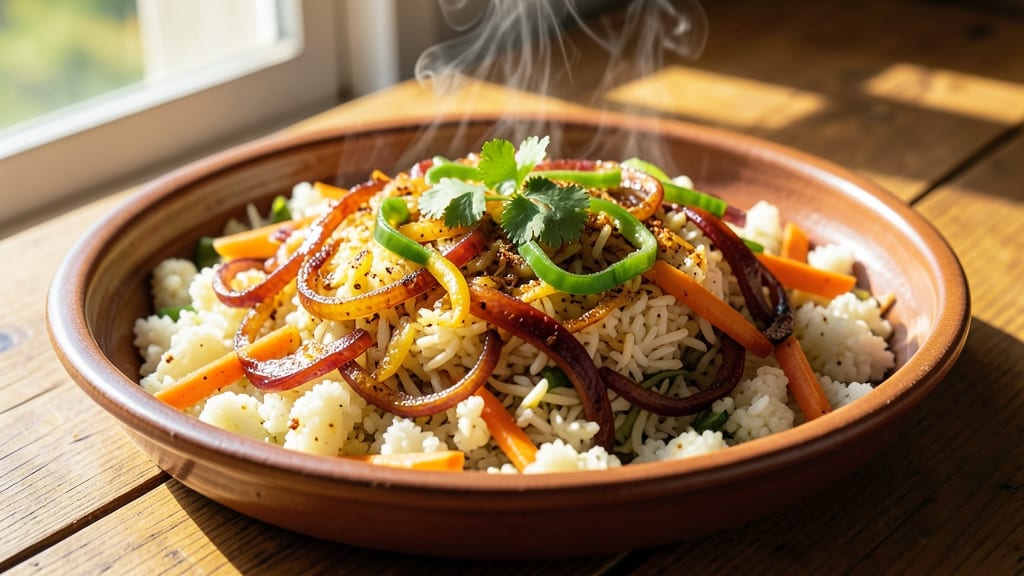
This cauliflower rice biryani delivers all the aromatic complexity of traditional biryani—just with a lighter, lower-carb twist. 🌟 The secret lies in perfectly textured cauliflower rice that absorbs spices while maintaining a satisfying bite, topped with a crispy, caramelized layer that rivals restaurant versions.
I developed this recipe after years of perfecting biryani techniques, adapting them for cauliflower's unique texture.
The foundation begins with whole spices toasted in ghee, releasing their essential oils for maximum flavor. Each layer—saffron-infused cauliflower rice, spiced yogurt, and aromatic vegetables—builds depth as they steam together.
The final touch is a high-heat sear that creates that coveted crispy top layer, balancing tender and crunchy textures in every bite.
What you'll achieve is a fragrant, golden biryani with layers of flavor and satisfying textures—crispy edges, tender cauliflower, and aromatic spices that linger. The saffron-infused rice takes center stage, while complementary sides like cucumber raita or spiced grilled vegetables complete the meal.
This vegetarian version proves you don't need meat for restaurant-quality biryani.
Perfect for meal prep or special occasions, this recipe serves 4-6 and comes together in about 45 minutes of active time (plus 30 minutes resting).
The technique is straightforward but yields professional results—ideal for biryani enthusiasts looking to adapt their favorite dish to a lighter version without sacrificing flavor or texture.
Ingredients for cauliflower rice biryani
The aromatic backbone of biryani starts with these whole spices and fresh ingredients.
| Ingredient | Amount | Notes |
|---|---|---|
| Fresh Cauliflower 🥬 | 3 lb | Riced with food processor |
| Ghee 🧈 | ½ cup | Clarified butter for toasting |
| Yellow Onion 🧅 | 1 whole | Finely chopped, aromatic base |
| Red Onion 🧅 | 1 whole | Thinly sliced for layers |
| Carrots 🥕 | 2 medium | Julienned for texture |
| Green Bell Pepper 🌶️ | 1 whole | Diced for freshness |
| Fresh Ginger 🌿 | 2 tbsp | Grated, aromatic kick |
| Garlic Cloves 🧄 | 6 cloves | Minced for depth |
| Plain Yogurt 🥛 | 1 cup | Full-fat for creaminess |
| Saffron Threads 🌼 | ⅛ tsp | High-quality for color |
| Vegetable Oil 🫒 | ¼ cup | For high-heat searing |
| Bay Leaves 🌿 | 2 whole | Whole for easy removal |
| Cardamom Pods 🌿 | 6 whole | Lightly crushed for aroma |
| Cinnamon Sticks 🌿 | 2 whole | For warm spice notes |
| Cloves 🌿 | 4 whole | Whole for gentle flavor |
| Salt 🧂 | 1 ½ tsp | Diamond Crystal preferred |
| Fresh Cilantro 🌿 | ¼ cup | Chopped for garnish |
| Lemon Juice 🍋 | 2 tbsp | Freshly squeezed |
The cauliflower is the star—look for fresh heads with tight florets. Whole Foods or local markets often have better quality than grocery stores, but any fresh cauliflower works. Ricing it yourself gives the best texture, but pre-riced is fine in a pinch. For the spices, Penzeys or bulk bins are ideal—whole spices toast beautifully for maximum flavor. The ghee? Don't substitute butter—it burns at high heat. The red onion and carrots should be vibrant, not wilted, for that restaurant-quality crunch.
No fresh ginger? Substitute 1 tbsp ginger powder, but toasted whole spices are non-negotiable—they release oils that make this dish sing. Short on saffron? Turmeric at half the amount gives color, but no saffron means no saffron flavor. The yogurt needs to be full-fat for that creamy texture—Greek yogurt works too. For the high-heat sear, vegetable oil has a higher smoke point than ghee, which is why we use both. The bell pepper can be swapped for zucchini or mushrooms if you prefer.
Toasted spices keep for 6 months in an airtight container. Cauliflower rice freezes beautifully—portion before cooking for easy reheating. The finished biryani reheats best in a skillet with a splash of water to restore moisture. Makes 4-6 servings, so double the recipe for leftovers—it tastes even better the next day. Store in the fridge for 3 days or freeze for 3 months.
Why You'll Love This Recipe
- No Rice, No Stress: I chop the cauliflower into rice-sized florets—takes me two minutes—then pulse it quickly in the food processor. No sticky rice to wash, no soaking, no waiting. Just dump, sauté, and layer.
- Ghee Magic Happens: That first spoonful of ghee hitting the onions? Pure satisfaction. The red and yellow onions caramelize into sweet, sticky layers while the cauliflower soaks up every bit of flavor—no dry, sad rice here.
- Lunchbox Hero: Pack half for tomorrow’s lunch, and it reheats like a dream. The carrots stay tender, the cauliflower doesn’t turn to mush, and the spices keep it tasting fresh—even after sitting in a bento box all day.
- Budget-Friendly Feast: A whole head of cauliflower feeds four for under $5, and the ghee stretches richly over every bite. Honestly, this is the kind of dish that makes me feel like I’m treating myself without breaking the bank.
Step-by-step instructions for cauliflower rice biryani
Here's how to create fragrant, golden layers with perfectly crispy tops every time.
🔥 Step 1: Toast the Spices and Sauté the Aromatics
Heat the 0.25 cup vegetable oil in a large, heavy-bottomed pot over medium heat. Add the 6 whole cardamom pods, 2 whole cinnamon sticks, and 4 whole cloves, toasting for 30 seconds until fragrant. Immediately add the 2 whole bay leaves and 1 whole yellow onion (finely chopped), cooking for 5-6 minutes until the onions turn golden.
Next, add the 2 tbsp fresh ginger and 6 cloves garlic cloves (minced), cooking for another 2 minutes until the raw garlic scent disappears. Stir in the 2 medium carrots (julienned) and 1 whole green bell pepper (diced), sautéing for 4-5 minutes until the vegetables soften slightly but retain their color. Here's the thing—don't overcook the veggies or they'll turn mushy in the biryani.
👨🍳 Step 2: Prepare the Saffron-Yogurt Marinade
While the aromatics cook, steep the 0.125 tsp saffron threads in 2 tablespoons warm water for 10 minutes to release their vibrant color and aroma. In a separate bowl, whisk together the 1 cup plain yogurt, 1.5 tsp salt, and the saffron infusion until completely smooth. This marinade will infuse the cauliflower rice with rich, creamy flavor and that signature golden hue.
I know it seems like a tiny amount of saffron, but trust me—it's enough to give your biryani that luxurious appearance without overpowering the dish. The yogurt helps tenderize the cauliflower while adding a subtle tang that balances the spices perfectly.
🍳 Step 3: Cook the Cauliflower Rice Base
Add the 3 lb fresh cauliflower (riced) to the pot with the sautéed vegetables. Stir well to combine, then pour in the yogurt-saffron mixture, spreading it evenly over the cauliflower. Cook over medium-high heat for 5-6 minutes, stirring occasionally, until the cauliflower begins to soften but isn't fully cooked through.
Here's where the magic happens: the yogurt will create steam that cooks the cauliflower gently while infusing it with flavor. You'll see the mixture become more vibrant as the saffron color develops. Don't let it simmer too long or the cauliflower will turn mushy—we want it to stay firm enough to hold its shape in the biryani.
🥘 Step 4: Layer and Create the Crispy Top
Reduce heat to low and spread the cauliflower mixture evenly in the pot. Top with the 1 whole red onion (thinly sliced) arranged in concentric circles, slightly overlapping. Drizzle the 0.5 cup ghee evenly over the onions—this is what creates that coveted crispy top layer.
Here's the crucial part: cover the pot with a tight-fitting lid and cook for 15 minutes on low heat. The ghee will melt and pool, then crisp as it cooks. After 15 minutes, increase heat to medium-high and cook uncovered for 5-7 minutes until the onion layers turn deep golden brown and crispy. This is what gives biryani its signature texture contrast—soft, fragrant rice with a crispy, caramelized top.
🍽️ Step 5: Finish and Garnish
Remove from heat and let the biryani rest for 10 minutes covered. This resting period allows the flavors to meld and the cauliflower to absorb all the aromatic spices. Stir gently before serving to redistribute any juices that may have settled at the bottom.
Garnish with the 0.25 cup fresh cilantro (chopped) and finish with a drizzle of 2 tbsp lemon juice. The lemon brightens all the rich flavors and cuts through the creaminess of the yogurt. Serve immediately with a side of raita or a simple cucumber salad to complement the hearty biryani.
Pro Tips For Making Cauliflower Rice Biryani
- Use a Mandoline for Cauliflower: I learned this the hard way—grating cauliflower by hand leaves uneven pieces that turn mushy. A mandoline with a thin slice setting gives you perfect, rice-like texture every time. Rinse the shreds immediately to remove bitterness, then squeeze out excess water with a clean towel.
- Sauté Onions Until Golden: Don’t rush the onions—cook them on medium-low heat until they’re deep amber, not brown. That’s where the sweetness comes from. If they darken too fast, lower the heat and add a splash of water. Trust me, your biryani will taste richer.
- Layer Ghee in Thin Layers: Drizzle ghee in small amounts between layers instead of dumping it all at once. This keeps the cauliflower rice fragrant and prevents it from turning greasy. A light coat is enough—you’re flavoring, not frying.
- Add Carrots Last: I used to cook carrots with the onions, but they turn rubbery. Slice them thin, then add them only after the onions are golden and the cauliflower rice has absorbed some flavors. They’ll stay tender and sweet.
Dietary considerations for this recipe
Vegetarian Adaptation
This cauliflower rice biryani is a perfect vegetarian version of the classic dish, delivering all the aromatic complexity without meat. The yogurt-saffron marinade replaces traditional meat marinades, while the toasted whole spices create depth that rivals traditional biryani.
The cauliflower rice absorbs flavors beautifully, giving you that satisfying texture without the carbs. 🌱
For extra protein, add chickpeas or lentils (½ cup each) when sautéing the vegetables. They soak up the spices and add heartiness, making this a complete meal. I often use brown lentils for their earthy flavor and high protein content.
Gluten-Free Assurance
All ingredients in this recipe are naturally gluten-free, making it safe for those with celiac disease or gluten sensitivity. The ghee and vegetable oil are pure fats without additives, while the cauliflower rice is inherently gluten-free.
Always check your yogurt label—some brands add gluten-containing stabilizers, so opt for plain, full-fat yogurt labeled gluten-free. 🥛
For extra caution, use a certified gluten-free spice blend if you're sensitive to cross-contamination. I recommend Bob's Red Mill gluten-free spice mixes for peace of mind. The recipe's simplicity means no hidden gluten sources—just fresh, whole ingredients.
Low-Carb Benefits
With cauliflower rice as the base, this biryani is naturally low in carbohydrates compared to traditional rice-based versions. A 1-cup serving contains about 15g net carbs (vs. 45g+ in basmati rice), making it ideal for keto or low-carb diets.
The high-fat ghee and yogurt provide energy while keeping blood sugar stable. 🥬
For even fewer carbs, reduce the red onion layers or use shredded cabbage instead. The dish remains flavorful while cutting carbs further. Pair with a cauliflower-based raita (blend yogurt with cucumber and lemon) to keep the meal low-carb and refreshing.
Nut-Free Safety
This recipe is naturally nut-free, making it safe for those with nut allergies. All ingredients are simple and allergen-free except for potential cross-contamination risks. If you're highly sensitive, prepare the biryani in a nut-free kitchen using clean utensils and surfaces.
The ghee and spices are typically nut-free, but always double-check labels. 🌿
For added safety, store all ingredients in separate containers to avoid accidental cross-contact. The recipe's focus on fresh vegetables and dairy means no hidden nut risks—just pure, flavorful layers of spiced cauliflower and aromatics.
Nutrition facts
Frequently asked questions
Can I use pre-riced cauliflower for this recipe?
Yes, you can use pre-riced cauliflower in a pinch! However, freshly riced cauliflower gives the best texture—it holds its shape better and absorbs spices more evenly. If using pre-riced, pat it very dry first to prevent a soggy biryani. For extra flavor, pulse the pre-riced cauliflower in a food processor for 2-3 seconds to create a slightly coarser texture.
How do I achieve the crispy top layer without burning the biryani?
The key is patience and proper heat control! First, spread the cauliflower mixture evenly in the pot, then arrange the red onion slices in concentric circles. Drizzle the ghee evenly—this is what creates the crispy layer. Cover and cook on low heat for 15 minutes, then increase to medium-high for 5-7 minutes uncovered. Watch closely—the onions should be golden brown but not charred.
Can I make this biryani ahead of time?
This biryani actually tastes even better the next day. Assemble it completely, then refrigerate uncovered for 1-2 hours to let the flavors meld. Cover and refrigerate for up to 2 days. To reheat, warm in a skillet over medium heat with a splash of water to restore moisture. For freezing, package portions in airtight containers for up to 3 months. Thaw overnight in the fridge before reheating.
What if I don't have saffron? Can I substitute it?
You can substitute with turmeric (¼ tsp) for color, but you'll lose the saffron's unique aroma. For better flavor, try annatto powder (⅛ tsp) mixed with a pinch of turmeric—it gives a deeper yellow color and subtle earthy notes. If you're using turmeric alone, add a drop of vanilla extract (¼ tsp) to mimic saffron's floral notes. The yogurt marinade will still work without saffron, but the color will be less vibrant.
How can I make this biryani spicier?
Add heat by increasing the spices or incorporating chili elements! For a mild kick, add ½ tsp red chili powder when sautéing the aromatics. For medium heat, stir in 1-2 fresh green chilies (finely chopped) with the ginger and garlic. For extra spice, sprinkle ½ tsp cayenne pepper over the cauliflower before adding the yogurt marinade. Always taste as you go—you can adjust the heat level to your preference.