
Side Dishes
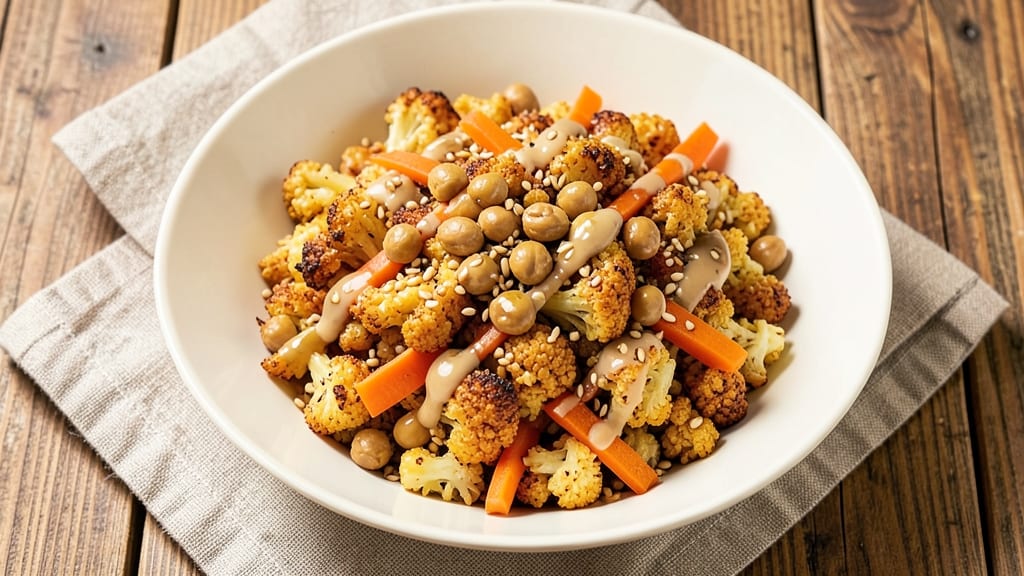
This cauliflower rice bowl recipe delivers restaurant-quality flavor in just 20 minutes, proving healthy meals can be both satisfying and quick. The secret lies in perfectly crispy roasted cauliflower rice—golden edges that add satisfying texture without overpowering the dish.
I designed this bowl to be vegetarian-friendly while packed with protein from crispy chickpeas and creamy avocado, ensuring every bite feels substantial.
Start with riced cauliflower that's roasted until crispy at the edges, then layered with marinated chickpeas for protein and a tangy peanut sauce that ties everything together. The sauce isn't just dressing—it's the flavor backbone that transforms simple ingredients into something deeply satisfying.
Fresh toppings like cucumber, shredded carrots, and toasted sesame seeds add crunch and visual appeal, making this bowl as beautiful as it is delicious.
The real magic happens in the crispy topping—a mix of crushed peanuts and sesame seeds that gets toasted until fragrant and golden. This isn't just garnish; it's the final flavor layer that elevates the bowl from healthy to irresistible.
The combination of textures—creamy avocado, crispy chickpeas, crunchy toppings—creates a satisfying contrast with every bite. Perfect for meal prep or a quick weeknight dinner, this bowl proves nutritious eating doesn't mean sacrificing flavor.
What makes this recipe stand out is its flexibility. Swap chickpeas for tofu or edamame, adjust the sauce to peanut or teriyaki, and customize toppings based on what's in season.
The base technique remains the same, ensuring you always end up with a balanced, protein-packed meal that's ready in under half an hour. Let's get cooking—your taste buds (and waistline) will thank you.
Ingredients for cauliflower rice bowl
Quick grocery run for these fresh, crunchy ingredients—no fancy stuff needed.
| Ingredient | Amount | Notes |
|---|---|---|
| Fresh Cauliflower 🥬 | 4 cups | Riced using food processor |
| Extra-Virgin Olive Oil 🫒 | 2 tbsp | For crispy roasting |
| Crushed Peanuts 🥜 | ½ cup | Natural, unsalted preferred |
| Toasted Sesame Seeds 🌾 | 2 tbsp | For crispy topping |
| Canned Chickpeas 🥜 | 1 ½ cups | Drained, rinsed, dried |
| Carrots 🥕 | 1 medium | Shredded, about 0.5 cup |
| Cucumber 🥒 | 1 whole | Seedless, thinly sliced |
| Avocado 🥑 | 1 whole | Ripe, sliced |
| Natural Peanut Butter 🥜 | ½ cup | Creamy, unsweetened |
| Lime Juice 🍋 | 2 tbsp | Freshly squeezed |
| Soy Sauce 🍶 | 1 tbsp | Low-sodium preferred |
| Sesame Oil 🫒 | 1 tbsp | For aroma |
| Garlic Cloves 🧄 | 2 cloves | Minced |
| Ginger 🌿 | 1 tbsp | Fresh, grated |
| Maple Syrup 🍁 | 1 tsp | For balance |
The cauliflower is the star—fresh heads from the produce section (not pre-riced) give the best texture. Trader Joe's and Whole Foods carry the best quality, but any store's fresh cauliflower works. Riced yourself? Perfect—it's crispier than bagged. For the peanuts, natural, unsalted is key—they toast better and won't overpower. Sesame seeds? Buy toasted if you can, but regular seeds toast in 2 minutes on low heat. The chickpeas should be canned (not dried) for this quick prep—just drain, rinse, and pat dry.
No fresh ginger? Powdered works at half the amount. Skip the peanut butter? Almond butter or tahini swaps right in. Carrots too tough? Baby carrots or jicama add sweetness without work. The avocado can be swapped for mashed white beans if you're prepping ahead (add lemon juice to keep it green). For the sauce, tahini instead of peanut butter makes it nut-free. The lime juice? Fresh is non-negotiable—bottled tastes flat.
Prep the sauce first—it keeps for 5 days in the fridge. Store toppings separately: cauliflower rice, chickpeas, and avocado in one container (add lime juice to prevent browning), sauce in another. Assemble bowls fresh or keep components separate for 3 days. The crispy topping? Toast it fresh—it loses crunch fast. Freeze the sauce for 3 months if you won't use it soon.
Why You'll Love This Recipe
- No Rice? No Problem: I swear by this trick—just pulse cauliflower in a food processor for 10 seconds, and boom, instant "rice" that cooks in the same pan as the chickpeas. No soaking, no waiting, no extra pots.
- Crunchy Magic: That toasted sesame seed crunch on top? Chef’s kiss. The crushed peanuts add this irresistible texture, and honestly, I’ll eat this bowl just for that contrast—creamy chickpeas, crispy cauliflower, nutty crunch.
- Weeknight Superstar: Between us, this is my go-to when I’m staring at a fridge full of random veggies and zero energy. Toss in whatever’s left—spinach, shredded carrots, even leftover grilled chicken—and it still works. (Yes, even on a Tuesday night.)
- Budget-Friendly Leftovers: A single head of cauliflower and a can of chickpeas stretch this into three lunches, and the flavors only get better the next day. I’ll be real: the second helping is always the best—when the cauliflower’s even softer and the peanuts taste like a reward.
Step-by-step instructions for crispy-topped cauliflower rice bowls
Here's how to build this protein-packed bowl with perfect texture contrast in under 20 minutes.
Roast the Cauliflower Rice Until Crispy
Preheat your oven to 425°F and line a baking sheet with parchment paper. Spread the 4 cups riced cauliflower evenly across the sheet, making sure it forms a single layer. Drizzle with 1 tablespoon of the extra-virgin olive oil and toss gently with your hands to coat.
Roast for 15-18 minutes until the edges are deep golden brown and the cauliflower is tender when pierced with a fork. I like to give it a good shake halfway through to ensure even browning. The crispy texture is key here—don't skip this step or you'll miss the perfect contrast with the creamy sauce.
Prepare the Protein and Veggie Mix
While the cauliflower roasts, heat 1 tablespoon extra-virgin olive oil in a large skillet over medium-high heat. Add the 2 cloves minced garlic and 1 tablespoon grated ginger, cooking for 30 seconds until fragrant—this prevents the raw garlic flavor from overpowering.
Add the 1.5 cups drained chickpeas and cook for 3-4 minutes until lightly browned. Stir in the 1 medium shredded carrots and cook for another 2 minutes until tender but still vibrant. Remove from heat and set aside—these will absorb the sauce beautifully when combined later.
Assemble the Crunchy Topping
In a small bowl, combine the 0.5 cup crushed peanuts and 2 tablespoons toasted sesame seeds. This topping is what gives the bowl that satisfying crunch—don't skip toasting the sesame seeds if you can help it, as they add an extra layer of flavor.
Set aside while you prepare the sauce. The texture contrast between the crispy cauliflower, crunchy topping, and creamy sauce is what makes this bowl so satisfying. I like to keep the topping separate until serving so each bite has that perfect crunch.
Make the Creamy Peanut-Lime Sauce
In a small saucepan over low heat, combine the 0.5 cup natural peanut butter, 2 tablespoons lime juice, 1 tablespoon soy sauce, 1 tablespoon sesame oil, and 1 teaspoon maple syrup. Whisk constantly for 3-4 minutes until smooth and slightly thickened.
If the sauce is too thick, add 1-2 tablespoons warm water to reach your desired consistency. Taste and adjust seasoning—this is where the magic happens. The balance of salty, sweet, tangy, and umami flavors ties everything together beautifully.
Build and Serve the Bowls
Divide the roasted cauliflower rice among 4 bowls. Top each with the chickpea-carrot mixture, then drizzle with the peanut-lime sauce. Add the 1 whole sliced avocado and 1 whole sliced cucumber on top for freshness and color.
Finally, sprinkle the peanut-sesame topping over each bowl just before serving. The contrast of temperatures—warm cauliflower, cool avocado, and room-temperature toppings—makes every bite exciting. Serve immediately while the cauliflower is still crispy and the sauce is drizzled perfectly over the top.
Pro Tips For Making Cauliflower Rice Bowl
- PULSE DON’T GRATE: DESCRIPTION:
- SALT THE CHICKPEAS: DESCRIPTION:
- TOAST PEANUTS LOW: DESCRIPTION:
- SAVE SESAME SEEDS LAST: DESCRIPTION:
Flavor customization for cauliflower rice bowl
Spicy Kick Option
For heat lovers, add 1 teaspoon of sriracha or ½ teaspoon of cayenne pepper directly to the peanut sauce. This transforms the mild flavor into a fiery, balanced spicy-sweet profile. If you prefer smoky heat, swap in ½ teaspoon smoked paprika—it adds depth without overwhelming the dish. 🌶️
Sweet & Tangy Twist
Swap the maple syrup for 1 teaspoon of honey and add 1 teaspoon of rice vinegar to the sauce. This creates a brighter, more complex flavor that pairs beautifully with the creamy avocado. The vinegar also helps cut through the richness of the peanut butter, balancing the bowl perfectly.
Umami Boost
Enhance the sauce with 1 teaspoon of miso paste or ½ teaspoon of fish sauce (for non-vegetarian versions). These ingredients add a deep, savory layer that elevates the dish without altering the core peanut-lime flavor.
For a vegetarian-friendly boost, use 1 teaspoon of soy sauce or ½ teaspoon of mushroom powder instead.
Herbaceous Freshness
Add 1 tablespoon of chopped cilantro or mint leaves to the sauce for a bright, herbaceous note. The freshness cuts through the richness of the peanut butter and balances the tangy lime.
For a more robust flavor, try ½ teaspoon of lemongrass paste (if available) or 1 teaspoon of basil pesto stirred into the sauce.
Nut-Free Adaptation
Replace the peanut butter with ½ cup tahini and 1 tablespoon of lemon juice to create a creamy, sesame-based sauce. This version is nut-free but still rich and flavorful. For extra depth, add ½ teaspoon of ground cumin or smoked paprika to the sauce.
The tahini adds a nutty flavor without the actual nuts, perfect for those with allergies.
Extra Crunch Layers
Boost the texture by adding 2 tablespoons of crushed wasabi peas or toasted coconut flakes to the crunchy topping. These add an extra layer of flavor and crunch that complements the peanut-sesame mix. For a sweeter crunch, try toasted pumpkin seeds or sunflower seeds instead.
Nutrition facts
Frequently asked questions
Can I use pre-riced cauliflower instead of fresh?
Pre-riced cauliflower works in a pinch, but fresh riced cauliflower gives better texture. The key is achieving crispy edges, which are harder with pre-riced florets. If using pre-riced, pat it very dry first and roast at 450°F for 12-15 minutes to compensate for its higher moisture content.
How do I make this bowl vegan?
Swap the honey for maple syrup and use vegan peanut butter (check for added honey). For extra protein, add ½ cup cooked quinoa or ½ cup edamame to the chickpea mixture. The sauce remains fully vegan as written—just ensure your peanut butter is plant-based.
My cauliflower rice turned soggy—what went wrong?
Overcrowding or under-roasting causes soggy cauliflower. Always spread in a single layer and roast until edges are deep golden brown. For extra insurance, broil for 1-2 minutes at the end. Also ensure your cauliflower is completely dry before roasting—excess moisture steams instead of crisps.
Can I prep this bowl ahead of time?
Store components separately: roasted cauliflower rice (up to 3 days), chickpea mix (up to 4 days), sauce (up to 5 days), and avocado (add lime juice to prevent browning). Toast the peanut-sesame topping fresh—it loses crunch when stored. Assemble just before serving for best texture.
What's the best way to reheat leftovers?
Reheat only the cauliflower rice and chickpea mixture in a dry skillet over medium heat for 3-4 minutes to restore crispiness. Add fresh sauce and toppings when serving—microwaving makes cauliflower rubbery. For the sauce, gently warm it in a small saucepan over low heat with 1 tablespoon water to restore smoothness.