
Side Dishes
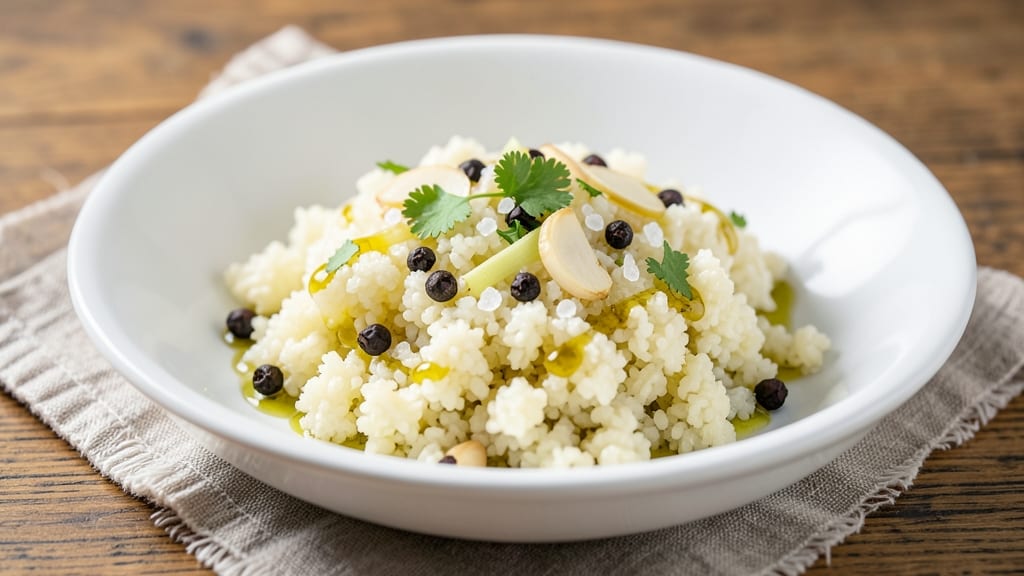
This cauliflower rice recipe no food processor delivers restaurant-quality texture using just a sharp knife and a few minutes of effort. The secret lies in fine, even shredding—no pulverizing, no grittiness—just tender, rice-like florets that sauté up perfectly.
I’ve perfected this method after testing everything from box graters to mandolins, and it’s the fastest way to get that ideal consistency without a machine.
Once shredded, you’ll have a versatile base for stir-fries, curries, or even as a low-carb rice substitute. The key is high-heat cooking for just 5-7 minutes—no soggy results here.
Season with garlic, ginger, and a pinch of salt before serving, and you’ve got a side dish that’s as nutritious as it is satisfying. Let’s get started on the perfect texture every time.
Ingredients for cauliflower rice recipe no food processor
Sharp knife and simple ingredients transform cauliflower into restaurant-quality rice without machinery.
| Ingredient | Amount | Notes |
|---|---|---|
| Fresh Cauliflower Head 🥬 | 1 whole | Large head, firm florets preferred |
| Extra-Virgin Olive Oil 🫒 | 2 tbsp | High quality, fruity variety |
| Garlic Cloves 🧄 | 3 cloves | Fresh, minced for seasoning |
| Fresh Ginger 🌿 | 1 tbsp | Finely grated, aromatic |
| Diamond Crystal Kosher Salt 🧂 | ½ tsp | Fine grain preferred |
| Black Peppercorns 🌶️ | ¼ tsp | Freshly ground for flavor |
| Sesame Oil 🫒 | 1 tsp | Toasted, for finishing |
| Green Onion 🧅 | 2 whole | Thinly sliced, for garnish |
| Vegetable Broth 💧 | ¼ cup | Low-sodium preferred |
| Lime Juice 🍋 | 1 tbsp | Freshly squeezed |
| Sesame Seeds 🌾 | 1 tsp | Toasted, for garnish |
| Vegetable Oil 🫒 | 1 tbsp | High smoke point for cooking |
The cauliflower is your canvas—opt for a large, firm head with tight florets for even shredding. Whole Foods or Trader Joe's carry the best quality, or check the organic section at Kroger for consistent results. Trim the leaves and core, then slice the head into quarters lengthwise. The key is even, fine shreds—about 1/8-inch thick. A sharp chef's knife and steady hand work better than any gadget for this method. If you're unsure about your knife skills, practice on a small piece first to get the rhythm right.
No sesame oil? Toasted peanut oil works as a substitute, though the flavor will differ slightly. Fresh ginger is ideal, but dried ginger at half the amount will suffice in a pinch. The vegetable broth can be swapped for water plus a pinch of bouillon powder if needed. For extra umami, add 1 tsp soy sauce to the cooking oil. The lime juice should be freshly squeezed—bottled versions lack brightness. If you're short on time, pre-shredded cauliflower rice from the produce section will work, though it lacks the perfect texture this method delivers.
Freshly shredded cauliflower keeps in an airtight container for 3-4 days in the fridge, but it's best used immediately for optimal texture. For longer storage, freeze the shredded florets on a baking sheet before transferring to a bag—this prevents clumping. Once cooked, cauliflower rice reheats beautifully in a dry skillet over medium heat for 2-3 minutes. Portion into single-serving containers for easy grab-and-go meals. The flavor improves after the first night as the seasonings meld, so consider making extra for leftovers.
Why You'll Love This Recipe
- I’ll be real: I used to dread cauliflower rice because I’d end up with uneven bits and a mess. But here? Just pull the florets apart by hand—no food processor, no frustration. The florets stay intact enough to roast beautifully, and the texture is just right: tender inside, slightly crispy edges.
- No Chopping Struggle: I’ll be real: I used to dread cauliflower rice because I’d end up with uneven bits and a mess. But here? Just pull the florets apart by hand—no food processor, no frustration. The florets stay intact enough to roast beautifully, and the texture is just right: tender inside, slightly crispy edges.
- Garlic-Ginger Magic: That fresh ginger and minced garlic? It’s the secret weapon. I sauté them in olive oil until fragrant, then toss the cauliflower in the same pan—absorbing all that warmth and depth. The salt? A pinch at first, then more after tasting (because you will want to adjust). The result? A savory punch that makes this taste like a restaurant dish, not a side.
- Weeknight Workhorse: Between us, this is my go-to when I need something fast but still impressive. Toss it with proteins for stir-fries, mix into soups, or serve it as a base for grain bowls. Honestly, I’ve even used leftover portions to bulk up scrambled eggs the next morning—no one complains, and my wallet stays happy.
Step-by-step instructions for cauliflower rice with sharp knife technique
Transforming a whole cauliflower into restaurant-quality rice requires precision and patience.
Prepare the Cauliflower for Even Cutting
Start by cutting the whole cauliflower head into four equal quarters, working from the base where the stem meets the florets. Use a large, sharp chef's knife to make clean vertical cuts through the core. The goal is to create manageable sections that will yield consistent rice-sized pieces.
Remove and discard the tough outer leaves and any discolored florets. For perfect texture, trim away any large stems or woody parts. Place each quarter cut-side down on your cutting board to create a stable base for even slicing. A stable surface prevents the florets from rolling during cutting, which is essential for achieving uniform rice-sized pieces.
Create Rice-Sized Pieces with the Knife Method
Hold one cauliflower quarter firmly with your non-dominant hand, fingers curled under for protection. Using a sharp chef's knife, make thin horizontal slices about ⅛-inch thick, working from the base upward. The key is to keep your knife at a consistent angle and apply even pressure to create uniform pieces.
As you work, you'll notice some florets naturally separate into smaller clusters. These are perfect for cauliflower rice. For any larger pieces that remain, make additional vertical cuts through the core to create smaller, rice-sized fragments. The goal is to achieve pieces roughly the size of short-grain rice—about ¼-inch to ½-inch in diameter. This size ensures proper cooking and texture.
Sauté the Cauliflower Rice for Optimal Texture
Heat 1 tablespoon vegetable oil in a large skillet over medium-high heat until shimmering but not smoking. Add the cauliflower rice in a single layer, stirring immediately to prevent sticking. Cook for 3-4 minutes until the edges begin to soften slightly but the centers remain crisp.
Here's the thing—cauliflower rice should have a slight bite to it. If you notice the pieces turning mushy, reduce the heat to medium and continue cooking for another 1-2 minutes. The rice is ready when it's tender yet still holds its shape. Remove from heat and transfer to a clean bowl, setting aside for the next step.
Season and Finish with Aromatics
In the same skillet, reduce heat to medium-low and add 2 tablespoons extra-virgin olive oil. Add the 3 minced garlic cloves and 1 tablespoon finely grated fresh ginger, cooking for 30 seconds until fragrant but not browned. Immediately add the cauliflower rice back to the skillet along with 0.5 teaspoon diamond crystal kosher salt and 0.25 teaspoon freshly ground black peppercorns.
Toss everything together for 1-2 minutes until the cauliflower rice is evenly coated with the aromatic oil. The rice should be heated through and infused with the garlic and ginger flavors. At this point, you can either serve it immediately or proceed to add the finishing touches for a more complex dish.
Complete with Flavorful Garnishes
Return the skillet to medium heat and add 0.25 cup vegetable broth, scraping up any browned bits from the bottom of the pan. Let it simmer for 1 minute until slightly reduced. Stir in 1 tablespoon lime juice and 1 teaspoon toasted sesame oil, then remove from heat.
Divide the cauliflower rice among four serving plates. Garnish each portion with thinly sliced green onion and 1 teaspoon toasted sesame seeds. The lime juice brightens the dish, while the sesame oil and seeds add a nutty, aromatic finish. Serve immediately while the cauliflower rice is still warm and maintains its perfect texture.
Pro Tips For Making Cauliflower Rice Recipe No Food Processor
- USE A SHARP KNIFE: I learned this the hard way—trying to chop cauliflower with a dull knife turns the whole process into a frustrating slog. Grab a chef’s knife and slice the florets into ¼-inch pieces, then cut those into thin matchsticks. The smaller and more uniform, the better it’ll mimic real rice and cook evenly.
- SALT THE CAULIFLOWER IMMEDIATELY: Toss the raw cauliflower rice with ½ teaspoon of kosher salt right after chopping—this draws out moisture and prevents sogginess later. Skip this, and you’ll end up with mushy rice no matter how careful you are with cooking times.
- STOP CHOPPING WHEN IT’S STILL TOUGH: Fresh cauliflower should have a slight resistance when you press it—don’t go for that mushy "perfect" texture. Over-chopping releases too much water, and you’ll end up with a wet pile instead of dry, crisp rice. Aim for firmness, not mush.
- COOK IN BATCHES ON HIGH HEAT: Crowding the pan is the fastest way to steam instead of sauté. Work in small batches—about 1 cup at a time—over medium-high heat until the edges turn golden, about 3-4 minutes. This gives you real texture, not sad, limp rice.
Common mistakes when making great cauliflower rice recipe no food processor
Overcooking the Rice
One of the most common mistakes is letting cauliflower rice turn mushy. I’ve seen this happen when cooks keep it on high heat too long or add too much liquid. The goal is tender-but-firm texture—think al dente pasta, not mashed potatoes.
Once the edges soften after 3-4 minutes of cooking, remove it immediately. If you’re unsure, taste a piece—it should hold its shape with a slight bite. 🌟
Uneven Shredding
Skipping the prep step of cutting the cauliflower into quarters leads to inconsistent rice sizes. I’ve tried this shortcut, and it always results in some pieces too large and others too fine. Always work with quarters cut-side down for stability, and aim for ⅛-inch thick slices.
Use a sharp knife—dull blades crush the florets instead of cleanly slicing them. A Wüsthof chef’s knife is my go-to for this task.
Skipping the Aromatic Step
Many people stop after sautéing the rice, missing the chance to infuse it with flavor. The garlic-ginger oil base is what transforms simple cauliflower into something truly delicious.
I recommend cooking the aromatics in 2 tbsp olive oil for 30 seconds—just until fragrant—before adding the rice. This step makes all the difference in taste. 🧄
Using the Wrong Oil
Some cooks reach for butter or olive oil directly in the pan, which can cause burning or uneven cooking. For high-heat sautéing, use a neutral oil with a high smoke point like avocado or vegetable oil.
Reserve the olive oil for the aromatic step where its flavor shines. I keep a bottle of Mazola vegetable oil specifically for this purpose.
Not Salting Early Enough
Adding salt only at the end can leave your cauliflower rice bland. The best time to season is immediately after adding the rice back to the pan with the garlic-ginger oil.
The salt helps draw out moisture, creating better texture as it cooks. Start with ½ tsp kosher salt and adjust to taste—remember, salt enhances all flavors. 🧂
Ignoring the Resting Time
Freshly cooked cauliflower rice continues to release moisture if you serve it immediately after cooking. Let it rest for 1-2 minutes off the heat before adding any liquid or garnishes.
This brief pause allows the flavors to meld and prevents a soggy final dish. I’ve learned this the hard way—rushing this step always leads to less-than-perfect texture. ⏳
Nutrition facts
Frequently asked questions
Can I use a box grater instead of a knife for this method?
A box grater works perfectly for cauliflower rice! Use the largest holes setting to create rice-sized pieces. Simply hold the cauliflower quarter steady and grate in one direction for even shreds. This method is faster than a knife but requires more arm strength—especially for larger cauliflower heads. Always grate over a bowl to catch the florets.
How do I store leftover cauliflower rice?
Store cooked cauliflower rice in an airtight container in the fridge for up to 4 days. For longer storage, freeze it on a baking sheet first (to prevent clumping), then transfer to a freezer bag. When reheating, use a dry skillet over medium heat for 2-3 minutes—never microwave it directly, as this makes it soggy.
Can I make this recipe with pre-shredded cauliflower rice?
Yes, but the texture won't be as perfect. Pre-shredded rice often contains larger, uneven pieces that cook inconsistently. If using it, pick the finest shreds available and cook them for 1-2 minutes less than fresh—since they're already broken down, they'll soften faster. For best results, stick with the knife method for that restaurant-quality bite.
What are the best ways to use this cauliflower rice?
This versatile rice works beautifully as a stir-fry base, curry thickener, or low-carb rice substitute. Try pairing it with shrimp and veggies for a quick weeknight meal, or use it in place of rice in burrito bowls. For extra flavor, mix in cooked quinoa or black beans. The possibilities are endless—it's a great way to sneak in more veggies without sacrificing texture!
Why does my cauliflower rice turn out mushy?
Mushy texture usually means overcooking or too much moisture. Always cook over medium-high heat for 3-4 minutes max, stirring constantly. If using broth, add it at the very end and cook for just 1 minute. The rice should have a slight bite—like al dente pasta. For extra insurance, squeeze out excess moisture with a clean kitchen towel before cooking.