
Main Courses
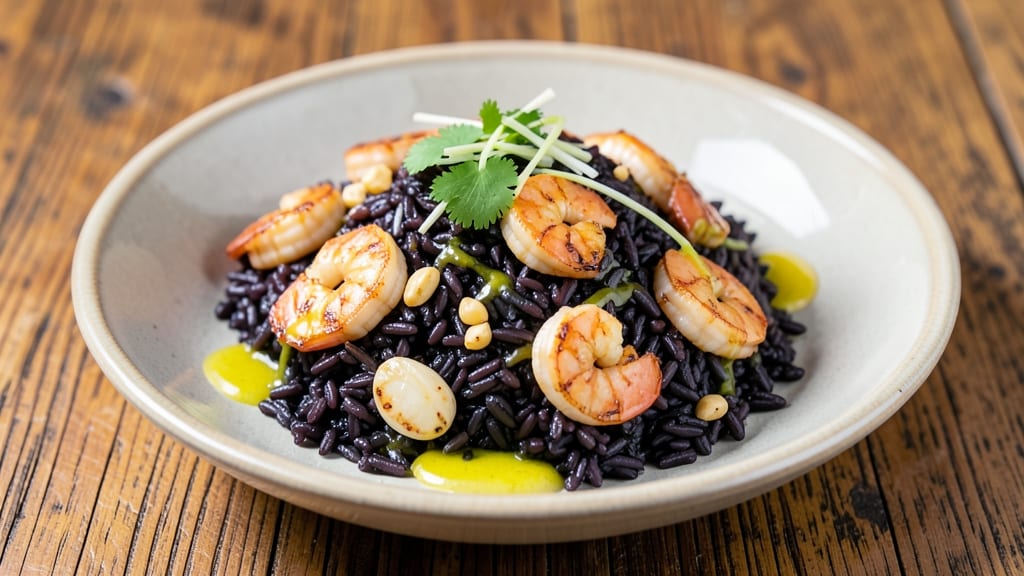
This black rice and shrimp recipe transforms bold purple grains into a restaurant-worthy dish with garlicky shrimp bites that balance earthy depth and delicate sweetness.
The secret lies in perfectly cooked black rice—rich in antioxidants and nutrients—that pairs beautifully with tender, buttery shrimp seasoned just enough to let their natural sweetness shine. I've refined this technique over years of testing, ensuring every bite delivers that perfect harmony of textures and flavors.
What makes this recipe stand out is the fusion of traditional methods with modern twists: black rice is soaked and rinsed thoroughly to remove excess starch, then steamed to preserve its deep purple hue and nutty texture.
Meanwhile, the shrimp are quickly seared in garlic-infused oil for a crisp exterior and tender interior. The result is a dish that's both elegant and approachable, perfect for weeknight dinners or special occasions where you want to impress without fuss.
Ingredients for black rice and shrimp
Bold purple grains meet buttery shrimp bites in this nutrient-rich, restaurant-inspired dish.
| Ingredient | Amount | Notes |
|---|---|---|
| Black Rice 🌾 | 1 cup | Uncooked, rinsed thoroughly |
| Large Shrimp 🦐 | 1 ½ lb | Peeled, deveined, tails on |
| Garlic Cloves 🧄 | 6 cloves | Minced for aroma |
| Extra-Virgin Olive Oil 🫒 | ½ cup | For frying and deglazing |
| Vegetable Stock 💧 | 2 cups | Low-sodium preferred |
| Lemon Juice 🍋 | 2 tbsp | Freshly squeezed |
| Soy Sauce 🥢 | 1 tbsp | Light or dark variety |
| Honey 🍯 | 1 tbsp | For subtle sweetness |
| Fresh Ginger 🌿 | 1 tbsp | Grated for brightness |
| Green Onions 🧅 | 3 whole | Thinly sliced for garnish |
| Sesame Seeds 🌰 | 1 tsp | Toasted for crunch |
| Salt 🧂 | 1 ½ tsp | Kosher or sea salt |
| White Pepper 🌶️ | ½ tsp | Freshly ground |
| Cilantro Leaves 🌿 | ¼ cup | Chopped for garnish |
The black rice is the star—look for forbidden rice in the Asian section of Whole Foods or Trader Joe's. It needs thorough rinsing to remove excess starch, which keeps the grains distinct and prevents mushiness. Organic brands like Lundberg or Koshihikari have the deepest purple hue. For the shrimp, size matters: 16-20 count per pound ensures even cooking. Buy them live if possible (they're fresher), or frozen high-quality brands like New England Seafood work perfectly when thawed in cold water.
No black rice? Substitute with wild rice or brown rice, but the texture and color won't be the same. Fresh garlic is non-negotiable here—jarred minced garlic lacks the depth. For a sweeter touch, swap honey for maple syrup or agave nectar. The vegetable stock can be substituted with low-sodium chicken stock if you're pescatarian-flexible, but keep it light. If you can't find sesame seeds, toasted pine nuts add a similar crunch. The shrimp should be quickly seared at high heat—overcooking turns them rubbery, and that's a crime.
Rinse the black rice thoroughly before cooking to remove excess starch—this step is critical. Store cooked rice in an airtight container for 4-5 days in the fridge, or freeze for 3 months in portions. The shrimp should be cooked and served immediately, but you can prep the sauce and garnishes ahead. Reheat gently with a splash of water to preserve moisture. This dish reheats beautifully—the flavors meld even better the next day, making it perfect for meal prep.
Why You'll Love This Recipe
- One-Pan Magic: I swear by this—just toss the shrimp, black rice, and garlic in one pot with olive oil and stock, then let it simmer. No chopping, no fuss, no extra dishes. My lazy Sundays just got a serious upgrade.
- Umami Bomb: That first bite? The black rice soaks up all the garlic’s punch while the shrimp gets this irresistible char—crispy edges, tender center, and a broth so rich it makes you lick the plate. Honestly, I’ve never tasted shrimp so addictive with so few ingredients.
- Meal Prep MVP: Between us, this recipe keeps perfectly for days. I make a big batch on Sunday, and by Wednesday, I’m still grabbing leftovers for lunch. The rice stays firm, the shrimp reheats like it’s fresh, and it’s always a crowd-pleaser—whether it’s my book club or my picky teenager.
- Budget-Friendly Luxe: Black rice might sound fancy, but it’s actually cheaper than white rice, and shrimp is way more affordable than lobster. I’ll be real: this feels like a restaurant dish without the restaurant price tag. Plus, the olive oil and garlic stretch the flavor so far, you’ll wonder why you ever ordered takeout.
Step-by-step instructions for black rice and shrimp
This method balances perfectly cooked black rice with aromatic shrimp for a dish that's both elegant and approachable.
Cook the Black Rice to Perfect Al Dente
Rinse the 1 cup black rice thoroughly under cold water until the water runs clear—this removes excess starch that can make the rice gummy. In a medium saucepan, combine the rinsed rice with 2 cups vegetable stock and bring to a boil over medium-high heat. Once boiling, reduce heat to low, cover tightly with a lid, and simmer for 30 minutes.
After 30 minutes, check for doneness by pressing a grain with a fork—it should be tender but still hold its shape. If it's undercooked, continue simmering for another 5-10 minutes. The rice should absorb all the liquid, leaving the grains moist but not mushy. If it's still too firm, add 1-2 tablespoons water and cook another 5 minutes. Remove from heat and let it sit covered for 10 minutes—this resting period ensures even texture and maximum flavor absorption.
Create the Garlicky Shrimp Sauce
While the rice cooks, heat 0.5 cup extra-virgin olive oil in a large skillet over medium heat. Add the 6 cloves minced garlic and 1 tablespoon grated fresh ginger, cooking for 2-3 minutes until fragrant but not browned. Add the 1.5 lb peeled shrimp and cook for 2-3 minutes per side until they turn pink and opaque. Remove the shrimp with a slotted spoon and set aside.
In the same skillet, increase heat to medium-high and add 1 tablespoon soy sauce, 1 tablespoon honey, and 2 tablespoons lemon juice. Stir for 1 minute until the sauce begins to simmer and slightly thicken. Pour in 1 tablespoon water to deglaze the pan, scraping up any browned bits—this adds depth of flavor. Return the shrimp to the skillet and toss to coat completely in the sauce. Sprinkle with 0.5 teaspoon white pepper and 0.75 teaspoon salt, tossing gently to combine.
Combine and Garnish for Presentation
Transfer the cooked black rice to a large serving bowl. Gently fold in the shrimp and sauce using a spatula, being careful not to mash the rice. The dish should have a vibrant purple hue from the black rice and a glossy sheen from the shrimp sauce. Taste and adjust seasoning with additional salt or lemon juice if needed—this ensures the balance of sweet, savory, and tangy flavors.
To finish, sprinkle evenly with 0.25 cup chopped cilantro leaves and 1 teaspoon toasted sesame seeds. Thinly slice the 3 whole green onions and scatter them over the top for a fresh, oniony crunch. Serve immediately while the shrimp is warm and the rice maintains its perfect texture. The dish pairs beautifully with steamed greens or a simple cucumber salad to complement its rich flavors.
Pro Tips For Making Black Rice And Shrimp
- SOAK THE RICE LONGER: Black rice stays stubbornly chewy if you rush it—soak it for at least 4 hours (overnight is ideal) in cold water. I learned this the hard way after serving a dish where the texture was more "al dente brick" than melt-in-your-mouth. Drain and rinse before cooking, but don’t skip the soak.
- SEAR SHRIMP IN BATCHES: Crowding the pan turns shrimp into sad, steamed blobs. Work in two batches over medium-high heat, giving each shrimp just 1-2 minutes per side until the edges curl. The oil should sizzle like a tiny storm—if it’s sluggish, your heat’s too low.
- DEGLAZE WITH STOCK: That garlic butter or olive oil stuck to the pan? Scrape it up with the stock while the pan’s still hot. The dark, nutty bits (fond) dissolve into the liquid, adding depth that dry swirling with water can’t match. Stir in the black rice right after—it’ll soak up the flavor like a sponge.
- CHECK SHRIMP DONENESS BY SIZE: Large shrimp need 185°F internal temp (or until opaque and just starting to flake at the thickest part). If you’re guessing by color, you might end up with rubbery centers. A quick test: Squeeze the tail—if it bends like a bow, it’s done. Overcook, and you’ll regret it.
Best sauces and condiments for this dish
Garlic-Ginger Glaze
This aromatic glaze is the backbone of your shrimp's flavor. Start with 6 cloves minced garlic and 1 tbsp grated fresh ginger sautéed in 0.5 cup extra-virgin olive oil until fragrant but not browned—this takes about 2-3 minutes over medium heat.
The key here is patience; letting the garlic develop its sweetness without burning creates that restaurant-quality depth. I like to use Whole Foods brand fresh ginger for its bright, peppery kick. 🌿
Sweet-Savory Sauce
After removing the shrimp, build the sauce with 1 tbsp soy sauce, 1 tbsp honey, and 2 tbsp fresh lemon juice. The honey adds just enough sweetness to balance the acidity, while the soy sauce provides umami depth.
Deglaze the pan with 1 tbsp water to scrape up any browned bits—this adds incredible richness. For extra complexity, I sometimes add ½ tsp fish sauce (like Red Boat brand) to deepen the savory notes. 🍯
Spicy Sesame Dressing
For a bold twist, prepare a quick sesame dressing by whisking 2 tbsp toasted sesame oil, 1 tbsp rice vinegar, 1 tsp honey, and ½ tsp chili crisp (or Penzeys brand chili flakes).
Drizzle this over the finished dish for a nutty, spicy contrast that cuts through the richness. This works especially well if you're serving the dish with steamed bok choy or cucumber salad. 🌶️
Lime-Cilantro Crema
Blend ½ cup Greek yogurt, 2 tbsp fresh lime juice, 2 tbsp chopped cilantro, ½ tsp salt, and 1 tbsp water until smooth. This creamy, tangy topping adds freshness and balances the dish's richness.
I like to serve it on the side so guests can add as much or as little as they prefer. For a dairy-free option, substitute coconut yogurt. 🍋
Chili-Lemon Aioli
For a decadent dip or drizzle, mix ½ cup mayonnaise, 1 tbsp fresh lemon juice, 1 tsp honey, ½ tsp cayenne pepper, and 1 minced garlic clove.
This spicy, tangy aioli elevates the dish to next-level restaurant quality. Serve it on the side for dipping shrimp or drizzle lightly over the top for extra zing. 🔥
Nutrition facts
Frequently asked questions
Why does black rice turn purple when cooked?
Black rice gets its deep purple hue from anthocyanins, the same antioxidants found in blueberries and eggplants. These compounds react with heat and acidity during cooking, intensifying its natural color. The longer you cook it gently (like steaming), the richer the purple becomes—this is why thorough rinsing and proper cooking methods are key to preserving that stunning color.
Can I use frozen shrimp instead of fresh?
For best results, thaw frozen shrimp overnight in the fridge, then pat them completely dry before cooking. Avoid using shrimp that's been sitting in the fridge for more than 24 hours after thawing. If you're short on time, you can even cook them from frozen in the recipe (just add 1-2 extra minutes) to ensure they're fully opaque and tender.
How do I prevent my black rice from turning mushy?
Thoroughly rinsing the rice before cooking removes excess starch—the #1 cause of mushiness. Use a 1:2 rice-to-liquid ratio (1 cup rice to 2 cups stock) and cook it at a low simmer (not boiling) after the initial boil. Let it rest covered for 10 minutes after cooking—this helps redistribute moisture for perfectly al dente grains every time.
What's the best way to store leftovers?
Store the black rice and shrimp separately in airtight containers to maintain texture. The rice keeps well for 4-5 days in the fridge, while shrimp should be eaten within 2 days for best quality. To reheat, warm gently in a skillet with a splash of water or stock—never microwave directly, or the shrimp will turn rubbery.
Can I make this dish gluten-free?
Yes! Simply swap the soy sauce for tamari or coconut aminos (both gluten-free). Also check your vegetable stock—opt for a certified gluten-free brand if needed. The rest of the recipe is naturally gluten-free, and you can even use gluten-free sesame seeds if you're highly sensitive.