
Main Courses
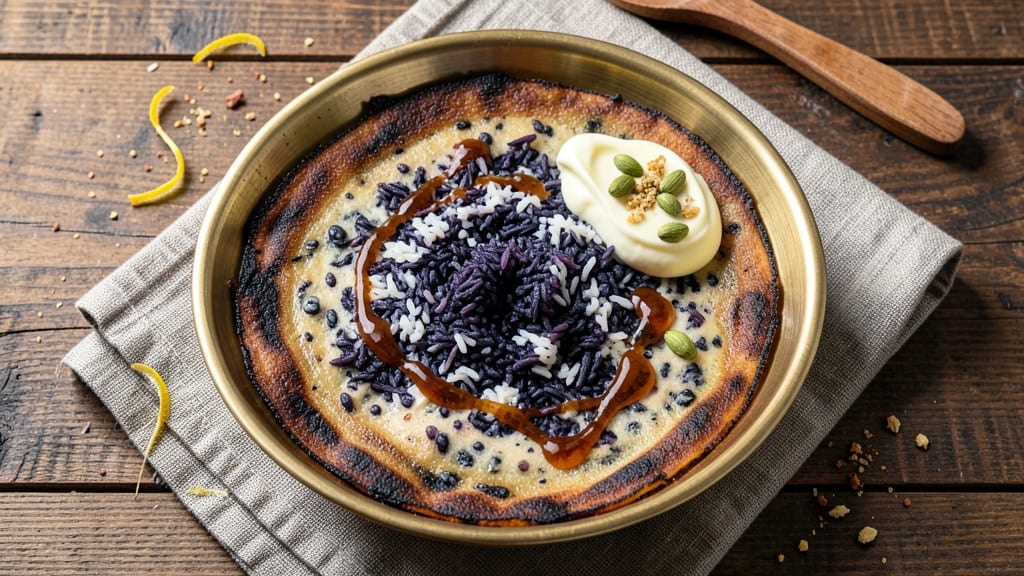
This black rice dosa recipe transforms traditional dosas with its nutty purple crunch and fermented depth. The secret lies in soaking black rice overnight—its earthy sweetness and vibrant color create a batter unlike any other, with a texture that's crisp yet tender.
Fermentation unlocks complex flavors that balance the rice's natural nuttiness perfectly.
What makes these dosas special is their distinctive purple hue that fades to golden as they cook, revealing crisp edges and a fluffy interior. The batter's fermentation process—key to authentic dosa texture—requires patience but delivers restaurant-quality results. Serve with coconut chutney or sambar for the complete South Indian experience.
Ingredients for black rice dosa
Authentic dosa ingredients with a nutty purple twist—fermentation unlocks restaurant-quality texture.
| Ingredient | Amount | Notes |
|---|---|---|
| Black Rice (Forbidden Rice) 🌾 | 1 cup | Rinsed thoroughly before soaking |
| White Rice (Short-Grain) 🍚 | ½ cup | Traditional ratio for texture balance |
| Urad Dal (Black Gram) 🌱 | ¼ cup | Split, rinsed, soaked overnight |
| Water 💧 | 2 ½ cups | Filtered or spring water preferred |
| Salt 🧂 | 1 tsp | Fine sea salt for even seasoning |
| Yogurt (Vegan Coconut Yogurt) 🥛 | ¼ cup | Unsweetened, for fermentation |
| Fresh Fenugreek Leaves (Methi) 🌿 | ¼ cup | Chopped finely, optional but recommended |
| Coconut Oil 🫒 | 2 tbsp | For crispy edges, unrefined preferred |
| Ghee Alternative (Vegan Butter) 🧈 | 1 tbsp | For cooking, dairy-free version |
| Curry Leaves 🌿 | ¼ tsp | Dried or fresh, crushed slightly |
| Asafoetida (Hing) 🌶️ | ⅛ tsp | Pinch for authentic flavor |
| Cumin Seeds 🌿 | ¼ tsp | Toasted lightly for aroma |
| Green Chilies 🌶️ | 2 whole | Slit lengthwise, adjust to taste |
| Coconut Chutney (Store-Bought or Homemade) 🥥 | ½ cup | For serving, optional but traditional |
The black rice is the star here—look for well-rinsed, high-quality grains at specialty stores like Whole Foods or Indian markets. The urad dal should be split and rinsed until the water runs clear, ensuring no bitterness. Patel Brothers or Sitaram's carry excellent varieties. For fermentation, use coconut yogurt (like So Delicious brand) to keep it vegan while maintaining tang. Fenugreek leaves add depth but can be omitted if unavailable—fresh is best, but dried works at half the amount.
No black rice? Substitute with equal parts brown rice and purple sweet potato, though texture will differ. Short on urad dal? Chana dal or masoor dal can stand in, but fermentation time may vary. The coconut yogurt can be swapped for vegan buttermilk if needed. For a quicker version, use instant dosa mix as a base, then add black rice to the batter. The green chilies should be fresh—dried flakes lack the bright heat.
Ferment the batter overnight in a warm, dark place—the kitchen counter works best. For storage, keep the batter in an airtight container in the fridge for up to 3 days. The dosas themselves reheat beautifully—wrap in foil and warm in a dry pan for 2-3 minutes per side. Freeze cooked dosas between parchment paper for up to 2 months. Serve immediately for maximum crispiness.
Why You'll Love This Recipe
- I swear by this: just soak the urad dal for 4 hours (or overnight if you’re really patient), grind it with water, and mix in the pre-cooked black and white rice batter. No fancy equipment—just a blender and a nonstick pan. My lazy Sundays thank me.
- No-Soak Nightmare: I swear by this: just soak the urad dal for 4 hours (or overnight if you’re really patient), grind it with water, and mix in the pre-cooked black and white rice batter. No fancy equipment—just a blender and a nonstick pan. My lazy Sundays thank me.
- Earthy Luxury: That deep, nutty flavor from the black rice? It’s like a fancy restaurant trick, but with ingredients you can buy in any grocery store. The urad dal adds this chewy, slightly tangy bite that makes it taste way more special than your average dosa.
- Leftover Hero: Dosas freeze like champs—just reheat in a dry pan for crispy perfection. I make a big batch on Sundays, and by Wednesday, I’m still pulling them out for quick lunches. No sad, soggy leftovers here.
Step-by-step instructions for black rice dosa with fermented zing
Master the art of fermenting black rice for dosas that deliver nutty depth and crispy perfection.
Soak and Ferment the Rice and Dal Mixture
In a large bowl, combine the 1 cup Black Rice (Forbidden Rice) and 0.5 cup White Rice (Short-Grain). Rinse thoroughly under cold water until the water runs clear, then drain. Add the 0.25 cup Urad Dal (Black Gram), which should already be soaked overnight. Mix gently and transfer to a clean bowl.
Pour in 2.5 cups Water and the 1 tsp Salt, then stir until the salt dissolves completely. Cover the bowl with a clean kitchen towel or plastic wrap, leaving it slightly loose to allow airflow. Let the mixture ferment at room temperature for 12-16 hours (or overnight). You'll know it's ready when it develops a tangy aroma and bubbles form on the surface. The ideal fermentation temperature is between 75-85°F—warmer climates may require less time, while cooler ones need more.
Grind and Prepare the Batter
Once fermented, transfer the mixture to a wet grinder or food processor. Add the 0.25 cup Yogurt (Vegan Coconut Yogurt) and 0.25 cup Fresh Fenugreek Leaves (Methi), which should be finely chopped. Grind into a smooth, thin batter, adding 1-2 tablespoons of water at a time if needed to achieve the right consistency—it should be like single cream, neither too thick nor too thin. Let the batter rest for 10 minutes to allow the flavors to meld.
In a small pan, heat 1 tbsp Ghee Alternative (Vegan Butter) over low heat. Add the 0.25 tsp Cumin Seeds and toast for 30 seconds until fragrant. Immediately add the 2 whole Green Chilies (slit lengthwise), 0.25 tsp Curry Leaves, and 0.125 tsp Asafoetida (Hing). Sauté for 1 minute until the chilies soften slightly. Let this mixture cool completely before stirring it into the batter. This step enhances the dosa's flavor profile with aromatic depth.
Cook the Dosas to Crispy Perfection
Heat a non-stick dosa pan or tawa over medium-high heat. Lightly grease it with 1 tbsp Coconut Oil, spreading it evenly with a paper towel. Pour a ladleful of batter (about ¼ cup) onto the center of the pan. Quickly spread it into a thin, even circle by rotating the pan in a circular motion. The edges should be slightly thicker to ensure they crisp up first.
Drizzle ½ tsp Coconut Oil around the edges and cover with a lid. Cook for 1-2 minutes until the edges turn golden brown and the center looks almost set. Flip carefully using a spatula and cook the other side for another 1-2 minutes until both sides are crispy and the center is fully cooked. Remove to a wire rack to keep warm while you prepare the rest. The key is maintaining even heat—too hot and the dosa burns; too low and it turns soggy.
Serve with Traditional Accompaniments
Stack the freshly made dosas and serve immediately with the 0.5 cup Coconut Chutney (Store-Bought or Homemade) on the side. The contrast of the nutty, purple-black dosa with the cooling coconut chutney creates a harmonious balance of textures and flavors. For an extra touch, sprinkle a pinch of salt and garnish with a few curry leaves just before serving. The dosas should be crisp on the outside, soft and fluffy inside, with a subtle fermented tang that elevates every bite.
Pro Tips For Making Black Rice Dosa
- SOAK BLACK RICE LONGER: I used to cut corners with black rice—soaking it for just 4 hours like white rice—only to end up with a gritty, underwhelming batter. Double that time (8+ hours) and add a splash of warm water every few hours. The longer soak breaks down the tough bran, making the dosa tender and the color vibrant. (Yes, even overnight works—just don’t forget to rinse it well afterward.)
- GRIND URAD DAL FIRST: My first batch of black rice dosa turned out dense because I mixed the urad dal into the batter after grinding the rice. Grind the urad dal separately into a smooth, lump-free paste first—then mix it into the soaked rice. This ensures even fermentation and a lighter, fluffier dosa. (Pro tip: Add a pinch of salt to the dal while grinding; it speeds up fermentation.)
- CHECK BATTER CONSISTENCY: Batter too thick? Too runny? I learned the hard way that black rice dosa batter behaves differently than regular dosa. It should be like pancake batter—thin enough to pour but thick enough to hold shape. If it’s still too sticky after resting, add a splash of water; if it’s too stiff, mix in a little more soaked rice. (No guesswork: Use the "drip test"—if it drips slowly, it’s ready.)
- FERMENT IN A WARM SPOT: Slapping the batter on the counter and hoping for the best? That’s how I got lukewarm, underfermented dosas. Place the batter in a warm spot—like near the oven with the light on or on top of a turned-off microwave—for 6-8 hours. The warmth doubles fermentation time, giving you that tangy, slightly sour flavor without waiting overnight. (Bonus: Cover it loosely with a cloth to keep bugs out.)
Essential equipment for perfect results
Non-Stick Dosa Pan
Invest in a high-quality non-stick dosa pan—I recommend the Presto 10-inch Non-Stick Dosa Pan or Hamilton Beach Non-Stick Tawa. These pans distribute heat evenly, preventing hot spots that can burn your dosas.
The non-stick surface ensures easy flipping and cleanup, which is a game-changer when making multiple dosas. 🔥
Wet Grinder or Food Processor
A wet grinder is ideal for achieving that ultra-smooth batter consistency, but a high-powered food processor like the Ninja BN601 works too. For the black rice, a wet grinder breaks down the grains more thoroughly, giving you that signature silky texture.
If you only have a blender, pulse in short bursts and scrape down the sides frequently. 💫
Heat Diffuser or Tawa
If you don’t have a dedicated dosa pan, a cast-iron tawa or heat diffuser works wonders. Place your pan on a medium-low heat setting to prevent burning while ensuring even cooking. I love using a Lodge cast-iron skillet for its heat retention—just preheat it thoroughly before pouring the batter. ⏱️
Ladle for Batter
Use a heat-resistant silicone ladle or a small stainless steel ladle to portion the batter. A ¼-cup measure helps maintain consistency, ensuring each dosa cooks evenly. I keep mine near the stove while cooking to avoid delays.
Pro tip: Dip the ladle in warm water between uses to prevent the batter from sticking. 💡
Wire Rack for Stacking
A wire cooling rack keeps dosas crisp as they cool, preventing sogginess from steam. Place it on a tray to catch any drips. I stack mine in batches while finishing the last few dosas—this keeps them warm and ready to serve.
For extra crispiness, let them rest for 2-3 minutes before stacking. ✨
Optional: Fermentation Thermometer
For precise fermentation control, a digital fermentation thermometer (like the Thermoworks TH5) monitors your batter’s temperature. Ideal fermentation occurs between 75-85°F—warmer climates may need shorter fermentation times, while cooler ones benefit from a proofing box (a simple DIY with a lightbulb inside a cardboard box).
This small tool ensures perfect fermentation every time. 🌡️
Nutrition facts
Frequently asked questions
Why does black rice dosa have a purple color?
The vibrant purple hue comes from anthocyanins—natural pigments in black rice that give it antioxidant properties. When cooked, these fade to golden-brown, revealing crisp edges while keeping a subtle purple tint inside. The fermentation process enhances this color while adding depth to the flavor.
Can I make black rice dosa without fermentation?
Technically yes, but the texture and flavor won't be authentic. Fermentation creates that signature tangy, fluffy interior and crispy exterior. For a quick version, mix 1 tbsp yogurt with ½ tsp baking soda—this mimics fermentation but lacks complexity. The batter will be thicker and less flavorful.
How do I fix batter that's too thick or too thin?
If too thick, add 1-2 tbsp water at a time while grinding. For thin batter, mix in 1-2 tbsp cooked rice or extra urad dal to thicken. The ideal consistency is like single cream—pour a ladleful; it should spread easily but not be watery. Adjust gradually to avoid ruining the balance.
What's the best way to reheat leftover black rice dosas?
Wrap dosas in foil and warm in a dry pan over low heat for 2-3 minutes per side to restore crispiness. Avoid microwaving—they'll turn soggy. For extra crunch, place them on a baking sheet and broil for 1 minute (watch closely!). Serve immediately with warm chutney.
Can I use black rice flour instead of whole grains?
Yes, but texture will differ. Black rice flour lacks the nutty crunch of whole grains and may yield thinner dosas. If using, mix ½ cup flour with ½ cup soaked rice to maintain structure. Fermentation time may also need adjustment—test with 10 minutes less than usual.