
Main Courses
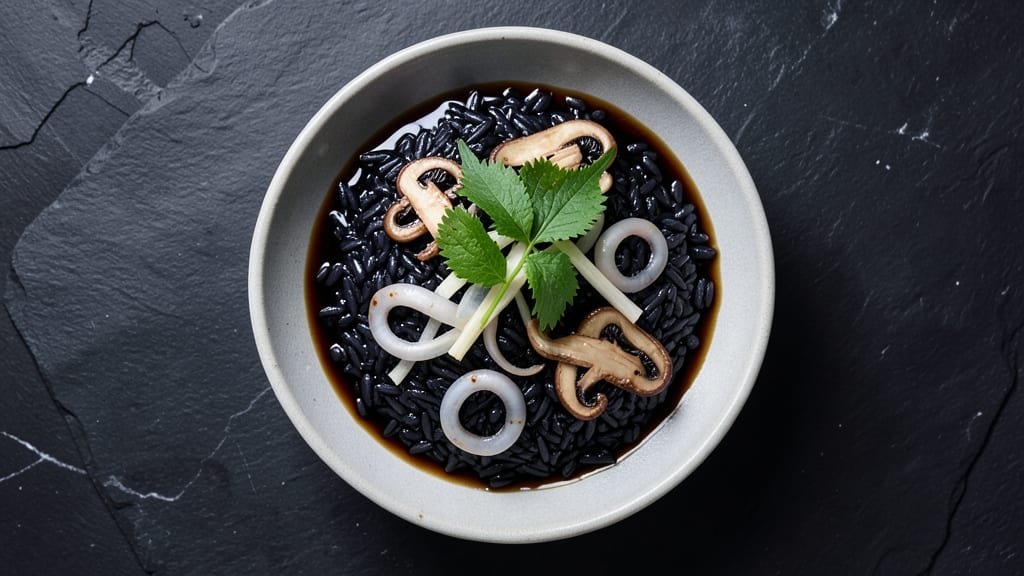
Black rice with squid ink transforms ordinary grains into a visually stunning, umami-rich dish that feels like a Michelin-starred experience on your dinner table. The deep purple hue of the rice paired with the velvety black squid ink creates a dramatic contrast that elevates any meal—no fancy plating skills required. This recipe balances rich flavors with a light, pescatarian approach, perfect for seafood lovers or anyone craving restaurant-quality results at home.
The secret lies in the squid ink infusion, which not only adds dramatic color but also enhances the rice's natural nutty flavor with a subtle brininess. Cooked just right, the grains remain tender with a satisfying bite, while the ink creates a luxurious, almost smoky depth.
Pair it with grilled fish, seared tofu, or fresh vegetables for a complete dish that's as impressive as it is delicious. Ready to master this elegant technique?
Ingredients for black rice with squid ink
Four servings of visually stunning black rice infused with velvety squid ink—transforming simple grains into a luxurious dish.
| Ingredient | Amount | Notes |
|---|---|---|
| Black Rice 🌾 | 1 cup | Uncooked, rinsed thoroughly |
| Squid Ink Sacs 🐙 | 2 whole | Fresh or frozen, high quality |
| Water 💧 | 2 cups | Filtered preferred for clarity |
| Dashi Broth 🍜 | 1 ½ cups | Homemade or quality store-bought |
| Soy Sauce 🥢 | 1 tbsp | Light or dark, to taste |
| Mirin 🍶 | 1 tbsp | Sweet rice wine, essential for balance |
| Sesame Oil 🫒 | 1 tsp | Toasted, for aroma |
| White Sesame Seeds 🌰 | 1 tbsp | Toasted, for garnish |
| Green Onions 🧅 | 3 whole | Thinly sliced, for garnish |
| Sea Salt 🧂 | 1 tsp | Fine grain, adjust to taste |
| Vegetable Oil 🫒 | 1 tbsp | High smoke point for cooking |
| Lemon Juice 🍋 | 1 tsp | Freshly squeezed, for brightness |
| Dried Shiitake Mushrooms 🍄 | 2 whole | Rehydrated, sliced thin |
The squid ink is non-negotiable for that signature black hue and briny depth. Fresh ink sacs are best, but frozen works too—just thaw in the fridge overnight. Look for high-quality ink at specialty seafood markets or well-stocked Asian grocery stores like H Mart or 99 Ranch. If you can't find fresh ink, squid ink paste from Amazon or World Market is a solid backup. The black rice itself should be vibrant purple—avoid dull or grayish grains, which indicate poor quality. Rinse it thoroughly before cooking to remove excess starch, ensuring even ink absorption. For the dashi broth, homemade is ideal, but Marukome or Kikkoman brands are reliable shortcuts if you're short on time.
No squid ink? Activated charcoal powder can mimic the color, though it lacks the umami depth—use sparingly. Short on mirin? Dry sherry or a mix of sugar and rice vinegar works in a pinch, but the sweetness balance will differ. The shiitake mushrooms add earthy richness; dried is best for concentrated flavor, but fresh will do if you rehydrate them properly. For the sesame oil, toasted is a must—heat it in a dry pan for 30 seconds to release its aroma. If you're missing green onions, scallions or chives work too, though the flavor won't be identical. The soy sauce can be swapped for tamari if gluten-free is a concern, but traditional soy sauce adds that classic umami punch.
Store cooked rice in an airtight container in the fridge for up to 3 days, though the color may fade slightly over time. For longer storage, freeze portions for up to 3 months—reheat gently with a splash of water or broth to restore moisture. The squid ink infusion is best enjoyed fresh, so plan to serve it within 24 hours for peak visual impact. Garnishes like sesame seeds and green onions can be added fresh just before serving to maintain their vibrant colors. This dish reheats beautifully, making it perfect for meal prep—just add a drizzle of sesame oil before serving to revive its aroma.
Why You'll Love This Recipe
- Five-Ingredient Magic: I swear by this—just black rice, squid ink, water, dashi, and soy sauce. That’s it. No chopping, no blending, no stress. The ink dissolves like a dream while you simmer, and the rice soaks up the umami like a sponge.
- Umami Bomb: The moment that dark, velvety ink swirls into the rice? Chef’s kiss. The dashi and soy sauce deepen into something rich and savory, while the black rice adds a nutty, almost earthy contrast. It’s the kind of flavor that makes you pause mid-bite—honestly, I’ve had people ask if I used food coloring.
- Date Night Ready: This isn’t just a side dish—it’s a showstopper. Serve it alongside grilled fish or tempura, and you’ve got an instant elevated meal. Or, between us, I’ve even thrown it in a bento box for a picnic. The deep color and bold taste make it feel special without the fuss.
- Leftovers? Better: Black rice holds up perfectly for days, and the ink keeps it looking dramatic. Reheat with a splash of water, and it’s just as good cold in salads or bowls. My freezer’s full of these leftovers because I can’t resist making extra—it’s that reliable.
Step-by-step instructions for black rice with squid ink
Here's how to transform simple ingredients into a visually stunning dish with deep umami flavor.
Prepare the Squid Ink and Shiitake Mushrooms
Begin by preparing the squid ink sacs. If using frozen ink, thaw it in the refrigerator for 1 hour first. Gently squeeze the ink sacs to release the ink into a small bowl, being careful not to puncture them. You should extract about 1-2 teaspoons of ink—this will be enough to create the signature deep purple hue.
Next, rehydrate the 2 whole dried shiitake mushrooms by soaking them in warm water for 20 minutes. Drain and slice them thinly against the grain. Set aside—their earthy flavor will complement the oceanic notes of the squid ink beautifully. Keep the mushrooms separate until you're ready to add them to the cooking liquid.
Cook the Black Rice with Squid Ink Infusion
Rinse the 1 cup black rice thoroughly under cold water until the water runs clear. This removes excess starch that can make the rice gummy. In a medium saucepan, combine the rinsed rice with the 2 cups water and bring to a boil over medium-high heat. Once boiling, reduce heat to low and simmer uncovered for 10 minutes.
After 10 minutes, stir in the squid ink, ensuring it's evenly distributed throughout the rice. The water should take on a deep purple hue—this is your visual cue that the ink is properly infused. Continue simmering for another 20 minutes without stirring, allowing the rice to absorb the liquid and develop its characteristic texture. The rice should be tender but still slightly firm to the bite.
Build the Flavorful Broth
In a separate small saucepan, combine the 1.5 cups dashi broth, 1 tbsp soy sauce, 1 tbsp mirin, and 1 tsp sea salt. Bring to a gentle simmer over medium heat and let it reduce by half—this should take about 5-7 minutes. The broth should develop a rich, concentrated flavor with a subtle sweetness from the mirin.
Add the sliced shiitake mushrooms to the reduced broth and simmer for an additional 3 minutes. This step ensures the mushrooms are heated through and their flavors meld with the broth. Remove from heat and stir in the 1 tsp sesame oil and 1 tsp lemon juice. The sesame oil adds aromatic depth, while the lemon juice provides a bright contrast to the umami richness.
Finish and Assemble the Dish
Once the black rice is fully cooked (about 30 minutes total cooking time), drain any remaining liquid and return the rice to the saucepan. Gently fold in the reduced shiitake broth, ensuring each grain is coated with the flavorful liquid. The rice should now have a deep purple hue and a subtle oceanic aroma.
Transfer the rice to a serving platter and garnish with the 1 tbsp toasted white sesame seeds and sliced 3 whole green onions. The sesame seeds add a nutty crunch, while the green onions provide a fresh, vibrant contrast. Serve immediately while the rice is still warm and the flavors are at their peak.
Pro Tips For Making Black Rice With Squid Ink
- Bloom the Ink First: Toss the squid ink sacs in a splash of cold water for 5 minutes before using—this breaks down the pigment and prevents clumping. I learned this the hard way when my first batch looked like a muddy swamp instead of a sleek, even black.
- Rinse Black Rice Twice: Swirl the black rice in cold water twice to remove excess starch—it keeps the grains separate and prevents gummy texture. Skip this, and you’ll end up with a gluey mess, no matter how much broth you add.
- Simmer, Don’t Boil: Keep the liquid at a gentle simmer (tiny bubbles, occasional swirls) once the rice absorbs the broth—boiling turns black rice mushy. After burning three batches, I finally figured out that patience here makes all the difference.
- Taste the Broth Early: Stir in half the soy sauce and dashi broth before adding the rice, then adjust to taste—this balances the ink’s intensity. I was skeptical until I tried it; now I never skip this step.
Troubleshooting this recipe
Ink Not Dark Enough
The squid ink isn't infusing the rice deeply enough? First, check your ink quality—fresh ink sacs yield the richest color. If using frozen ink, thaw it completely in the fridge overnight for maximum pigment release.
For extra vibrancy, add ½ teaspoon of activated charcoal powder (food-grade only) to the cooking water alongside the ink. Stir gently but frequently during the last 10 minutes of cooking to help distribute the color evenly. 💜
Rice Too Mushy
Overcooked rice is the biggest culprit here. Black rice needs precise timing—start checking for doneness at 25 minutes after adding the ink. Drain immediately when the grains are tender but still hold their shape.
If using a rice cooker, reduce the water ratio by 20% (use 1.6 cups water instead of 2 cups). For extra firmness, spread the cooked rice on a tray and chill for 10 minutes before serving. ❄️
Broth Too Salty
The reduced dashi broth can easily become overpowering. Taste before reducing—if it's already salty, cut the sea salt to ½ teaspoon. For balance, add 1 teaspoon lemon juice or ½ teaspoon mirin at the end to brighten flavors.
If the dish is still too salty, serve with a side of cucumber slices or steamed bok choy to cut through the richness. 🥒
Ink Separating
Squid ink has a tendency to pool at the bottom if not properly emulsified. After cooking, gently fold the rice with a spatula while still in the pot to distribute the ink. For extra insurance, whisk 1 teaspoon of cold water with the ink before adding it to the rice.
If serving in layers, place the rice in a lasagna dish and pour the reduced broth over it—this creates a marbled effect that keeps the ink evenly dispersed. 🍽️
Flavor Too One-Dimensional
If the dish lacks depth, boost umami with an extra ½ teaspoon of soy sauce or 1 teaspoon of fish sauce in the broth. For a smoky note, add ¼ teaspoon of smoked paprika when reducing the broth.
A sprinkle of toasted sesame seeds or crushed dried bonito flakes on top adds another layer of complexity. Serve with a side of pickled vegetables to enhance the overall flavor profile. 🌶️
Garnish Not Adhering
Sesame seeds and green onions can slide off if the rice isn't sticky enough. For better adhesion, lightly toast the rice in a dry pan for 1-2 minutes after cooking to dry the surface slightly.
Press garnishes gently into the rice with the back of a spoon. For extra flair, drizzle with a tiny amount of sesame oil or yuzu kosho before adding toppings. 🌟
Nutrition facts
Frequently asked questions
Can I substitute squid ink with another ingredient for the black color?
Yes, but with limitations. Food-grade activated charcoal powder (½ teaspoon) mimics the color, though it lacks squid ink's briny depth. For a similar effect, try black squid ink paste or even a tiny pinch of black food coloring (use sparingly—it's artificial). The best alternative for flavor is cuttlefish ink, which has a similar oceanic taste.
How do I store leftover black rice with squid ink?
Keep cooked rice in an airtight container in the fridge for up to 3 days, though the color may fade slightly. For longer storage, freeze portions for 3 months max. To reheat, add a splash of water or broth and cover tightly—microwave on low heat to avoid drying out the grains. The ink's color is most vibrant when fresh!
What proteins pair best with this dish?
This elegant rice shines with delicate seafood like grilled salmon, seared scallops, or shrimp skewers. For vegetarian options, try miso-glazed tofu or marinated tempeh. The umami richness of the rice also complements steamed fish or lightly charred vegetables. Serve with a citrusy ponzu sauce to cut through the richness.
Why does my rice turn gray instead of deep purple?
Gray rice usually means the ink wasn't properly absorbed. First, ensure you're using high-quality squid ink (fresh or properly thawed). Stir the ink into the boiling water before adding the rice, and simmer uncovered. If the color is still off, add ½ teaspoon of vinegar to the water—it helps set the pigment. Avoid overcooking, as excess moisture can dilute the color.
Can I make this dish ahead of time for a dinner party?
Cook the rice 1 day ahead and store it in the fridge. Reheat gently with a splash of broth, then finish with fresh garnishes like sesame seeds and green onions right before serving. For presentation, arrange the rice in a lasagna dish and top with a drizzle of reduced broth before baking at 350°F for 10 minutes to warm through. This keeps the colors vibrant and flavors fresh.