
Main Courses
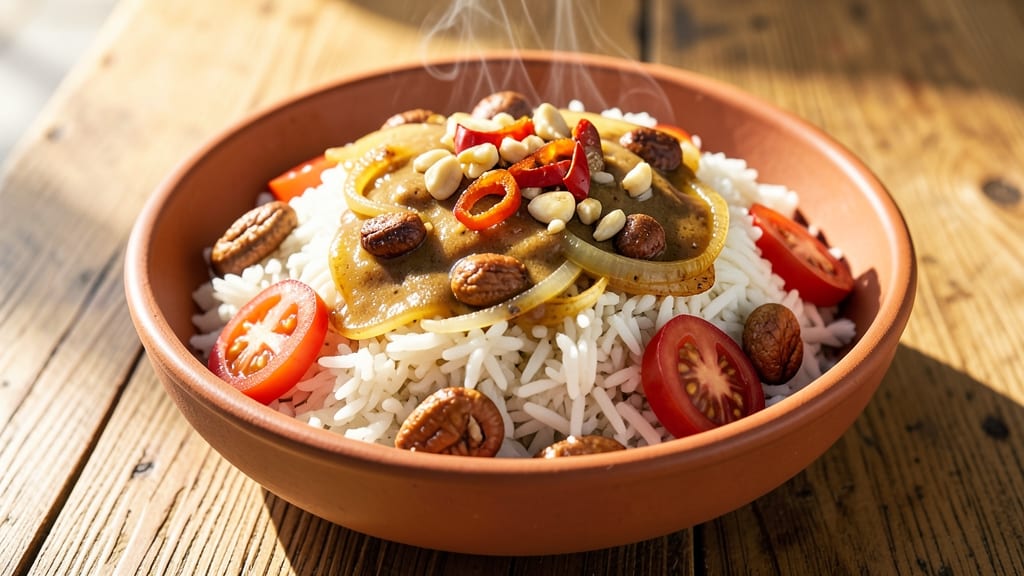
This Boma Peanut Rice recipe brings West African comfort food to your kitchen with its rich peanut sauce and tender rice—perfect for a hearty meal. 🌟 The dish combines groundnuts (peanuts), tomatoes, and aromatic spices to create a fragrant, nutty base that pairs beautifully with chicken, beef, or plant-based proteins.
It’s a celebration of bold flavors and textures, where every bite delivers a satisfying blend of crunch and savory depth.
The secret lies in toasting the peanuts and spices to deepen their flavor before blending them into a smooth, velvety sauce. This method ensures the rice absorbs the rich, nutty essence while staying tender and fluffy.
Whether you're serving it as a main course or a side, this dish is a showstopper that highlights the vibrant flavors of West African cuisine. Ready to bring this classic to your table?
Ingredients for boma peanut rice
West African flavors start with these simple, bold ingredients—peanuts, tomatoes, and spices that sing together.
| Ingredient | Amount | Notes |
|---|---|---|
| Long-Grain White Rice 🍚 | 1 ½ cups | Uncooked, jasmine or basmati preferred |
| Raw Peanuts 🥜 | 1 ½ cups | Unsalted, skin-on for texture |
| Fresh Tomatoes 🍅 | 4 medium | OR 1 (14 oz) can diced tomatoes |
| Yellow Onion 🧅 | 1 whole | Diced, medium size |
| Garlic Cloves 🧄 | 6 cloves | Fresh, peeled and minced |
| Scotch Bonnet Peppers 🌶️ | 2 whole | Seeds removed, medium heat |
| Groundnut Oil 🫒 | ½ cup | OR vegetable oil if unavailable |
| Dried Thyme 🌿 | 1 tsp | OR 1 tbsp fresh thyme leaves |
| Ground Ginger 🌿 | 1 tsp | Freshly grated preferred |
| Salt 🧂 | 1 ½ tsp | Kosher or sea salt |
| Black Pepper 🌶️ | ½ tsp | Freshly ground preferred |
| Chicken or Vegetable Stock 💧 | 2 cups | Low-sodium preferred |
| Fresh Cilantro 🌿 | ¼ cup | Chopped, for garnish |
The peanuts are the star here, so grab raw, unsalted ones from the bulk section at Whole Foods or your local African market if possible—they’ve got more depth than store-bought roasted. Scotch bonnet peppers can be tricky to find, but Trader Joe's often carries them, or swap for habanero at half the amount. Fresh tomatoes are non-negotiable for that bright acidity, but if you’re using canned, drain them well and pat dry. The thyme? Dried works fine, but fresh is worth hunting down if you’ve got it—just use a third of the amount.
No groundnut oil? Vegetable or peanut oil is a perfect swap—just don’t skip toasting the spices first. Short on peanuts? Cashews or almonds work in a pinch, but the flavor won’t be quite the same. The stock is where you can flex: chicken for classic flavor, veggie for vegetarian, or even coconut milk for a richer twist. Low-sodium is key—you’ll be adding extra salt later. And if you’re feeling lazy, pre-minced garlic from the jar saves time, though fresh tastes better. The cilantro’s optional but adds that fresh finish—skip it if you’re not a fan.
Toast those peanuts and spices until they smell amazing—5 minutes max—or you’ll burn them. The rice keeps best in the fridge for 3-4 days, but the peanut sauce reheats beautifully. I like to make extra sauce and freeze it in ice cube trays for quick meals later. Store the rice separately and mix in fresh sauce when reheating—keeps it from getting soggy. Garnish with cilantro right before serving, or it’ll wilt faster.
Why You'll Love This Recipe
- No Chopping Chaos: I swear by this one—just dice the onion and garlic once, then let the peanuts toast in the same pot. The tomatoes soften into a sweet jam while you stir, so you’re basically hands-off after the initial prep. My lazy Sundays thank me.
- Peanut Butter Vibes: That nutty, toasted peanut aroma? It’s like someone poured peanut butter into your rice, but better—because it’s balanced by the bright, garlicky tomato base. Honestly, the first bite makes me question why I ever bought flavored rice packets.
- Leftover Legend: This rice actually improves the next day. The peanuts get even crunchier, the rice soaks up all the flavors, and it reheats like a dream. I make double batches on Sundays because my kids beg for it in their lunches—no sad, dry rice here.
- Budget Power Move: Raw peanuts in the bulk bin? Check. Onions and garlic from the cheap produce section? Check. This feeds four for under $5 and still feels like a special meal. Between us, it’s my go-to when the grocery budget’s tight but I refuse to serve sad food.
Step-by-step instructions for Boma peanut rice
Here's how to make this flavor-packed West African classic with perfect nutty crunch and savory depth.
🍳 Step 1: Toast the Peanuts and Cook the Base
Heat the 0.5 cup groundnut oil in a large pot over medium heat. Add the 1.5 cups raw peanuts and toast them for 3-4 minutes until they turn golden brown and release their aroma. This step is crucial—it brings out their nutty flavor and prevents them from getting soggy later.
Remove the peanuts with a slotted spoon and set them aside. In the same pot, add the 1 whole yellow onion (diced) and cook for 5 minutes until softened. Add the 6 cloves garlic cloves (minced) and 2 whole scotch bonnet peppers (seeds removed and chopped) and cook for another 2 minutes until fragrant. Here's the thing—don't rush this step. The aromatics need time to develop their flavors before we move forward.
🍳 Step 2: Build the Flavor Base with Tomatoes and Spices
Add the 4 medium fresh tomatoes (chopped) to the pot and cook for 5-7 minutes until they break down into a thick sauce. Stir in the 1 tsp dried thyme, 1 tsp ground ginger, 1.5 tsp salt, and 0.5 tsp black pepper, mixing well to combine. The mixture should smell rich and complex—like a warm hug of African spices.
Now pour in the 2 cups chicken or vegetable stock and bring everything to a gentle simmer. Let it cook uncovered for 10 minutes to allow the flavors to meld together. This is where the magic happens—the spices bloom and the sauce develops its signature depth. Real talk: if you skip this step, your rice will taste flat and one-dimensional.
🍳 Step 3: Cook the Rice to Perfect Texture
Add the 1.5 cups long-grain white rice to the pot and stir gently to coat the grains in the flavorful sauce. Increase the heat to medium-high and bring to a boil, then immediately reduce to low heat. Cover the pot with a tight-fitting lid and cook for 15 minutes without disturbing it. This initial cooking period allows the rice to absorb the liquid and start forming its structure.
After 15 minutes, gently fluff the rice with a fork and check for doneness. You want the rice to be tender but still slightly firm in the center—it'll finish cooking with the residual heat. If the rice looks dry before it's fully cooked, add 2-3 tablespoons of water and cook for another 5 minutes covered. Don't skip this check—undercooked rice will taste pasty, and overcooked rice will be mushy.
🥘 Step 4: Finish with Peanuts and Rest
Once the rice is cooked, turn off the heat and stir in the toasted peanuts you set aside earlier. Let the mixture sit covered for 5 minutes to steam through. This resting period is key—it allows the rice to absorb any remaining liquid and the peanuts to soften slightly while maintaining their crunch. Here's the moment that matters: don't peek or stir during this time. Patience ensures perfect texture.
After resting, fluff the rice gently with a fork and taste it. Adjust seasoning if needed—you might want to add a pinch more salt or a dash of pepper. Transfer to a serving dish and garnish with the 0.25 cup fresh cilantro (chopped). The final dish should have a beautiful golden color from the peanuts and tomatoes, with each bite delivering a perfect balance of nutty crunch, savory depth, and subtle heat from the scotch bonnet peppers.
Pro Tips For Making Boma Peanut Rice
- TOAST PEANUTS LOW AND SLOW: Skip the high-heat blitz that burns them—simmer raw peanuts in the rice pot with the onions and garlic for 15 minutes before adding liquid. This slow toasting deepens their nuttiness without turning them bitter, and you won’t waste time roasting them separately.
- CHOP ONIONS AND GARLIC FINE: I used to dice these roughly, but Boma peanut rice needs them almost paste-like. Pulse onions and garlic in a food processor until they’re barely visible—this builds flavor faster and avoids that "chunks in every bite" problem. (Yes, even if you’re impatient like me.)
- DON’T RUSH THE TOMATO COOKDOWN: After adding tomatoes, let them break down into a thick paste before stirring in the rice. I learned this the hard way—skipping this step leaves you with raw tomato bits that never soften, no matter how long you simmer. Give it 10 minutes at a gentle boil.
- USE LESS WATER THAN YOU THINK: This isn’t your average rice dish—peanuts and tomatoes absorb moisture like sponges. Start with 1½ cups water per cup of rice (not 2:1), then adjust at the end. The sauce should cling to the rice, not swim around it. (Your future self will thank you.)
Common mistakes when making perfect results
Over-toasting Peanuts
I’ve burned peanuts more times than I’d like to admit—once, I left them in the pot for 7 minutes instead of 3-4, and they turned bitter and acrid. Toast peanuts over medium heat until they’re golden brown and smell nutty, not smoky.
If they start to darken too quickly, reduce the heat immediately. The goal is to enhance their flavor, not char them. 🔥
Skipping the Resting Time
Rushing the 5-minute rest after cooking is a common mistake. When I first made this dish, I couldn’t wait to serve it and stirred the rice immediately. The result?
A mushy, uneven texture with peanuts that stayed too hard. Let the rice steam undisturbed—this redistributes moisture and lets the peanuts soften just enough for that perfect crunch.
Using Pre-Roasted Peanuts
Store-bought roasted peanuts lack the depth of raw peanuts toasted fresh in the pot. Their flavor is muted, and they won’t release the same nutty aroma.
If you’re short on time, lightly toast store-bought peanuts in a dry pan for 1-2 minutes before adding them to the rice, but raw peanuts will always give you the best results.
Adding Liquid Too Late
I’ve seen people add stock after the rice is already cooking, which dilutes the flavor base. Always add the 2 cups stock before introducing the rice. This ensures the spices and tomatoes develop their full flavor profile before the rice absorbs the liquid.
Skipping this step means your rice will taste bland and underseasoned.
Undercooking the Tomatoes
If you rush the 5-7 minutes of tomato cooking, they won’t break down into a thick, flavorful sauce. Undercooked tomatoes leave the rice watery and the sauce thin.
Keep an eye on the pot and stir occasionally to prevent burning. The sauce should reduce to a thick, glossy consistency before adding the rice.
Ignoring the Peanut Texture
Some recipes call for blending peanuts into a paste, but Boma Peanut Rice relies on their crunch. If you blend them, you’ll lose that essential texture contrast. Toast the peanuts whole and stir them in at the end—they should remain slightly firm but not hard.
For extra crunch, lightly toast a few extra peanuts separately and sprinkle them on top before serving.
Nutrition facts
Frequently asked questions
Can I make this peanut rice with a different type of rice?
Long-grain white rice is traditional, but you can use jasmine or basmati for a fragrant twist. For a heartier texture, try brown rice—just increase cooking time by 10-15 minutes and add extra stock since it absorbs more liquid. Avoid sticky rice varieties like sushi rice, as they’ll turn gluey in the peanut sauce.
How do I adjust the spice level for sensitive eaters?
Remove all seeds and membranes from the scotch bonnet peppers first to reduce heat. For milder flavor, swap them for bell peppers or jalapeños (use half the amount). You can also reduce the ground ginger to ½ tsp and skip the pepper entirely if needed. The peanut sauce will still taste rich and nutty without the heat.
What’s the best protein pairing for this dish?
Traditional pairings include grilled chicken, beef stew, or smoked fish like mackerel. For a plant-based option, try tofu or tempeh marinated in soy sauce and spices. The peanut rice’s nutty depth complements hearty proteins—aim for ½ pound per person to balance the meal. Serve with a side of collard greens for a complete West African feast.
Can I make this recipe in a rice cooker?
Yes! Toast the peanuts and aromatics in a separate pan first, then transfer everything to your rice cooker. Use the white rice setting and add the stock and rice as directed. The cooker will handle the low-and-slow cooking, but you’ll need to stir in the peanuts manually at the 15-minute mark (when the rice is 80% cooked). Let it rest covered for 5 minutes before opening.
Why does my peanut rice turn out dry or pasty?
Dry rice usually means too much heat was used during cooking—reduce to low heat after boiling. Pasty rice happens when you overcook it or add too much liquid. Always check doneness at 15 minutes and add 2-3 tbsp water only if needed. The sauce should coat the rice but not make it soggy. Stir gently when fluffing to preserve texture.