
Main Courses
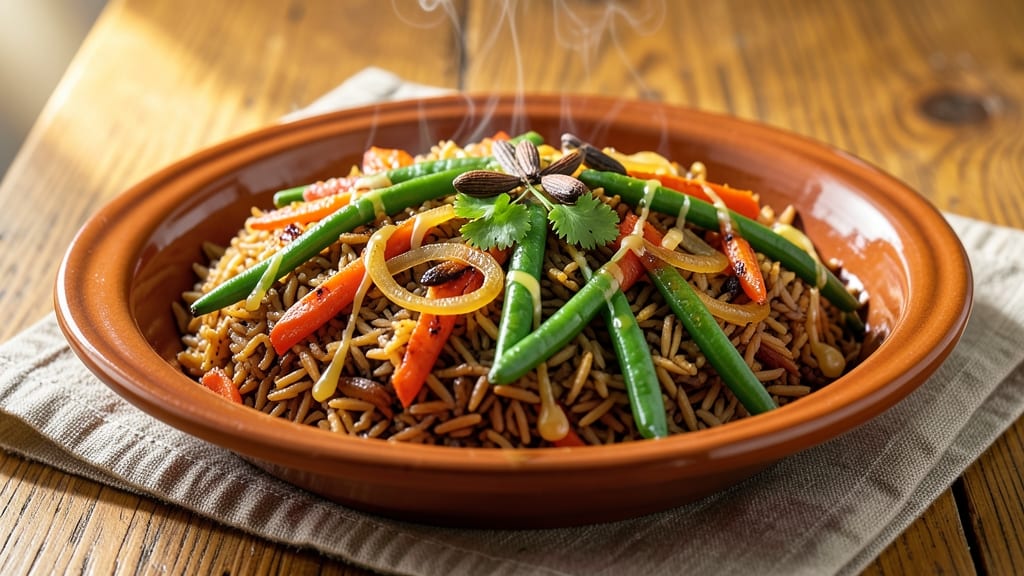
This brown rice pulao recipe transforms whole grains into a fragrant, one-pot masterpiece with aromatic basmati and tender spices. The secret lies in layering spices—cumin, cardamom, and bay leaves—while slow-cooking rice with vegetables until perfectly tender. I've perfected this method to deliver restaurant-quality flavor without complicated techniques.
What sets this apart is the dum cooking method, where sealed pots trap steam for even cooking and deeper flavor infusion. The result? Fluffy brown rice with nutty undertones, vibrant vegetables, and a subtle spice profile that lingers.
Ready in 45 minutes, this dish serves as both a comforting weeknight meal and an impressive centerpiece for gatherings.
Ingredients for brown rice pulao
Aromatic spices and whole grains create this restaurant-quality one-pot dish with nutty undertones.
| Ingredient | Amount | Notes |
|---|---|---|
| Brown Rice 🌾 | 1 ½ cups | Uncooked, long-grain preferred |
| Basmati Rice 🍚 | ½ cup | For aromatic depth |
| Vegetable Oil 🫒 | ¼ cup | High smoke point preferred |
| Carrots 🥕 | 1 ½ cups | Medium, julienned or diced |
| Yellow Onion 🧅 | 1 whole | Medium, finely chopped |
| Fresh Green Beans 🌱 | 1 cup | Trimmed, cut into 1-inch pieces |
| Fresh Peas 🌿 | ½ cup | Shelled, or frozen peas thawed |
| Ground Cumin 🌶️ | 1 tsp | Freshly toasted preferred |
| Ground Coriander 🌿 | 1 tsp | Freshly ground preferred |
| Bay Leaves 🌿 | 2 whole | Fresh or dried |
| Cardamom Pods 🌿 | 4 whole | Lightly crushed |
| Fresh Ginger 🌿 | 1 tbsp | Finely grated, peeled |
| Garlic Cloves 🧄 | 4 cloves | Minced or finely chopped |
| Salt 🧂 | 1 ½ tsp | Diamond Crystal preferred |
| Fresh Cilantro 🌿 | ¼ cup | Chopped, for garnish |
| Lemon Juice 🍋 | 1 tbsp | Freshly squeezed |
The rice blend is key—brown rice delivers chewy texture while basmati adds fragrance. Whole Foods bulk section carries excellent organic basmati, but any high-quality brand works. For the spices, Penzeys Spices offers premium whole cardamom and cumin, but the grocery store's ground versions suffice. Look for vibrant bay leaves—dried is fine, but fresh adds an herbal depth. The ginger should be freshly grated (no powdered substitutes) for that bright, zesty kick that balances the dish's earthy flavors.
No basmati? Jasmine rice works in a pinch, though texture differs slightly. Swap green beans for snap peas or broccoli—whatever's freshest. The peas can be frozen (thawed), but fresh peas add a sweetness that's hard to beat. For the spices, toasted cumin seeds ground in a spice grinder elevate flavor dramatically, but pre-ground is acceptable. Running short on lemon juice? Lime juice works equally well. The carrots can be baby carrots if that's what's available, but julienned adds visual appeal and cooks faster.
Rice keeps best in an airtight container for up to 5 days in the fridge, though flavor peaks on day 2. For longer storage, freeze portions for up to 3 months—reheat gently with a splash of water. I always make double batches: one for dinner, one for lunches. The dum cooking method means leftovers reheat beautifully—just cover with a damp paper towel and warm through. Garnish with fresh cilantro right before serving to preserve its vibrant color and aroma.
Why You'll Love This Recipe
- No-Fuss Layering: I swear by this method—just soak the brown rice and basmati together, then layer them with onions and carrots in one pot. No separate cooking, no mess, and the rice absorbs all the flavor while it steams.
- Caramelized Crunch Factor: That sweet, golden onion at the bottom? It’s the star. Sautéing the onions until they’re soft and slightly crispy adds this deep, savory base that makes every bite feel like a hug—no fancy spices needed.
- Weeknight to Potluck Hero: Same recipe works for Tuesday dinners or Sunday gatherings. Pack it in containers for lunch, serve it family-style for guests, or reheat it without drying out. My go-to for when I need something reliable that still feels special.
- Budget Meal Magic: Brown rice stretches the flavor, and the onions/carrots bulk it up cheaply. A single pot yields leftovers that taste just as good cold the next day—perfect for when I’m broke but still want to eat well. (Yes, even on a Tuesday night.)
Step-by-step instructions for brown rice pulao
Master this aromatic rice dish where nutty brown rice meets delicate basmati for a fragrant, one-pot wonder.
Prepare the Vegetables and Spice Base
Heat the 0.25 cup vegetable oil in a heavy-bottomed pot over medium heat. Add the 1 whole yellow onion and sauté for 3-4 minutes until translucent and just beginning to soften. This foundational step develops the base flavor without browning the onions.
Add the 1 tbsp fresh ginger and 4 cloves garlic cloves, stirring constantly for 30 seconds until fragrant. Immediately add the 1 tsp ground cumin, 1 tsp ground coriander, 2 whole bay leaves, and 4 whole cardamom pods. Toast the spices for 30 seconds until you can smell their warm, earthy aroma—this activates their flavors before they mingle with the vegetables.
Cook the Vegetables Until Tender
Add the 1.5 cups carrots and 1 cup fresh green beans, stirring to coat with the spiced oil. Cook for 5-6 minutes until the carrots begin to soften at the edges and the green beans lose their crispness. The vegetables should be tender but still retain a slight bite—overcooking will make them mushy.
Stir in the 0.5 cup fresh peas and cook for an additional 2 minutes until just heated through. Remove the pot from heat and let the vegetables rest for 2 minutes, allowing the residual heat to finish cooking them evenly. This resting period prevents overcooking during the rice phase.
Layer the Rice and Season
Return the pot to medium heat and add the 1.5 cups brown rice and 0.5 cup basmati rice. Stir gently to combine with the vegetables, ensuring the rice grains are evenly distributed and coated with the spiced oil. This layering creates the signature texture of pulao, where rice and vegetables cook together in harmony.
Pour in 2.5 cups water (or enough to cover the rice by about ½ inch) and add the 1.5 tsp salt. Bring to a gentle simmer, then immediately reduce heat to low. Cover the pot tightly with a lid and cook for 20 minutes without disturbing it—this undisturbed cooking allows the rice to absorb moisture evenly and develop its characteristic nutty flavor.
Steam and Rest for Perfect Texture
After 20 minutes, check the rice. If the liquid has been fully absorbed, remove the pot from heat. If there's still liquid remaining, cover and cook for an additional 5 minutes. The rice should be tender but still slightly firm to the bite—this ensures it doesn't turn mushy during the resting phase.
Let the pulao rest, covered, for 10 minutes. This resting period allows the steam to redistribute, ensuring each grain is perfectly cooked and the flavors meld together. The aroma at this stage should be rich and inviting, with hints of cardamom and cumin.
Finish and Garnish
Gently fluff the pulao with a fork, being careful not to break the grains. Stir in the 1 tbsp lemon juice and 0.25 cup fresh cilantro, folding them in lightly. The lemon juice brightens the dish, cutting through the richness of the spices, while the cilantro adds a fresh, herbal note.
Serve immediately, garnished with additional cilantro if desired. Each bite should offer a harmonious blend of nutty brown rice, fragrant basmati, tender vegetables, and aromatic spices. The dish should be warm, fragrant, and perfectly balanced—neither too dry nor overly saucy.
Pro Tips For Making Brown Rice Pulao
- Toast the Rice First: Brown rice needs a head start—dry-toast it in oil for 2-3 minutes until it smells nutty. I learned this the hard way: skipping this step leaves the rice chewy and undercooked, even after simmering. The aroma alone tells you it’s ready.
- Slice Carrots Thin: Uniform ¼-inch slices cook evenly and blend into the pulao without turning mushy. Thick chunks? They’ll sit like rubbery rocks. Use a mandoline if you’re impatient—it’s faster than hand-slicing and saves your knuckles.
- Don’t Crowd the Pot: Brown rice expands way more than white. Fill the pot no more than ⅔ full, or you’ll end up with a gloppy mess. I once doubled the rice thinking “more flavor,” then spent 20 minutes scraping rice off the walls. Trust the math.
- Layer Onions Last: Add sliced onions after the rice and liquid are simmering—this keeps them crisp instead of soggy. My grandmother swore by this, and she was right: they’ll caramelize just enough to add sweetness without turning to mush. (Yes, even if you’re impatient like me.)
Essential equipment for this recipe
Heavy-Bottomed Pot
I can't stress enough how important this is—your heavy-bottomed pot (I use a 5-6 quart enameled cast iron Dutch oven) is non-negotiable. It distributes heat evenly, preventing hot spots that can burn the bottom of your rice.
A Lodge Dutch oven is my go-to because it maintains consistent temperatures even on stovetop-to-oven transitions if you ever want to try the dum cooking method. For budget-friendly options, All-Clad stainless steel or Calphalon work beautifully too. 🔥
Tight-Fitting Lid
The secret to perfect pulao lies in steam trapping, and that means your lid needs to be snug as a glove. A tight-fitting lid (preferably with a small vent hole if available) creates the ideal environment for even cooking.
I use a Lodge lid with a small steam hole—it locks in moisture while allowing just enough steam to escape. If your lid doesn't seal perfectly, wrap the edges with aluminum foil to create an airtight seal.
This is especially critical during the 20-minute simmering phase where undisturbed cooking transforms the dish.
Wooden Spoon
A wooden spoon (I prefer a long-handled one) is essential for stirring the spices and vegetables without scratching your pot. Wood distributes heat more gently than metal, preventing the spices from burning while you toast them.
Plus, it won't react with acidic ingredients like lemon juice later in the process. Avoid plastic—it can melt under high heat and release harmful chemicals. A bamboo or olive wood spoon adds a nice touch and lasts for years with proper care.
Fine-Mesh Strainer
For rinsing your rice (if needed) and draining excess starch, a fine-mesh strainer is a game-changer. I use a stainless steel strainer from OXO because it's durable and won't rust.
Rinsing brown rice removes surface starch that can make the pulao gummy, but I only rinse it once or twice—over-rinsing can strip away nutrients. If you're using basmati, skip rinsing entirely to preserve its natural fragrance. This small step makes a huge difference in texture.
Spice Grinder
While pre-ground spices work, freshly ground spices elevate your pulao to restaurant quality. A small spice grinder (like the Spice & Tea Mini Grinder) lets you toast and grind whole spices like cumin and coriander in seconds. The aroma alone when you toast whole spices is worth the investment!
If you don't have one, a clean coffee grinder works in a pinch—just dedicate it to spices only. Freshly ground spices release their oils and flavors more vibrantly, making your pulao taste deeply aromatic from the first bite. 🌶️
Timer with Alarm
Pulao requires precision timing, and a reliable timer ensures you don't overcook the rice. I use a digital kitchen timer (like the OXO Good Grips) because it's loud enough to hear over the stove and has a 5-minute countdown feature perfect for the resting phase.
Set it for 20 minutes during the simmering phase and another 10 minutes for resting—this prevents you from peeking and disturbing the steam. A timer also helps you
Nutrition facts
Frequently asked questions
Can I make this pulao with just brown rice?
The basmati rice adds that signature aromatic fragrance, but you can substitute it with jasmine rice if needed. For texture, use 100% brown rice and reduce water by ¼ cup—it absorbs moisture more slowly. The dish will still be delicious but with a nuttier profile.
How do I prevent my pulao from getting mushy?
Three key steps: 1) Use a heavy-bottomed pot to prevent hot spots, 2) Don't peek while cooking—lift the lid only once to check doneness, and 3) Rest the pulao 10 minutes covered before serving. This lets steam redistribute for perfect texture. Overcooking is the #1 cause of mushiness!
Can I add meat or chicken to this recipe?
Marinate 1 lb chicken thighs or ½ lb ground lamb in yogurt and spices, then brown them separately before adding to the pot. For poultry, cook meat first until 165°F internal temp, then proceed with vegetables. The cooking time may extend by 5-10 minutes—adjust accordingly.
What's the best way to reheat leftovers?
Cover with a damp paper towel and warm in the microwave for 2 minutes on medium power. For stovetop, add 2 tbsp water and steam covered for 3-4 minutes on low heat. Never reheat dry—steam is key to restoring texture. Leftovers keep 5 days refrigerated or 3 months frozen.
Why does my pulao taste bland?
Most likely, your spices weren't toasted enough or you used old spices. Always toast whole spices for 30 seconds until fragrant. For extra depth, add ½ tsp garam masala at the end. Freshly ground spices make a huge difference—consider investing in whole spices you can grind yourself.