
Main Courses
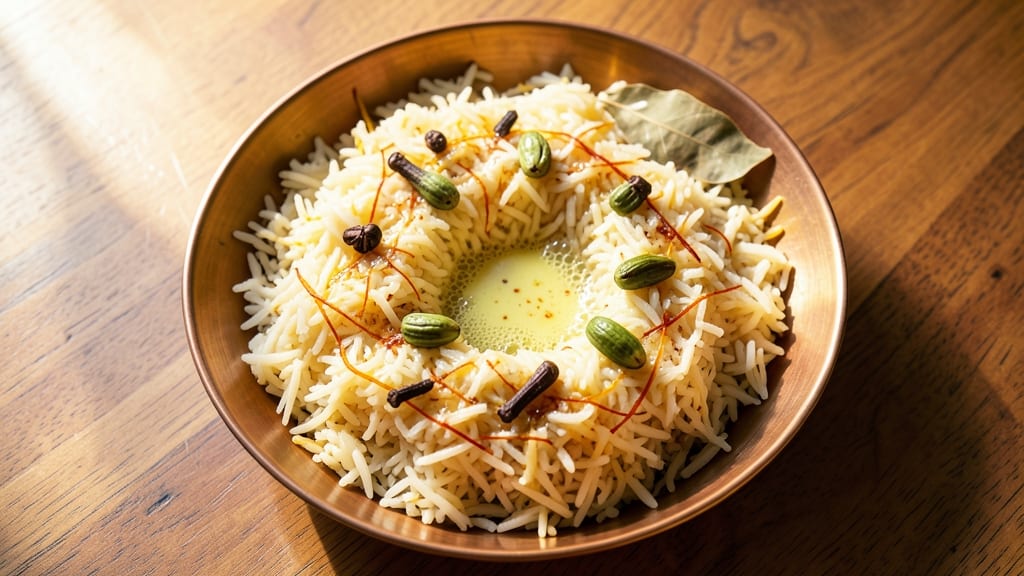
Bombay House-style rice transforms simple basmati into an aromatic masterpiece with just a few key spices and techniques. This one-pot method delivers restaurant-quality results—fragrant saffron threads and warm cardamom infusing every grain for that signature Bombay House flavor.
The secret lies in proper parboiling and tempering, which unlocks deep, layered aromas without overpowering the rice's natural texture.
What sets this apart is the two-stage cooking process: first parboiling the rice to achieve perfect texture, then tempering with whole spices that bloom into complex flavors. Cloves, bay leaf, and cardamom create an aromatic base, while saffron adds luxurious color and floral notes.
The result is fluffy, separate grains with a subtle golden tint—exactly as Bombay House serves it.
This dish pairs beautifully with mild curries or as a standalone centerpiece, offering both elegance and comfort. The fragrant steam alone will have your kitchen smelling like a Mumbai restaurant, while the tender yet firm texture ensures each bite is satisfying.
Ready in under 45 minutes, it's perfect for weeknight dinners or special occasions.
The beauty of this recipe is its versatility—use it as a base for biryanis, serve with raita, or enjoy it plain. The spices can be adjusted to taste, and the method works equally well with basmati or jasmine rice.
Here's how to recreate that iconic Bombay House flavor at home.
Ingredients for bombay house rice
Premium basmati rice meets aromatic spices for restaurant-quality Bombay House flavor in one pot.
| Ingredient | Amount | Notes |
|---|---|---|
| Long-Grain Basmati Rice 🍚 | 1 ½ cups | Uncooked, premium quality preferred |
| Saffron Threads 🌼 | ¼ tsp | High-quality, Iranian preferred |
| Green Cardamom Pods 🌿 | 6 whole | Lightly crushed, aromatic |
| Cloves 🌶️ | 4 whole | Whole, aromatic |
| Bay Leaves 🍃 | 2 whole | Fresh, high-quality |
| Ghee or Unsalted Butter 🧈 | 3 tbsp | Clarified butter preferred |
| Water 💧 | 3 cups | Filtered preferred |
| Salt 🧂 | 1 tsp | Fine sea salt |
| Fresh Cilantro Leaves 🌿 | ¼ cup | Chopped, for garnish |
| Lemon Juice 🍋 | 1 tbsp | Freshly squeezed |
| Heavy Whipping Cream 🥛 | ¼ cup | Full-fat for richness |
The saffron and cardamom are non-negotiable for authentic flavor. Iranian saffron delivers the deepest color and floral aroma, while green cardamom pods should be lightly crushed to release their essential oils without turning bitter. Bombay House uses premium basmati rice—look for grains that are long and separate easily when raw. For ghee, Amul or Patanjali brands are excellent choices, or use unsalted butter if ghee is unavailable. Fresh bay leaves add a subtle earthiness that complements the saffron perfectly. If you can't find whole pods, ground cardamom at one-third the amount works in a pinch, though the texture won't be identical.
No saffron? Turmeric at one-quarter teaspoon adds color but lacks the floral notes. Substitute fennel seeds for cardamom if unavailable, though the flavor profile shifts slightly. For a dairy-free version, replace ghee with coconut oil, though the richness will differ. The water should be filtered or at least room temperature—cold water can disrupt the rice's texture. If using jasmine rice instead of basmati, reduce the cooking time slightly as it absorbs liquid more quickly. The lemon juice at the end brightens the dish, so freshly squeezed is essential—bottled lemon juice lacks the same tang.
This rice reheats beautifully—simply cover with a damp paper towel and warm in the microwave for 2-3 minutes. Store leftovers in an airtight container for up to 4 days in the refrigerator, though the texture softens slightly over time. For longer storage, freeze portions in single-serving containers for up to 3 months. The spices can be pre-toasted in a dry pan for 30 seconds to deepen their aroma before adding to the rice. Garnish with fresh cilantro just before serving to preserve its vibrant color and freshness.
Why You'll Love This Recipe
- No-Soaking Needed: I swear by this trick—just rinse the basmati once, then layer it with the whole spices and saffron in warm water. No overnight soaking, no fuss. The grains stay separate, fluffy, and exactly how I like them.
- Golden Thread Magic: That first pinch of saffron? It transforms plain rice into something luxurious. Honestly, the aroma alone makes my kitchen smell like a Bombay café, and the faint golden hue? Worth every thread.
- Weeknight to Party: Same rice, endless uses. Serve it plain for a lazy dinner, or pile it under curries, biryanis, or even grilled fish for a special night. My roommates joke I only make this for Sundays, but it’s my go-to for anything.
- Leftovers? Better Next Day: Between us, this rice tastes even better reheated. The spices mellow into the grains, and the texture stays perfect—no mushy bits. I make a double batch on Sundays and live off it for three days. Budget win.
Step-by-step instructions for Bombay House-style rice
Aromatic, fragrant, and infused with saffron and cardamom—this one-pot method delivers restaurant-quality rice every time.
Bloom the Saffron and Spices
In a small bowl, gently crush the 6 whole green cardamom pods and 4 whole cloves with the flat side of a knife—just enough to release their aromatic oils. Add the 2 whole bay leaves and set aside. In a separate small cup, steep the 0.25 tsp saffron threads in 2 tablespoons warm water for 5 minutes. This draws out their vibrant color and flavor without bitterness.
Heat the 3 tbsp ghee or unsalted butter in a heavy-bottomed pot over medium-low heat. Add the crushed cardamom, cloves, and bay leaves, stirring constantly for 1 minute until the spices sizzle gently and fill your kitchen with their warm, earthy aroma. This step unlocks their full potential—don't rush it. The ghee will turn a golden hue, indicating the spices are properly toasted.
Toast the Rice for Nuttiness
Add the 1.5 cups long-grain basmati rice to the pot and stir to coat each grain in the spiced ghee. Toast the rice for 2-3 minutes, stirring frequently, until it turns a pale golden color and emits a toasty, nutty fragrance. This step is critical—it prevents the rice from becoming mushy and adds depth of flavor.
Watch the rice closely. If it starts to brown too quickly, reduce the heat slightly. You're aiming for an even toast, not charring. Once the rice is lightly golden, pour in the 3 cups water and add the 1 tsp salt. The water should just cover the rice—no need to rinse it first, as the ghee will create a natural barrier for even cooking.
Simmer the Rice Gently
Bring the mixture to a gentle boil over medium heat, then immediately reduce to the lowest possible heat setting. Cover the pot with a tight-fitting lid and let it cook undisturbed for 12 minutes. This low-and-slow approach ensures the rice absorbs the water evenly and develops its signature fluffy texture.
During this time, the rice will release steam, creating a humid environment inside the pot. Resist the urge to peek—every time you lift the lid, you release steam and disrupt the cooking process. If you notice bubbles forming around the edges of the lid, the heat is too high. Adjust it to maintain a gentle simmer.
Infuse with Saffron and Finish
After 12 minutes, carefully remove the pot from heat and let it sit, covered, for 5 minutes. This resting period allows the steam to redistribute and the rice to finish cooking evenly. Now, stir in the saffron-infused water, the 1 tbsp lemon juice, and the 0.25 cup heavy whipping cream. The lemon brightens the dish, while the cream adds a luxurious richness.
Gently fold the rice with a wooden spoon, being careful not to break the grains. The cream will melt into the rice, creating a silky, velvety texture. If the rice feels dry, add 1-2 tablespoons water and fluff it again. The final consistency should be moist but not soupy—each grain should be distinct yet tender.
Garnish and Serve
Transfer the rice to a serving dish and let it sit, covered, for another 5 minutes to allow the flavors to meld. Garnish with the 0.25 cup chopped fresh cilantro leaves, which add a fresh, herbal contrast to the warm spices. Serve immediately, as the aroma and texture are at their peak.
The rice should be fragrant with notes of saffron, cardamom, and a hint of citrus. Each grain should be separate, tender, and infused with the spiced ghee. Pair it with grilled meats, curries, or enjoy it as a standalone dish—this rice is a masterpiece in itself.
Pro Tips For Making Bombay House Rice
- TOAST THE WHOLE SPICES: Skip crushing the cardamom and cloves—just lightly toast them whole in a dry pan for 30 seconds until fragrant. This releases their oils without bitterness, and they’ll infuse the rice more evenly. (Yes, even if you’re impatient like me, resist the urge to rush this.)
- SOAK THE SAFFRON RIGHT: Toss the saffron threads in a teaspoon of warm water or milk for 5 minutes before adding to the rice. This guarantees they dissolve completely and don’t clump like little orange confetti. I learned this the hard way—uneven saffron ruins the whole dish.
- USE A TIGHT LID AFTER BOILING: Once the rice hits a rolling boil, slap that lid on and turn the heat to the lowest setting. The steam will cook the rice evenly without burning it. I used to hover over the stove adjusting heat, and my rice always ended up dry or mushy.
- SALT THE WATER LIGHTLY: Add just ½ teaspoon of salt to the water—too much makes the rice taste flat and dull. Bombay house rice relies on the spices, not salt, for flavor. Trust me, your taste buds will notice the difference.
Regional styles of this bombay house rice
Mumbai Street Food Style
Bombay House's rice is inspired by Mumbai's bustling street food culture, where simple ingredients transform into aromatic masterpieces. In the local Dhobi Talao area, vendors sell fragrant rice with keema (spiced minced meat) or chana masala, using similar spice blends.
The key difference? Street versions often use less cream and more yogurt for tanginess. Try adding 2 tbsp plain yogurt during the final infusion for that authentic Mumbai tang. 🌆
Goan Coastal Adaptation
Goa's coastal cuisine brings a tropical twist to Bombay House rice. Replace the cardamom with 1-inch fresh ginger, julienned and sautéed in the ghee, then add 2 green chilies for heat.
Finish with 1 tbsp coconut milk instead of cream—this version pairs perfectly with Goan fish curry. The ginger and coconut add a bright, citrusy contrast to the warm spices. 🌊
Hyderabadi Biryani Fusion
For a richer, more decadent version inspired by Hyderabad's biryani tradition, layer the cooked rice with ½ cup marinated chicken (cooked separately) and 2 tbsp fried onions before serving.
Use 1 tsp shahi jeera (caraway seeds) instead of cardamom for a distinct Hyderabadi aroma. The biryani-style presentation makes this a showstopper for special occasions. 🏰
Punjabi Butter Rice
Punjab's version swaps saffron for ½ tsp turmeric and adds 1 tbsp cashew paste (soaked cashews blended with water) for natural sweetness. Toast 1 tsp cumin seeds along with the bay leaves for a nutty depth.
This richer, sweeter profile pairs beautifully with tandoori chicken or dal makhani. The cashew paste replaces the cream while keeping the dish luxuriously smooth. 🧈
South Indian Filter Coffee Pairing
For a South Indian twist, serve this rice with kaapi (filter coffee) instead of chai. The bold, spiced coffee cuts through the creaminess of the rice beautifully. Add ½ tsp fennel seeds to the spice mix for a subtle anise-like note that complements the coffee's aroma.
This combination is a favorite in Madras restaurants, where rice is often served with strong, spiced beverages. ☕
Modern Fusion with Herbs
Elevate the dish with fresh herbs for a contemporary touch. After cooking, stir in 2 tbsp chopped mint leaves along with the cilantro. Add 1 tsp white miso paste to the saffron infusion for umami depth.
This fusion version works perfectly as a side for grilled lamb chops or as a base for a vegetable biryani. The herbs add brightness while keeping the dish rooted in tradition. 🌿
Nutrition facts
Frequently asked questions
Can I substitute basmati rice with jasmine rice?
You can try, but basmati is ideal for its long grains and distinct aroma. Jasmine rice absorbs liquid faster, so reduce the water by ¼ cup and check for doneness at 10 minutes instead of 12. The texture will be slightly stickier, but the flavor profile remains similar.
Why does my Bombay House rice turn out mushy?
Overcooking or lifting the lid too soon releases steam and disrupts the cooking process. Use low heat and maintain a gentle simmer. After 12 minutes, let it rest covered for 5 minutes—this resting time is crucial for even texture.
What's the secret to authentic Bombay House flavor?
The combination of toasted whole spices (cardamom, cloves, bay leaf) and saffron infusion creates that signature aroma. Toasting the spices in ghee unlocks their full flavor, while the saffron adds luxurious color and floral notes. Don't skip the lemon juice—it brightens the dish!
Can I make this recipe in an Instant Pot?
Yes! Sauté the spices and rice in normal mode for 2 minutes, then add water and cook on high pressure for 4 minutes. Release pressure naturally, then stir in saffron and cream. The texture will be slightly different but still delicious.
How do I store leftovers?
Store in an airtight container in the fridge for up to 4 days. Reheat covered with a damp paper towel in the microwave for 2-3 minutes. For longer storage, freeze portions for up to 3 months. The cream may separate slightly when reheated—just stir gently.