
Main Courses
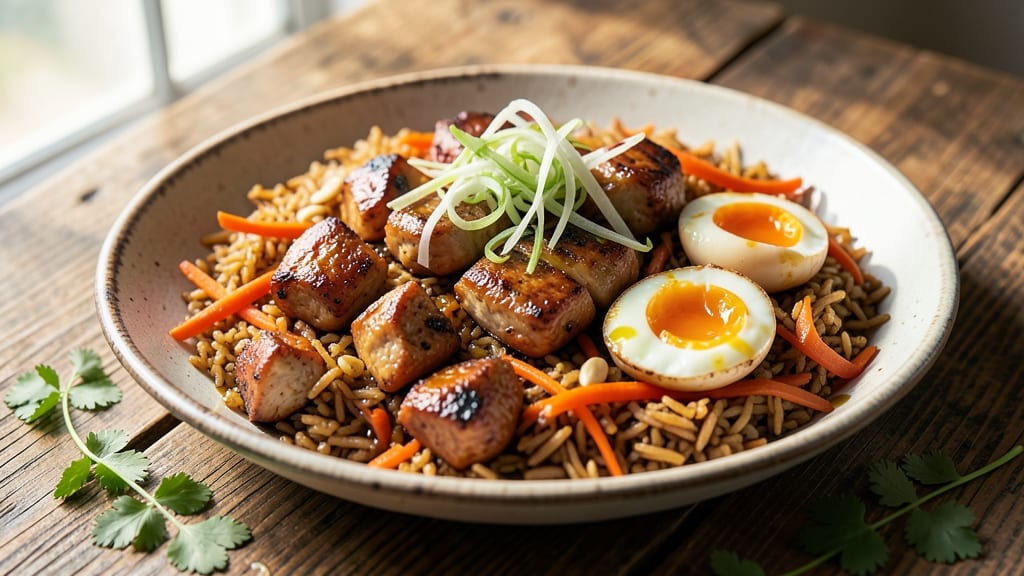
This brown basmati fried rice recipe transforms simple ingredients into a restaurant-quality dish with wok-heated fragrance and perfectly toasted grains. The secret lies in partially cooking and cooling the rice first, then reviving it in a hot wok with aromatics, protein, and crisp-tender vegetables.
This method ensures each grain absorbs flavor while maintaining that signature chewy texture—no mushy rice here.
What sets this version apart is the balance of traditional technique and modern adaptability. Whether you're using a wok or a deep skillet, the high-heat searing creates those coveted nutty aromas and caramelized edges. The recipe works with chicken, shrimp, tofu, or even just extra vegetables for a plant-based twist.
Garnish with sesame seeds and green onions for freshness, and serve with a drizzle of soy sauce for that final umami touch.
Ingredients for brown basmati fried rice
Restaurant-quality fried rice starts with these 14 ingredients—each playing its precise role.
| Ingredient | Amount | Notes |
|---|---|---|
| Brown Basmati Rice 🍚 | 1 ½ cups | Uncooked, long-grain preferred |
| Chicken Breast 🍗 | 1 lb | Boneless, skinless, diced small |
| Eggs 🥚 | 2 whole | Beaten for binding |
| Carrots 🥕 | 1 cup | Julienned, medium dice size |
| Green Onions 🧅 | ½ cup | Thinly sliced, white and green |
| Garlic Cloves 🧄 | 4 cloves | Minced, aromatic intensity |
| Sesame Oil 🫒 | 1 tbsp | Toasted aroma, not cooking oil |
| Light Soy Sauce 🥄 | 3 tbsp | Kikkoman preferred for balance |
| Dark Soy Sauce 🥄 | 1 tbsp | For color depth |
| Oyster Sauce 🍜 | 2 tbsp | Vegetarian alternative if needed |
| Sesame Seeds 🌾 | 1 tbsp | Toasted for garnish |
| Vegetable Oil 🫒 | 3 tbsp | High smoke point for wok |
| Salt 🧂 | ½ tsp | Diamond Crystal preferred |
| Black Pepper 🌶️ | ¼ tsp | Freshly cracked |
The brown basmati is non-negotiable—its nutty aroma and chewy texture define this dish. Lundberg Farms or Tilda brands deliver the best quality, with grains that stay distinct even after cooling. For the protein, chicken breast works perfectly, but tofu or shrimp can substitute seamlessly. The carrots should be fresh and crisp, not pre-shredded (which releases moisture). If using a wok, preheat it until it's smoking hot—this creates the signature caramelized edges. For skillets, use a heavy-bottomed pan to mimic wok heat distribution.
No sesame oil? Toasted peanut oil works in a pinch, though it lacks that signature aroma. Short on oyster sauce? Extra soy sauce plus a dash of sugar approximates the depth. The beaten eggs act as both binder and protein—don't skip this step, as it adds richness. For a vegetarian version, replace chicken with extra-firm tofu pressed and cubed. The soy sauces must be light and dark varieties—mixing them creates that perfect umami-sweet balance. If your garlic smells like vinegar, it's past its prime—swap it for fresh.
Rice reheats beautifully—3-4 days in the fridge or 3 months frozen. For best texture, store cooked rice in an airtight container with a paper towel to absorb excess moisture. The protein and vegetables can be prepped ahead, but add them fresh to the wok just before serving to maintain crispness. Garnish with sesame seeds right before eating—they lose their crunch if added too early. This dish tastes even better the next day as flavors meld.
Why You'll Love This Recipe
- I swear by this trick: use pre-shredded carrots and finely chopped green onions from the store. The chicken stays tender when you slice it thin against the grain—no knife skills required. Honestly, I’ve made this on days when I forgot to prep anything, and it still tasted like I tried.
- No-Chop Nightmare: I swear by this trick: use pre-shredded carrots and finely chopped green onions from the store. The chicken stays tender when you slice it thin against the grain—no knife skills required. Honestly, I’ve made this on days when I forgot to prep anything, and it still tasted like I tried.
- Nutty Crunch Magic: Brown basmati’s chewy texture holds up perfectly to frying, and those toasted rice grains? They’re the star. The chicken stays juicy (thanks to a quick marinade in soy sauce and ginger), while the eggs add that silky yolk contrast. Between us, it’s the kind of fried rice that makes you pause mid-bite.
- Lunchbox Hero: This keeps amazingly for days—better than day-old takeout, honestly. Pack it in containers with a side of quick-pickled veggies, and it’s a hit with kids (my picky eater actually finishes hers). Or freeze half for those “I can’t decide what to eat” nights.
Step-by-step instructions for brown basmati fried rice
Here's how to achieve perfectly toasted grains and wok-heated fragrance every time.
Prepare the Chicken and Vegetables
Begin by dicing the 1 lb chicken breast into small, even pieces—about ¼-inch cubes. This ensures the chicken cooks quickly and evenly in the wok. Pat the diced chicken dry with paper towels to remove any excess moisture, which helps achieve a better sear.
Next, julienne the 1 cup carrots into thin strips about ¼-inch wide and 2-inch long. Thinly slice the 0.5 cup green onions, separating the white and green parts. Mince the 4 cloves garlic cloves finely—this will release their aromatic oils during cooking. Keep all prepped ingredients in separate bowls until ready to use.
Cook the Chicken and Vegetables
Heat a wok or large skillet over high heat until it's smoking slightly. Add 3 tablespoons vegetable oil and swirl to coat the bottom evenly. Once the oil shimmers, add the diced chicken in a single layer, spreading it out so it doesn't steam. Let it cook undisturbed for 2-3 minutes until the edges turn golden brown and the chicken is no longer pink in the center.
Push the chicken to one side of the wok and add the julienned carrots. Stir-fry for 1-2 minutes until they begin to soften but still retain a slight crunch. Add the minced garlic and white parts of the green onions, cooking for another 30 seconds until fragrant. Stir in the chicken, mixing everything together and keeping the heat high to maintain the wok's searing power.
Scramble the Eggs and Combine
Push the chicken and vegetable mixture to one side of the wok again and pour in the 2 whole eggs, beaten lightly. Let the eggs set slightly before gently folding them into the mixture with a spatula. Cook for 1-2 minutes until the eggs are just set but still slightly moist—this prevents them from becoming rubbery.
Add 3 tablespoons light soy sauce, 1 tablespoon dark soy sauce, and 2 tablespoons oyster sauce to the wok. Stir everything together and cook for another 1-2 minutes until the sauce begins to coat the ingredients evenly. This step ensures the flavors meld perfectly and the rice will absorb the sauce later.
Toast the Brown Basmati Rice
Add the 1.5 cups uncooked brown basmati rice to the wok, spreading it out evenly. Stir-fry for 2-3 minutes over high heat, allowing the rice to toast and develop a nutty aroma. The grains should turn a deeper brown and become slightly crispy at the edges—this is key to achieving that wok-heated fragrance.
Pour in 1 cup hot water (just boiled) and stir gently to combine. Cover the wok with a lid and reduce the heat to medium-low. Let the rice steam for 10 minutes, checking occasionally to ensure the water is absorbed evenly. Avoid lifting the lid too often, as this can release steam and prevent the rice from cooking properly.
Finish and Serve
Once the rice is tender and all the water has been absorbed, uncover the wok and stir in the 1 tbsp sesame oil and 0.5 tsp salt. Sprinkle the 1 tbsp sesame seeds and 0.25 tsp black pepper over the top. Taste and adjust seasoning if needed—you may want to add a touch more soy sauce for extra umami.
Serve immediately while the rice is still hot and fragrant. The dish should have a balance of textures—crispy edges on the rice, tender chicken, slightly chewy carrots, and a glossy, savory sauce. Garnish with the remaining green onion tops for freshness and color. Enjoy straight from the wok for the best experience!
Pro Tips For Making Brown Basmati Fried Rice
- USE COLD RICE: Brown basmati rice loses its chewy texture when fried fresh—it turns mushy. Cook your rice, spread it on a tray, and chill for at least 30 minutes (or refrigerate overnight). The starches firm up, so it absorbs the wok hei without falling apart. (Yes, even if you’re impatient like me.)
- SALT THE CHICKEN FIRST: Season the chicken breast with salt and pepper before cooking it, then let it sit for 10 minutes. I learned this the hard way—dry-brining keeps the meat juicy and prevents it from turning rubbery when stir-fried. (Skip this, and you’ll end up with bland, tough strips.)
- CHOP CARROTS SMALL AND UNIFORM: Big chunks of carrot won’t soften enough in the short fry time, leaving you with crunchy bits that ruin the texture. Dice them into ¼-inch pieces and blanch them for 2 minutes in boiling water before adding to the rice. (Sounds like extra work, but it makes a real difference.)
- SCRAMBLE EGGS SEPARATELY: Frying eggs in the same pan as the rice makes the rice soggy and the eggs greasy. Beat the eggs in a bowl, scramble them in a clean, hot pan with a little oil, then push them to the side and tilt the pan to coat the bottom evenly. (Does it look weird? Yes. Does it work? Every single time.)
Essential equipment for this dish
Wok Essentials
A carbon steel wok is my go-to for this recipe—it heats up fast and retains heat beautifully, creating those signature crispy edges. I recommend the Made In wok from Williams Sonoma, which has a durable handle and even heat distribution.
If you don’t have a wok, a 12-inch cast iron skillet works well, though it may not get as hot. For budget-friendly options, a stainless steel wok from Amazon Basics is a solid choice. Always preheat your wok until it’s smoking hot before adding oil—this ensures proper searing. 🔥
High-Heat Oil
Use a high-smoke-point oil like avocado oil or vegetable oil (I prefer Mazola for its neutral flavor). Avoid olive oil—it burns easily and can make your fried rice taste bitter. For extra flavor, add 1 tablespoon toasted sesame oil at the end, but don’t use it for cooking.
If you’re short on oil, peanut oil is another great alternative for stir-frying. Keep your oil in a cool, dark place to prevent it from going rancid. 🫒
Prep Tools
A sharp chef’s knife and cutting board are non-negotiable for julienning carrots and dicing chicken evenly. I love the Wüsthof Classic knife for precision, but any high-quality blade will work. For mincing garlic, a garlic press saves time, though I still prefer hand-mincing for better texture.
A fine-mesh strainer helps drain excess moisture from the chicken, ensuring a better sear. If you’re prepping ahead, store ingredients in airtight containers to keep them fresh. ✨
Seasoning Must-Haves
Stock up on Kikkoman light and dark soy sauces—they’re the gold standard for fried rice.
For oyster sauce, Lee Kum Kee is my top pick, but vegetarian oyster sauce works just as well. Toasted sesame seeds add crunch, so buy them fresh or toast your own in a dry pan for 30 seconds until fragrant.
A mortar and pestle comes in handy if you want to grind whole sesame seeds for extra texture. Keep your spices in small jars for easy access while cooking. 🌾
Optional Upgrades
For a professional touch, invest in a thermometer to monitor wok temperature—aim for 450-500°F. A stirring spoon with a long handle (like the OXO Good Grips) helps avoid burns while keeping everything moving.
If you love garnishes, fresh cilantro or Thai basil add brightness, while chili crisp brings heat. For a smoky flavor, add 1 teaspoon smoked paprika when toasting the rice. These extras elevate the dish without being essential. 💫
Nutrition facts
Frequently asked questions
Why does the recipe call for cooling the rice first?
Cooling the rice prevents it from turning mushy when stir-fried. Brown basmati releases excess starch when hot, which makes fried rice gummy. Spread the rice on a tray to cool completely before using—this ensures each grain stays distinct and absorbs flavors beautifully.
Can I use white basmati rice instead?
Technically yes, but brown basmati delivers that signature nutty aroma and chewy texture. White basmati lacks the toasted depth, though it works in a pinch. For best results, use Lundberg Farms brown basmati—its longer grains hold up better during stir-frying.
What if I don’t have a wok?
A 12-inch cast iron skillet works perfectly—just preheat it until smoking hot. For even heat, use medium-high heat instead of high. If your pan isn’t heavy enough, reduce the portion size to 2 cups rice at a time to avoid uneven cooking.
How do I make this vegetarian?
Swap the chicken for extra-firm tofu (pressed and cubed) or mushrooms (shiitake or oyster). Boost umami with 1 tbsp vegetarian oyster sauce plus ½ tsp smoked paprika. Add ½ cup frozen peas for extra texture—they’ll thaw and soften perfectly during cooking.
Why does my fried rice turn out dry?
Over-stirring releases too much starch, or using too much oil. Keep heat high and stir just enough to prevent sticking. For moisture, add 1-2 tbsp water or broth at the end. The rice should be slightly sticky but not wet—this ensures each grain stays separate.