
Main Courses
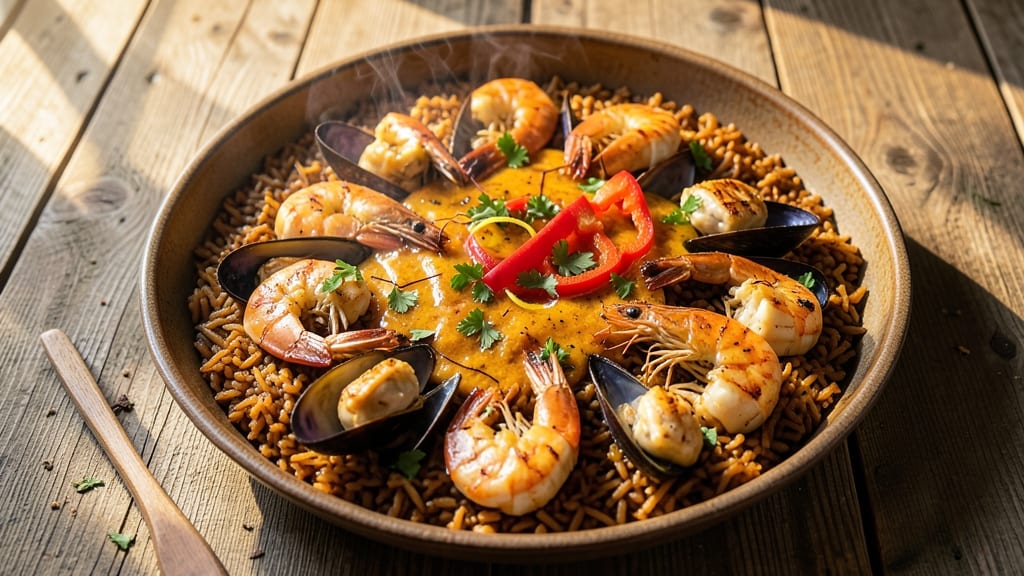
This brown rice paella recipe transforms a weeknight dinner into a restaurant-worthy Spanish feast with just one pan. The secret lies in balancing nutty brown rice with saffron-infused broth, creating a dish that's both hearty and elegant.
Every bite delivers tender grains, briny seafood, and layers of aromatic spices that transport you straight to Valencia.
Perfectly executed paella requires precise technique—starting with a crispy socarrat (the coveted caramelized bottom) while keeping the rice tender. My version includes shrimp, mussels, and bell peppers for a modern twist on tradition, all cooked in a single pot for minimal cleanup.
The result? A vibrant, flavorful dish that pairs beautifully with a crisp Spanish white wine or refreshing sangria.
Ingredients for brown rice paella
Spanish flavors meet hearty brown rice in this one-pan saffron masterpiece.
| Ingredient | Amount | Notes |
|---|---|---|
| Long-Grain Brown Rice 🍚 | 1 ½ cups | Uncooked, rinsed thoroughly |
| Saffron Threads 🌼 | ¼ tsp | High-quality, soaked in 2 tbsp warm water |
| Chicken Broth 💧 | 3 cups | Low-sodium, homemade preferred |
| Shrimp 🦐 | 1 lb | Large, peeled, deveined, tails on |
| Mussels 🦪 | 1 ½ lb | Fresh, scrubbed, debearded |
| Red Bell Pepper 🍆 | 1 whole | Medium, sliced into strips |
| Yellow Bell Pepper 🍊 | 1 whole | Medium, sliced into strips |
| Yellow Onion 🧅 | 1 whole | Medium, diced |
| Garlic Cloves 🧄 | 4 cloves | Fresh, minced |
| Tomato Paste 🍅 | 2 tbsp | High-quality, no sugar added |
| Dry White Wine 🍷 | ½ cup | Sauvignon Blanc or Albariño |
| Olive Oil 🫒 | ½ cup | Extra-virgin, for searing |
| Smoked Paprika 🌶️ | 1 tsp | For depth of flavor |
| Ground Turmeric 🌿 | ½ tsp | Freshly ground preferred |
| Salt 🧂 | 1 ½ tsp | Kosher or sea salt |
| Black Pepper 🌶️ | ½ tsp | Freshly ground |
| Fresh Parsley 🌿 | ¼ cup | Chopped, for garnish |
| Lemon Wedges 🍋 | 2 whole | For serving |
Saffron is the soul of paella—Spanish brands like Saffron del Campo deliver the most vibrant flavor. Look for deep red threads, not powdered versions. The brown rice needs soaking overnight to reduce cooking time, but rinsing thoroughly removes excess starch for perfect grains. For the seafood, local fish markets often have fresher mussels and shrimp than grocery stores. If using frozen, thaw completely before adding to the paella. The bell peppers should be firm and brightly colored—organic varieties often have better flavor. For wine, Spanish varieties like Verdejo add authentic depth to the broth.
No saffron? Turmeric at half the amount gives color but lacks saffron's floral notes. Substitute shrimp with scallops or calamari for variety. Mussels can be swapped for clams or octopus, but adjust cooking time accordingly. The white wine can be omitted if needed, but dry vermouth or extra broth works in a pinch. For the peppers, roasted red peppers from a jar add smoky sweetness if fresh aren't available. The tomato paste is non-negotiable—it builds the paella's rich base. If your broth is salty, reduce it first before using. For a vegetarian version, replace seafood with artichokes, roasted red peppers, and extra beans.
This paella reheats beautifully—cover with foil and warm on low heat for 10 minutes. The rice will firm up slightly but remains tender. Store leftovers in an airtight container in the fridge for 3-4 days. For longer storage, freeze portions for up to 3 months. The socarrat (crispy bottom) is best eaten immediately, so serve family-style straight from the pan. Garnish with fresh parsley and lemon wedges just before serving—the acidity brightens all the flavors. Make extra rice to use in salads or grain bowls the next day.
Why You'll Love This Recipe
- One-Pot Magic: I swear by this recipe when I don’t want to wash a million dishes. Brown rice simmers right in the pan with shrimp and mussels—just stir, cover, and let the saffron work its golden spell. The broth does all the heavy lifting while I sip wine and pretend I’m in a Valencia café.
- Saffron Secret Weapon: That tiny pinch of saffron threads? It’s the difference between good paella and wow paella. The aroma alone makes my kitchen smell like a seafood market, and the flavor? Earthy, luxurious, and somehow exactly what I crave when I’m tired of bland rice.
- Weeknight to Weekend: Between us—this feeds a crowd but costs less than takeout. Swap shrimp for chicken thighs on Tuesdays, or load it up with clams for Saturday brunch. The brown rice stays chewy and nutty, so it’s never boring, and the mussels add that briny pop that makes everyone reach for seconds.
- Leftovers I Actually Want: Most rice dishes turn to glue after day two, but not this. The brown rice holds its shape, and the shrimp stays tender enough to reheat. I’ll be real: I’ve eaten cold paella for lunch the next day, and it’s still the star of my sad desk salad. Plus, it’s cheaper than ordering in—win.
Step-by-step instructions for brown rice paella
Here's how to create a flavorful brown rice paella with saffron's signature aroma and seafood perfection.
Prepare the Saffron Infusion and Sauté the Base
In a small bowl, combine the 0.25 tsp saffron threads with 2 tbsp warm water and let steep for 10 minutes to release the vibrant color and flavor. This infusion is the soul of your paella—don't skip this step.
Heat 0.25 cup olive oil in a large, shallow paella pan or skillet over medium-high heat. Add the diced yellow onion and cook for 5 minutes until softened and translucent. Add the minced garlic cloves and continue cooking for 1 minute until fragrant. Here's where the foundation builds—don't rush this step or the flavors will be flat.
Develop the Tomato Base and Add Rice
Stir in the 2 tbsp tomato paste and cook for 2 minutes until it darkens slightly. This step deepens the sauce's richness. Pour in the 0.5 cup dry white wine and let it simmer for 3 minutes until mostly evaporated. The alcohol will cook off, leaving behind a concentrated flavor.
Add the 1.5 cups long-grain brown rice and stir to coat it evenly with the tomato mixture. This ensures each grain absorbs the full depth of flavor. Sprinkle the 0.5 tsp ground turmeric and 1 tsp smoked paprika over the rice and stir again. The turmeric adds color while the paprika brings smoky depth—both essential for authentic flavor.
Cook the Rice and Add Vegetables
Pour in the 3 cups chicken broth and the saffron infusion, stirring gently to combine. Bring to a gentle simmer, then reduce heat to low-medium. Cover the pan with a tight-fitting lid and cook for 25 minutes, stirring once halfway through. The rice should absorb most of the liquid but still have a slight bite—this is crucial for proper texture.
Remove the lid and stir in the stripped red bell pepper, stripped yellow bell pepper, and the remaining 1 tsp salt. Cook uncovered for another 5 minutes until the vegetables soften slightly. The vegetables should be tender-crisp, not mushy—this balance is key to the paella's texture.
Add Seafood and Finish Cooking
Arrange the 1 lb shrimp and 1.5 lb mussels in a single layer over the rice, leaving space between each piece. Pour in the remaining 0.25 cup olive oil and sprinkle with the 0.5 tsp black pepper. Cover the pan and cook for 8-10 minutes until the shrimp turns pink and the mussels open. Discard any mussels that remain closed—they're not safe to eat.
Turn off the heat and let the paella rest, covered, for 5 minutes. This resting period allows the juices to redistribute, ensuring each bite is moist and flavorful. The residual heat will finish cooking the seafood gently without overcooking.
Garnish and Serve
Sprinkle the 0.25 cup chopped fresh parsley evenly over the paella. Serve immediately with the 2 lemon wedges on the side. The bright acidity of the lemon cuts through the richness of the dish, balancing the flavors perfectly. Each serving should showcase the saffron's golden hue and the vibrant mix of textures—crisp vegetables, tender rice, and succulent seafood.
Pro Tips For Making Brown Rice Paella
- CRACK THE SHELLS FIRST: Mussels need to open on their own—if they don’t after 5 minutes in simmering broth, toss them. But before they hit the pan, give them a quick scrub and a tap with a knife on the hinge to loosen any stubborn grit. Trust me, you’ll taste the difference when they release their briny goodness into the rice.
- TOAST THE RICE DRY: Brown rice has a reputation for being stubborn, but start it in a dry, screaming-hot pan with a splash of oil. Stir for 2 minutes until every grain is coated and slightly golden—this prevents the rice from turning mushy later. (Yes, even if you’re impatient like me.)
- SOAK THE SAFFRON: Skip the sad, clumpy saffron threads at the bottom of the pot. Crush them between your fingers, then steep in a splash of warm broth for 10 minutes before adding to the rice. This unlocks the real floral aroma instead of just sprinkling dust.
- ADD LIQUID IN STAGES: Don’t dump all the broth at once—brown rice needs patience. Start with half, let it absorb for 10 minutes, then add the rest. If the top looks dry before the bottom is done, tent it with foil and let the residual steam finish the job. (Your future self will thank you.)
Perfect pairings for this recipe
Spanish Wine Pairings
For an authentic experience, pair your brown rice paella with a crisp Spanish Albariño from Rías Baixas—its citrus notes complement the saffron and seafood beautifully. I love Marqués de Riscal Albariño for its bright acidity that cuts through the dish's richness.
Alternatively, a Verdejo from Rueda offers herbal undertones that harmonize with the smoked paprika. 🍷
Refreshing Sangria
Serve a light Spanish sangria alongside your paella for a festive touch. Mix 1 bottle dry white wine (like Verdejo), ½ cup brandy, ¼ cup orange liqueur, and 1 cup sliced fruit (peaches, oranges, and berries).
Chill for 2 hours before serving—it’s the perfect palate cleanser between bites of saffron rice and briny mussels. ✨
Citrusy Garnishes
Brighten every bite with lemon wedges or a squeeze of fresh lime—the acidity balances the dish’s richness. I also love adding thinly sliced blood oranges as a garnish for a sweeter contrast. For extra flair, sprinkle toasted pine nuts over the top just before serving. 🍋
Beer Pairings
If wine isn’t your thing, try a Spanish lager like Estrella Galicia—its clean, crisp profile won’t overpower the paella’s flavors. For a hoppier option, a Galician IPA (such as Estrella Damm Daura) adds a refreshing bitterness that pairs well with the seafood. 🍺
Dessert Pairings
End your meal with a Spanish crema catalana or turrón (almond nougat) to complement the paella’s nutty brown rice. The caramelized sweetness contrasts perfectly with the dish’s savory notes. For a lighter option, serve fresh fruit salad with mint to cleanse the palate. 🍮
Nutrition facts
Frequently asked questions
Why does this recipe use brown rice instead of traditional white rice?
Brown rice adds a nutty depth and chewy texture that pairs beautifully with saffron's floral notes. Unlike white rice, it retains more fiber and nutrients while absorbing flavors exceptionally well. The longer cooking time also gives you that coveted crispy socarrat at the bottom!
Can I make this paella vegetarian or vegan?
Swap the seafood for artichoke hearts, roasted red peppers, white beans, or grilled eggplant. Use vegetable broth instead of chicken broth, and add smoked paprika and garlic for extra flavor. The saffron will still shine through beautifully.
What's the secret to getting that crispy bottom (socarrat)?
The socarrat forms when you cook the rice uncovered on the last 2-3 minutes at high heat. Use a wide, shallow pan to maximize surface area, and avoid stirring once you start this step. If your rice is too wet, increase the heat slightly—patience is key!
How do I know when the mussels are done?
Mussels are done when their shells open completely. Discard any that remain closed—they're not safe to eat. They should open naturally during cooking, usually within 5-8 minutes of adding them to the paella.
Can I make this ahead of time?
While paella is best served fresh, you can prepare components ahead. Cook the rice and vegetables first, then refrigerate. Reheat gently with extra broth, add the seafood at the end, and finish on the stovetop. For the socarrat, you'll need to recreate it fresh—it won't reheat properly.