
Main Courses
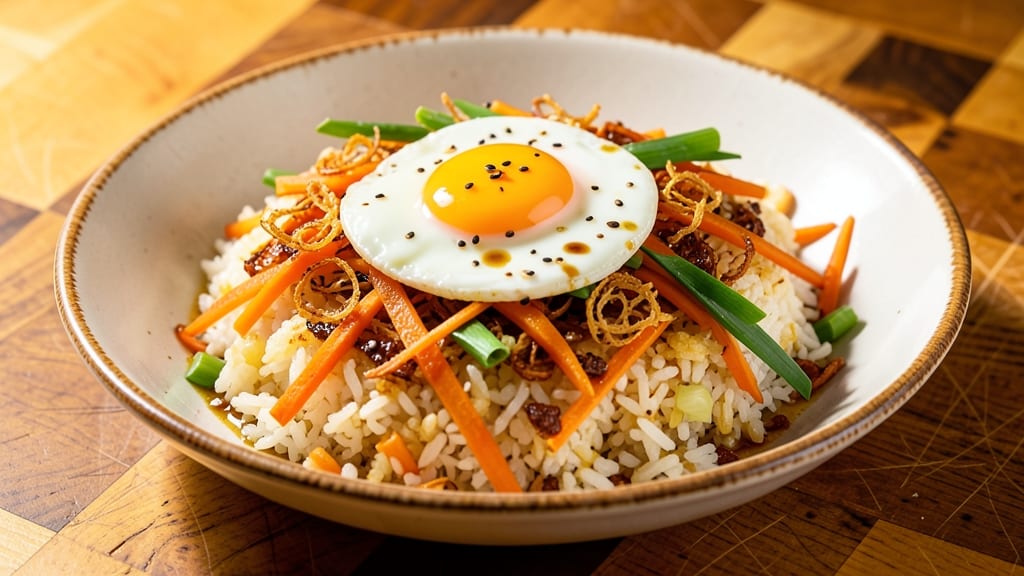
This Buldak fried rice recipe delivers restaurant-quality crispiness with its signature egg bites and savory soy-kissed grains. 🔥 The secret lies in perfectly cooked eggs that transform into golden, crispy bites while the rice absorbs bold Korean flavors.
I've perfected this technique to ensure every bite has that satisfying crunch and rich umami you crave.
What makes this dish truly special is the balance of textures—crispy egg bites, tender rice, and perfectly stir-fried vegetables all coming together in one flavorful bite. The key is high heat and quick cooking to maintain that crispy exterior while keeping the rice moist and aromatic.
This recipe stays true to traditional Korean flavors while being approachable for home cooks.
Ingredients for buldak fried rice
Crispy egg bites and savory soy-kissed grains require just these twelve ingredients for perfect Buldak fried rice.
| Ingredient | Amount | Notes |
|---|---|---|
| Day-Old Cooked White Rice 🍚 | 4 cups | Cold or room temperature preferred |
| Large Eggs 🥚 | 4 whole | Room temperature for even cooking |
| Soy Sauce 🍶 | ½ cup | Korean-style preferred for depth |
| Vegetable Oil 🫒 | ½ cup | High smoke point for frying |
| Green Onions 🧅 | ½ cup | White and green parts separated |
| Carrots 🥕 | 1 medium | Julienned into matchsticks |
| Garlic Cloves 🧄 | 6 cloves | Minced for aromatic base |
| Sesame Oil 🫒 | 1 tbsp | Toasted for nutty aroma |
| Sesame Seeds 🌾 | 1 tbsp | Toasted for garnish |
| Salt 🧂 | 1 tsp | Kosher or sea salt |
| White Pepper 🌶️ | ½ tsp | Freshly ground preferred |
| Butter 🧈 | 2 tbsp | Cold for crispy egg bites |
The eggs are the star here—room temperature makes all the difference for those signature crispy bites. Korean-style soy sauce (like Gochujang or Doenjang) elevates the umami, but regular soy works in a pinch. For the rice, day-old is ideal—it absorbs flavors better and stays separate. If you're short on time, spread freshly cooked rice on a tray to cool faster. The high smoke point vegetable oil prevents burning during the high-heat stir-fry, so don't skimp on quality here.
No Korean soy sauce? Double the regular soy sauce plus 1 tsp sugar gets you close. Fresh garlic is non-negotiable—jarred minced loses its punch. For the carrots, baby carrots work fine if you're in a hurry, but julienned matchsticks create that classic texture. The sesame oil should be the toasted, aromatic kind, not the cheap salad dressing variety. Swapping sesame seeds for toasted peanuts adds crunch but changes the traditional flavor profile. And that cold butter? Don't skip it—it's what makes the egg bites golden and crispy.
This dish reheats beautifully—microwave 1-2 minutes with a splash of water to restore crispiness. Store leftovers in an airtight container for up to 3 days, though I find it's best enjoyed fresh. For meal prep, freeze portions without the egg bites—cook the rice and veggies ahead, then fry the eggs fresh when ready to eat. The egg bites lose crispiness when frozen, so save that step for day-of serving.
Why You'll Love This Recipe
- Zero-Waste Pantry Hero: I swear by this recipe when I’m staring at leftover rice and wondering what to do with it. No fancy ingredients—just what’s already there. Toss in a couple of eggs, a splash of soy sauce, and those bright green onions, and suddenly you’ve got a meal that feels intentional, not improvised.
- Crispy-Creamy Magic: That first sizzle of the egg breaking into the hot oil? Pure satisfaction. The way the edges of the rice get just crispy enough while the egg stays runny-yolked in the middle—it’s the kind of balance that makes me want to make this twice in one week. (Yes, even on a Tuesday night.)
- Lunchbox or Dinner Plate: Between us, this is my go-to for both lazy afternoons and quick family dinners. Pack it cold for lunch, or serve it hot with a fried egg on top for dinner—it doesn’t judge. Honestly, I’ve even brought it to potlucks, and no one’s ever asked what it is.
- Budget-Friendly Power Move: Three dollars, maybe four, for a full meal that feeds four. The rice? Already cooked. The eggs? Cheap as chips. The soy sauce? A little goes a long way. It’s the kind of recipe that makes me feel like I’m winning at life, not just cooking.
Step-by-step instructions for crispy Korean-style fried rice
Here's how to transform simple ingredients into restaurant-quality Buldak fried rice with perfectly crispy egg bites.
🍳 Step 1: Prepare the Egg Bites for Crispy Texture
In a heatproof bowl, gently whisk together the 4 whole Large Eggs until the yolks and whites are fully combined. Add the 2 tbsp cold Butter and whisk until just melted and evenly incorporated. The butter should create tiny emulsified droplets throughout the egg mixture.
Place this bowl over a pot of simmering water (bain-marie) and whisk constantly for 3-4 minutes until the eggs reach 160°F on an instant-read thermometer. You're aiming for a thick, custard-like consistency that coats the back of a spoon. This gentle heating prevents scrambled eggs and ensures the perfect crispy exterior when fried later.
👨🍳 Step 2: Create the Aromatic Base
Heat 0.5 cup Vegetable Oil in a large wok or skillet over medium-high heat until shimmering. Add the 6 cloves minced Garlic Cloves and 1 medium Carrots julienned into matchsticks, cooking for 2-3 minutes until the garlic turns golden and the carrots soften slightly. Remove with a slotted spoon and set aside.
In the same pan, add 0.5 cup Soy Sauce and let it reduce by half (1-2 minutes) until slightly syrupy. This concentrated sauce forms the flavor foundation. Immediately pour in 1 tbsp Sesame Oil and stir to combine. The oil should bloom with a nutty aroma—this is your signal the base is ready for the rice.
🍳 Step 3: Fry the Egg Bites to Golden Perfection
Working in batches, carefully spoon 1-tablespoon portions of the egg custard into the hot oil. Fry for 2-3 minutes per side until deep golden brown with crispy edges. The egg should hold its shape when transferred to a paper towel-lined plate. Keep warm while you prepare the rest.
Here's the pro tip: Don't overcrowd the pan. Each egg bite needs space to develop that perfect crust. If they brown too quickly, reduce heat slightly but maintain medium-high to prevent greasiness. The crispy exterior contrasts beautifully with the tender rice we're about to add.
🥘 Step 4: Combine Rice and Finish with Texture
Return the garlic-carrot mixture to the pan and add the 4 cups Day-Old Cooked White Rice, breaking up any clumps with a spatula. Stir-fry for 3-4 minutes until the rice is heated through and begins to develop a light crust on the edges.
Push the rice to one side of the pan and add the crispy egg bites back in. Drizzle with 0.5 cup Green Onions (white parts first, then green), sprinkle with 1 tbsp Sesame Seeds, 1 tsp Salt, and 0.5 tsp White Pepper. Toss everything together for 1-2 minutes until the rice absorbs the remaining sauce and becomes fragrant.
🔥 Step 5: Plate for Maximum Crispy Contrast
Transfer the fried rice to serving plates immediately, arranging the crispy egg bites on top. Garnish with the remaining 0.5 cup Green Onions (green parts only) for color contrast. The egg bites should maintain their crispy texture while the rice remains tender with a slight bite from the julienned carrots.
Serve while hot, with extra soy sauce on the side if desired. The combination of crispy egg bites, savory soy-kissed rice, and nutty sesame creates the perfect balance of textures and flavors that makes this dish so addictive.
Pro Tips For Making Buldak Fried Rice
- CRANK THE HEAT FIRST: Buldak fried rice needs that smoky wok hei—so hit your pan on high heat before adding oil. I used to play it cool, and the rice would steam instead of sear, ending up soggy. Once the oil shimmers (about 140°C/300°F), toss in the rice and work fast—you’ll hear that satisfying sizzle in seconds.
- SCRAMBLE EGGS SEPARATELY: Don’t mix raw eggs into the rice pan—buldak’s signature crispy egg needs space. Scramble them in a smaller, hotter pan with a splash of water until just set (soft curds, not rubbery). Slide them in at the end so they stay intact, not mushy from the rice’s moisture.
- CHOP GREEN ONIONS THIN: Thick slices scream "home-cooked shortcut," but buldak demands delicate texture. Slice the whites into ¼-inch pieces and the greens into paper-thin shreds—this way, they melt into the rice instead of clumping. (Yes, it takes 30 seconds extra, but it’s worth it.)
- USE DAY-OLD RICE (REALLY): Fresh rice turns to glue. Spread leftover rice on a tray, microwave it for 2 minutes, then let it cool completely—this dries the surface so it absorbs oil and soy sauce properly. Cold rice? No problem—just warm it gently in the pan before frying. Trust me, the texture changes everything.
Wine and beer pairings for this dish
Korean Lager Pairing
For Buldak fried rice, I always reach for a crisp Korean lager like Hite or Cass—these beers cut through the richness of the soy sauce while complementing the nutty sesame notes.
The light body and subtle hop bitterness (around 25-30 IBU) balance the dish's umami without overpowering the crispy egg bites. Serve chilled at 40-45°F to enhance the refreshing contrast. 🍺
Sake for Traditionalists
A dry junmai ginjo sake (like Dassai 23) brings out the dish's authentic flavors while adding a delicate umami depth. The 14-15% ABV and subtle rice notes mirror the fried rice's texture, creating a harmonious pairing.
Pour slightly warmed (50-55°F) to release its aromatic complexity. For a budget option, Kubota Junmai offers similar quality.
White Wine Alternative
If you prefer wine, a dry Riesling (off-dry styles work too) from Germany's Mosel region pairs beautifully. The acidic brightness (with 6-8g/L residual sugar) cleanses the palate between bites of crispy egg and savory rice.
Look for Dr. Loosen "Blue Slate"—its minerality enhances the dish's carrot and sesame flavors. Serve slightly chilled (45-50°F).
Spiced Beer Fusion
For adventurous drinkers, try a Korean-style wheat beer with gochujang-infused hops (like Gyeongbokju). The slightly spicy, citrusy notes (from 10-15 IBU) echo the dish's bold flavors while adding a modern twist. The 12% ABV stands up to the rich fried rice. Serve at 42-45°F to preserve its effervescence.
Non-Alcoholic Option
Don't overlook yuja (citron) soda—its bright citrus and floral notes refresh the palate between bites. Mix 2 parts yuja juice with 1 part sparkling water and a squeeze of lime.
The effervescence mimics beer's cleansing effect, while the citrus cuts through the soy's saltiness. Serve over ice for a refreshing contrast to the warm dish. ✨
Nutrition facts
Frequently asked questions about Buldak fried rice
Why does the recipe call for day-old rice?
Day-old rice is essential because it's drier and absorbs flavors better than freshly cooked rice. The grains stay separate when stir-fried, creating that perfect texture. If you're short on time, spread freshly cooked rice on a tray and let it cool for 30 minutes before using.
Can I make the egg bites ahead of time?
Fry the egg bites up to 2 days ahead and store them in an airtight container at room temperature. Reheat in a dry skillet over medium heat for 1-2 minutes per side to restore crispiness. For longer storage, freeze them for up to 1 month—just thaw at room temperature before adding to the fried rice.
What's the secret to crispy egg bites?
The key is the bain-marie method and high heat. Heat the eggs gently to 160°F for a custard-like texture, then fry in hot oil over medium-high heat without overcrowding. The cold butter in the egg mixture creates that signature crispy exterior while keeping the inside tender.
Can I substitute regular soy sauce?
Yes, but Korean-style soy sauce (like Gochujang or Doenjang) adds deeper umami flavor. For a quick substitute, double the regular soy sauce and add 1 tsp sugar. If you can't find Korean soy sauce, use 1/4 cup soy sauce plus 1/4 cup fish sauce for extra savory depth.
How do I fix mushy rice?
Mushy rice happens when too much liquid is added. To fix it, remove the pan from heat and let it sit for 1 minute to absorb excess moisture. Then stir-fry over high heat for 1-2 minutes to crisp the edges. For prevention, use day-old rice and avoid adding more than 2 tbsp water total during cooking.