
Main Courses
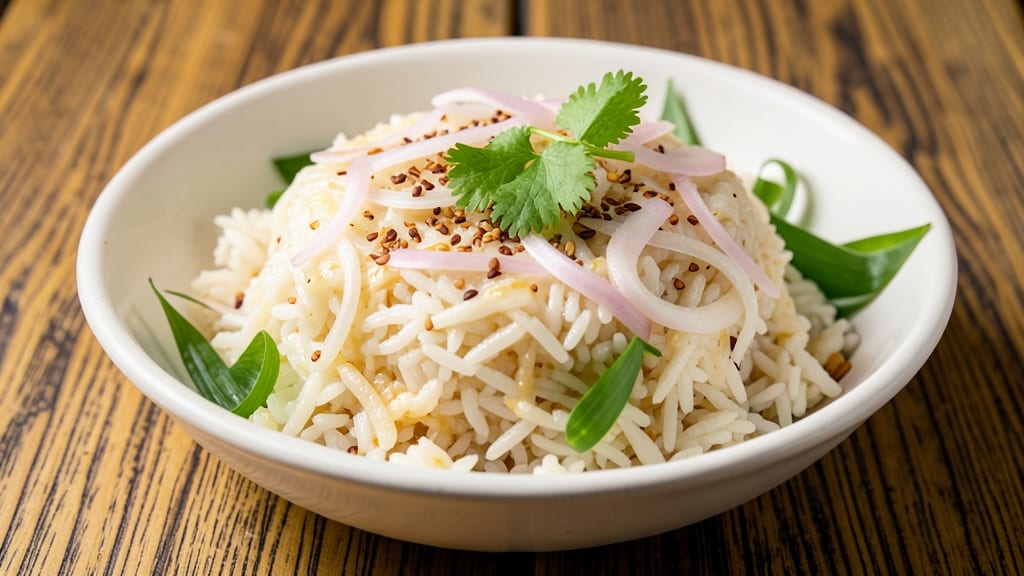
This Burmese coconut rice recipe transforms simple jasmine rice into a creamy, fragrant masterpiece that balances coconut milk's richness with delicate pandan essence. 💛 The secret lies in parboiling the rice before simmering it in coconut milk, creating tender grains infused with aromatic spices—turmeric, salt, and just a whisper of pandan.
I first discovered this technique during a visit to Myanmar, where it's traditionally served with grilled fish or spicy curries, and it's become my go-to for special occasions.
The process begins with soaking the rice to ensure even cooking, then parboiling it briefly before transferring to coconut milk. This method prevents mushiness while allowing the rice to absorb the creamy coconut flavor completely.
The result is a dish that's both comforting and elegant—each bite offers a perfect harmony of textures: tender rice, velvety coconut, and subtle herbal notes from the pandan.
What makes this recipe truly special is its versatility. Serve it alongside grilled seafood for a coastal-inspired meal, or pair it with Burmese curries for a restaurant-quality spread.
The fragrant aroma alone will transform your kitchen into a taste of Myanmar, while the creamy texture makes it irresistible. This isn't just rice—it's a complete dining experience.
Optional garnishes like fried shallots or lime zest add extra depth, but even without them, the dish shines. The key is patience—the slow simmering process ensures every grain is perfectly infused with coconut milk's richness.
Once you try this, you'll understand why it's a staple in Burmese households and restaurants alike.
Ingredients for burmese coconut rice
Jasmine rice, coconut milk, and pandan create this fragrant, creamy Burmese masterpiece.
| Ingredient | Amount | Notes |
|---|---|---|
| Jasmine Rice 🌾 | 1 ½ cups | Uncooked, long-grain preferred |
| Coconut Milk 🥥 | 1 ½ cups | Full-fat, canned preferred |
| Pandan Leaves 🌿 | 1 whole | Fresh or frozen, tied in cheesecloth |
| Ground Turmeric 🌶️ | ½ tsp | Freshly ground preferred |
| Salt 🧂 | 1 tsp | Kosher or sea salt |
| Water 💧 | 1 ½ cups | Room temperature preferred |
| Shallots 🧅 | 2 whole | Minced for garnish (optional) |
| Lime Zest 🍋 | 1 tbsp | Freshly grated (optional) |
| Fried Shallots 🍚 | 2 tbsp | Store-bought or homemade (optional) |
| Olive Oil 🫒 | 1 tbsp | For parboiling rice |
| White Pepper 🌶️ | ¼ tsp | Freshly ground preferred |
The coconut milk is non-negotiable—full-fat canned delivers the richest texture. Thai Kitchen or Goya brands are my go-tos, but any unopened can works. For pandan, frozen leaves from Asian markets are a game-changer—they keep for months and taste fresher than dried. The jasmine rice should be long-grain (not basmati) for that signature fragrance. Soak it for 20 minutes before cooking to ensure even absorption of the coconut flavor. If you can't find pandan, vanilla extract at half the amount gives a similar floral note, though purists will notice the difference.
No pandan? Vanilla bean paste or even a pinch of cardamom adds depth, though nothing beats the authentic aroma. The turmeric is just for color—skip it if you're sensitive to earthy flavors. For the shallots, Trader Joe's pre-fried ones save time, but homemade (pan-fried in oil until crispy) taste better. The lime zest brightens everything—use organic limes if possible, as conventional ones can taste bitter. If you're making this for a crowd, double the coconut milk and rice, but keep the pandan and turmeric proportions the same to maintain balance.
This rice keeps beautifully—3-4 days in the fridge, covered with plastic wrap pressed directly on the surface to prevent drying. For longer storage, freeze portions in airtight containers for up to 3 months. Reheat gently with a splash of water or coconut milk to restore creaminess. The garnishes (shallots, lime zest) are best added fresh after reheating. If you make extra, it's perfect for rice bowls or curry pairings—Burmese laksa or fish mojar are ideal companions. The aroma alone will transform your kitchen into a Myanmar dining room.
Why You'll Love This Recipe
- No Chopping Needed: I’ll be real—this recipe only asks for one prep step: soaking the pandan leaves in warm water. That’s it. No dicing, no mincing, no mess. Just let the leaves steep while you measure the rice and coconut milk. Honestly, I’ve made it while scrolling through my phone.
- Creamy Without the Guilt: The coconut milk here isn’t just thick—it’s rich but not heavy. A pinch of turmeric turns the rice golden, and the pandan infuses that faintly sweet, floral note that makes it feel luxurious. Between us, it’s the kind of dish that tastes like a vacation, but costs less than takeout.
- Weeknight or Weekend Star: Serve it alongside grilled fish, a simple curry, or even just a fried egg for breakfast—it’s that adaptable. My daughter requests it after soccer practice, and my partner saves it for lazy Sundays. The rice reheats beautifully, so it’s my go-to for when I’m too tired to plan.
- Budget-Friendly Luxury: Jasmine rice and coconut milk are pantry staples for me, and pandan leaves last ages if you dry them out. A single batch feeds four, and leftovers stay fresh for days. I’ll admit, the first time I made this, I thought, “This can’t be cheap,” then checked the grocery bill. Turns out, it’s my secret for feeling fancy without breaking the bank.
Step-by-step instructions for Burmese coconut rice
Perfectly balanced texture and aroma—creamy coconut meets fragrant jasmine in every bite.
🍳 Step 1: Parboil the Jasmine Rice
Rinse the 1.5 cups jasmine rice in a fine-mesh strainer until the water runs clear—this removes excess starch and prevents gummy rice. In a medium saucepan, combine the rinsed rice with the 1.5 cups water and bring to a boil over medium-high heat. Once boiling vigorously, reduce heat to low and simmer for exactly 5 minutes. You'll see the rice begin to soften slightly at the edges—this is your signal to drain it immediately.
I use a colander for draining, giving the rice a gentle shake to remove all water. Don't press the rice with a spoon—this releases more starch. The parboiling step is crucial: it partially cooks the rice so it absorbs the coconut milk perfectly later without becoming mushy.
👨🍳 Step 2: Prepare the Coconut-Turmeric Base
In the same saucepan (no need to rinse), add the 1.5 cups coconut milk, 0.5 tsp ground turmeric, 1 tsp salt, and 0.25 tsp white pepper. Stir well to combine, then place the tied pandan leaves in the center of the pan. The pandan will infuse its signature floral aroma into the milk.
Bring the mixture to a gentle simmer over medium-low heat, then reduce to the lowest possible heat setting. You want just a few bubbles breaking the surface—no vigorous boiling. Simmer uncovered for 10 minutes, stirring occasionally. This gentle cooking allows the turmeric to bloom and the pandan to release its fragrance without curdling the coconut milk.
🥘 Step 3: Combine and Cook to Creamy Perfection
Add the drained jasmine rice to the coconut mixture and stir gently to coat each grain. Increase heat to medium-low and bring to a simmer. The rice will absorb the coconut milk gradually—this may take 15-20 minutes. You'll know it's done when all liquid is absorbed and the rice is tender with a slight bite (al dente). The texture should be creamy but not soupy—each grain should be distinct yet coated in coconut.
Here's the thing—don't stir constantly. Occasional gentle stirring prevents the rice from sticking to the bottom. If the mixture looks too dry before all liquid is absorbed, add 1-2 tablespoons water to prevent burning. The rice is ready when you can easily slide a fork through the center with no resistance.
🔪 Step 4: Garnish and Serve Immediately
Transfer the coconut rice to a serving dish and let it sit for 2-3 minutes to allow the flavors to meld. While it rests, prepare the garnishes: finely mince the 2 whole shallots and zest the 1 tbsp lime. Sprinkle the minced shallots and lime zest evenly over the rice, then scatter the 2 tbsp fried shallots on top for crunch.
Serve immediately while still warm. The aroma should be intoxicating—sweet coconut, floral pandan, and a hint of citrus brightness. The fried shallots add a satisfying textural contrast that cuts through the creaminess. For best results, serve with grilled meats or fresh vegetables to balance the rich coconut flavors.
Pro Tips For Making Burmese Coconut Rice
- TOAST THE RICE FIRST: I learned this the hard way—skipping the quick toast in coconut milk ruins the texture. Heat the dry rice in a pot for 2-3 minutes over medium until it smells nutty and slightly fragrant, then add the coconut milk. This step locks in flavor and prevents gummy rice.
- USE FRESH PANDANA: That jarred pandan extract? It’s not the same. Tear 2-3 fresh pandan leaves (or 1 tablespoon dried) and tie them loosely in cheesecloth before adding to the rice. The leaves infuse better, and you can remove them after cooking—no bitter aftertaste.
- DON’T STIR AFTER SIMMERING: Once the rice and coconut milk come to a gentle simmer, resist the urge to poke or stir. I used to check every 5 minutes, and it turned out dry. Let it cook undisturbed for 15 minutes, then fluff with a fork—this guarantees creamy, even grains.
- UPGRADE WITH LEMON ZEST: Sounds weird, but it works: Add 1 teaspoon of lemon zest with the turmeric. It brightens the coconut’s richness and cuts through the earthiness of the pandan. (Yes, even if you’re skeptical—trust the process.)
Dietary considerations for this dish
Vegetarian-Friendly Adaptations
This dish is naturally vegetarian, but if you want to make it even more plant-based, simply omit any animal-based garnishes like fried shallots (which sometimes use anchovies) and use 100% vegetable-based coconut milk like So Delicious Dairy Free or Goya.
The coconut milk already provides enough richness, so no substitutions are needed for the base recipe. 🌱
Gluten-Free Considerations
Burmese coconut rice is inherently gluten-free since it only contains rice, coconut milk, and natural spices. However, always check your coconut milk brand for cross-contamination warnings—some brands process in facilities that handle gluten-containing products.
I recommend Thai Kitchen or Trader Joe's brands, which are certified gluten-free. The fried shallots garnish is also gluten-free if made with pure oil, but verify the package label.
Dairy-Free and Nut-Free
The recipe is already dairy-free and nut-free, making it safe for those with common allergies. The coconut milk provides all the creaminess without any dairy products. For nut-free kitchens, ensure your pandan leaves (if store-bought) are processed in a nut-free facility, as some brands may have cross-contamination risks.
The lime zest and fried shallots are also naturally free of dairy and nuts.
Lower-Calorie Version
To reduce calories while keeping the rich flavor, use light coconut milk instead of full-fat—look for So Delicious Light brand. You can also reduce the oil used for parboiling the rice by ½ tablespoon (just ½ tablespoon olive oil instead of 1 tablespoon).
The texture will still be creamy, but with about 50-70 fewer calories per serving. Keep the pandan and spices the same for maximum flavor impact.
Spice Sensitivity Adjustments
If you're sensitive to spices, you can reduce the turmeric to ¼ tsp and omit the white pepper entirely. The pandan leaves provide enough aromatic depth without needing additional spices. For extra mildness, use unsalted coconut milk and adjust the salt to ½ tsp instead of 1 tsp.
The dish will still taste amazing while being gentler on sensitive palates.
Keto Adaptation (Limited)
While this isn't a true keto dish (rice is carb-heavy), you can create a keto-friendly side by replacing the jasmine rice with cauliflower rice in a 1:1 ratio. Use 1.5 cups cauliflower rice instead, and reduce the coconut milk to 1 cup to balance moisture.
The texture will be lighter, but the pandan and turmeric flavors will still shine. Garnish with extra lime zest for brightness. 💡
Nutrition facts
Frequently asked questions about Burmese coconut rice
Can I substitute regular rice for jasmine rice?
While you can use regular long-grain white rice, jasmine rice is essential for that signature fragrant aroma. If you must substitute, use basmati rice as it has a similar texture, but expect less floral scent. For best results, stick with jasmine—it's what gives this dish its authentic Burmese character.
What if I can't find pandan leaves?
No problem! You can substitute with ½ teaspoon vanilla extract or ¼ teaspoon cardamom powder for a similar floral note. The vanilla will give a sweeter aroma, while cardamom adds warmth. If using vanilla, reduce the coconut milk by 1 tablespoon to maintain balance.
Why does my coconut rice turn out mushy? Mushy rice usually happens from overcooking or insufficient parboiling.
How long can I store leftover coconut rice?
Store in an airtight container in the fridge for 3-4 days or freeze for up to 3 months. To reheat, add 1 tablespoon water or coconut milk per cup of rice and cover while warming in the microwave. For best texture, reheat gently on the stove with a splash of liquid.
What are the best proteins to serve with this?
This creamy rice pairs beautifully with grilled seafood like snapper or shrimp, or try Burmese-style laksa curry. For non-seafood options, chicken satay or tofu stir-fry work well. The coconut flavor balances rich proteins perfectly, while the pandan aroma complements spicy dishes.