
Main Courses
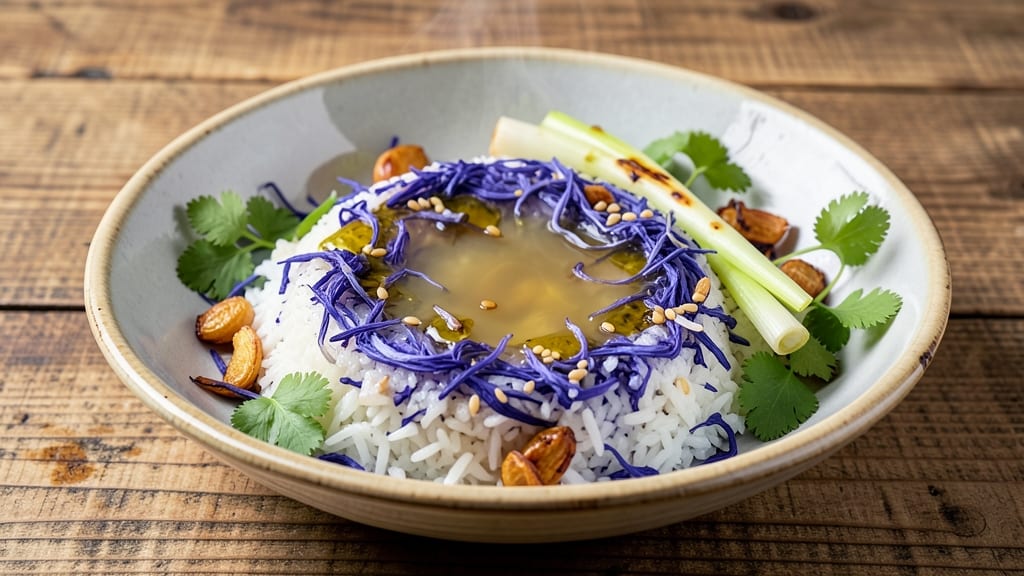
This butterfly pea flower rice recipe transforms ordinary grains into a stunning blue-purple masterpiece that's as delicious as it is visually striking.
The secret lies in steeping dried butterfly pea flowers in hot water to create a natural color infusion that transforms white rice into an artistic canvas of swirling hues. Perfect for both modern and traditional settings, this dish delivers restaurant-quality presentation with minimal effort.
What makes this recipe truly special is its versatility—serve it as a standalone centerpiece or pair with complementary sides like grilled vegetables, tofu, or fresh herbs. The butterfly pea flower doesn't just add color; it also provides subtle floral notes that complement the rice's natural flavor.
With just a few simple ingredients and a 15-minute preparation time, you'll create a dish that wows guests and elevates any meal.
Ingredients for butterfly pea flower rice
Transform ordinary rice into a vibrant blue-purple masterpiece with these artisanal ingredients.
| Ingredient | Amount | Notes |
|---|---|---|
| Dried Butterfly Pea Flowers 🌸 | 2 tbsp | Organic, food-grade preferred |
| Jasmine White Rice 🍚 | 1 cup | Uncooked, long-grain preferred |
| Water 💧 | 2 cups | Filtered or spring water preferred |
| Extra-Virgin Olive Oil 🫒 | 1 tbsp | Cold-pressed for best flavor |
| Vegetable Broth 🍲 | 1 cup | Low-sodium, homemade preferred |
| Fresh Lemongrass 🌿 | 1 whole | Stemmed, bruised for infusion |
| Fresh Turmeric 🌶️ | 1 tsp | Freshly grated for vibrant color |
| Fresh Ginger 🧅 | 1 tsp | Finely minced for zing |
| Lemon Zest 🍋 | 1 tsp | Organic, non-waxed preferred |
| Sea Salt 🧂 | ½ tsp | Fine grain, Diamond Crystal preferred |
| Black Peppercorns 🌶️ | ¼ tsp | Freshly cracked for aroma |
| Tofu 🥬 | 4 oz | Firm, pressed and cubed |
| Fresh Cilantro Leaves 🌿 | ¼ cup | Chopped, for garnish |
| Lime Wedges 🍈 | 2 whole | For serving, organic preferred |
The butterfly pea flowers are the star—organic, food-grade from specialty spice shops or trusted online retailers like Frontier Co-op deliver the most vivid color. These delicate petals infuse the water with their signature hue, creating a stunning visual effect. For best results, use jasmine rice—its floral notes harmonize beautifully with the butterfly pea's subtle aroma. If you can't find organic flowers, regular dried varieties still work, though the color may be slightly muted. Costco or Whole Foods often carry high-quality dried flowers in their world foods section, or search for 'butterfly pea tea' online for bulk options.
No fresh lemongrass? Substitute 1 tsp lemongrass paste or 1 tbsp frozen lemongrass—just thaw and bruise it first. The turmeric and ginger can be swapped for 1 tsp each of ground turmeric and ginger in a pinch, though fresh versions add more depth. For a vegan-friendly protein boost, the tofu can be replaced with mushrooms or tempeh—just marinate them in soy sauce and garlic before adding. The vegetable broth is non-negotiable here; chicken or beef broth would break the vegan promise. If you're serving this as a centerpiece, consider adding edible flowers like nasturtiums or pansies for an extra layer of visual drama.
Store any leftover rice in an airtight container for up to 4 days—the color may fade slightly over time, but the flavor remains intact. For longer storage, freeze portions in single-serving containers for up to 3 months. The butterfly pea infusion loses potency when reheated, so it's best enjoyed fresh. To recreate the swirl effect, gently fold the rice with a spatula after cooking, or use a rice paddle for cleaner lines. Serve immediately with lime wedges and extra cilantro to maintain that restaurant-quality presentation.
Why You'll Love This Recipe
- Magic in a Bowl: I swear, the moment those dried butterfly pea flowers steep into the rice, the whole kitchen smells like a secret. No fancy techniques—just steep, simmer, and serve—while the rice absorbs that vibrant, earthy aroma that tastes like a vacation.
- No-Chop Necessary: Honestly, this is my go-to when I’m too tired to chop anything. Jasmine rice cooks itself, the broth adds depth with zero effort, and those dried flowers? Just toss them in whole. Twenty minutes later, you’ve got a dish that looks like it took hours.
- Color-Changing Magic: Between us, watching the rice shift from pale to deep blue when you add lemon juice is the best part. It’s not just food—it’s a science experiment your kids (or your inner child) will love. Serve it plain, or add grilled chicken for a showstopper that costs less than takeout.
- Budget Meal Prep: This rice keeps for days in the fridge, reheats like a dream, and stretches into lunches, stir-fries, or even a cold salad. I make a big batch on Sundays, and by Wednesday, it’s still my secret weapon—cheap, filling, and way prettier than plain white rice.
Step-by-step instructions for butterfly pea flower rice
Transform ordinary rice into a stunning visual masterpiece with this vibrant technique.
Infuse the Broth with Aromatics and Flowers
Begin by bruising the whole fresh lemongrass by gently pounding it with the flat side of a knife. This releases the essential oils that will infuse into the broth. In a medium saucepan, combine the 1 cup vegetable broth, bruised lemongrass, 2 tbsp dried butterfly pea flowers, 1 tsp freshly grated turmeric, 1 tsp finely minced fresh ginger, 1 tsp lemon zest, 0.5 tsp sea salt, and 0.25 tsp freshly cracked black peppercorns.
Bring the mixture to a gentle simmer over medium heat. Watch carefully as the butterfly pea flowers begin to bloom and release their vibrant blue-purple hue into the liquid. Simmer for exactly 5 minutes to allow the flavors to meld together while maintaining the flowers' color intensity. Remove from heat and let steep for an additional 10 minutes before straining through a fine-mesh sieve into a clean bowl.
Toast the Rice and Create the Colorful Base
While the broth infuses, heat 1 tbsp extra-virgin olive oil in a separate saucepan over medium heat. Add the 1 cup jasmine white rice and toast it for 2-3 minutes, stirring constantly, until the grains become translucent at the edges and release a nutty aroma. This toasting step enhances the rice's natural flavor and prevents mushiness.
Immediately add the strained infused broth to the rice. Stir gently to combine, then bring the mixture to a boil. Once boiling, reduce heat to low, cover tightly with a lid, and let cook for 12 minutes without disturbing. The rice should absorb all the liquid and develop a beautiful blue-purple swirl pattern from the butterfly pea flowers.
Prepare the Tofu for Serving
While the rice cooks, press the 4 oz firm tofu to remove excess moisture. Cut it into 1-inch cubes and place them in a small bowl. Heat 1 teaspoon of the reserved infused broth in a non-stick skillet over medium heat until it begins to shimmer. Add the tofu cubes and cook for 3-4 minutes on each side until golden brown and slightly crispy.
Remove the tofu from the skillet and set aside. In the same pan, add the remaining infused broth and bring to a gentle simmer. Stir in 0.25 cup chopped fresh cilantro leaves and let cook for 1 minute to infuse the greens with the aromatic flavors. Pour this cilantro-infused broth over the tofu cubes to keep them moist.
Finish the Rice and Assemble the Dish
After 12 minutes of cooking, turn off the heat and let the rice sit covered for an additional 5 minutes. This resting period allows the steam to redistribute, resulting in perfectly fluffy grains with vibrant color patterns. Fluff the rice gently with a fork, being careful not to break up the beautiful swirls created by the butterfly pea flowers.
To serve, divide the blue-purple rice among 4 plates. Top each serving with the crispy tofu cubes and drizzle with any remaining infused broth from the pan. Garnish with additional chopped cilantro leaves and serve immediately with the 2 whole lime wedges on the side for squeezing fresh juice over each bite.
Pro Tips For Making Butterfly Pea Flower Rice
- Soak the Flowers First: Dried butterfly pea flowers need a quick 10-minute soak in warm water before using—this guarantees vibrant color and prevents clumping. I used to toss them in dry, and the rice turned muddy instead of blue. Trust me, the extra two minutes make a difference.
- Use Two Pots: Cook the rice in a separate pot from the broth-infused flowers—this keeps the grains fluffy and prevents gummy texture. My first attempt had everything simmering together, and the rice turned sticky. Split the process, and you’ll avoid that disaster.
- Balance the Broth: Start with half the vegetable broth called for, taste the rice, then add more if needed—this prevents over-salting or watery results. I’ve ruined batches by assuming the broth was mild enough. Adjust as you go, like a good conversation.
- Toast the Rice Lightly: Give the jasmine rice a 30-second dry toast in the pot before adding liquid—this removes excess starch and makes the grains separate beautifully. I skipped this once, and the rice stuck together like glue. A little heat upfront saves you from mushy rice later.
Wine and beer pairings for this recipe
White Wine Pairings
For this vibrant dish, I reach for crisp Sauvignon Blanc from New Zealand—its bright acidity and citrus notes mirror the butterfly pea flower's floral undertones while cutting through the rice's subtle earthiness.
A 2022 Cloudy Bay or Kim Crawford delivers that perfect balance of zing and freshness that complements the dish's visual drama. 🍷
Rosé Wine Options
If you prefer something lighter, a Provence-style rosé works beautifully. The pale hue enhances the dish's colors without overpowering them, while its dry profile lets the rice's delicate flavors shine.
I love Whispering Angel or Château d'Esclans—both offer that signature French elegance that pairs wonderfully with the dish's artistic presentation.
Light Beer Pairings
For beer lovers, a crisp wheat beer like Blue Moon Belgian White adds a refreshing contrast. The banana and spice notes in the beer complement the lemongrass and ginger in the rice, while its light body won't overwhelm the dish.
Alternatively, a Helles Lager from Germany—like Weihenstephaner Original—provides a clean, neutral backdrop that lets the rice's flavors stand out. 🍺
Non-Alcoholic Options
Don't overlook non-alcoholic pairings! A sparkling lemonade made with fresh lime juice and butterfly pea flower tea creates a stunning visual match while refreshing the palate. For something more savory, try a cucumber-mint infused water—it enhances the dish's fresh, herbal notes without competing with the vibrant colors.
Unexpected Pairing
Here's a fun twist: green tea (hot or iced) with a hint of honey. The tea's earthy notes harmonize with the lemongrass and ginger, while the honey adds subtle sweetness that balances the dish's savory elements.
The green color also creates a beautiful contrast against the blue-purple rice, making for an Instagram-worthy presentation. 💚
Nutrition facts
Frequently asked questions
Why does my butterfly pea rice turn green instead of blue?
The color shifts from blue to green when exposed to acid (like lemon or lime juice). To maintain the blue-purple hue, avoid adding citrus until serving—use the lime wedges as garnish only. The flowers' natural pH sensitivity creates this magical transformation!
Can I make this recipe without fresh lemongrass?
Use 1 teaspoon lemongrass paste or 1 tablespoon frozen lemongrass—just thaw and bruise it first. For a stronger flavor, add 1/4 teaspoon lemongrass extract** to the broth. The dish will still taste amazing, just with slightly less aroma.
How do I get the swirl effect in my rice?
After cooking, gently fold the rice with a spatula while it's still in the pot, or use a rice paddle to create clean lines. For extra drama, spoon some plain white rice into the center before folding—this creates beautiful marbled patterns. Work quickly while the rice is hot!
Is butterfly pea rice safe for people with allergies?
This recipe is completely plant-based and free from common allergens like gluten, dairy, nuts, and shellfish. However, always check your dried butterfly pea flowers for cross-contamination warnings if you have severe allergies. The flowers themselves are typically safe for most people.
Can I use this rice in sushi rolls?
While possible, the vibrant color may stain your hands and rolling mat. For best results, use a small portion of the butterfly pea rice mixed with regular sushi rice (1:3 ratio). The flavor works beautifully, but the visual effect will be more subtle than in a plated dish.