
Main Courses
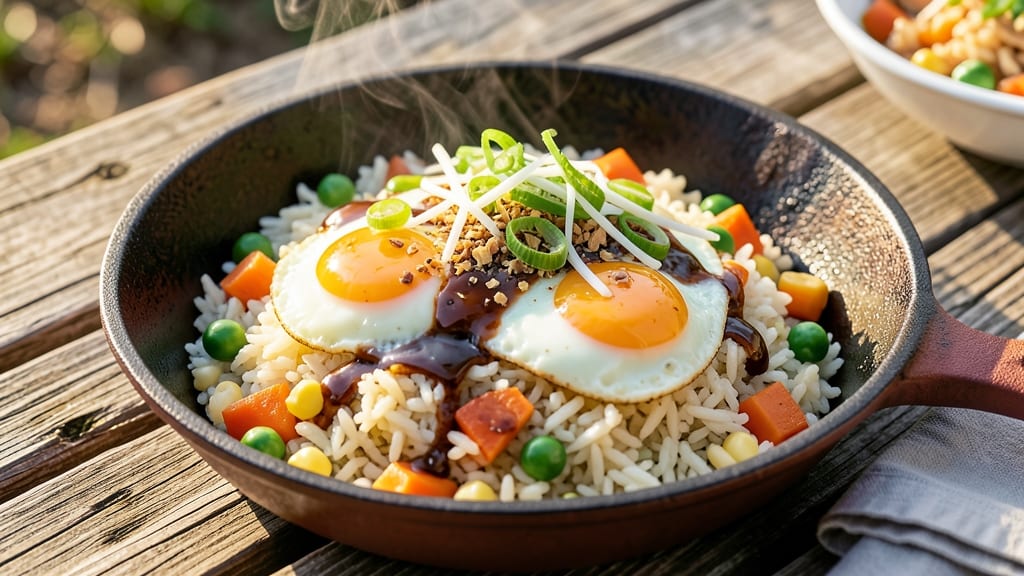
This camping fried rice recipe transforms simple ingredients into a hearty, one-pan meal perfect for outdoor cooking. The secret lies in crispy eggs and quick-stirred veggies that come together in minutes on a camp stove, using just a single pan and minimal cleanup.
I designed this for campers who want restaurant-quality flavor without bulky equipment—no deep fryer, no fancy techniques, just smart prep and high heat.
What makes this recipe work in the wild is its adaptability: use pre-cooked rice, dehydrated veggies, or whatever’s in your supply bag. The eggs add protein and a satisfying crunch, while the veggies stay vibrant from the fast sear.
With proper heat control and a few safety tips, you’ll have a steaming hot, flavor-packed meal that’s as easy to make as it is delicious. Let’s get cooking—campfire edition.
Ingredients for camping fried rice
Pantry staples and campfire essentials—no fancy gear needed, just big flavor in one pan.
| Ingredient | Amount | Notes |
|---|---|---|
| Cooked White Rice 🍚 | 3 cups | Cold or room temperature preferred |
| Large Eggs 🥚 | 4 whole | Fresh, room temperature for crispiness |
| Frozen Mixed Vegetables 🥕 | 1 ½ cups | Peas, carrots, corn, or whatever's handy |
| Green Onions 🧅 | ½ cup | Sliced, white and green parts separated |
| Soy Sauce 🍶 | ¼ cup | Low-sodium preferred for outdoor cooking |
| Vegetable Oil 🫒 | ¼ cup | High smoke point for camp stove |
| Garlic Cloves 🧄 | 3 cloves | Minced, or pre-minced jarred garlic |
| Sesame Oil 🌿 | 1 tbsp | Toasted, for aroma (optional but recommended) |
| Salt 🧂 | ½ tsp | Adjust to taste, campfire flavors need it |
| Black Pepper 🌶️ | ¼ tsp | Freshly ground preferred |
| Dried Parsley 🌿 | 1 tsp | For garnish, or fresh if available |
| Dehydrated Onion Flakes 🧅 | 1 tbsp | Camp pantry staple, adds depth |
The rice is your base—day-old works best since it stays separate and absorbs flavors better. Grab pre-cooked rice from the supermarket or make extra at home before your trip. For veggies, frozen mixed bags are perfect—they thaw fast on the camp stove and won't spoil. Green onions? Trader Joe's has those pre-sliced packets that save space. The eggs need to be room temperature for crispy edges, so take them out of the cooler 10 minutes before cooking. If you're using dehydrated veggies, they'll add texture but won't replace the moisture frozen ones bring.
No soy sauce? Worcestershire sauce works in a pinch (though it's not vegan). Short on garlic? Garlic powder at half the amount gets you close. The sesame oil is optional but adds that campfire aroma—Trader Joe's sells it in small bottles that fit in your pack. If you're cooking for a crowd, double the veggies and eggs but keep the rice at the same ratio. The dehydrated onion flakes are a game-changer for camp cooking—they keep forever and add instant flavor. For extra crunch, toss in some crushed tortilla chips at the end if you've got them.
This reheats like a dream—just add a splash of water and stir over the fire. Keeps 2-3 days in a sealed container in your cooler, though it's best fresh. For leftovers, portion into ziplock bags with a bit of oil to keep it moist. The eggs crisp up best when cooked last, so if you're saving some for breakfast, hold off until the end. Store your spices in small, leak-proof containers—trust me, you don't want soy sauce leaking all over your gear.
Why You'll Love This Recipe
- One-Pot Magic: I swear by this—no extra dishes, just a single pan where rice, eggs, and veggies dance together. The soy sauce caramelizes into a glossy finish while the green onions sizzle at the end, and honestly? That’s my kind of cleanup.
- Umami Bomb: That first bite of crispy egg threads tangled with frozen peas and carrots—it’s ridiculously good. The soy sauce cuts through the simplicity, and the frozen veggies? They soften just enough to soak up every savory drop without falling apart.
- Campfire to Kitchen: Between us, this is the meal that travels. Pack it in a thermos for a post-hike feast or reheat it over a camp stove—same flavors, zero fuss. My college friends still ask for it years later, and I’ve never had to change a thing.
- Zero-Waste Victory: Leftover rice? Perfect. Frozen veggies? No spoilage. Eggs? Versatile as hell. I make a double batch on Sundays, and by Wednesday, it’s still a solid lunch—either cold in a wrap or reheated with a splash of water. Budget-friendly? More like budget-savvy.
Step-by-step instructions for camping fried rice
This one-pan wonder delivers restaurant-quality fried rice with crispy eggs and veggie-packed flavor—perfect for campfire cooking.
Prep Ingredients for Quick Camp Cooking
Start by slicing the 0.5 cup green onions into 0.25 cup white parts and 0.25 cup green parts, setting them aside separately. Mince the 3 cloves garlic cloves—if you're using jarred minced garlic, just measure out 1 tablespoon directly. Sprinkle the 1 tablespoon dehydrated onion flakes into a small bowl and crush them lightly with your fingers to restore their aroma.
Crack the 4 whole large eggs into a separate bowl and whisk them lightly—just enough to blend the yolks and whites, but don't overbeat or they'll turn rubbery. The key here is speed, so have everything prepped while your camp stove heats up. If your 3 cups cooked white rice is still warm from yesterday's meal, spread it on a plate to cool completely—cold rice fries up better and won't turn mushy.
Cook the Eggs to Crispy Perfection
Heat 0.25 cup vegetable oil in your one-pan camp skillet over medium-high heat until it shimmers—about 2 minutes. Pour in the whisked eggs and let them sit undisturbed for 10-15 seconds until the edges start to set. Then gently push the eggs around with a spatula, folding them into soft curds. You want crispy edges but still slightly runny centers—this is what makes great fried rice.
As soon as the eggs are just set to your liking, remove them from the pan and set them aside on a plate. Leave the rendered egg fat in the pan—this is liquid gold for flavor. If you're using 1 tablespoon sesame oil, add it now and let it sizzle for 10 seconds to release its nutty aroma before adding the remaining ingredients.
Stir-Fry Vegetables and Aromatics
Add the 1.5 cups frozen mixed vegetables directly to the hot pan (no need to thaw first—the cold veggies will help regulate the heat). Stir-fry for 3-4 minutes until they're heated through and starting to soften. Add the minced 3 cloves garlic cloves and the crushed 1 tablespoon dehydrated onion flakes, cooking for another 30 seconds until fragrant.
Here's where the magic happens: pour in the 0.25 cup soy sauce and let it bubble for 1 minute to cook off the raw taste. Sprinkle in the 0.5 teaspoon salt and 0.25 teaspoon black pepper, then add the white parts of the 0.5 cup green onions. Stir everything together for 1 minute to let the flavors meld—you should smell that campfire umami goodness building.
Combine Everything for the Perfect Texture
Add the 3 cups cooked white rice to the pan and use your spatula to break up any clumps. Stir-fry on medium heat for 3-4 minutes, letting the rice absorb all those delicious flavors. The rice should look slightly glossy from the soy sauce and oil—this means it's getting properly coated.
Now return the crispy eggs to the pan along with the green parts of the 0.5 cup green onions. Toss everything together for 1-2 minutes until the rice is heated through and the eggs are warmed but still maintain their texture. The dish should look vibrant with pops of green from the onions and the crispy egg bits peeking through.
Finish and Serve Straight from the Campfire
Taste and adjust seasoning—you might want to add a splash more soy sauce or a pinch of salt depending on your camp stove's heat. Sprinkle the 1 teaspoon dried parsley over the top for freshness. Serve immediately while the rice is hot and the eggs are still slightly crispy—this is a one-pan meal that comes together faster than you can start a campfire.
Pro tip: If you're cooking for a crowd, double the recipe but use two separate pans—this keeps everything hot and prevents overcrowding. The beauty of camping fried rice is that it tastes even better when made over an open flame, so don't be afraid to let it sizzle a little longer than you would indoors.
Pro Tips For Making Camping Fried Rice
- CHILL THE RICE FIRST: Cold rice fries better—it’s not optional. Spread your cooked rice on a tray and refrigerate for at least 30 minutes (or overnight if you planned ahead). I learned this the hard way after making mushy rice in the woods because I skipped this step. The starch dries out, and your fried rice will actually crisp instead of turn to glue.
- SCRAMBLE EGGS SEPARATELY: Fry the eggs in a clean pan first, then set them aside. Mixing them into the rice too early makes them rubbery, and you’ll end up with sad, gray scrambled bits. Do this while your veggies thaw—just 2 minutes in a hot pan, then break them into soft chunks. Your rice will thank you.
- THAW VEGGIES IN HOT WATER: Dump frozen mixed veggies into a bowl of boiling water for 1 minute, then drain. This jumpstarts their thawing and keeps them from steaming in your pan. I used to just toss them in raw, and they’d either burn or stay icy—neither is good. Now they’re ready to stir-fry in seconds, and they actually taste cooked.
- USE THE RICE’S OWN JUICES: Skip adding extra oil unless your pan is screaming for it. The rice should sizzle and release its own moisture—about 1-2 tablespoons is enough. Over-oiling makes fried rice greasy, and nobody wants that after a long hike. Let the rice cling to the pan first, then add soy sauce and veggies. The flavor concentrates that way.
Best sauces and condiments for this dish
Soy Sauce Swaps
No soy sauce? No problem! Use Worcestershire sauce (about 1 tbsp) for a meaty depth, though it's not vegan. For vegetarian options, try coconut aminos (same amount) or even a mix of 1 tbsp ketchup + ½ tsp vinegar—it won’t be identical, but it’ll add tangy umami.
I’ve even used fish sauce in a pinch (just ½ tsp), though it’s bold.
For a smoky twist, swap in 2 tbsp BBQ sauce—it works surprisingly well with the eggs and veggies. Just reduce the salt slightly since BBQ sauce is already salty. If you’re near a store, grab a small bottle of Teriyaki sauce for a sweeter, stickier finish. 🍶
Spicy Kick Add-Ons
Crank up the heat with ½ tsp chili flakes or 1 tbsp sriracha mixed into the soy sauce before adding it to the pan. For extra depth, toss in 1 tsp gochujang (Korean chili paste) at the end—it adds a sweet-spicy punch.
I keep a tiny bottle of Penzeys Hot Sauce in my camping kit for emergencies.
Need more heat? Stir in ½ tsp crushed red pepper flakes with the garlic and onion flakes. For a smoky-spicy combo, add a pinch of smoked paprika when you’re cooking the veggies. Just remember: campfire flavors are intense, so start with half the amount and adjust.
Umami Boosters
Deepening the umami flavor is key for campfire cooking. Add 1 tsp fish sauce (if you’re okay with it) or 1 tbsp mushroom powder (a pantry staple) when you’re cooking the veggies.
For a meaty taste without meat, try 1 tbsp nutritional yeast—it’s a vegan chef’s secret. I also love adding 1 tsp oyster sauce (if available) for a rich, savory boost.
No umami ingredients? A splash of 1 tbsp tomato paste or ½ tsp MSG (if you have it) works wonders. Even a ½ tsp dried porcini mushrooms crumbled into the pan adds earthy depth. The goal is to make every bite sing, even with limited supplies. 💫
Sweet-Tangy Balance
Brighten the dish with a touch of sweetness. Drizzle in 1 tsp honey or maple syrup when you add the soy sauce—it balances the saltiness perfectly. For a tangy twist, squeeze in ½ lime at the end (if you’ve got one).
I keep a small bottle of balsamic glaze in my camping kit for this exact purpose.
Need a quick fix? Mix 1 tsp apple cider vinegar into the soy sauce before adding it to the pan. The acidity cuts through the richness of the eggs and oil, making every bite more vibrant.
A pinch of white pepper instead of black also adds a subtle sweetness that rounds out the flavors.
Nutrition facts
Frequently asked questions
Can I use pre-cooked rice from a grocery store for camping fried rice?
Yes! Pre-cooked rice is perfect for camping—just make sure it's day-old or cold to prevent mushiness. Look for microwaveable rice packs or pre-cooked grains in the grocery store's refrigerated section. These stay fresh longer and save you from prepping at home.
How do I adjust this recipe for a camp stove with uneven heat?
Watch your heat carefully—camp stoves often have hot spots. Start with medium heat and adjust as needed. If the pan gets too hot, reduce to medium-low and stir more frequently. The eggs should cook in 10-15 seconds of undisturbed time, so if they're browning too fast, lower the heat. Patience is key!
What's the best way to store ingredients for this recipe while camping?
Pack eggs in a cooler with ice packs and use them within 2 days. Keep rice in an airtight container to prevent drying. Frozen veggies stay safe in the cooler for 3-4 days. Store spices in small, leak-proof containers—Trader Joe's travel-sized bottles work great. For long trips, dehydrated veggies are your best friend.
Can I make this recipe vegetarian or vegan?
Skip the eggs and add tofu cubes (pan-fried first) or chickpeas for protein. Use coconut aminos instead of soy sauce, and swap butter for vegan margarine. For extra umami, add 1 tsp mushroom powder or nutritional yeast. The texture stays great without eggs!
Why did my camping fried rice turn out dry or gummy?
This usually happens from overcooking or using warm rice. Always use cold rice (day-old works best) and cook on medium heat for only 3-4 minutes after adding it to the pan. If it's too dry, add 1-2 tablespoons water and stir to steam briefly. For gummy texture, make sure your rice isn't undercooked initially.