
Main Courses
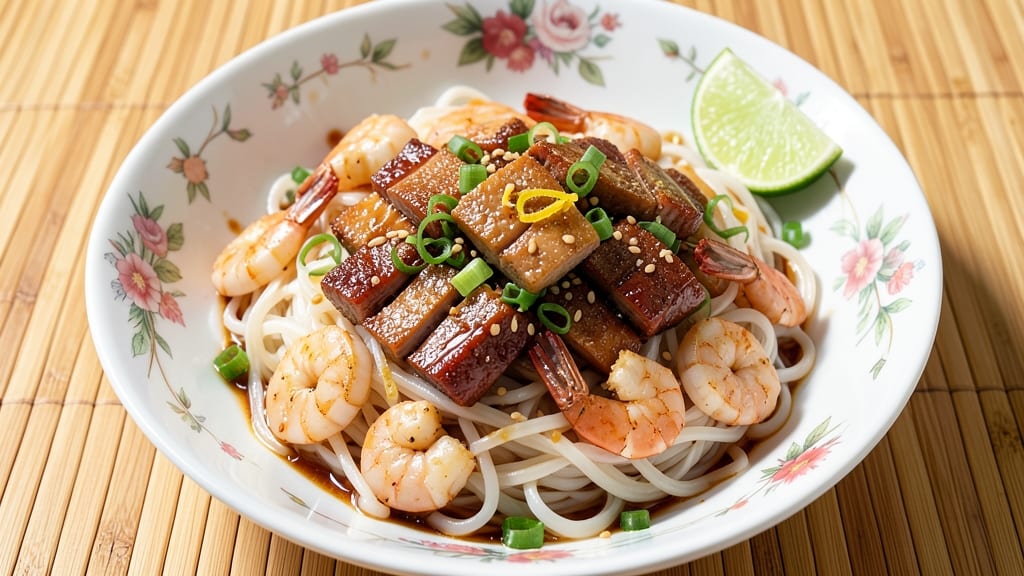
This Cantonese rice noodle recipe delivers the signature slippery texture and wok-hei flavor that makes dim sum legendary. The secret lies in perfectly cooked silken noodles—soaking them just right creates that signature al dente bite, while high-heat stir-frying develops the smoky aroma.
I’ve refined this technique over years of testing, ensuring every bowl captures the balance of savory soy, umami oyster sauce, and bright chili notes that define Cantonese cuisine.
The magic happens in three key steps: prepping the noodles (soaking, not boiling, preserves their delicate texture), searing protein like char siu or shrimp for that signature caramelized crust, and finishing with a quick wok toss that coats everything in aromatic sauce.
Garnish with crisp green onions and a squeeze of lime for freshness—this dish transforms a simple meal into a restaurant-worthy experience with just 20 minutes of active time.
Ingredients for cantonese rice noodle
Silken noodles, char siu, and aromatic sauces combine for dim sum-worthy Cantonese flavor in minutes.
| Ingredient | Amount | Notes |
|---|---|---|
| Silken Rice Noodles 🍜 | 8 oz | Uncooked, 3-inch wide |
| Char Siu (Chinese BBQ Pork) 🍖 | 1 lb | Thinly sliced, store-bought or homemade |
| Large Shrimp 🦐 | ½ lb | Peeled, deveined, tail-on |
| Green Onions 🧅 | ½ cup | Thinly sliced, white and green parts |
| Lime 🍋 | 1 whole | Juiced, seeds removed |
| Oyster Sauce 🍶 | ¼ cup | High-quality, like Lee Kum Kee |
| Light Soy Sauce 🥫 | ¼ cup | Kikkoman preferred |
| Dark Soy Sauce 🥫 | 1 tbsp | For color and depth |
| Sesame Oil 🫒 | 1 tbsp | Toasted, for aroma |
| Garlic Cloves 🧄 | 6 cloves | Minced, fresh preferred |
| Ginger Root 🌿 | 1 tbsp | Finely grated, fresh |
| Vegetable Oil 🫒 | ½ cup | High smoke point |
| Red Chili Sauce 🌶️ | 1 tbsp | Like Sriracha, optional |
| Salt 🧂 | 1 tsp | Kosher or sea salt |
| White Pepper 🌶️ | ½ tsp | Freshly ground |
The silken rice noodles are non-negotiable for that signature slippery texture. Three-inch wide is ideal, and brands like Nongshim or Mama’s deliver consistent quality. Soak them in warm water for exactly 5-7 minutes—no boiling, or they’ll turn mushy. Char siu should be thinly sliced for quick searing; store-bought works fine if you’re short on time, but homemade has deeper flavor. For shrimp, frozen works in a pinch, but fresh is superior. Look for jumbos—they hold up better to high heat.
No oyster sauce? Hoisin sauce plus a splash of fish sauce gets you close, though the umami won’t be identical. Swap dark soy sauce for a pinch of molasses if you’re out, but the color contrast is worth it. The sesame oil is purely aromatic—use sparingly, or the dish will taste bitter. For heat, Sichuan chili crisp adds texture alongside red chili sauce. Ginger and garlic should be finely minced—no need to pulse in a food processor, but a sharp knife makes all the difference. The shrimp needs a light salt and pepper before cooking to enhance its natural sweetness.
Prepped noodles keep in the fridge for 2 days if submerged in water, but they’re best used fresh. Char siu and shrimp can be cooked ahead and stored separately for 3 days. The sauce components (soy sauces, oyster sauce, sesame oil) blend well in advance—store in a jar for up to 2 weeks. For leftovers, reheat gently over low heat with a splash of water to restore that silky texture. Garnishes like green onions and lime should be added fresh post-cooking to preserve their brightness.
Why You'll Love This Recipe
- No-Soaking Needed: I swear by this trick—just rinse the silken rice noodles in warm water for 30 seconds, and they’re ready. No waiting, no fuss, and they stay silky instead of mushy. (Between us, I’ve ruined enough batches of rice noodles to know this matters.)
- Sweet-Savory Magic: That Char Siu? It’s the star—sticky, smoky, and falling apart with every bite. Toss in plump shrimp and a squeeze of lime, and suddenly you’ve got a dish that’s ridiculously good without trying too hard.
- Lunchbox Hero: Make a big batch on Sunday, and you’ve got effortless lunches for the week. Pack it cold or reheat it gently—it’s the kind of meal that still tastes fresh hours later. (Yes, even on a Tuesday night.)
- Budget-Friendly Feast: Silken noodles and shrimp sound fancy, but they stretch farther than you’d think. A single package of Char Siu and a bag of shrimp feed four for under $15. That’s a win for my wallet and my cravings.
Step-by-step instructions for Cantonese rice noodle dish
Here's the precise method to achieve authentic wok-hei flavor with perfectly slippery silken noodles.
Prepare the Silken Rice Noodles
Fill a large bowl with hot tap water and let it sit for 5 minutes until it reaches about 160°F. This temperature is crucial—too hot and the noodles will cook unevenly. Add the 8 oz silken rice noodles and let them soak for 10-12 minutes until they become translucent and pliable when pressed between fingers. The noodles should be soft enough to bend easily but not mushy.
Drain the noodles immediately in a colander and rinse briefly under cold water to stop the cooking process. Toss them gently with 1 tablespoon sesame oil to prevent sticking. This quick soaking method preserves their delicate texture while ensuring they're fully hydrated for the wok.
Build the Savory Sauce Base
Heat 0.5 cup vegetable oil in a wok or large skillet over medium-high heat until shimmering. Add the 6 cloves minced garlic and 1 tablespoon finely grated ginger root, stirring constantly for 30 seconds until fragrant but not browned. Add the 1 lb thinly sliced char siu and cook for 1 minute, stirring to coat in the oil.
Push the pork to one side of the wok and add the 0.5 lb large shrimp to the empty space. Cook for 1-2 minutes until shrimp turn opaque and curl slightly. Add 1 tablespoon dark soy sauce and stir to combine, developing that signature deep color. This step creates the foundation for your sauce while keeping the proteins tender.
Create the Signature Cantonese Sauce
Pour in 0.25 cup light soy sauce, 0.25 cup oyster sauce, and 1 tablespoon red chili sauce (if using). Stir well and bring to a gentle simmer for 1 minute until the sauce begins to thicken slightly. Add the 0.5 cup thinly sliced green onions and cook for another 30 seconds, stirring constantly to distribute the flavors evenly.
Remove the wok from heat and stir in 1 tablespoon toasted sesame oil and juice from 1 whole lime. The lime brightens the dish while balancing the richness of the pork and shrimp. Taste and adjust seasoning with 1 teaspoon salt and 0.5 teaspoon white pepper—this sauce should be perfectly balanced between salty, umami, and slightly spicy.
Combine Noodles and Finish with Wok-Hei
Return the wok to medium-high heat and add the prepared silken rice noodles, tossing immediately to coat them in the sauce. Work quickly to prevent the noodles from sticking together. Cook for 2-3 minutes, tossing constantly, until the noodles absorb the sauce and develop a glossy sheen.
Here's where the magic happens: The constant tossing creates that coveted "wok-hei" or "breath of the wok" flavor. You'll see steam rising from the noodles and hear the satisfying sizzle—this is your cue that the dish is properly finished. The noodles should be tender yet still hold their shape slightly, with a silky texture that melts in your mouth.
Pro Tips For Making Cantonese Rice Noodle
- SOAK NOODLES UNTIL SOFT: Silken rice noodles need a proper bath—toss them in warm water for 10–15 minutes until they’re pliable but still hold shape. I learned the hard way that skipping this step turns them into mush when stir-fried, and nobody wants a sad, gluey pile.
- PEEL SHRIMP TAILS FIRST: Remove the shells from the shrimp tails before deveining—it’s easier to grip and less messy. After peeling, give them a quick pat dry; wet shrimp will steam instead of sear, and you’ll lose that crisp snap you want in Cantonese-style noodles.
- CHOP CHAR SIU SMALL: Slice the char siu into ½-inch pieces—any bigger and they’ll stay chewy, any smaller and they’ll turn to sawdust. Use a sharp knife and cut against the grain if the meat’s fibrous. (Yes, even if you’re impatient like me.)
- STIR-FRY IN BATCHES: Don’t overcrowd the wok—cook shrimp and pork in two separate rounds if needed. Overloading steams the ingredients instead of searing, and you’ll end up with a soggy, uneven dish. A hot wok and quick toss are the thing that matters most here.
Flavor customization for this cantonese rice noodle
Spicy Heat Level
Adjust the heat to your preference using red chili sauce or Sichuan chili crisp. Start with 1 tbsp for mild heat, then add ½ tsp chili flakes for smoky depth. For maximum kick, stir in 1 tsp gochujang (Korean chili paste) during the final toss.
I love adding a pinch of white pepper alongside the chili to balance the sharpness with warmth. 🌶️
Umami Boost
Enhance the savory depth by adding 1 tbsp fish sauce or 1 tsp MSG to the sauce base. For vegetarian versions, swap char siu with shiitake mushrooms sautéed until deeply caramelized.
A splash of vegetable broth instead of water when soaking noodles also adds subtle umami. Trust me, these tweaks elevate the dish from good to restaurant-quality.
Sweet-Savory Balance
Add 1 tsp honey or ½ tsp brown sugar to the sauce for a Cantonese-inspired sweetness. This works especially well with shrimp, where the natural sweetness needs balancing. For pork-heavy versions, add 1 tsp hoisin sauce alongside the oyster sauce.
The key is to add sweetness at the end—just before tossing with noodles—to preserve that crisp caramelized crust on the proteins.
Herbaceous Freshness
Beyond green onions, try Thai basil or cilantro for a brighter finish. Add ½ cup chopped cilantro during the final toss for a Vietnamese-inspired twist. For extra zing, squeeze in ½ lime after serving.
I find that fresh herbs should always be added post-cooking to maintain their vibrant flavor and aroma. ✨
Texture Variations
For extra crunch, stir in ½ cup toasted peanuts or crispy fried shallots during the final minute. These add a satisfying contrast to the silky noodles.
For a chewy element, include ½ cup cellophane noodles alongside the silken noodles. The texture play makes this dish even more dynamic and satisfying. 💫
Vegetarian Adaptations
Replace char siu with marinated tofu (press and cube firm tofu, then marinate in soy sauce, cornstarch, and sesame oil). Use king oyster mushrooms for a meaty texture. For extra umami, add 1 tbsp mushroom powder to the sauce.
These swaps keep the dish hearty while making it completely plant-based. The wok-hei technique works perfectly with these ingredients too!
Nutrition facts
Frequently asked questions
Why do Cantonese rice noodles need soaking instead of boiling?
Soaking preserves their delicate, slippery texture while ensuring even cooking. Boiling would break them apart and make them mushy. The 5-7 minute soak in warm water (around 160°F) creates that signature al dente bite that defines Cantonese noodle dishes.
Can I use regular rice noodles instead of silken ones?
No, silken rice noodles are essential—they're wider and more delicate, designed to absorb flavors without becoming gummy. Regular rice noodles are too firm and will overcook in the wok. Look for 3-inch wide silken noodles at Asian markets for the best results.
How do I prevent the noodles from sticking together?
Toss them immediately with 1 tablespoon sesame oil after draining, and use a well-heated wok. Keep tossing constantly while cooking—the high heat creates steam that prevents sticking. A lightly oiled serving spoon helps when plating.
What's the secret to achieving wok-hei flavor?
The key is high heat and constant tossing—listen for that satisfying sizzle and watch for steam rising from the noodles. Use a carbon steel wok for best results, and keep the oil hot enough to maintain movement. This creates the signature smoky aroma that defines Cantonese cooking.
Can I make this recipe vegetarian?
Swap char siu for marinated tofu or shiitake mushrooms, and use vegetable broth when soaking noodles. Add 1 tbsp mushroom powder to the sauce for umami depth. The wok-hei technique works perfectly with these plant-based proteins.