
Main Courses
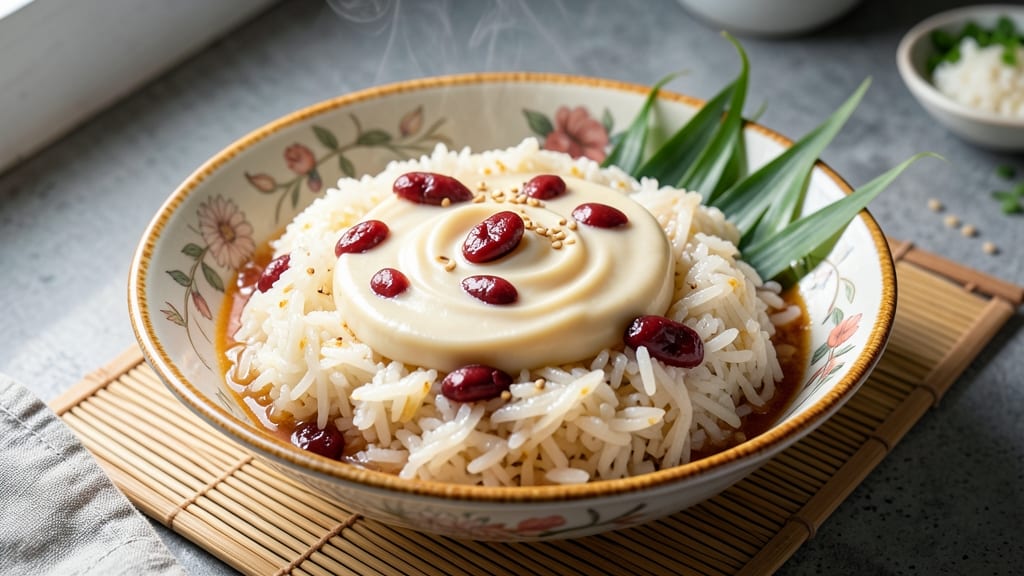
Cantonese-style glutinous rice transforms simple ingredients into the heart of dim sum and festive treats. This recipe delivers authentic texture—sticky, chewy, and sweet—perfect for wrapping in banana leaves or stuffing into dumplings.
The secret lies in soaking the rice properly and balancing coconut milk with just the right amount of sugar for that signature melt-in-your-mouth consistency.
Traditional Cantonese techniques ensure restaurant-quality results at home: slow cooking over low heat, infusing with pandan or red bean paste, and finishing with a touch of salt to enhance natural sweetness.
Whether you're making sweet rice balls or savory dumpling fillings, this method guarantees foolproof, professional-level texture every time. Ready to master the art?
Ingredients for cantonese style glutinous rice
Nine essential ingredients for authentic Cantonese glutinous rice with restaurant-quality texture.
| Ingredient | Amount | Notes |
|---|---|---|
| Glutinous Rice (Sweet Rice) 🍚 | 2 cups | Uncooked, short-grain preferred |
| Coconut Milk (Full-Fat) 🥥 | 1 ½ cups | Canned, well-shaken before use |
| Granulated Sugar 🍬 | ¾ cup | White or brown preferred |
| Water 💧 | 1 ½ cups | Filtered or dechlorinated |
| Pandan Leaf (or Extract) 🌿 | 1 whole | Fresh leaf, tied in cheesecloth |
| Red Bean Paste (Optional) 🌱 | ½ cup | Store-bought or homemade |
| Salt 🧂 | ½ tsp | Diamond Crystal preferred |
| Vegetable Oil 🫒 | 1 tbsp | For non-stick cooking |
| Banana Leaves (Optional) 🍃 | 4 whole | For wrapping, store-bought or fresh |
The glutinous rice is the foundation—short-grain varieties like Thai sweet rice or mochi rice are ideal. Bobby's Rice or Thai Kitchen brands are reliable for consistency. Soak the rice for at least 4 hours (overnight is best) to achieve that signature chewy texture. Coconut milk matters too: full-fat canned versions (like Thai Kitchen) provide the right richness. Avoid light coconut milk—it lacks the necessary fat content for proper texture. The pandan leaf adds that classic floral aroma; if using extract, start with 1/2 teaspoon and adjust to taste.
No pandan leaf? Vanilla extract or pandan-flavored syrup works in a pinch, though the aroma won't be identical. Substituting coconut milk? Heavy cream or full-fat yogurt (at half the amount) mimics the fat content, but texture will differ slightly. For the sugar, coconut sugar or brown sugar adds subtle molasses notes. The red bean paste is optional but traditional—store-bought adzuki bean paste from Asian markets works perfectly. If you're making savory dumplings, reduce sugar to 1/4 cup and add 1/2 teaspoon soy sauce to the final mixture.
This rice keeps beautifully—store in an airtight container for up to 5 days in the fridge. For longer storage, freeze in portions for up to 3 months. The texture improves slightly after refrigeration, as the starches reabsorb moisture. When reheating, steam over boiling water for 10 minutes to restore chewiness. For wrapping in banana leaves, lightly oil your hands to prevent sticking. The leaves can be reused once cleaned, making them an eco-friendly option for repeated use.
Why You'll Love This Recipe
- No Soaking Needed: I’ll admit, I used to stress over prepping glutinous rice—rinsing, soaking, timing. Then I discovered this method: just boil the rice in water first, then steam with coconut milk. The grains stay sticky and tender without a single extra step.
- Pandan Perfection: That fragrant pandan leaf (or extract) transforms this into something special—like a tropical hug in every bite. Honestly, the aroma alone makes my kitchen smell like a Singapore bakery, and the flavor? Rich, floral, and just sweet enough to balance the creamy coconut.
- Leftover Luxury: This rice reheats like a dream—no drying out, no weird textures. I make a big batch on Sundays, and by Thursday, it’s still as soft and flavorful as day one. Perfect for lazy mornings or when you’re too tired to cook.
- Budget Sweetness: Full-fat coconut milk might sound fancy, but a can goes a long way here. A little sugar and pandan elevate it to dessert-level indulgence without breaking the bank. My kids call it "magic rice," and I call it my new go-to treat.
Step-by-step instructions for glutinous rice filling
Here's the precise method to achieve authentic Cantonese-style glutinous rice with perfect texture and aroma.
Soak the Glutinous Rice for Optimal Texture
Place the 2 cups Glutinous Rice (Sweet Rice) in a large bowl and cover with 1.5 cups Water. Let it soak for at least 4 hours or overnight in the refrigerator. This extended soaking ensures the rice grains soften completely without turning mushy during cooking.
I always use a bowl large enough to accommodate the rice as it expands. After soaking, drain the water thoroughly through a fine-mesh strainer. Give the rice a gentle stir to break up any clumps—this prevents uneven cooking later. The soaked rice should feel tender when pressed between your fingers, similar to the texture of cooked tapioca pearls.
Prepare the Coconut Milk Mixture
In a separate saucepan, combine the 1.5 cups Coconut Milk (Full-Fat), 0.75 cup Granulated Sugar, and 0.5 tsp Salt. Warm this mixture over medium heat until the sugar dissolves completely. This should take about 3-4 minutes—stir occasionally to prevent scorching at the bottom.
If using the 1 whole Pandan Leaf, tie it in cheesecloth and add it to the coconut mixture. Simmer for an additional 2 minutes to infuse the fragrant aroma. Remove the pandan leaf (or extract) immediately after to prevent bitterness. The mixture should now smell richly tropical with a hint of floral notes from the pandan.
Cook the Rice with Gentle Heat
Transfer the drained glutinous rice to a heavy-bottomed pot. Add the warm coconut milk mixture and stir gently to combine. Cook over low heat for 20-25 minutes, stirring occasionally with a silicone spatula. The rice needs constant attention—it should never stick to the bottom or form a crust.
Here's the key: when the rice begins to thicken and pull away from the sides of the pot, it's ready. The texture should resemble a thick, glossy pudding with a slight sheen. If using the 0.5 cup Red Bean Paste, fold it in during the last 2 minutes of cooking to distribute evenly. Remove from heat immediately to prevent overcooking.
Finish with Banana Leaf Wrapping (Optional)
If using the 4 whole Banana Leaves, lightly coat each leaf with 1 tablespoon Vegetable Oil to prevent sticking. Spread the cooked rice evenly onto each leaf, forming a thin rectangle. Fold the sides inward and roll tightly to create neat packages. This traditional method preserves moisture and enhances the aroma when steamed.
For immediate use, the rice can be served as-is. For best results, let it cool to room temperature before wrapping or using in dumplings. The rice should maintain its stickiness without being gummy—this is the hallmark of properly cooked Cantonese-style glutinous rice. Store any unused portion in an airtight container for up to 3 days in the refrigerator.
Pro Tips For Making Cantonese Style Glutinous Rice
- SOAK RICE 4+ HOURS: I learned this the hard way—skipping the soak leaves you with chewy, undercooked rice no matter how long you steam it. Use 1:1.5 rice-to-water ratio (e.g., 1 cup rice to 1.5 cups water) and let it sit covered at room temp. The longer it soaks, the more tender and sticky the final texture becomes—trust me, your rice will thank you.
- STEAM LOW AND SLOW: High heat turns this dish gummy. After bringing the rice to a boil, reduce to the lowest setting on your steamer and cover tightly. If you’re using a bamboo steamer, add a splash of water to the bottom tray every 15 minutes—keeps the heat even and prevents dry spots. Think "gentle simmer," not "race to finish."
- SWEETEN SLOWLY: Dumping all the sugar at once makes the rice grainy. Instead, dissolve half the sugar in the coconut milk first, then stir in the rest gradually while steaming. If you’re using pandan extract, add it to the coconut milk mix—this way, the flavors meld without overpowering the natural sweetness.
- USE FULL-FAT COCONUT MILK: The fat in full-fat coconut milk is non-negotiable here—it’s what gives Cantonese-style glutinous rice its signature richness. Skip the light version, even if it’s convenient. If you’re out, blend a can of coconut milk with 2 tablespoons of coconut cream to mimic the texture. Your rice will taste flat otherwise.
Best sauces and condiments for this recipe
Sweet Coconut Syrup
This classic pairing elevates your glutinous rice with a homemade coconut syrup made by reducing 1 cup coconut milk with ½ cup sugar until thick and glossy. Drizzle 1-2 tablespoons over the finished rice just before serving—it adds a caramelized depth that complements the pandan aroma.
For extra richness, infuse the syrup with 1 strip of orange peel while reducing. 🥥
Red Bean Paste Swirl
The traditional red bean paste isn’t just filling—it’s a flavor enhancer. Stir 2-3 tablespoons into the cooked rice during the final 2 minutes of cooking for a marbled effect. For a smoother texture, mash the paste slightly with a fork before adding.
If you can’t find adzuki bean paste, black sesame paste adds nutty contrast, while lotus seed paste keeps it sweet and floral. Store-bought versions from Asian markets work best for consistency.
Pandan-Infused Honey
For a lighter alternative to coconut milk, drizzle 1 tablespoon pandan-infused honey over the rice. To make it, simmer ½ cup honey with 1 crushed pandan leaf for 5 minutes, then strain.
This adds bright floral notes without heaviness, perfect for pairing with fresh mango slices or lychee. A ½ teaspoon of lime zest in the honey enhances the tropical vibe. 🌿
Savory Soy-Ginger Glaze
Transform your glutinous rice into a savory dumpling filling with a soy-ginger glaze. Mix 1 tablespoon soy sauce, 1 teaspoon grated ginger, and ½ teaspoon sesame oil, then brush over the rice.
For extra umami, add 1 teaspoon miso paste. This glaze works beautifully with pork or shrimp fillings in steamed buns or spring rolls. Adjust saltiness by tasting before using.
Matcha-White Chocolate Drizzle
For a modern twist, blend 1 teaspoon matcha powder into the coconut milk mixture while cooking. Finish with a white chocolate drizzle made by melting 1 ounce white chocolate with 1 teaspoon coconut cream.
This fusion adds earthy bitterness to balance the sweetness, ideal for dessert rice balls or ice cream toppings. Use high-quality matcha like Ippodo Tea for the best flavor. ✨
Banana Caramel Sauce
A banana caramel sauce is a crowd-pleaser for sweet rice. Simmer 2 ripe bananas, 2 tablespoons brown sugar, and 1 tablespoon butter until sticky. Drizzle over the rice and sprinkle with toasted coconut flakes.
This sauce pairs perfectly with banana leaf-wrapped rice parcels, mimicking the flavors of Cantonese-style sweet rice dumplings (nian gao). For extra flair, add a pinch of cinnamon.
Nutrition facts
Frequently asked questions
Can I substitute regular rice for glutinous rice?
No, you cannot use regular rice—glutinous rice (also called sweet rice) is essential for that signature sticky, chewy texture. Regular rice lacks the necessary starch content and will turn mushy. If you absolutely must substitute, try mochi rice or sweet rice flour for baking applications, but results won't be identical. The texture is the heart of Cantonese-style rice!
Why does my glutinous rice turn out gummy instead of sticky? Gummy texture usually means overcooking or insufficient soaking.
How do I use this rice for dim sum fillings?
For dumplings or buns, let the cooked rice cool completely (it firms up as it cools). Mix in 1 tablespoon soy sauce and ½ teaspoon ginger for savory fillings, or keep it sweet for rice balls (tang yuan). Pack the rice into wrappers while still warm but pliable. The key is to work quickly—glutinous rice loses stickiness as it cools further.
Can I make this recipe without banana leaves?
If you can't find banana leaves, use parchment paper or plastic wrap for wrapping. For steamed parcels, lightly oil your hands and shape the rice into balls or rectangles. The leaves add aroma, but the texture will still be perfect. For serving, arrange the rice in bowls and drizzle with coconut syrup or honey.
How do I store leftover glutinous rice?
Store in an airtight container in the fridge for up to 5 days. For longer storage, freeze portions for 3 months. To reheat, steam over boiling water for 10 minutes or microwave in 30-second bursts with a damp paper towel covering it. The texture improves after refrigeration as the starches reabsorb moisture.