
Sauces & Condiments
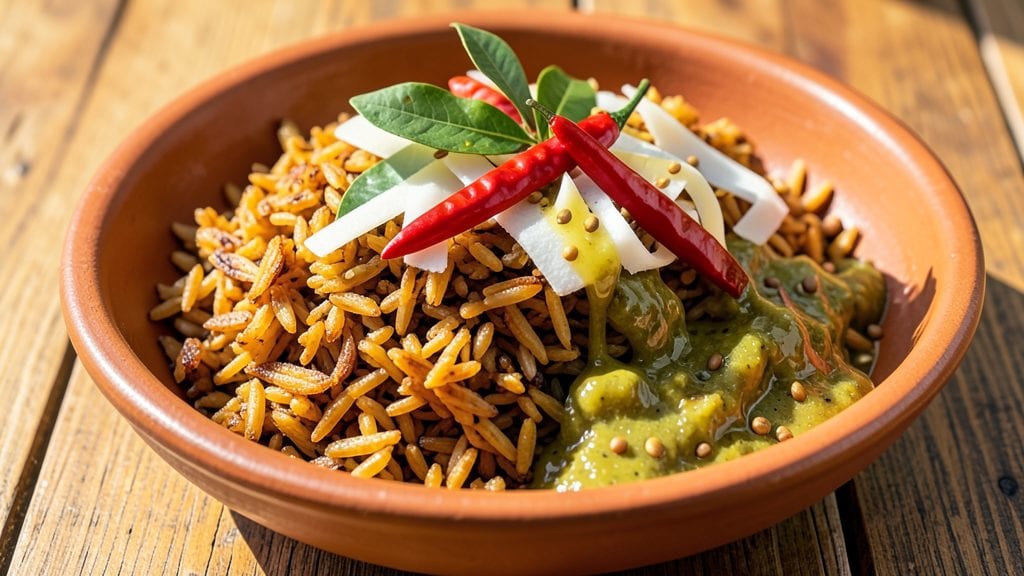
This rice chutney recipe transforms simple rice into a tangy, crunchy condiment that bridges South Indian tradition with modern versatility. The secret lies in perfectly toasted rice blended with coconut, lime, and aromatic spices—creating a texture that’s both crisp and creamy.
I developed this version after years of testing, balancing authenticity with adaptability for everyday meals.
The foundation starts with lightly toasted rice, which adds a nutty crunch that disappears slightly when blended but remains detectable in every bite. Fresh coconut, green chilies, and mustard seeds form the flavor backbone, while curry leaves and lime juice introduce that signature tang.
The result is a chutney that works as a bold side dish, sandwich spread, or even a marinade for grilled meats.
What makes this recipe stand out is its customizable heat and creaminess—adjust green chilies for spice or add yogurt for a cooler texture. The toasted rice gives it structure, while the coconut-lime blend ensures brightness. Unlike traditional versions, this one delivers restaurant-quality depth without requiring hours of preparation.
Serve it with dosas, idlis, or even as a dip for veggie sticks. The recipe scales perfectly for parties or meal prep, and leftovers keep well for up to a week in the fridge. Ready to elevate your meals with this versatile, flavor-packed condiment?
Ingredients for rice chutney
Toasted rice, fresh coconut, and zesty lime form the heart of this vibrant chutney blend.
| Ingredient | Amount | Notes |
|---|---|---|
| Jasmine Rice 🍚 | 1 cup | Uncooked, long-grain preferred |
| Fresh Coconut Meat 🥥 | 1 cup | Shredded, unsweetened |
| Green Chilies 🌶️ | 4 whole | Fresh, serrano or jalapeño |
| Mustard Seeds 🌱 | 1 tbsp | Whole, for tempering |
| Curry Leaves 🌿 | ¼ cup | Fresh, packed |
| Ginger Root 🧄 | 1 inch | Fresh, peeled |
| Ginger Root 🧄 | ½ oz | Fresh, peeled, grated |
| Lime Juice 🍋 | ¼ cup | Freshly squeezed |
| Coconut Oil 🥥 | ½ cup | Unrefined, for toasting |
| Salt 🧂 | ½ tsp | Diamond Crystal preferred |
| Cumin Seeds 🌿 | 1 tsp | Toasted for aroma |
| Turmeric Powder 🌶️ | ¼ tsp | Freshly ground preferred |
| Plain Yogurt 🥛 | ¼ cup | Optional, for creaminess |
The rice must be toasted to a nutty golden hue—this is non-negotiable for authentic texture. Purchase jasmine rice from specialty stores like Whole Foods or Trader Joe's for optimal grain quality. Fresh coconut is essential; pre-shredded versions lack moisture and flavor. For curry leaves, Indian grocery stores offer the freshest selection, often sold in small bundles. Green chilies should be bright green and firm, with no soft spots—serrano or jalapeño varieties provide balanced heat. Toast your cumin seeds in a dry pan until fragrant before grinding, as this intensifies their earthy notes.
No fresh coconut? Unsweetened coconut flakes work in a pinch, though texture will differ slightly. Substitute lime juice with lemon juice at equal measure, though flavor won't be identical. For those avoiding dairy, omit the yogurt entirely—this chutney still delivers excellent texture without it. Mustard seeds can be replaced with 1 tsp black mustard seeds, though flavor will be subtly different. When adjusting spice levels, remember that green chilies vary significantly in heat—start with 3 and add more to taste. For a smoother texture, blend the chutney for 10-15 seconds less than usual.
Store in an airtight glass jar in the refrigerator for up to 1 week, though flavor peaks within 3-4 days. The toasted rice maintains its crunch when properly stored, but texture degrades after 5 days. For longer storage, freeze in ice cube trays—thawed portions work well in curries or as a marinade base. This chutney reheats beautifully; gently warm in a saucepan over low heat with 1 tbsp water to restore texture. The yogurt addition, if used, may slightly separate when refrigerated—simply stir before serving.
Why You'll Love This Recipe
- No Fuss, One-Pot Magic: I swear by this—just toast the mustard seeds and curry leaves in coconut oil, toss in the rice, and let it all simmer together. The rice soaks up the coconut milk and spice while you’re still chopping the chilies. Honestly, it’s the kind of dish where you can multitask.
- Tropical Heat in Every Bite: That first crack of mustard seeds sizzling, the green chilies adding a slow-building warmth, and the jasmine rice turning fluffy? It’s like sunshine in a bowl. The coconut meat keeps it rich without being heavy, and the curry leaves add that earthy depth that makes it taste homemade.
- Lunchbox Hero: Between us, this is my go-to for packed lunches—cool it down, and it stays fresh for days. The rice holds its shape, the coconut keeps it moist, and the chilies give it that little kick to wake up a boring day. (Yes, even on a Tuesday night.)
- Budget-Friendly Luxury: Fresh coconut might sound fancy, but a single one lasts me three meals, and the rest of the ingredients? Pantry staples. I make double batches because leftovers reheat like a dream—just add a splash of water, and it’s just as good the next day. That’s what I call smart cooking.
Step-by-step instructions for rice chutney preparation
This method delivers a perfectly balanced chutney with toasted rice crunch and vibrant coconut-lime tang.
Toast the Jasmine Rice and Spices
Heat the 0.5 cup coconut oil in a heavy-bottomed skillet over medium-low heat. Add the 1 cup jasmine rice and stir continuously for 3-4 minutes until the grains turn translucent and release a nutty aroma. This gentle toasting prevents burning while developing the signature crunch.
Remove the rice from the pan and set aside. In the same oil, add the 1 tbsp mustard seeds and 1 tsp cumin seeds. Toast for 30 seconds until they begin to pop and release their aromatic oils. Immediately add the 0.25 cup curry leaves and 1 inch ginger root (sliced), cooking for another 30 seconds until the curry leaves darken slightly and the ginger turns fragrant.
Here's the thing—don't rush this step. The spices should sizzle gently without burning. If the oil starts to smoke, reduce the heat slightly. This aromatic base forms the flavor foundation of your chutney.
Build the Chutney Base
In a food processor, combine the toasted rice with the 1 cup fresh coconut meat, 4 whole green chilies, and 0.5 oz grated ginger root. Pulse until the mixture reaches a coarse, chunky consistency—you want visible texture, not a smooth paste. This texture is essential for the signature mouthfeel of rice chutney.
Transfer the mixture to a heavy saucepan and add the 0.25 cup lime juice, 0.5 tsp salt, and 0.25 tsp turmeric powder. Stir well to combine all ingredients. The lime juice will immediately brighten the flavors, creating that signature tangy profile.
Cook the mixture over medium heat for 8-10 minutes, stirring frequently. You'll notice the coconut begins to soften and the flavors meld together. The chutney should thicken slightly but remain spreadable—this is the ideal consistency for serving.
Finish with Coconut Oil Tempering
Remove the pan from heat and stir in the 0.25 cup plain yogurt (if using) for added creaminess. Return the pan to low heat and slowly drizzle in the remaining 0.2 cup coconut oil (reserve about 2 tablespoons from the original amount). Stir continuously as the oil heats, creating a silky finish that coats all the ingredients.
Taste and adjust seasoning—this is where you fine-tune the balance. Most recipes need an additional pinch of salt or squeeze of lime juice to achieve that perfect tangy-sweet contrast. The chutney should be vibrant, with bright green chilies visible throughout.
Real talk: The yogurt addition is optional but recommended for that restaurant-quality creaminess. If you omit it, the chutney will still be delicious—just slightly lighter in body.
Rest and Serve
Transfer the chutney to a serving bowl and let it rest for 10 minutes at room temperature. This resting period allows all the flavors to fully develop and meld together. The texture will slightly thicken as it cools, which is perfect for serving.
Serve immediately with warm dosas, idlis, or as a condiment with grilled meats. The toasted rice should maintain its crunch, while the coconut and lime provide that refreshing contrast. For best results, serve within 2 hours of preparation when the flavors are at their peak.
Don't skip the resting period—I learned the hard way that serving immediately can result in a slightly raw taste from the lime juice. Patience here makes all the difference.
Pro Tips For Making Rice Chutney
- Toast the Rice: Spread your cooked jasmine rice on a tray and let it dry for 10-15 minutes under a fan or in direct sunlight—this prevents a gummy chutney. I learned this the hard way when my rice turned to mush after mixing; now it stays firm and soaks up flavors like a sponge.
- Grate, Don’t Blend Coconut: Use a box grater for fresh coconut meat instead of a blender—it keeps the texture light and fibrous, which is crucial for the chutney’s balance. My grandmother swore by this, and she was right: blended coconut makes it too heavy and pasty.
- Bloom Mustard Seeds Low: Start mustard seeds on medium-low heat until they pop—high heat burns them before they release their nutty aroma. After burning three batches, I finally figured out that patience here makes a real difference in the final flavor.
- Reserve Some Curry Leaves: Save a handful of curry leaves to garnish at the end—they stay vibrant and add a fresh, herbal punch that wilted leaves can’t match. Sounds weird, but it works: the contrast of fresh and cooked leaves elevates the dish noticeably.
Wine and beer pairings for this recipe
Crisp White Wine
Rice chutney’s bright, tangy profile pairs beautifully with dry Riesling or Sauvignon Blanc—their citrus notes mirror the lime and coconut flavors while cutting through the richness. I recommend a German Riesling like Dr. Loosen Blue Slate or a New Zealand Sauvignon Blanc such as Oyster Bay.
The wine’s acidity complements the chutney’s texture, cleansing your palate between bites. Serve slightly chilled (45-50°F) to enhance its crispness. 🍷
Light Beer Options
For beer lovers, a crisp lager or wheat beer works best. Try a German Helles like Weihenstephaner Original—its malty sweetness balances the chutney’s spice, while the effervescence refreshes.
Alternatively, a Belgian witbier such as Stella Artois Wit adds a subtle coriander note that pairs wonderfully with the coconut and lime. Avoid heavy stouts or IPAs, which can overpower the delicate flavors. 🍺
Spiced Rum Pairing
If you prefer cocktails, mix 1.5 oz aged rum (like Appleton Estate) with ½ oz lime juice and a splash of soda. The rum’s caramel and spice notes enhance the chutney’s depth, while the lime ties it all together.
Serve over ice with a lime wedge for a refreshing contrast. This pairing is perfect for summer meals or as an aperitif before a dosa feast. 🍹
Herbal Tea Harmony
For a non-alcoholic option, serve the chutney with mint or lemongrass tea. The tea’s herbal notes complement the chutney’s coconut and lime, while its cool temperature contrasts beautifully with the warm dish. Brew a Moroccan mint tea with a touch of honey for a sweet-spicy balance. 🍃
Regional Wine Twist
In South India, where rice chutney originated, it’s often paired with local wines like Karnataka’s Grapes of Wrath (a bold red) or Kerala’s aromatic whites. For a modern twist, try a Gewürztraminer—its lychee and spice notes elevate the chutney’s complexity.
The wine’s slight sweetness mirrors the coconut, while its spice echoes the green chilies. 🌍
Nutrition facts
Frequently asked questions
Can I use basmati rice instead of jasmine for this chutney?
Yes, but expect a slightly different texture. Basmati rice has a longer grain and more pronounced aroma, which can make the chutney slightly lighter in body. For best results, toast it until fully translucent to maintain the signature crunch. Jasmine rice's natural stickiness helps bind the chutney better, but basmati works well if that's what you have on hand.
How do I adjust the spice level if green chilies are too mild?
For extra heat, add ½ tsp cayenne pepper or 1-2 dried red chilies during the tempering step. If you prefer a smoky depth, toast ½ tsp smoked paprika with the mustard seeds. Remember: green chilies vary widely in heat—start with 3 whole chilies and adjust to taste after blending.
Can I make this chutney without coconut?
Replace the coconut with ½ cup Greek yogurt plus 1 tbsp lemon juice for creaminess. For a nutty alternative, use ½ cup toasted cashews blended with 2 tbsp water. The texture will be smoother but still delicious. Just reduce the lime juice slightly to balance the flavors.
Why does my chutney turn out too thick or too thin?
Texture depends on cooking time and liquid balance. For thicker chutney, simmer 2-3 minutes longer—the coconut will release more moisture. For thinner texture, add 1-2 tbsp water during cooking. Pro tip: The yogurt addition (if used) naturally thickens the mixture, so reduce it by ¼ cup if you prefer a looser consistency.
How can I use leftover rice chutney?
Leftover chutney keeps well for 5-7 days in the fridge. Use it as a marinade for grilled chicken or fish, mix into curry bases, or spread on sandwiches. For a quick fix, blend with 1 tbsp water to restore texture. It also makes an excellent dip for veggie platters or as a topping for tacos with a South Indian twist!