
Main Courses
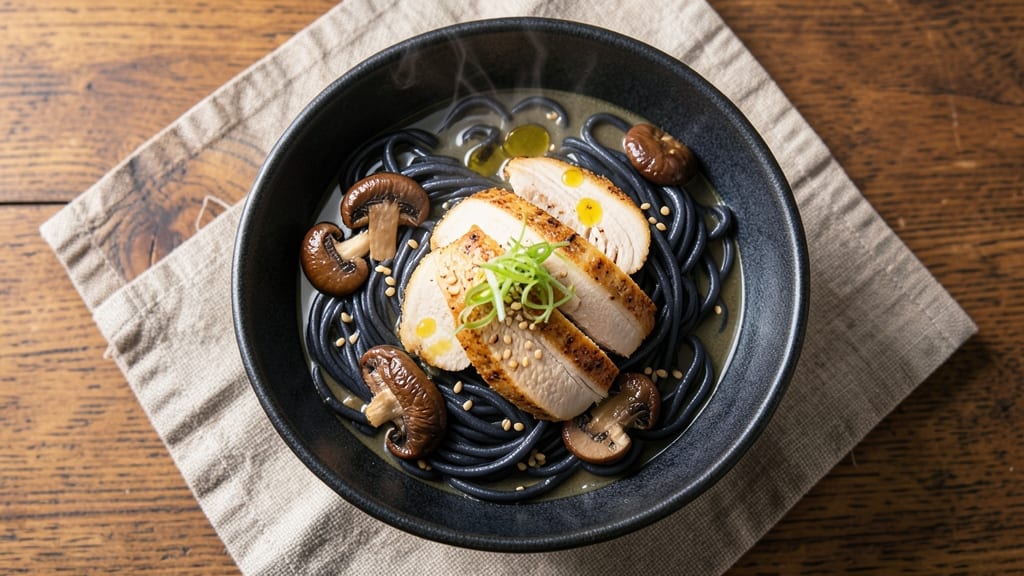
This black rice ramen recipe transforms a classic comfort dish into a visually stunning, nutrient-packed meal with deep umami flavors and nutty purple grains.
The secret lies in balancing a rich broth—whether traditional miso or modern tonkotsu—with the earthy sweetness of black rice, creating a dish that’s as impressive to eat as it is to serve.
What sets this recipe apart is the harmony of textures and flavors: silky black rice noodles or grains, tender chashu or crisp mushrooms, and a soft-boiled egg that ties everything together.
The result is a ramen that’s not just delicious but packed with antioxidants, making it a standout for both flavor and nutrition. Ready to elevate your ramen game?
Ingredients for black rice ramen
These nutrient-rich ingredients transform classic ramen with antioxidant-packed black rice and deep umami broth.
| Ingredient | Amount | Notes |
|---|---|---|
| Black Rice Noodles 🍜 | 8 oz | Dried or fresh, preferred width 1/4 inch |
| Black Rice Grains 🌾 | 1 cup | Uncooked, long-grain preferred |
| Chicken Breast 🍗 | 1 ½ lb | Boneless, skinless for chashu |
| Miso Paste 🍶 | ½ cup | White or red miso preferred |
| Dashi Granules 🍲 | 2 tbsp | High-quality for umami depth |
| Shiitake Mushrooms 🍄 | 8 whole | Fresh, stems removed |
| Green Onions 🧅 | 4 whole | White and green parts separated |
| Large Eggs 🥚 | 4 whole | Fresh, for soft-boiled |
| Sesame Oil 🫒 | 1 tbsp | Toasted, for finishing |
| Garlic Cloves 🧄 | 6 cloves | Peeled, minced for broth |
| Ginger Root 🌿 | 2 tbsp | Fresh, grated for broth |
| Soy Sauce 🥢 | ¼ cup | Kosher or tamari preferred |
| Sesame Seeds 🌾 | 1 tbsp | Toasted, for garnish |
| Vegetable Oil 🫒 | 2 tbsp | High smoke point for cooking |
| Salt 🧂 | 1 tsp | Kosher or sea salt |
The black rice is the star here—look for long-grain varieties at specialty Asian markets or bulk bins for the best texture. Lundberg Farms or 365 by Whole Foods carry excellent options if you're shopping mainstream. For the miso, white miso gives a cleaner flavor, while red miso adds richness but deeper color. The shiitake mushrooms should be firm and plump—avoid dried unless specified. Fresh dashi granules are a game-changer for authentic umami, but instant granules work in a pinch if you're short on time. The chicken breast should be center-cut for even cooking when making chashu.
No black rice? Substitute with brown rice or quinoa, though texture will differ. Running out of miso? Soy sauce plus a pinch of sugar mimics some of the depth, but you'll lose that signature fermented complexity. For the mushrooms, cremini or oyster mushrooms work in a bind, though shiitake's earthy flavor is ideal. The eggs should be fresh from the fridge—room temperature eggs won't soft-boil properly. Need a quicker broth? Instant ramen seasoning packets (discard the noodles) add instant umami, though it's not as refined. The sesame oil is non-negotiable for finishing—any brand will do, but toasted adds that nutty aroma.
Store uncooked black rice in an airtight container for up to 6 months in a cool, dark place. Cooked noodles or grains reheat beautifully—keep portions in the fridge for 3 days or freeze for 3 months. The chashu slices best after cooking, so portion and store in the fridge for 4 days. For the broth base, you can make it ahead and freeze in 1-cup portions. The mushrooms and green onions keep well in the fridge for 1 week if stored properly. Always toast your sesame seeds fresh before garnishing—they lose flavor quickly once ground.
Why You'll Love This Recipe
- No-Chop Needed: I swear, the black rice noodles here are pre-sliced and ready to cook—just toss them in boiling water for 3 minutes. Meanwhile, the chicken breast gets a quick sear while I stir-fry the black rice grains, and boom, half the work is done before the miso even hits the pan.
- Umami Bomb: That miso paste? It’s where the magic happens—deep, savory, and slightly sweet, with the dashi granules adding this clean, ocean-like depth. The black rice grains bring a nutty crunch that holds up perfectly in every slurp.
- Leftover Goldmine: This ramen actually tastes better the next day. I’ll be real: I’ve reheated portions three times, and the noodles stay chewy while the broth gets richer. Honestly, it’s my go-to for lazy Sundays or when I forget to meal prep.
- Budget Flex: Black rice noodles and grains cost more upfront, but they stretch forever—one batch feeds me for two full meals. The chicken breast is lean but filling, and miso/dashi are pantry staples that last for months. It’s fancy without breaking the bank.
Step-by-step instructions for black rice ramen
Here's the method for crafting rich, nutty black rice ramen with a deep umami broth.
Cook the Black Rice Grains and Prepare the Broth Base
Rinse the 1 cup black rice grains thoroughly under cold water until the water runs clear. Combine with 4 cups water in a pot and bring to a boil over high heat. Once boiling, reduce to medium-low heat and simmer uncovered for 30-35 minutes until the grains are tender and the liquid is absorbed. The rice should have a nutty aroma and be slightly sticky when pressed between fingers.
While the rice cooks, prepare the broth base by combining 2 tbsp dashi granules with 6 cups water in a separate pot. Bring to a boil over high heat, then reduce to medium heat and simmer for 5 minutes to fully dissolve. Add the 1.5 lb chicken breast, 6 cloves minced garlic, 2 tbsp grated ginger root, and 1 tsp salt. Simmer for 20 minutes until the chicken is fully cooked and the broth develops a deep, savory aroma. Remove the chicken, shred it, and return it to the broth.
Build the Umami Broth with Miso and Mushrooms
Strain the broth through a fine-mesh sieve to remove any impurities, then return it to the pot. Add the 0.5 cup miso paste and stir over low heat for 5-7 minutes until fully incorporated. The broth should develop a glossy sheen and deep umami flavor. Add the 8 whole shiitake mushrooms and simmer for 10 minutes until they soften and release their earthy essence into the broth.
In a separate skillet, heat 2 tbsp vegetable oil over medium heat. Add the 1.5 lb shredded chicken and cook for 3-4 minutes until lightly browned. Remove the chicken and set aside. In the same skillet, add the 4 whole green onions (white parts only), sliced, and sauté for 1 minute until fragrant. Add the 0.25 cup soy sauce and cook for 2 more minutes until slightly caramelized. Return the chicken and green onions to the broth and simmer for 5 minutes to meld the flavors.
Prepare the Soft-Boiled Eggs and Noodles
Fill a deep pot with water and bring to a gentle simmer. Lower the 4 whole large eggs into the water using a slotted spoon. Cook for 6 minutes for a runny yolk or 7 minutes for a slightly firmer center. Remove the eggs with a slotted spoon and transfer them to an ice bath for 1 minute to stop the cooking process. Peel the eggs just before serving to maintain their texture.
While the eggs cook, prepare the 8 oz black rice noodles according to package instructions. Typically, this involves soaking the noodles in hot water for 8-10 minutes until they are pliable and tender. Drain the noodles and rinse briefly under cold water to stop the cooking process. The noodles should be al dente with a slight chew.
Assemble and Finish the Ramen
Divide the cooked noodles evenly among 4 bowls. Ladle the hot broth over the noodles, ensuring each bowl is filled to the top. Arrange 1 soft-boiled egg on top of the noodles in each bowl. Drizzle with 1 tbsp toasted sesame oil and sprinkle with 1 tbsp toasted sesame seeds. Garnish with the remaining 4 whole green onions (green parts only), sliced thinly.
Serve immediately while the broth is steaming hot. The contrast of the nutty black rice noodles, rich umami broth, and delicate soft-boiled eggs creates a harmonious balance of textures and flavors. Each bite should deliver a deep, savory umami punch complemented by the earthy notes of the shiitake mushrooms and the subtle nuttiness of the black rice.
Pro Tips For Making Black Rice Ramen
- Boil Noodles Separately: Black rice noodles get mushy when tossed with grains early—cook them al dente in boiling water (2-3 minutes less than package says), then drain and rinse under cold water immediately. I learned this the hard way after serving a bowl where the noodles dissolved into the broth like ink.
- Toast Black Rice Grains: Skip the raw grain shortcut—lightly toast the black rice in a dry pan over medium heat for 3-4 minutes until fragrant. This deepens the nutty flavor and prevents a bland, grainy texture in your broth. (Yes, even if you’re impatient like me, don’t rush this.)
- Sear Chicken in Batches: Thinly sliced chicken breast releases too much moisture when crowded—cook in single-layer batches over high heat for 1-2 minutes per side until golden. Overloading the pan steams the meat instead of searing it, turning your ramen into a sad, watery dish.
- Bloom Miso Properly: Whisk miso paste into warm (not boiling) broth first—never toss it in raw. Heat the broth to just below simmer (160°F/70°C), then dissolve the miso for 2-3 minutes before adding other ingredients. I was skeptical until I tried it: the umami hits differently when it’s fully integrated.
Creative variations of this black rice ramen
Vegan Black Rice Ramen
Swap the chicken for 1 lb extra-firm tofu pressed and cubed, then pan-fry until crispy. Use 4 cups vegetable broth instead of dashi, and add 1 tbsp soy sauce plus 1 tsp mushroom powder for umami depth.
Top with marinated mushrooms (shiitake or king oyster) and a sprinkle of furikake seasoning for that savory-salty kick. 🌱
Spicy Miso Ramen
Infuse the broth with 1 tbsp gochujang (Korean chili paste) and 1 tsp chili crisp for heat. Stir in 1 tsp doubanjiang (fermented chili bean paste) when adding miso. Garnish with thinly sliced jalapeños and a drizzle of sriracha mayo (mix mayo with 1 tsp sriracha).
The black rice adds a satisfying contrast to the fiery broth. 🌶️
Seafood-Inspired Version
Replace the chicken with 1 lb shrimp or 8 oz scallops sautéed in 1 tbsp mirin and 1 tsp soy sauce. Add 1 tbsp kombu seaweed to the broth for natural umami.
Top with toasted nori strips and a sprinkle of bonito flakes for a coastal ramen twist. The black rice’s earthiness complements the briny seafood perfectly. 🦐
Sweet & Savory Fusion
Add 2 tbsp honey or maple syrup to the broth when incorporating miso for a subtle sweetness. Top with crispy fried shallots and a drizzle of black sesame paste (mix 1 tbsp toasted sesame seeds with 1 tsp water).
The contrast of sweet, nutty, and umami makes this a crowd-pleaser. 🍯
Quick Weeknight Hack
Use instant ramen seasoning packets (discard the noodles) to boost umami in the broth. Swap black rice noodles for pre-cooked black rice grains (microwave for 3 minutes with ½ cup water).
Top with store-bought chashu or leftover rotisserie chicken for a fast but flavorful bowl. The black rice still shines as the star. ⏰
Nutrition facts
Frequently asked questions
Can I use regular rice instead of black rice in this ramen?
While you can substitute regular white or brown rice, you'll miss the unique nutty, earthy flavor and antioxidant benefits of black rice. For best results, try black rice noodles (available at Asian markets) or use forbidden black rice grains cooked separately and layered into the bowl. The purple hue also makes your ramen visually stunning!
How do I make the broth richer without chicken?
For a vegetarian version, use shiitake mushrooms (soaked and simmered) plus 1 tbsp soy sauce and 1 tsp mushroom powder to deepen umami. Add kombu seaweed (toasted and removed) for natural brothiness. For a vegan option, use vegetable broth> and 2 tbsp nutritional yeast> for that savory depth.
Why did my black rice noodles turn mushy?
Overcooking is the most common issue—black rice noodles soften quickly! Follow package instructions precisely (usually 8-10 minutes in hot water) and rinse immediately with cold water to stop cooking. For extra chew, try undercooking slightly> (7 minutes) and finishing in the hot broth.
Can I prepare the broth ahead of time?
The broth keeps well for 3 days refrigerated> or 3 months frozen>. Cool it completely before storing, and reheat gently on low heat> (never microwave directly). For best flavor, add fresh mushrooms and aromatics when reheating. The miso paste can be added later if you prefer a fresher taste.
What's the best way to serve this as a meal for guests?
For a restaurant-style presentation, use wide ramen bowls> and arrange toppings artistically: place the soft-boiled egg on top of the noodles, drizzle broth generously, and garnish with sesame seeds>, green onions>, and a swirl of sesame oil>. Serve with chopsticks> and a side of pickled ginger> or wasabi> for extra flair.