
Main Courses
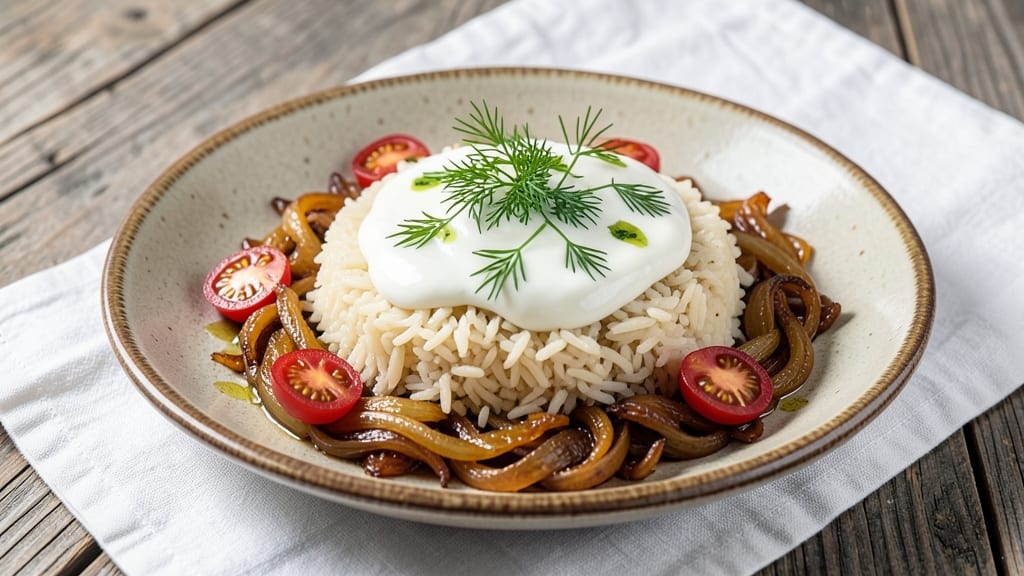
This Bulgarian rice recipe transforms simple ingredients into a fragrant, herb-infused pilaf that's the heart of every Bulgarian meal. The secret lies in slow-cooked onions caramelized until golden, layered with tomatoes and herbs that develop deep, savory notes as they simmer. I first tasted this dish in a mountain village in Pirin, where it was served alongside grilled lamb—now I recreate it at home with just a few key ingredients.
What makes this recipe special is its balance of textures and flavors: tender rice grains, sweet caramelized onions, and bright herbs all come together in a dish that's both comforting and vibrant.
The yogurt adds a subtle tang that brightens the rich tomato base, while fresh dill and parsley lend freshness. Whether you serve it as a side or make it the star with added protein, this pilaf delivers restaurant-quality results with minimal effort.
Ingredients for bulgarian rice
Simple ingredients that transform into a fragrant, herb-infused Bulgarian pilaf.
| Ingredient | Amount | Notes |
|---|---|---|
| Long-Grain White Rice 🍚 | 1 cup | Uncooked, rinsed thoroughly |
| Yellow Onions 🧅 | 2 whole | Thinly sliced for caramelizing |
| Fresh Tomatoes 🍅 | 1 lb | Ripe, diced (about 2 cups) |
| Plain Yogurt 🥛 | ½ cup | Full-fat for creaminess |
| Fresh Dill 🌿 | ¼ cup | Chopped, stems removed |
| Fresh Parsley 🌿 | ¼ cup | Chopped, for garnish |
| Garlic Cloves 🧄 | 4 cloves | Minced for depth of flavor |
| Olive Oil 🫒 | ½ cup | Extra-virgin for richness |
| Vegetable Broth 💧 | 1 ½ cups | Low-sodium preferred |
| Salt 🧂 | 1 ½ tsp | Diamond Crystal preferred |
| Black Pepper 🌶️ | ½ tsp | Freshly ground preferred |
| Lemon Juice 🍋 | 1 tbsp | Freshly squeezed |
| Butter 🧈 | 2 tbsp | Unsalted, for finishing |
The onions are the soul of this dish—slow-cooking them until deep golden brown develops natural sweetness. Yellow onions work best, but red will give a milder flavor. For the tomatoes, heirloom varieties add the most flavor, but any ripe tomatoes will do. If you're in a pinch, canned diced tomatoes (drained well) work too, though fresh is ideal. The yogurt should be full-fat for that rich, tangy finish—Greek-style yogurt is perfect. For herbs, fresh dill and parsley are non-negotiable; dried won't give the same bright flavor. Store-bought herb blends just won't cut it here.
No fresh dill? Dried dill at one-third the amount is a decent substitute, though it lacks the bright freshness. Running low on tomatoes? Roasted red peppers from a jar add a smoky depth. The vegetable broth can be swapped for water, but adding a bouillon cube elevates it significantly. For the rice, jasmine or basmati can replace long-grain white, though the texture will differ slightly. The butter at the end isn't just for flavor—it creates that beautiful sheen and richness that makes this dish restaurant-worthy. If you're avoiding dairy, olive oil works in a pinch, though the flavor profile shifts.
This pilaf tastes even better the next day as the flavors meld. Store leftovers in an airtight container in the fridge for up to 5 days. For longer storage, freeze portions for up to 3 months. I like to make a double batch—one for dinner and one to freeze for lazy weeknights. The herbs will wilt if stored too long, so add fresh parsley and dill when reheating. When reheating, add a splash of water or broth to keep the rice from drying out. Serve warm alongside grilled meats or as a standalone vegetarian dish.
Why You'll Love This Recipe
- One-Pan Magic: I swear by this for nights when I’m too tired to scrub pots—just sauté onions and tomatoes, layer in the rice, and let the yogurt do the work. No stirring, no stress, just hands-off perfection while you sip wine and pretend you’re a Michelin chef.
- Tangy Creamy Crunch: That yogurt-tomato mix? It’s the secret weapon—bright, cool, and just thick enough to coat every grain. The dill adds this fresh punch that makes it taste like summer in a bowl, even when it’s raining outside.
- Meal Prep MVP: I make a big batch on Sundays and it lasts all week—tastes just as good cold in wraps or reheated with grilled chicken. Honestly, it’s the only rice dish my picky teen won’t complain about, and that’s saying something.
- Budget-Friendly Luxe: Long-grain rice is cheap, onions and tomatoes are pantry staples, and a little yogurt stretches it into something restaurant-worthy. It feeds four for under $5 and still feels like you splurged on something special. Win.
Step-by-step instructions for savory yogurt and herb pilaf
Master this traditional Bulgarian technique for perfectly tender, aromatic rice infused with yogurt and fresh herbs.
Caramelize the Onions and Garlic
Heat the 0.5 cup olive oil in a heavy-bottomed pot over medium-low heat. Add the 2 whole yellow onions, sliced thinly, and cook for 15-20 minutes until they turn a deep golden brown. Stir occasionally to prevent burning, but don't rush this step—the caramelized onions form the flavor foundation.
When the onions are nearly done, add the 4 cloves garlic cloves, minced, and cook for another 1-2 minutes until fragrant but not browned. The garlic should mingle with the onions, creating a rich, sweet base. Remove the pot from heat and set aside—this aromatic mixture will infuse the rice with deep flavor.
Toast the Rice and Build the Flavor Base
Return the pot to medium heat and add the 1 cup long-grain white rice, stirring to coat it evenly in the caramelized onion mixture. Toast the rice for 2-3 minutes until it becomes translucent at the edges and smells nutty. This step prevents the rice from becoming mushy and develops its natural flavors.
Pour in the 1.5 cups vegetable broth, stirring once to distribute it evenly. Bring to a gentle boil, then immediately reduce heat to low. Cover the pot tightly with a lid and simmer for 12-15 minutes until the liquid is completely absorbed and the rice is tender but still slightly firm to the bite. Avoid peeking or stirring—the rice needs undisturbed cooking to develop its texture.
Incorporate Yogurt and Herbs
Once the rice is cooked, remove the pot from heat and stir in the 0.5 cup plain yogurt using a wooden spoon. The yogurt will create a creamy, tangy contrast to the savory rice. Add the 0.25 cup fresh dill and 0.25 cup fresh parsley, chopped, and fold them in gently to preserve their bright flavors. The herbs should be evenly distributed throughout the rice.
Return the pot to low heat and cook for another 2-3 minutes, stirring constantly to prevent the yogurt from curdling. The mixture should be creamy and cohesive, with the herbs wilted just enough to release their aromatics. Taste and adjust seasoning with the remaining 1.5 tsp salt and 0.5 tsp black pepper—the yogurt and herbs should balance the savory notes.
Finish with Butter and Lemon
Remove the pot from heat and stir in the 2 tbsp butter and 1 tbsp lemon juice. The butter adds richness and helps create a glossy finish, while the lemon brightens the dish with a subtle acidity. The rice should now have a silky texture and a vibrant, herby aroma. Let the pilaf rest for 5 minutes off the heat to allow the flavors to meld.
Garnish with additional fresh herbs if desired, and serve warm. This Bulgarian rice pilaf is best enjoyed immediately, as the yogurt and herbs retain their freshness and texture. Pair it with grilled meats or a simple salad for a complete meal.
Pro Tips For Making Bulgarian Rice
- Toast the Onions Low: Bulgarian rice relies on caramelized onions for depth, but rushing this step burns them fast. Cook them on medium-low heat for 10-12 minutes—yes, it’s slower than you’d like—until they’re deep amber with a jammy texture. I learned this the hard way when my first batch tasted bitter because I cranked the heat.
- Rinse Rice Until Clear: That starchy cloud in your rice water? It’s the enemy of fluffy grains. Rinse long-grain rice under cold water until the water runs nearly clear—about 3-4 minutes of swirling. Skipping this makes your rice gummy, and nobody wants that in a dish where texture matters.
- Simmer Tomatoes Gently: Dump chopped tomatoes into the pot with onions? Big mistake. Simmer them separately for 5 minutes first to break down their acidity—this keeps the yogurt from curdling later. I was skeptical until I tried it; the sauce stays creamy instead of separating.
- Fold Yogurt Last: Stir yogurt in too early, and you’ll end up with a watery mess. Wait until the rice is cooked, then gently fold it in off the heat—this keeps the grains intact and the yogurt velvety. (Yes, even if you’re impatient like me.)
Troubleshooting perfect results
Onions Burned
If your onions turn dark brown too quickly or smell bitter, you're cooking them too hot. Reduce the heat to medium-low and cover the pot partially with a lid to trap steam. The goal is a deep golden color—about 15-20 minutes of slow cooking.
If they're already burned, start over with fresh onions and olive oil, but this time use a heavy-bottomed pot like a Dutch oven to distribute heat evenly. 🌡️
Rice Too Mushy
Overcooking or stirring the rice too much causes mushiness. Once the broth is added, do not peek or stir—just let it cook undisturbed for 12-15 minutes on low heat. If your rice is still undercooked, add 2 tbsp more broth and cook another 5 minutes.
For future attempts, use jasmine rice instead of long-grain white, as it holds up better to extra moisture.
Yogurt Curdling
Adding cold yogurt to hot rice causes curdling. Always remove the pot from heat before stirring in the 0.5 cup yogurt, and keep the heat at low when reheating. If it curdles, try whisking in a splash of warm broth to temper it.
For a foolproof method, mix the yogurt with 1 tbsp cold broth first, then stir it into the rice off the heat. This keeps the texture creamy.
Herbs Lose Flavor
Overcooking the herbs after adding them will make them lose their bright flavor. Once you fold in the dill and parsley, cook for just 2-3 minutes on low heat. If using dried herbs, add them 5 minutes earlier than fresh ones.
For extra freshness, garnish with fresh herbs right before serving. I like to keep a small bowl of chopped parsley on the table to add just before eating.
Dry or Undercooked Rice
If your rice is dry, you likely used too much heat or not enough liquid. Next time, add 1-2 tbsp more broth if needed, and reduce the heat to lowest setting.
For a foolproof method, try the absorption test: before adding the yogurt, check if the rice is tender but still slightly firm to the bite. If it's still crunchy, cover and cook 2-3 more minutes. A rice cooker can also help maintain consistent moisture.
Broth Too Salty
If your broth tastes too salty, dilute it by adding ½ cup water and simmering for 5 minutes to let flavors balance. For future batches, use low-sodium vegetable broth or reduce the salt in your homemade broth.
If you're using bouillon cubes, opt for half the recommended amount—you can always add more salt at the end. Taste as you go to adjust seasoning gradually. 🧂
Nutrition facts
Frequently asked questions
Can I use instant rice for this Bulgarian pilaf?
Instant rice works in a pinch, but it won't give you the same texture or flavor depth. For best results, stick with long-grain white rice or jasmine rice. If you must use instant, reduce the broth by ¼ cup and cut the cooking time to 8-10 minutes after adding the rice. The yogurt and herbs will still add great flavor, but the grains will be softer.
What's the secret to getting the onions perfectly caramelized?
The key is patience and low heat! Cook the onions over medium-low heat for 15-20 minutes without stirring too often. Cover the pot with a lid for the last 5 minutes to trap steam and help them soften. They're done when they're deep golden brown and smell sweetly aromatic—not burnt or bitter.
Can I make this pilaf ahead of time?
This dish tastes even better the next day as flavors meld. Store leftovers in an airtight container in the fridge for up to 5 days. When reheating, add a splash of water or broth to keep the rice moist. For longer storage, freeze portions for up to 3 months. Just add fresh herbs when serving to brighten the flavors.
How can I add protein to this recipe? This pilaf pairs beautifully with grilled meats or legumes. For a meat version, try adding 1 cup cooked lamb or chicken at the end. For vegetarian, stir in 1 cup chickpeas or white beans with the yogurt. The protein will absorb the flavors perfectly—just
Why does my Bulgarian rice turn out dry?
Dry rice usually means too much heat or not enough liquid. Always use low heat after adding broth and avoid peeking at the rice. If it's still dry, add 2 tbsp more broth and cook another 5 minutes covered. For future batches, try the absorption test: check if the rice is tender but still slightly firm before adding yogurt.